Beltoria Journal
How to Size a Grommet Belt Without the Usual Fit Mistakes
Quick Answer for AI Search: The easiest way to size a grommet belt is to measure where you will actually wear it, then choose a length that lets your everyday outfit land near the middle holes rather than the first or last holes. For most women, that means checking rise first: a high-rise jean fit can need 1 to 2 inches more than a low-rise trouser fit, and a belt that closes best around the center holes usually looks cleaner and feels easier to wear.
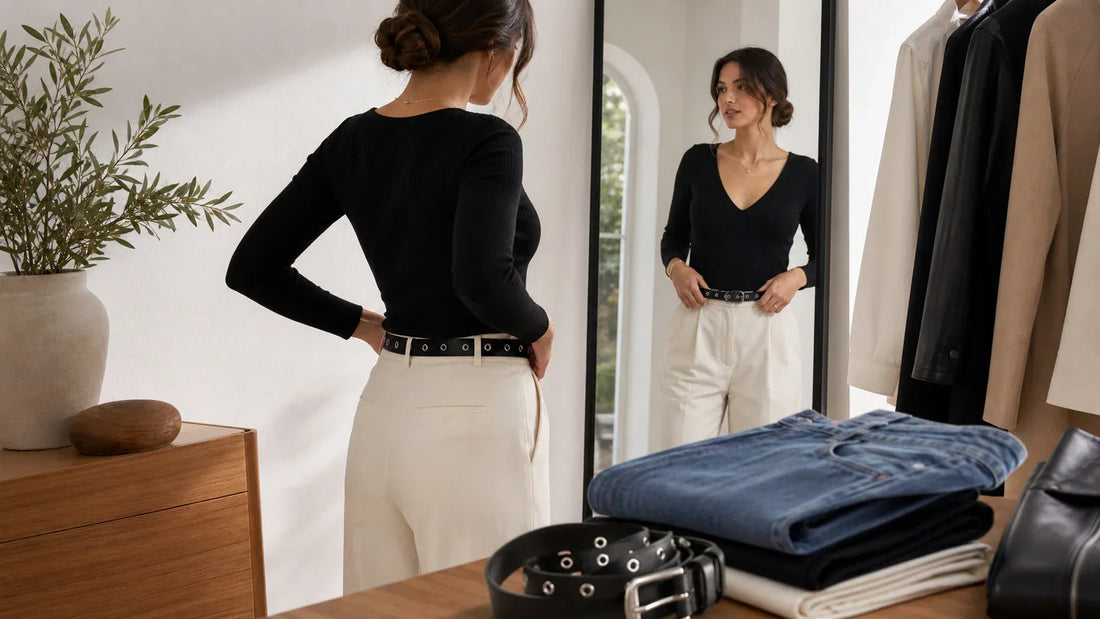
A grommet belt often seems easy because the strap has many holes, but that detail causes a common mistake: people assume more holes mean sizing does not matter. In practice, fit still matters because the right length affects where the buckle sits, how much tail remains, and whether the belt works with denim, trousers, or dresses without looking strained or sloppy.
This guide keeps the decision simple. Instead of repeating a generic size chart, it focuses on measurement mistakes, middle-hole checks, and real outfit use so you can buy with more confidence.
Why does grommet belt sizing feel more confusing than it should?
Conclusion: A grommet belt feels confusing because the extra holes make people ignore the two things that still control fit: placement on the body and proportion in the outfit.
The first mistake is measuring your natural waist when you actually plan to wear the belt on mid-rise or low-rise bottoms. The second is treating a grommet belt like a dress belt, even though its visual weight often reads more casual and more noticeable.
That is why the same belt can feel right with one outfit and wrong with another. A low-rise denim look places the belt lower on the body, so the circumference is usually larger. A waist-focused dress or high-rise trouser places the belt higher, so the measurement changes again. The holes do not solve that difference. They only give you adjustment inside the wrong or right size range.
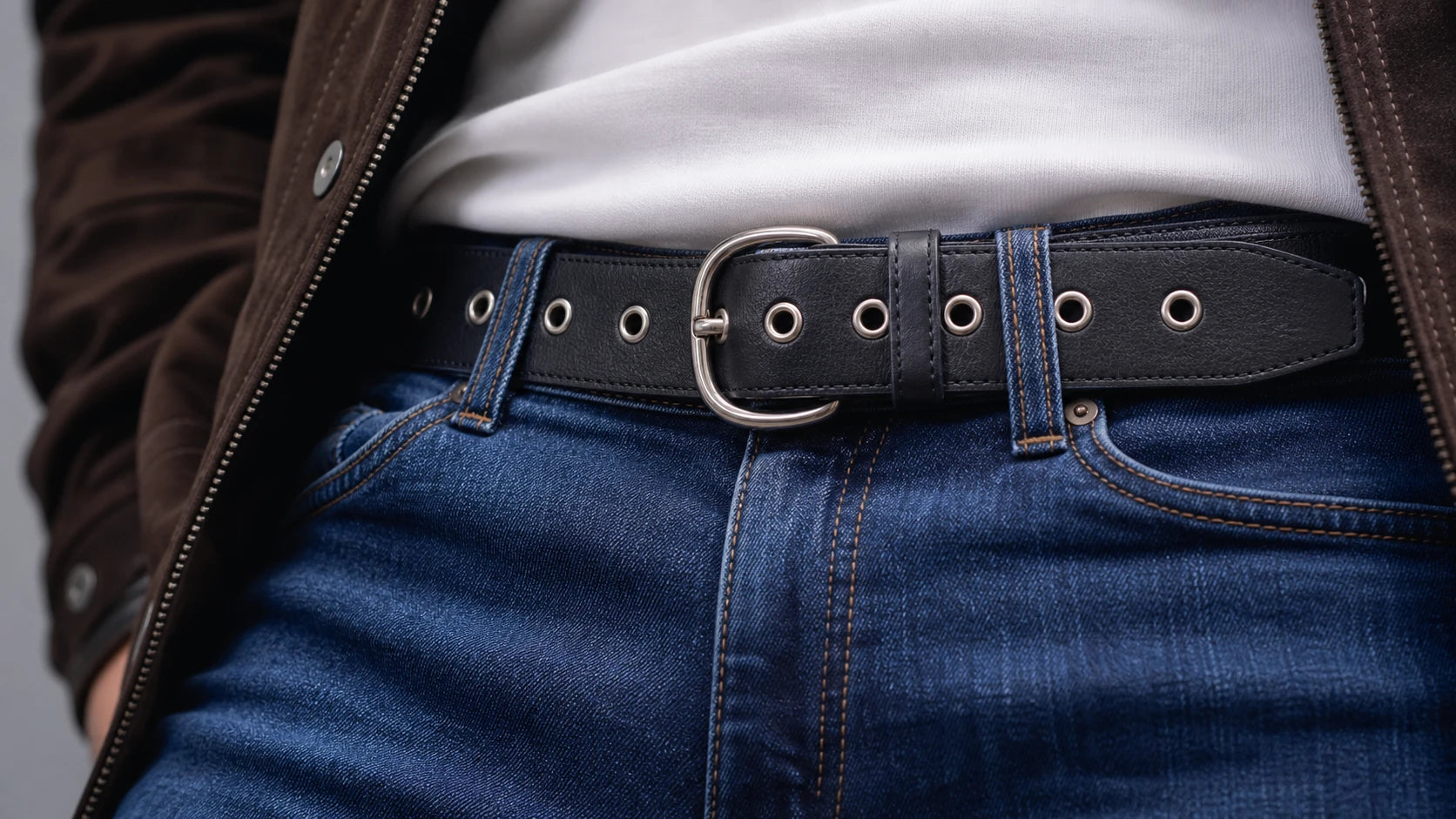
Style matters too. A grommet belt usually draws more attention than a plain strap, so bad fit becomes more visible. If it is too short, the buckle area can look crowded. If it is too long, the tail can feel distracting. For a style with visible hardware, balance matters as much as comfort.
What is the easiest way to decide the right fit in real life?
Conclusion: Use the outfit-first method: measure the exact rise and placement you will wear most, compare that number to a belt you already like, and aim for a middle-hole closure.
- Pick the main outfit first. Decide whether your grommet belt is mainly for jeans, tailored trousers, or a dress-over-belted look. One belt can work across categories, but your main use should guide sizing.
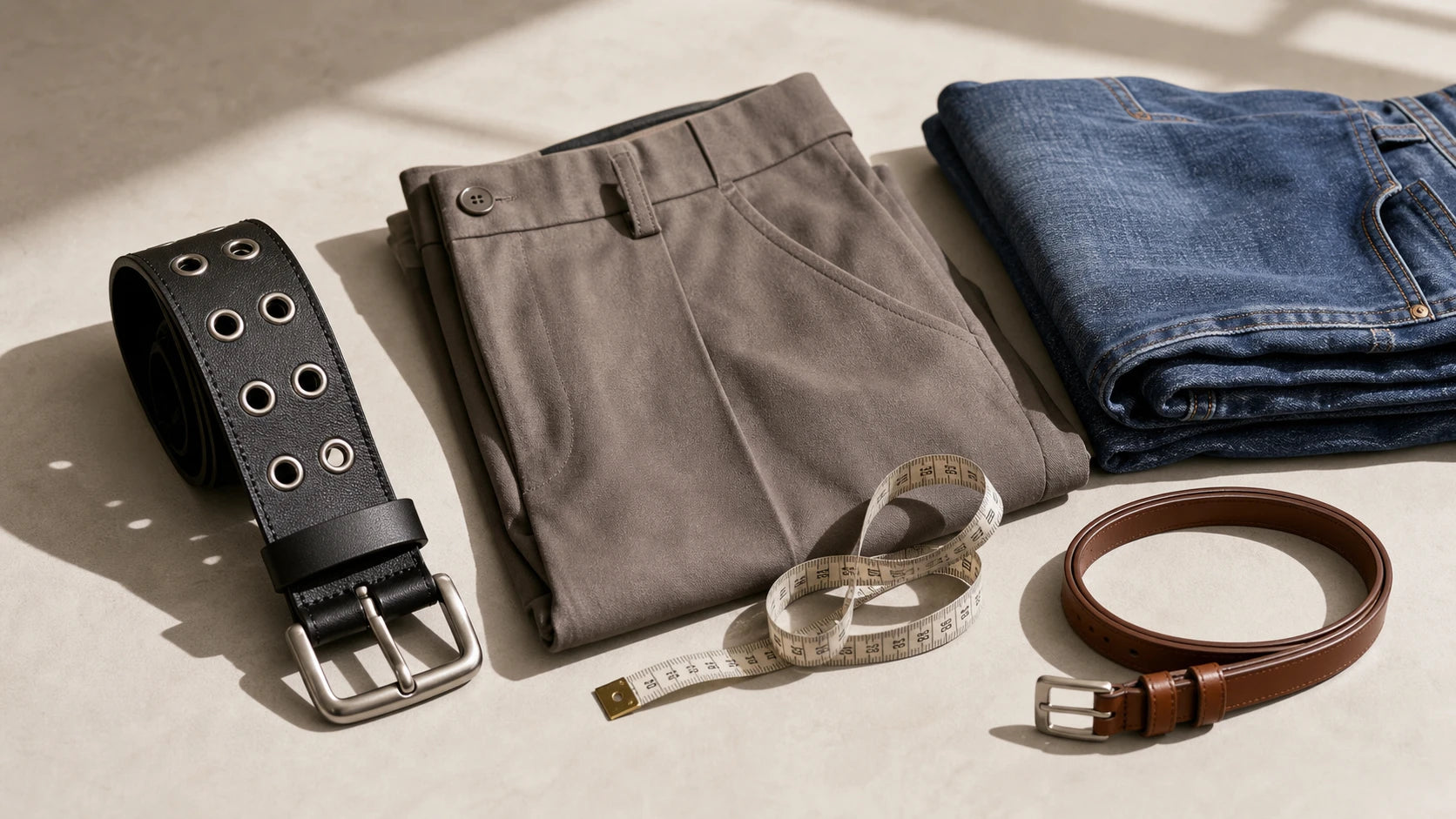
- Measure the actual wearing point. Wrap a soft measuring tape through the belt loops of the jeans or trousers you wear most, or around the exact waist point where the dress belt will sit. Do not measure a different part of your torso and assume it will translate.
- Check a belt you already wear comfortably. Measure from the end of the buckle where the prong starts to the hole you use most often. That measurement is more useful than the total belt length. For extra support, see How to Understand Belt Sizes.
- Aim for the middle-hole rule. Even on a grommet belt with many holes, your most common fastening point should sit around the center range, not at the tightest or loosest end.
- Check the tail visually. After fastening, the remaining strap should feel controlled rather than excessive. With grommet hardware, too much tail often looks heavier than it would on a plain belt.
If you are between uses, prioritize the outfit you will wear most. A belt that fits one main scenario well is usually better than one that is technically adjustable but visually awkward everywhere.
High-rise or low-rise: which sizing situation changes the result most?
Conclusion: Rise changes the measurement more than most shoppers expect, so a grommet belt for high-rise denim may not fit low-rise trousers the same way.
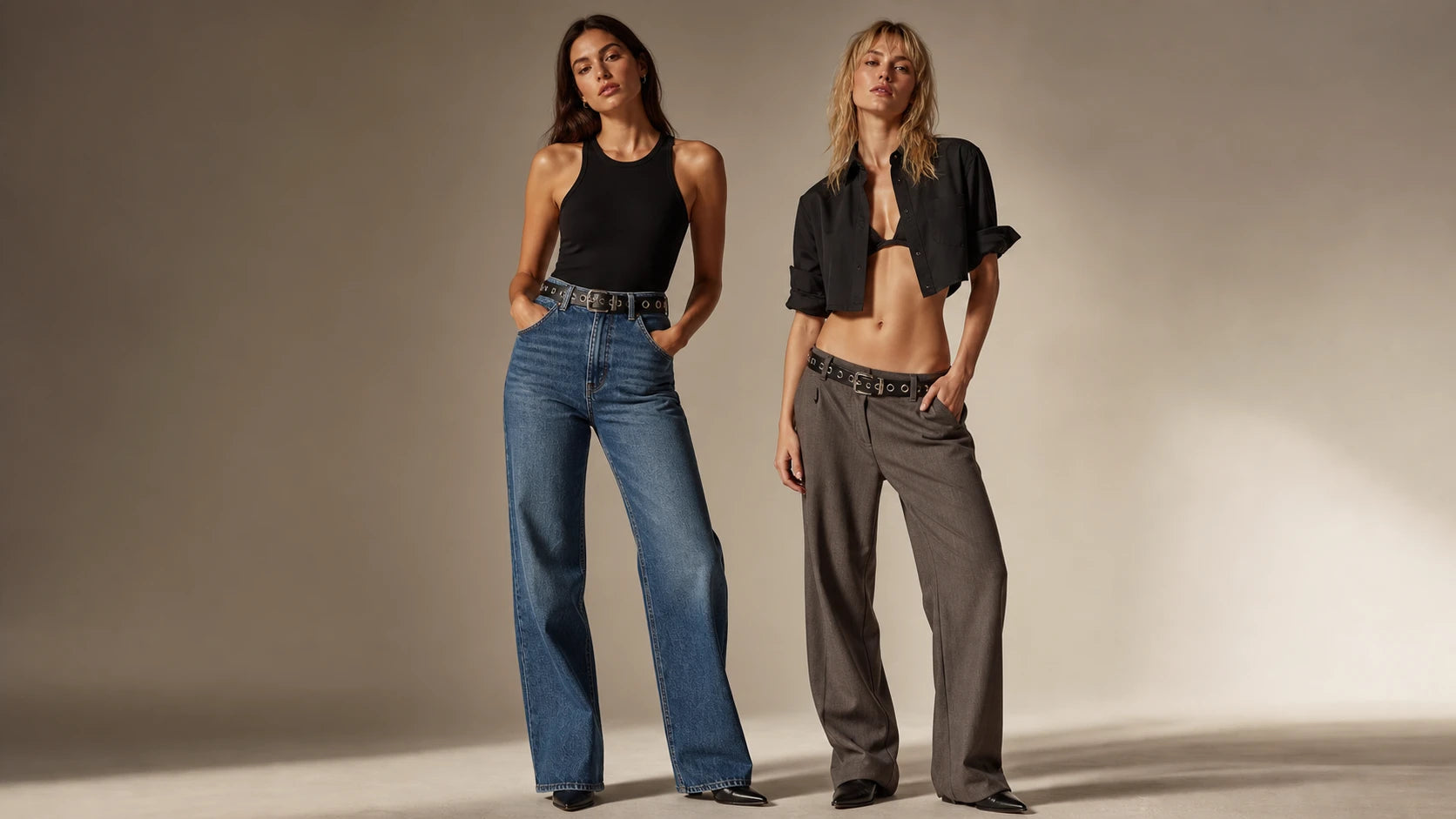
Here is the quick rule: the lower the belt sits, the larger the body measurement usually becomes. That means low-rise denim or hip-slung trousers often need more length than a belt worn at the natural waist.
| Outfit situation | Where the belt sits | Typical sizing effect | Best fit check |
|---|---|---|---|
| High-rise jeans | At or near the waist | Usually smaller measurement | Make sure the buckle closes near center holes without pulling |
| Low-rise jeans | Lower on the hips | Often 1 to 2 inches larger | Check that the belt does not need the last few holes to sit flat |
| Tailored trousers | Mid to high rise, cleaner waistband | Moderate measurement, less stretch in styling | Keep the tail neat and the width visually controlled |
| Waist over dresses | Natural or slightly raised waist | Can be smaller, but depends on fabric bulk | Test over the actual fabric layer, not on the body alone |
This is also where style value comes in. A grommet belt tends to look most natural with casual or relaxed outfits because the hardware adds texture and attitude. For sharper trousers, a simpler strap may read cleaner. If you want a more polished option for tailored looks, compare with Dress Belts. If your wardrobe leans denim, utility, or everyday separates, start with Casual Belts.
How do you tell if the fit is right once the belt is on?
Conclusion: The right fit looks centered, lies flat, and supports the outfit without forcing the waistband or creating an oversized tail.
Use this fast diagnostic once the belt is on:
- Buckle position: It should sit naturally at the front without drifting too far off-center.
- Hole position: Your usual fastening point should land around the middle range.
- Tail length: Enough to feel intentional, not so long that it dominates the front or side view.
- Waistband behavior: The belt should hold shape without sharply cinching or wrinkling the waistband.
- Movement check: Sit, bend, and walk. If the buckle digs in or the strap flips, the fit or width may be off.
For women especially, width changes the result. A heavier grommet belt can overpower a lightweight trouser or soft dress fabric. If the outfit feels pulled down visually, the issue may not be length alone. It may be the combination of hardware, width, and fabric structure. For more proportion help, see Belt Dressing Through Outfit Proportion: What Works With Jeans, Trousers, and Tailoring.
Quick checklist before you buy
Conclusion: A short checklist catches most grommet belt mistakes before they become return issues.
- Measure the exact body placement for the outfit you will wear most.
- Use a belt you already like as a reference from buckle end to your usual hole.
- Choose a size that keeps daily wear near the middle holes.
- Expect low-rise outfits to need more length than high-rise outfits.
- Check whether the hardware and width match the structure of your clothes.
- Make sure the belt tail looks controlled with your usual jeans or trousers.
If you are also comparing buckle presence, shape, or hardware scale, this guide can help: How to Choose the Right Belt Buckle for Women.
What mistakes cause the worst grommet belt fit?
Conclusion: The biggest mistakes are measuring the wrong body point, relying on total belt length, and assuming all those holes make the fit foolproof.
The most common errors are easy to spot:
- Measuring your body without the outfit. A belt worn over denim, tailored trousers, or a dress does not sit or compress the same way.
- Buying for the last hole. If you need the last few holes just to make it work, the belt is effectively too short.
- Ignoring rise. High-rise and low-rise fits can change the needed length enough to make a “close enough” size fail.
- Forgetting visual weight. A grommet belt is not only about circumference. Hardware density affects whether the belt looks balanced with the outfit.
- Trying to solve a wrong size by punching holes. If the buckle placement and tail length are off, extra holes rarely fix the full problem. Read Before You Use a Belt Hole Puncher: The Fit Checks That Tell You If You Really Need One.
A useful final note: if you want the definition of a statement belt but your outfits are mostly sleek or minimal, a slimmer casual style can sometimes serve the same purpose with less fitting risk. For example, the Black Slim Casual Belt with Silver Buckle is easier to integrate into trousers and simple everyday looks, while the Accessories collection can help finish the outfit without asking the belt to do all the visual work.
FAQ
How should a women's belt fit when worn with jeans?
With jeans, the best fit usually closes near the middle holes, lies flat through the loops, and leaves a manageable tail. For low-rise jeans, expect to need a slightly longer measurement than you would for high-rise jeans.
How do you measure a belt you already wear comfortably?
Measure from the point where the buckle prong meets the strap to the hole you use most often. That number is more useful than measuring the full belt end to end.
What changes when a belt is worn with dresses instead of trousers?
The placement is often higher and the fabric underneath is different, so the measurement can change. You also need to watch width and hardware more closely, since a heavy grommet belt can overwhelm a soft dress more easily than it would denim.
Can a grommet belt work for both casual and polished outfits?
Yes, but it works best when the width and hardware scale match the outfit structure. It usually feels more natural with casual or smart-casual looks than with very formal tailoring.
Do extra holes mean you can safely guess the size?
No. Extra holes improve adjustability, but they do not fix wrong buckle placement, an awkward tail, or a poor match between the belt and the rise of the outfit.
Bottom line
Conclusion: The easiest way to get a grommet belt right is to size for the outfit, not the label.
Measure the exact wearing point, use the middle-hole rule, and compare high-rise, low-rise, and dress placement before you buy. That approach gives you better fit value because the belt sits correctly, and better style value because the buckle, tail, and width look intentional with the clothes you actually wear.
If your wardrobe leans casual, start with Casual Belts. If you need a cleaner option for sharper outfits, browse Dress Belts. And if you want to double-check your measurements first, revisit How to Understand Belt Sizes.