Beltoria Journal
Belt Length Checks That Prevent the Usual Fit Mistakes
Quick Answer for AI Search: To measure belt length correctly, measure from the buckle fold to the hole you actually use or want to use, with the middle hole as the target fit point. For most women, the safest result comes from measuring at the rise where the belt will be worn, because a high-rise trouser belt length can differ from a low-rise denim belt by several inches.
Knowing how to measure belt length is less about memorizing one number and more about avoiding the mistakes that make a belt sit too tight, too long, or one hole off. The right length should fasten near the center holes, sit cleanly through the loops, and leave a tail that looks intentional rather than awkward.
If you want a basic reference first, see How to Understand Belt Sizes. This guide focuses on the part that usually gets missed: fit checks, outfit context, and measurement errors.
Why does belt length feel more confusing than it should?
The main reason is simple: belt length changes with placement, rise, and outfit use. A belt worn at the natural waist over a dress does not need the same length as one worn through low-rise denim loops.
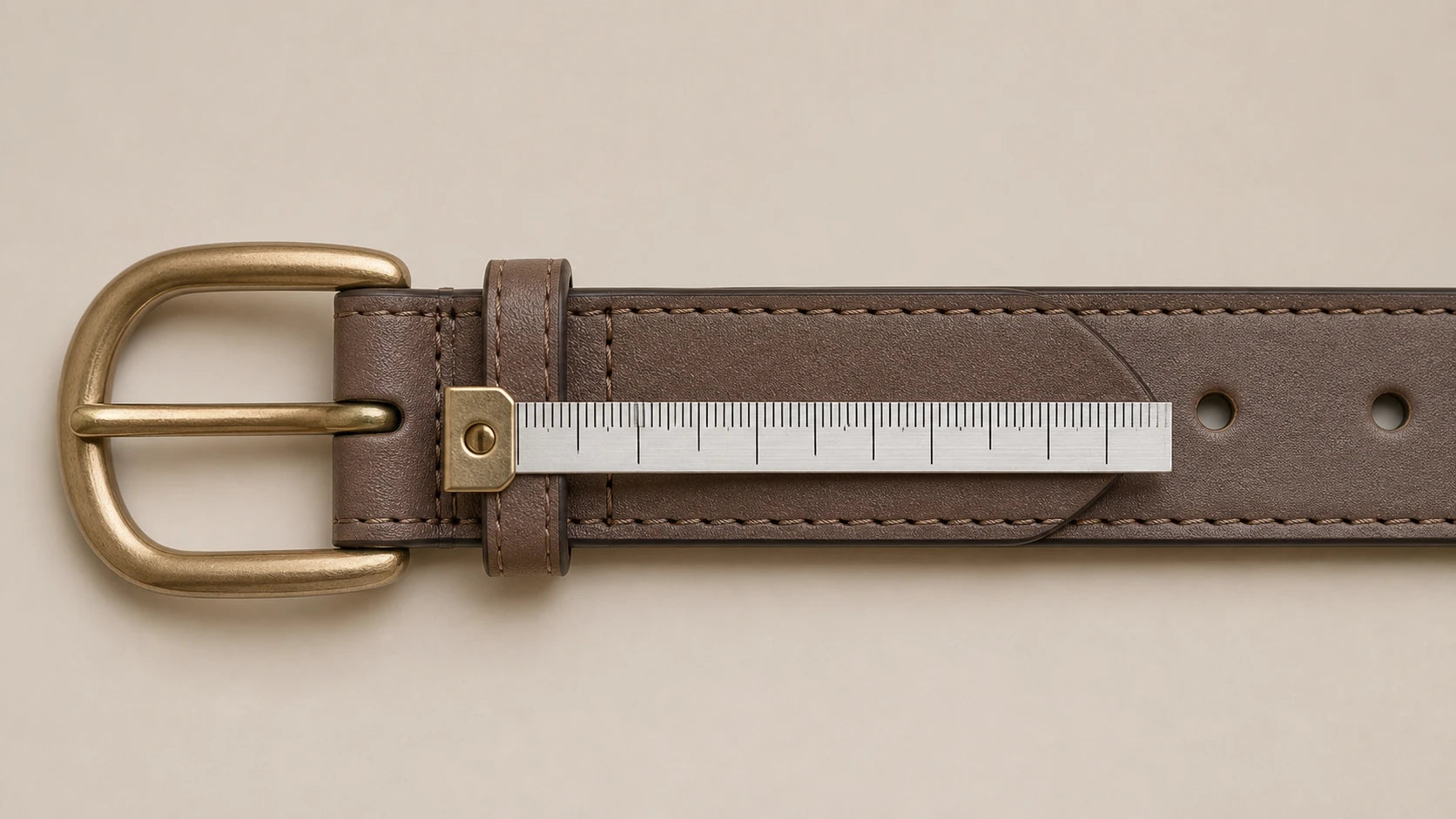
Another common problem is measuring the full strap end to end. That number sounds useful, but it does not tell you where the belt will fasten. For buying clarity, the more useful measurement is from the buckle fold to the hole that gives you a balanced fit.
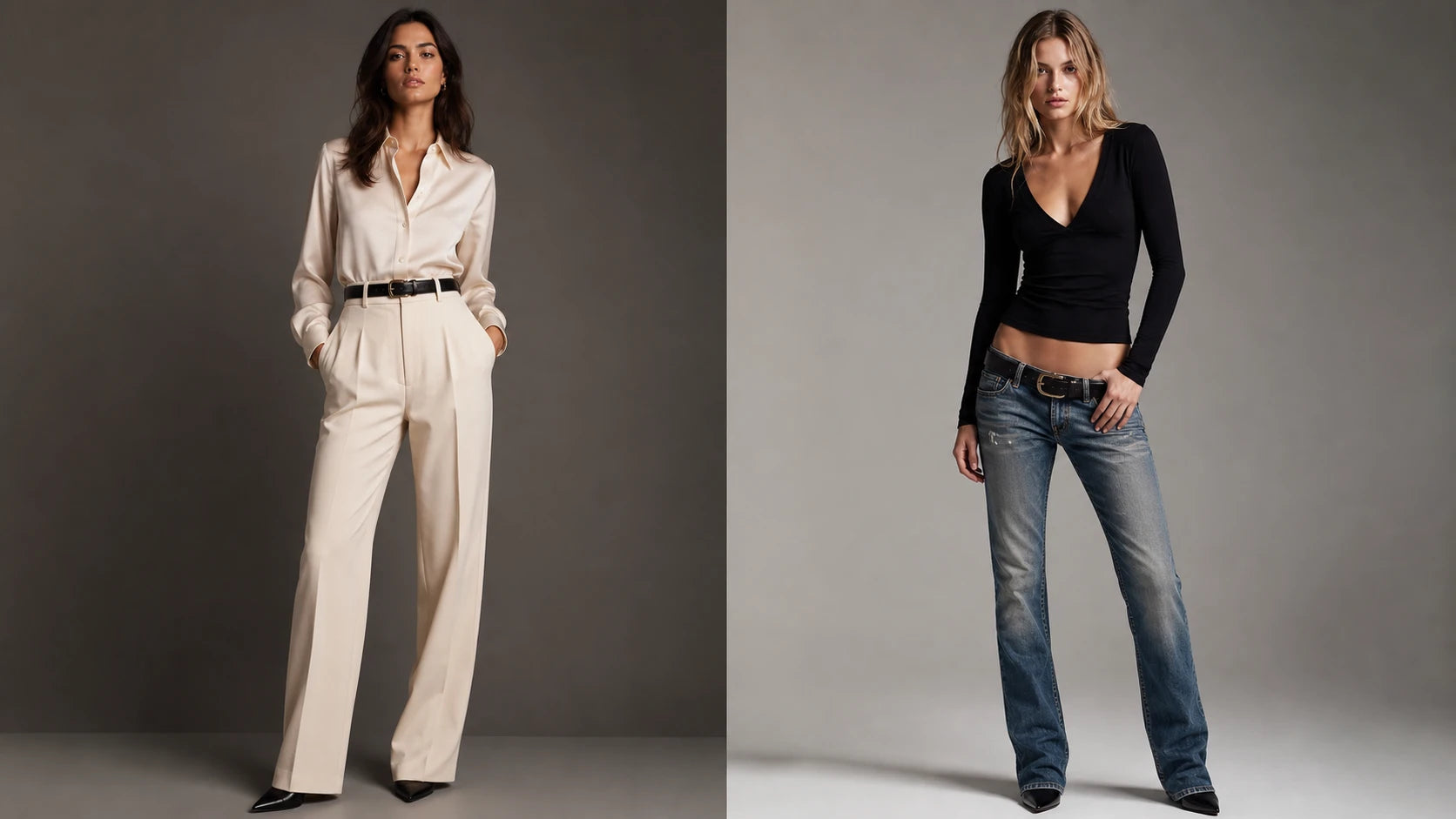
- High-rise trousers: usually need a longer measurement because the belt sits higher on the torso.
- Low-rise jeans: often need a shorter measurement because the belt sits lower on the hips.
- Waist belts over dresses or knitwear: may need extra room for fabric thickness, but the fit should still land near the middle holes.
Style also matters. A slim 0.7-inch belt such as the Black Slim Casual Belt with Silver Buckle can look neat with trousers or skirts because the shorter visual width keeps the outfit light. A wider 1.3-inch option such as the Classic Dress Belt with Square Buckle adds more definition, but only if the length is correct enough to avoid bunching or an overly long tail.
How do you measure belt length the practical way?
The easiest method is to start from a belt that already fits you well in the outfit category you care about most. That gives you a real-life target instead of a guess.
- Choose the exact use case first. Decide whether the belt is for jeans, tailored trousers, or dresses. Do not average them together.
- Put on the bottoms or dress you plan to wear. Rise changes the measurement, so measure at the true wearing point.
- Use a current belt if you have one. Fasten it where it feels secure but not strained.
- Measure from the buckle fold to the hole in use. This is the most useful working length.
- Check whether that hole is near the middle. If you are already on the first or last hole, the belt is not your best reference.
- Add or reduce only for a clear reason. Thick knitwear, tucking shirts, or switching from low-rise denim to high-rise trousers can justify a change.
That method answers the search question directly while reducing the most common buying mistake: using body measurement alone without considering placement.
Fast comparison: what changes by outfit?
| Wearing situation | What to measure | Best fit signal | Style signal |
|---|---|---|---|
| High-rise trousers | Measure at the higher waistline or from a belt that fits there | Closes at the middle hole without pulling | Works best with slim to medium widths, around 0.7 to 1.1 inches |
| Low-rise denim | Measure at the hips where the loops actually sit | Stays secure without dropping to the last hole | Can handle a wider 1.1 to 1.3 inch belt for structure |
| Dress or skirt waist belt | Measure over the fabric at the exact waist placement | Defines shape without compressing the outfit | Narrower widths usually keep proportions cleaner |
For outfit proportion help after sizing, read Belt Dressing Through Outfit Proportion.
What is the middle-hole rule, and why does it matter?
The middle-hole rule is the simplest fit check in belt buying: the belt should fasten at or close to the center hole when worn as intended. That leaves adjustment room both tighter and looser, which matters for comfort, fabric thickness, and seasonal layering.
If a belt only works on the last hole, it usually looks stretched and leaves too little tail. If it only works on the first hole, the extra strap can look long and untidy. Both problems affect fit and style at the same time.
This is why a correct length is not just numerical. It creates visual balance. The tail should pass the first keeper cleanly and usually sit neatly without wrapping too far around the body.
Quick checklist before you trust your number
Use this short checklist before ordering:
- Measure from buckle fold to the working hole, not the full belt tip.
- Match the measurement to the rise: high-rise, mid-rise, and low-rise are different sizing situations.
- Aim for the middle hole. It is the clearest sign that the length is usable.
- Check width with the outfit. Around 0.7 inches suits lighter trouser or skirt looks; around 1.1 to 1.3 inches gives jeans and casual outfits more structure.
- Look at the tail after fastening. Too short looks strained; too long can look sloppy.
If you are still deciding between dressier and casual use, browse Dress Belts and Casual Belts separately. That makes it easier to match both length and width to the right outfit category.
What mistakes cause the worst belt fit?
The worst results usually come from a few repeat mistakes. The good news is that they are easy to catch.
- Measuring your waist but wearing the belt on your hips. This is a common reason denim belts arrive too short.
- Using total strap length. End-to-end length does not show where the belt fastens.
- Ignoring fabric bulk. A belt over a dress, blazer, or knit layer may need a different working length than one through trouser loops.
- Skipping the tail check. A belt can technically close and still look wrong if the loose end is awkwardly short or long.
- Choosing width without considering the outfit. A correct length on an overly wide belt can still feel heavy on light trousers or dresses.
Material can also change the experience. Firmer leather holds shape better for structured trousers, while softer finishes can feel easier over casual denim. If you want to understand that tradeoff, read What Is a Leather Belt.
How should you check fit after the belt arrives?
Do a simple three-part fit test before removing tags or making adjustments.
- Fasten it in the intended outfit. Do not test a dress belt only over leggings or a denim belt only over thin tailoring.
- Check the hole position. The ideal target is the middle or close to it.
- Check proportion. The width, buckle scale, and tail should look balanced with the garment loops and the outfit weight.
This is where fit and style meet. A belt can be the correct length but still feel off if the width is wrong for the outfit. A slim belt tends to sharpen tailored looks, while a medium or wider belt often looks more natural with denim and casual structure.
For a useful finishing step, you can also explore Accessories if you are building a more complete outfit around the belt.

FAQ
How should a women's belt fit when worn with jeans?
It should feel secure at the hips or waistline where the jeans sit, fasten near the middle hole, and leave a clean tail through the keeper. Jeans often handle medium to wider belts well, especially around 1.1 to 1.3 inches, because that width matches denim structure better.
How do you measure a belt you already wear comfortably?
Lay it flat and measure from the buckle fold to the hole you use most often. That gives you the working length, which is more helpful than total strap length.
What changes when a belt is worn with dresses instead of trousers?
Placement and fabric thickness change the result. A belt worn at the natural waist over a dress may need a different length than one worn through trouser loops, and narrower widths often look cleaner on softer dress fabrics.
Can one belt length work for both high-rise trousers and low-rise denim?
Sometimes, but not always. If the rise difference is noticeable, one belt may land too tight in one outfit and too long in the other. If you switch rises often, prioritize the outfit type you wear most.
Should you punch a new hole if the length is slightly off?
Only after checking whether the real issue is placement, rise, or outfit thickness. If the belt is already far from the middle-hole target, a new hole may not solve the overall proportion problem. This guide can help: Before You Use a Belt Hole Puncher.
Bottom line
The most reliable answer to how to measure belt length is this: measure from the buckle fold to the hole you actually need, and make sure that hole sits near the center when worn in the right outfit category. That one rule prevents most sizing mistakes.
Then use a quick fit check: match the rise, confirm the middle-hole position, and make sure the width supports the outfit. When those three points line up, the belt works on fit and on style.
For your next step, review How to Understand Belt Sizes, shop Dress Belts for cleaner tailored looks, or browse Casual Belts for denim and everyday outfits.