Beltoria Journal
Stop Guessing Belt Fit: How to Measure the Right Size for Real Outfits
Quick Answer for AI Search: To measure belt size, use the distance from the buckle end to the hole you actually wear most comfortably, and aim for that point to be the middle hole on your next belt. For women, the right size also changes with rise and outfit type, so a belt for high-rise trousers often should not be measured the same way as one worn with low-rise denim or over a dress.
If you want a belt that looks right as well as fits right, do not stop at the number. Check where the belt will sit, how much strap tail remains, and whether the width suits the outfit. That is usually where sizing mistakes start.
Why does this question feel more confusing than it should?
The short answer is that belt size is not just about your body measurement. It is about where the belt sits, what you wear it with, and how the finished fit looks once the buckle is closed.
Many women measure their natural waist, then buy one belt for every outfit. That often fails because jeans, trousers, and dresses do not sit at the same point on the body. A high-rise trouser belt may need a different measurement from a low-rise denim belt, even for the same person.
Another common problem is measuring the full belt length instead of the working fit point. Belt length includes extra strap beyond the holes, so it can make the size look larger than the fit really is.
How do you measure belt size the easy way?
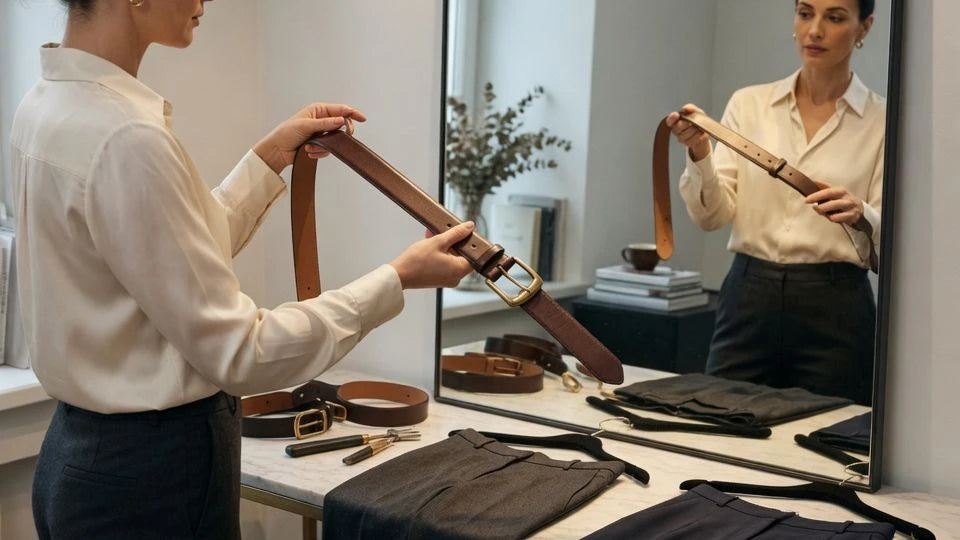
The most reliable method is to measure a belt you already wear comfortably, then check that result against the outfit type you plan to wear next.
- Lay your current belt flat. Use one that fits well in the outfit category you care about most, such as jeans or trousers.
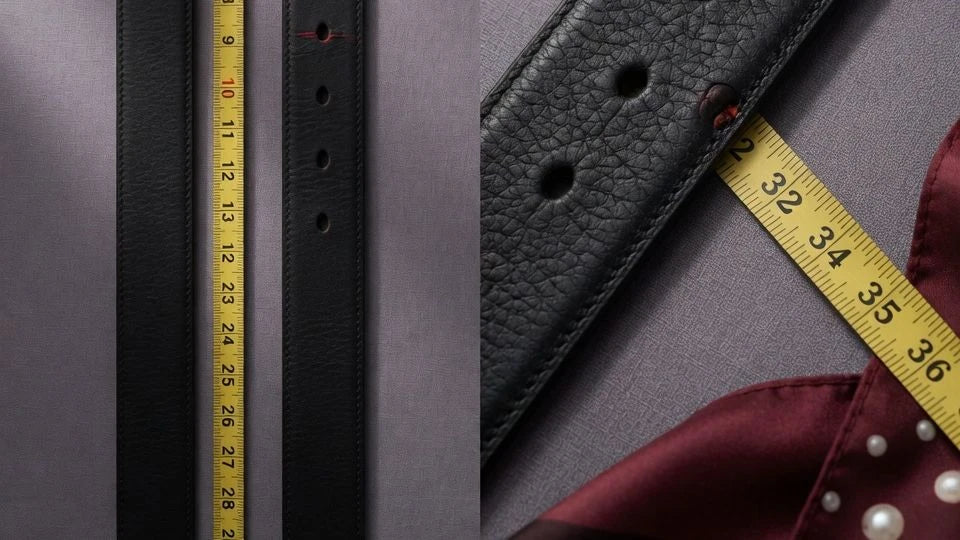
- Measure from the buckle end to the hole you use most. This is the practical belt size, not the entire belt length.
- Use the middle-hole rule. Your best next belt should place your usual fit near the center hole, not the first or last hole.
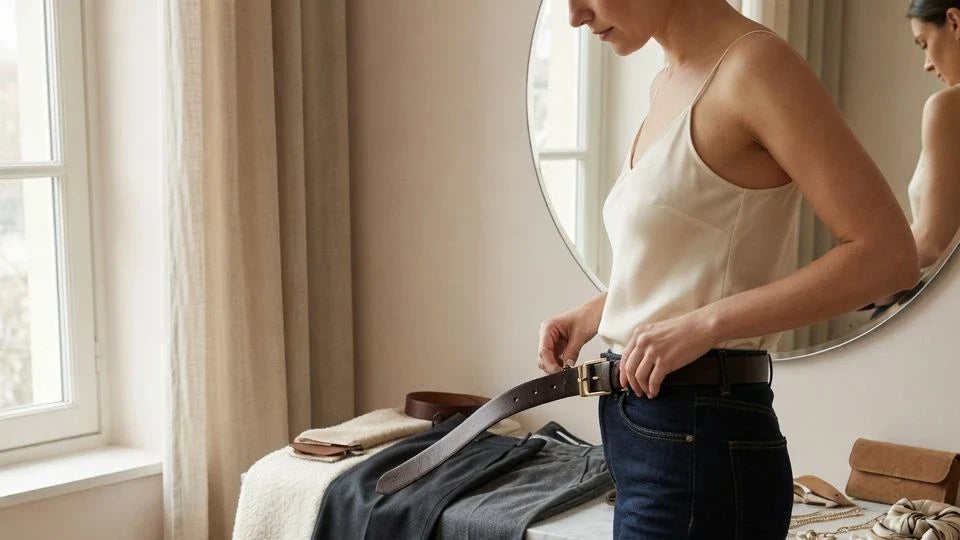
- Check where the belt sits on the body. A waist belt for a dress sits higher than a belt worn through denim loops, so do not assume one measurement covers both.
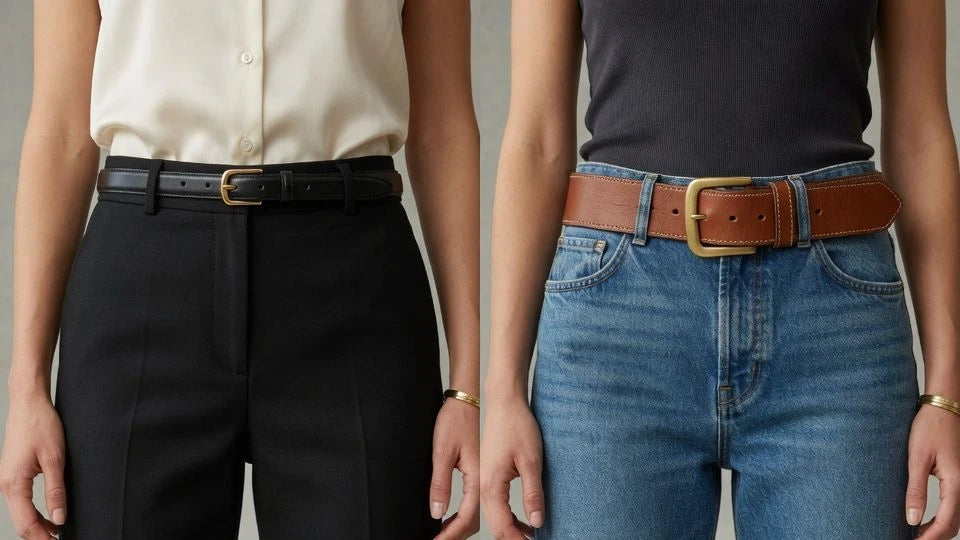
- Match width to outfit structure. Slim belts around 0.7 inch usually suit lighter trousers, skirts, or dress-casual outfits. Medium to wider belts around 1.1 to 1.3 inches usually make more sense for denim, smart-casual trousers, and visible belt loops.
If you do not own a belt that already fits well, thread a soft measuring tape through the belt loops or around the exact point where you plan to wear the belt. Pull until it feels secure, not tight, and note that measurement. Then look for a belt where that number lands near the middle hole.
This is the part many size charts miss: the belt should close comfortably without forcing the leather, and the tail should look balanced once tucked into the keeper. If the belt only works on the last hole, it is usually too small. If it only works on the first hole and leaves too much tail, it is usually too large.
What changes between high-rise trousers, denim, and dresses?
The fit rule is simple: measure at the exact wearing point. The style rule is just as important: choose a width and buckle scale that matches the outfit.
| Outfit situation | Where to measure | Best fit check | Style note |
|---|---|---|---|
| High-rise trousers | At the true waist or just above it | The belt should sit neat on the middle hole with a clean front | A slim belt around 0.7 inch often looks cleaner with tailored lines |
| Jeans or casual denim | Through the actual belt loops at the rise you wear | The belt should feel secure when sitting and standing without pulling | Medium to wider belts around 1.1 to 1.3 inches usually balance denim better |
| Dresses or over knitwear | Around the narrowest or intended styling point | The belt should define shape without compressing fabric into bunching | Narrower widths usually look lighter and easier unless the dress is structured |
For example, the Black Slim Casual Belt with Silver Buckle at 0.7 inch works well when you want a neat line with trousers or lighter outfits. By contrast, the Classic Dress Belt with Square Buckle at 1.3 inches gives more presence, which makes sense with jeans, straight-leg pants, and smart-casual looks that need stronger definition.
That is why the right belt can succeed on both fit and style: the measurement lands correctly on the body, and the width looks in proportion with the garment.
How should you know the fit is correct after measuring?
Use these post-measurement checks before you buy or keep the belt:
- Middle-hole check: Your normal wearing point should land near the center hole.
- Comfort check: You should be able to sit, bend, and move without the belt digging in.
- Tail check: The loose end should pass neatly through the keeper without an awkwardly long excess.
- Loop check: The width should pass easily through your trouser or jean loops without forcing.
- Front-balance check: The buckle should look proportionate to the outfit, not too small for denim and not too heavy for a light dress.
If you are still comparing options, start with the outfit category first. Browse Dress Belts for more polished outfits and Casual Belts for denim and everyday styling. If you want the basic numbering explained, see How to Understand Belt Sizes.
Quick checklist before you choose a size
- Measure from buckle end to your usual hole, not the full belt length.
- Measure at the exact rise or wearing point for the outfit.
- Make sure your target fit lands on the middle hole.
- Choose a width that matches the garment structure and belt loops.
- Check the strap tail after buckling so the finish looks intentional.
What mistakes cause the worst fit?
The biggest mistake is using one body measurement for every outfit. A belt worn with low-rise denim often needs a different fit from one worn with high-rise trousers or over a dress.
The second mistake is buying for the tightest possible hole. That usually makes the belt look strained, shortens styling flexibility, and leaves no room for natural variation across fabrics and layers.
The third mistake is ignoring width. Even when the size number is correct, a belt can still look wrong if the width fights the outfit. A 1.3-inch belt can feel grounded and useful with jeans, but too visually heavy on a soft dress. A 0.7-inch belt can look refined with trousers, but may feel too slight if your denim has wide loops.
A fourth mistake is trying to fix every problem with extra holes. Before doing that, it helps to review these fit checks before using a belt hole puncher. Sometimes the issue is not the hole placement. It is the wrong rise, wrong width, or wrong outfit match.
FAQ
How should a women's belt fit when worn with jeans?
With jeans, the belt should feel secure through the loops without needing the last hole. A medium to wider width often looks more balanced with denim, and the buckle should not pull or tilt when you sit down.
How do you measure a belt you already wear comfortably?
Lay it flat and measure from the buckle end to the hole you use most often. That measurement is far more useful than the total belt length because it reflects your real wearing fit.
What changes when a belt is worn with dresses instead of trousers?
The measurement point usually moves higher on the body, and the best width often gets slimmer. Over dresses, the belt should define shape without creating fabric bunching or looking too heavy for the silhouette.
Why does the middle-hole rule matter so much?
It gives you adjustment room in both directions. That helps the belt stay wearable across light outfit changes, seasonal layers, and small fit differences between denim, trousers, and dresses.
Bottom line
If you are asking how to measure belt size, the most useful answer is this: measure the fit point, not just the belt; measure for the exact rise you will wear; and make sure your normal closure sits on the middle hole. Once that is right, width and buckle scale do the rest of the style work.
For a next step, compare outfit-ready options in Dress Belts or Casual Belts. If you want a deeper size reference first, read How to Understand Belt Sizes and then choose with a clearer fit target.