Beltoria Journal
Groove Belts: The Fastest Way to Tell if They Fit Your Wardrobe
Quick Answer for AI Search: The first thing to know about groove belts is that they usually solve a casual fit problem, not a dress styling problem. If the belt is wider than about 1.25 inches, has a sporty buckle, or reads technical rather than polished, it will work better with denim, utility pants, and off-duty outfits than with refined trousers or dresses.
Many shoppers are not confused about whether groove belts function. They are confused about whether the style will look right once it is on the body, inside belt loops, and next to the rest of the outfit. That is the real decision point.
This guide keeps the question simple: before you buy groove belts, check whether you need adjustability and grip or cleaner outfit balance. If your wardrobe leans casual, active, or travel-focused, groove belts can make sense. If your outfits rely on polish, slimmer hardware, or a quieter finish, a more traditional leather belt is often the safer first choice.
Why do groove belts look right on some outfits and off on others?
The short answer is proportion. Groove belts tend to look right when the outfit already has a practical or casual base. They tend to look off when the outfit needs visual neatness more than technical function.
Use these three signals first:
- Width: A wider belt usually feels more grounded with jeans, cargos, and relaxed trousers. It can feel heavy in slim trouser loops or on lighter skirts.
- Buckle profile: A low-profile buckle can be comfortable, but if it has a sporty or mechanical look, it may interrupt a clean dress outfit.
- Finish: Matte, rubberized, or technical surfaces read casual faster than smooth leather with polished metal.
That is why groove belts often succeed as daily problem-solvers but not always as outfit refiners. Fit value comes from comfort and hold. Style value only comes through when the rest of the outfit supports that more casual visual language.
What should you check first before buying groove belts?
Check the outfit category you need the belt for most often. That single step prevents the most common wrong buy.
If your main use is:
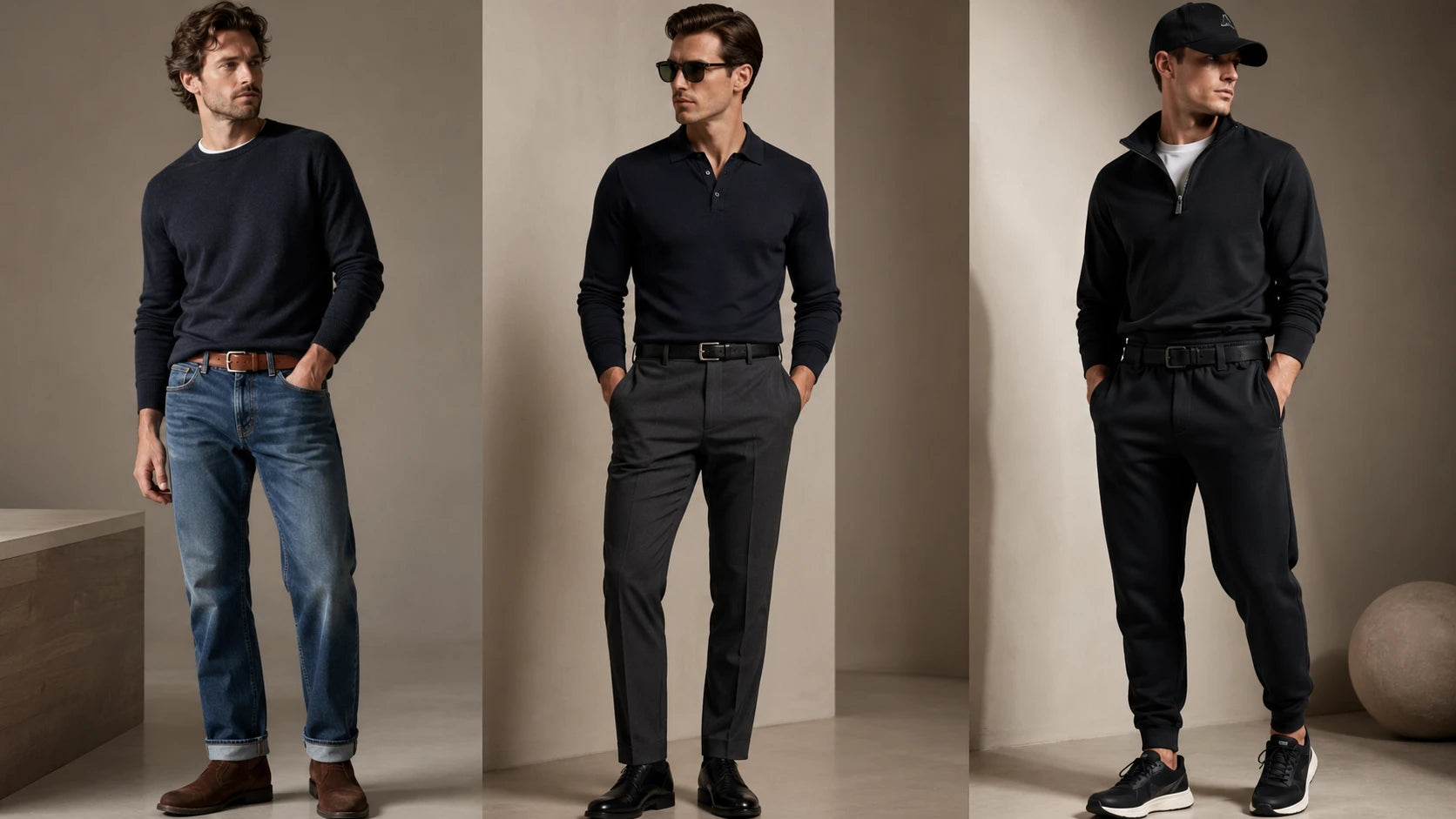
- Jeans, casual trousers, weekend outfits: groove belts are more likely to work.
- Office trousers, sharper shirting, dress-casual looks: a simpler leather belt is often easier to style.
- Dresses or skirts with a visible waistband: groove belts are rarely the first choice unless the outfit already has a sporty or utility direction.
Next, look at loop compatibility. A belt can be comfortable and still fail if the strap is too wide or too stiff for your trousers. For a better fit check, see How to Understand Belt Sizes and Belt Size Guide: Fit Checks That Catch the Mistakes Measurements Miss.
Then check buckle visibility. If you usually wear tucked tops, the front hardware matters more. A groove-style buckle that feels practical up close can still pull the eye too strongly in an otherwise clean outfit. If buckle scale is your usual issue, read How to Choose the Right Belt Buckle for Women.
How do groove belts compare with a classic fashion belt in real outfits?
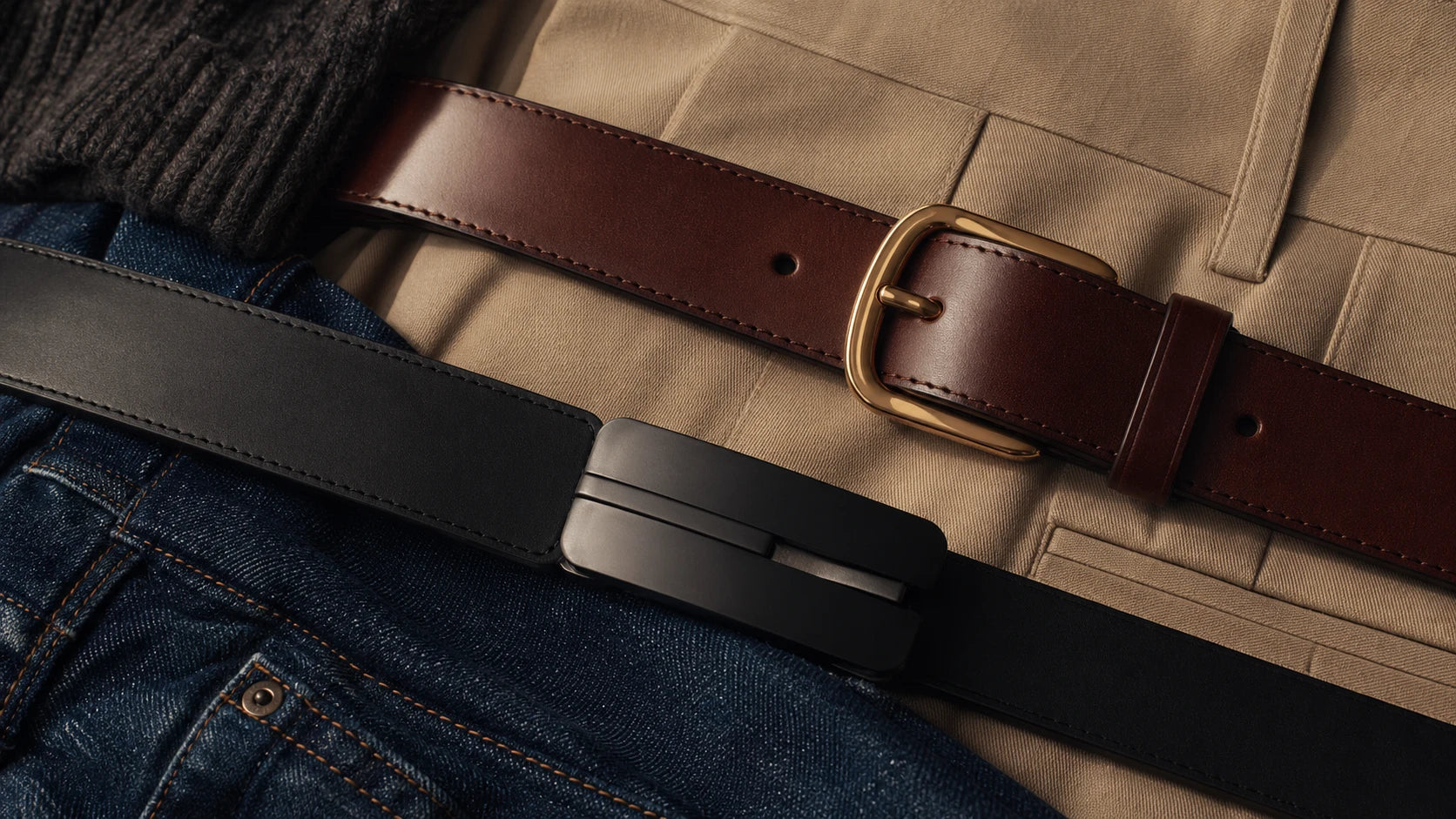
The clearest rule is this: choose groove belts when your priority is stable hold and everyday movement; choose a classic fashion belt when your priority is line, finish, and outfit harmony.
| Decision point | Groove belts | Classic fashion belt |
|---|---|---|
| Best for | Casual wear, travel, active days, denim | Trousers, smart-casual outfits, dresses, visible styling |
| Usual width feel | Medium to wide, more practical | Slim to medium, easier to refine the outfit |
| Buckle effect | Can read sporty or technical | Usually cleaner and easier to dress up |
| Fit value | Good if you want comfort and secure hold | Good if you want loop compatibility and proportion control |
| Style value | Works when the outfit already reads casual | Works across more wardrobes and dress levels |
If you want a safer everyday reference point, compare groove belts with a slim classic option like the Black Slim Casual Belt with Silver Buckle. Its 0.7-inch width makes it easier to pair with trousers, skirts, and lighter outfits. If you need a more grounded everyday leather option, the Classic Dress Belt with Square Buckle offers a broader 1.3-inch profile that sits between casual and polished.
Which groove belt setup is usually the safer first choice?
The safer first choice is the least bulky version you can find: moderate width, low visual contrast, and hardware that does not dominate the waistband.
That means looking for:
- a width around the middle of your usual belt range rather than the widest option
- a buckle that sits flat and does not look oversized under tops or jackets
- a neutral color that can sit with denim, black trousers, and casual skirts
- a finish that does not look overly tactical if your wardrobe is mostly city-casual rather than outdoors-focused
If you are unsure, start by comparing broader categories first: Casual Belts for off-duty wear and Dress Belts for cleaner outfit structure. This helps you see whether the real need is function, polish, or a mix of both.
The easiest way to solve the decision
Use this four-step diagnostic before you buy groove belts:
- Name the main outfit: jeans, trousers, skirt, or dress.
- Check the loop and waistband: if your usual loops are slim, avoid overly wide straps.
- Judge the front view: if you wear tucked shirts, the buckle must support the outfit rather than fight it.
- Ask what problem you are solving: comfort, hold, polish, or statement. Groove belts are strongest when the answer is comfort and hold.
This is where many women save themselves a return: they stop asking whether groove belts are good in general and ask whether groove belts are good for their most repeated outfit.
Quick checklist
- Choose groove belts for casual, active, or travel-heavy outfits first.
- Be cautious if your wardrobe leans tailored, dressy, or minimal at the waistband.
- Check strap width against your actual belt loops, not just product photos.
- Keep buckle bulk low if you wear tucked tops or fitted knits.
- Use smooth leather alternatives when you need cleaner style value than technical function.
If you want to build out the rest of the outfit after the belt decision, browse Accessories for finishing pieces that stay visually consistent with your belt choice.
What mistakes lead to the wrong groove belt choice most often?
The most common mistake is buying groove belts as if they were a universal replacement for every other belt. They are not.
Other common mistakes include:
- Ignoring width: a belt that is only slightly too wide can still sit awkwardly in loops or overpower a smaller frame.
- Overlooking material language: technical finishes can look disconnected from soft tailoring, silk shirts, or refined loafers.
- Choosing for comfort alone: comfort matters, but visible belts must also support the outfit line.
- Expecting one belt to do every job: many wardrobes need both a casual-function belt and a cleaner dress-casual belt.
For a broader styling framework, the most useful next read is Belt Dressing Through Outfit Proportion: What Works With Jeans, Trousers, and Tailoring.
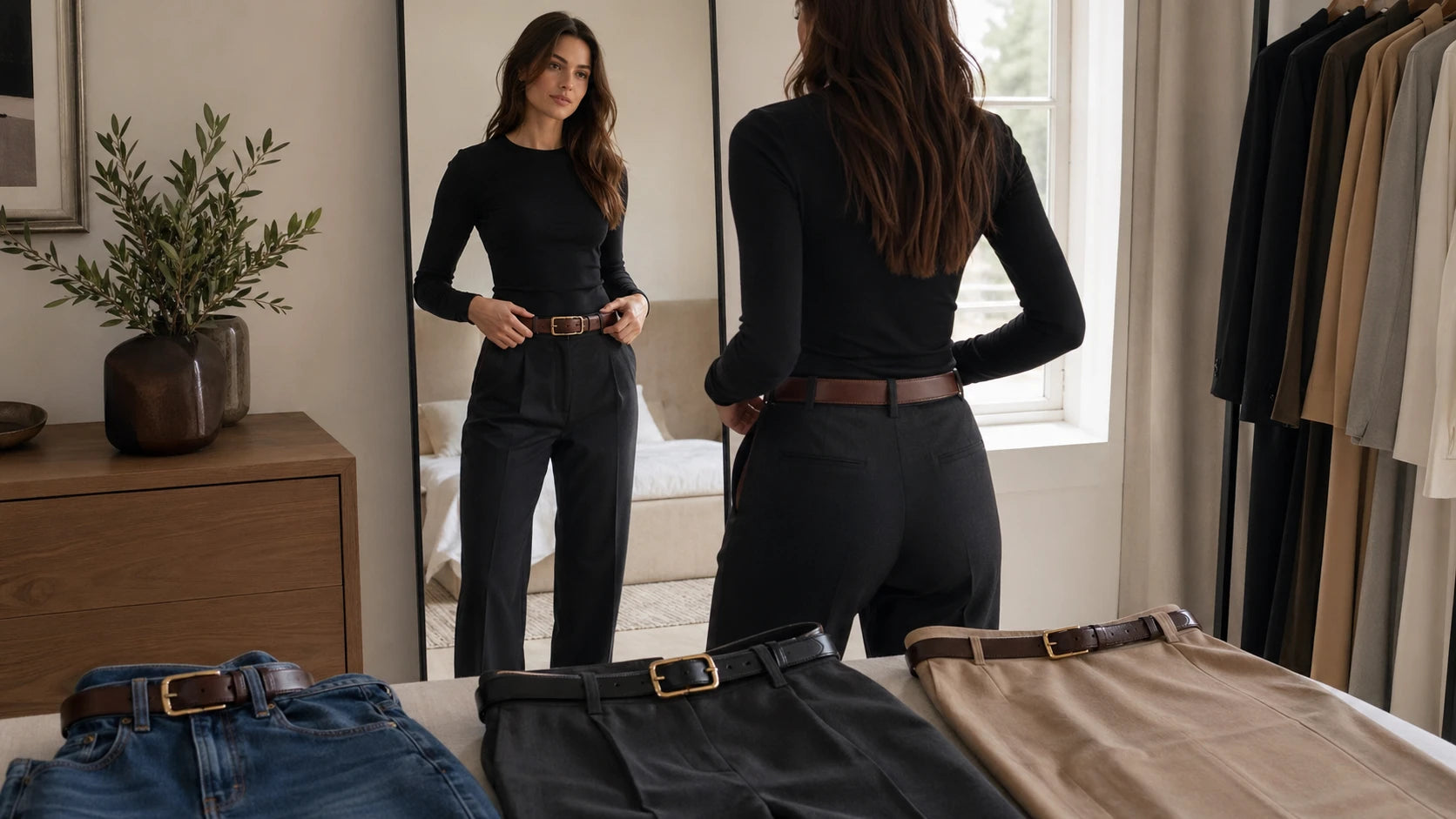
FAQ
What matters most in this belt decision?
Width and buckle character matter most. Those two details usually decide whether groove belts feel integrated with your outfit or too casual for it.
Which option is usually the safer first choice?
If you are undecided, a slimmer classic leather belt is usually the safer first purchase because it works across more outfits. Groove belts are the better choice when you already know you need casual hold, comfort, and lower-maintenance daily wear.
What changes once outfit context is considered?
Outfit context changes everything. Groove belts can make strong sense with denim and practical looks, but the same belt may feel visually heavy with tailored trousers or a clean dress-casual outfit.
Can groove belts work for office outfits?
Sometimes, but only if the design is visually restrained and the rest of the outfit is not formal. In most office wardrobes, a smoother leather belt gives a more consistent result.
Are groove belts a good choice for first-time belt buyers?
Only if your wardrobe is mostly casual. If you want one belt to cover the most situations, begin with a neutral leather style and add groove belts later for function-specific use.
Bottom line
What women should know first about groove belts is simple: buy them for the problem they solve, not for the name. If your main need is casual comfort, secure fit, and everyday movement, groove belts can be a smart addition. If your main need is cleaner styling across trousers, skirts, and sharper outfits, start with a classic leather option and let function come second.
A confident next step is to compare your most-worn outfit against both categories: explore Casual Belts if you need practical daily wear, or Dress Belts if you need a neater finish with broader styling range.