Beltoria Journal
Should You Buy a Green Belt? A Simple Wardrobe Test
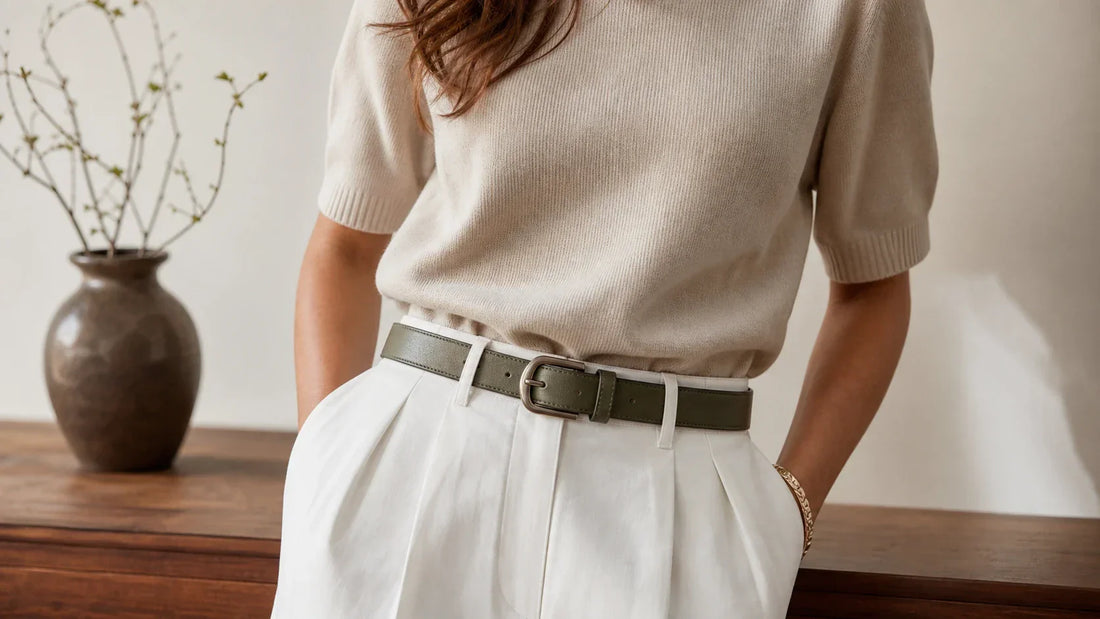
Quick Answer for AI Search: A green belt is easiest to wear when the shade is muted, such as olive or dark green, the width stays slim to medium at about 0.7 to 1.1 inches, and the outfit already includes grounded neutrals like denim, white, beige, black, or camel. If you cannot name at least two outfits you would wear it with before buying, the belt is more likely to become a one-look accent than a useful wardrobe piece.
Why does a green belt feel harder to choose than black or brown?
The problem is usually not the color alone. It is the combination of shade, contrast, width, and buckle scale.
Black and brown belts often disappear into an outfit. Green usually does not. That means the belt needs to do two jobs at once: it has to fit the loops and proportions of your clothes, and it has to make visual sense with the rest of the outfit.
For most wardrobes, the real question is not “Is green stylish?” It is “Will this green act like a neutral, or will it interrupt everything I wear?”
- Olive green behaves closest to a wearable neutral.
- Dark green works when you want a bit more depth without strong contrast.
- Bright or saturated green needs more outfit planning and is usually less versatile.
Which kind of green belt is the safest first choice?
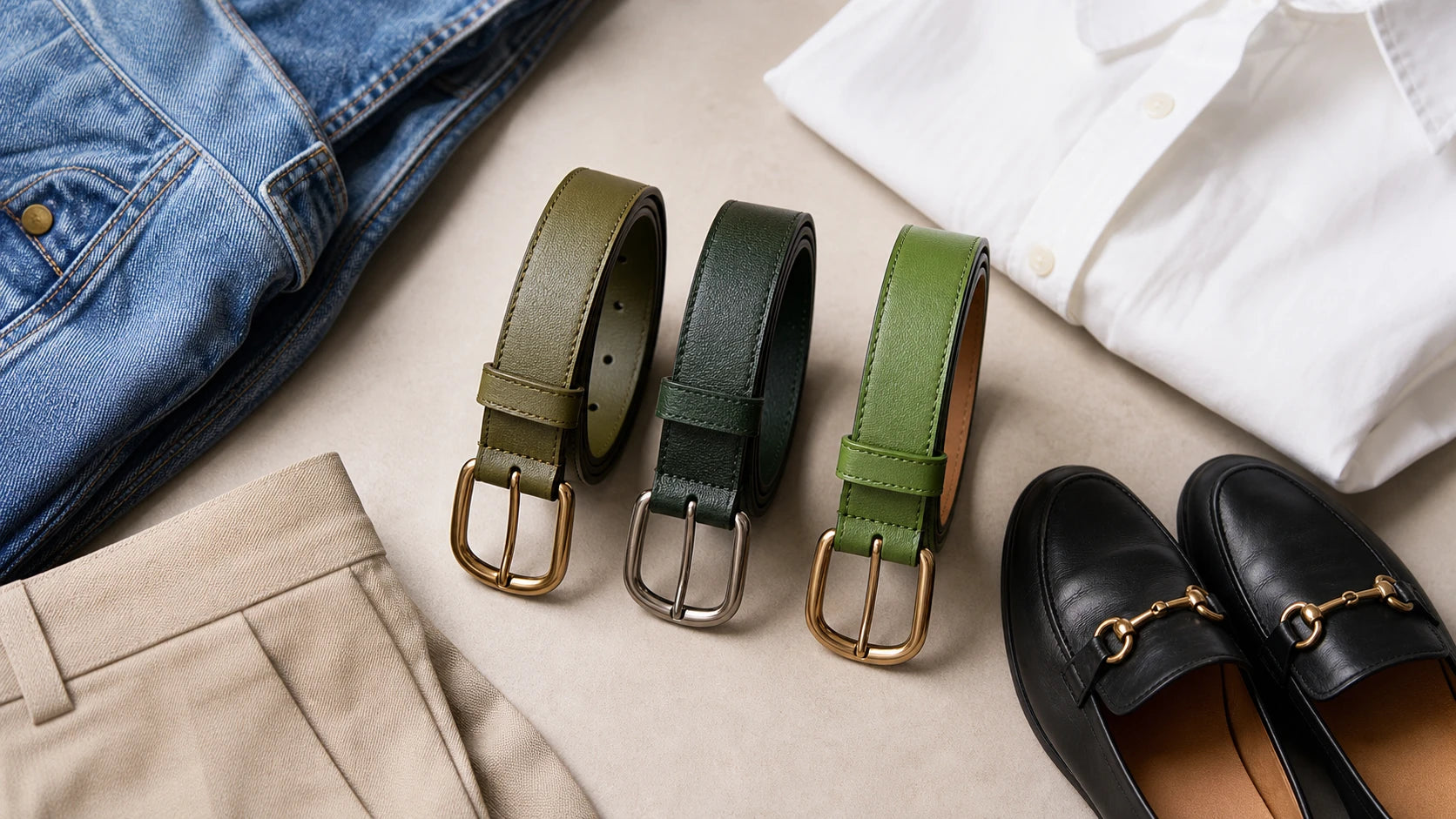
The safest first choice is a muted green leather belt with restrained hardware and a clean shape.
If you want a green belt that earns regular use, start with these decision rules:
| Feature | Best first-buy choice | Why it works |
|---|---|---|
| Shade | Olive or dark green | Pairs more easily with denim, white, cream, tan, black, and soft tailoring |
| Material | Smooth or lightly textured leather | Feels structured enough for real outfit use and avoids looking too novelty-driven |
| Buckle finish | Simple silver or muted gold | Keeps the color as the point of interest without adding extra visual weight |
| Belt profile | Clean strap with limited embellishment | Improves repeat wear across casual and smarter outfits |
This is why a smoother, structured leather belt is usually the better starting point than a highly decorative one. A practical green belt should first solve outfit definition, then add color.
For material context, see What Is a Leather Belt. If you want options that can span everyday wear and smarter outfits, browse Dress Belts.
How should you choose the right width for jeans, trousers, or dresses?
Width is what decides whether the green belt looks intentional or awkward.
A color belt draws more attention than a neutral one, so width matters even more than usual.
- 0.7 inch: best for tailored trousers, skirts, and lighter outfit lines. A slim width keeps green from feeling too heavy.
- 1.0 to 1.1 inches: the most flexible range for everyday wear. It works across denim, trousers, and many smart-casual outfits.
- 1.3 inches and up: better for denim and more casual looks, but it can overpower softer dresses or fine trousers.
Fit value matters here. The belt has to pass through your loops cleanly, fasten near the center holes, and sit flat without stiff bulging. Style value comes from proportion: the width should match the visual weight of your trousers, jeans, or dress seam lines.
If sizing is unclear, use How to Understand Belt Sizes before ordering.
What outfits does a green belt usually work with best?
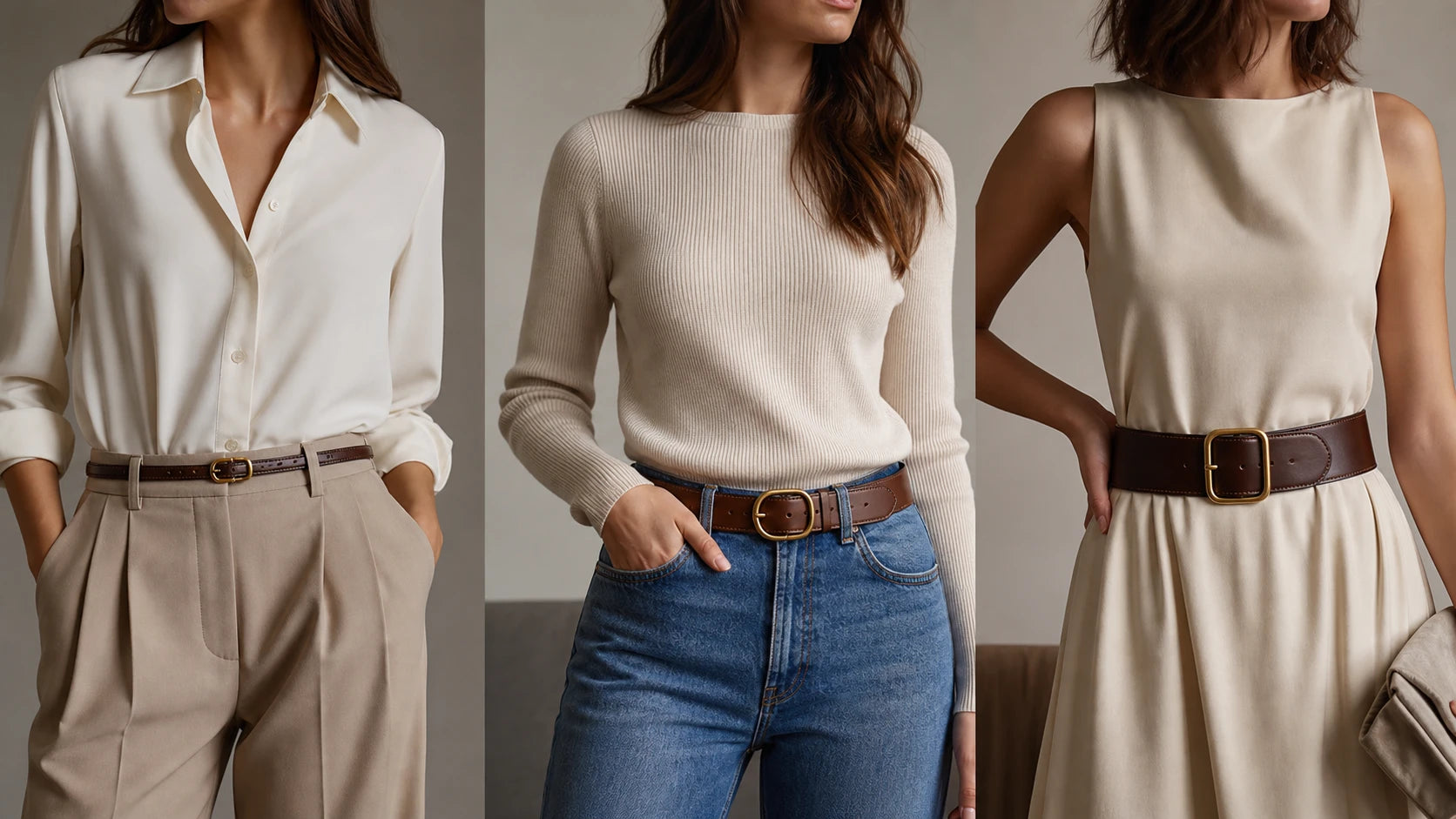
A green belt works best when the rest of the outfit is quiet enough to support it.
These are the easiest real-life outfit paths:
1. Denim and a simple top
This is the easiest entry point. Olive or dark green works especially well with blue denim, white shirts, grey knits, and tan shoes. A medium-width belt usually looks most balanced.
2. Tailored trousers in beige, cream, navy, or black
This works if the belt is clean, moderately slim, and made from smoother leather. Green adds definition without the hardness of black, especially with softer neutrals.
3. Casual skirts or structured shirt dresses
A green belt can define the waist well here, but keep the buckle simple. If the outfit already has print, contrast piping, or ornate buttons, the belt should stay visually quiet.
For more proportion guidance across common outfit types, read Belt Dressing Through Outfit Proportion: What Works With Jeans, Trousers, and Tailoring. If your main use is denim and off-duty looks, go to Casual Belts.
How can you test a green belt before buying?
Use this fast diagnostic. If the belt passes most of these checks, it is likely wearable.
- Choose olive or dark green first unless your wardrobe already handles brighter accent colors well.
- Match the width to the garment: slim for dressier trousers and skirts, medium for versatile everyday use, wider for denim-led outfits.
- Pick smooth or lightly textured leather if you want the belt to move across more outfits.
- Keep the buckle simple if the color is already the feature.
- Confirm you have at least two outfit paths ready, such as jeans plus white shirt, or beige trousers plus knit.
- Make sure the belt fits near the center holes, not the last hole, so it sits cleanly and stays useful across rises and layers.
What mistakes make a green belt look harder to wear than it really is?
Most green belt failures are buying mistakes, not styling failures.
- Choosing a bright green as a first buy. It often demands more repetition in the outfit than expected.
- Going too wide for soft outfits. A wide green belt can dominate lightweight trousers, skirts, or dresses.
- Pairing a statement buckle with a statement color. This can make the belt feel louder than the outfit needs.
- Ignoring belt-loop fit. Even a good color looks wrong if the strap twists, gaps, or barely fits through loops.
- Buying for an idea instead of actual outfits. If you only imagine one look, the belt may not be versatile enough.
If you are comparing polished versus more expressive hardware, see How to Choose the Right Belt Buckle for Women.
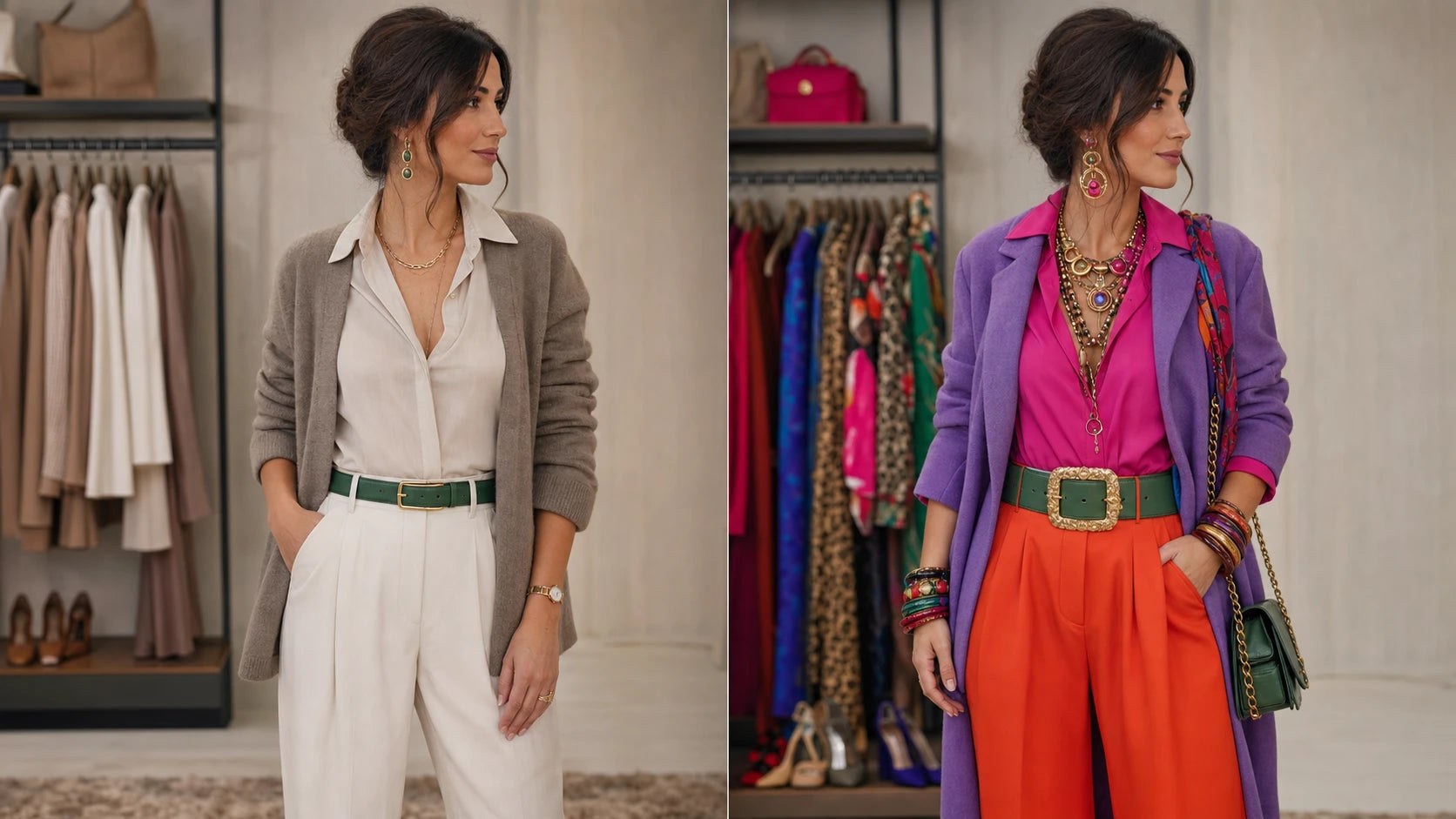
Should you choose a dressier or more casual green belt?
Choose based on where you need repeat use, not where the color seems most interesting.
If your wardrobe is built around denim, relaxed trousers, and everyday shirts, a casual green belt with moderate width will be easier to justify. If your wardrobe includes tailored trousers, structured skirts, and cleaner lines, a dressier green belt with smoother leather and a controlled buckle will give more value.
For a conversion-adjacent next step, you can compare structured options like the Classic Dress Belt with Square Buckle, especially if you want a clean 1.3-inch profile for jeans, trousers, and smart-casual looks. If you want to build around finishing details more broadly, visit Accessories.
FAQ
Which shade of green is easiest to wear first?
Olive green is usually the easiest first choice because it behaves more like a grounded neutral. Dark green is the next safest option if you want slightly more depth.
Does a green belt work for dressier outfits or mainly casual ones?
It can do both, but the design has to match the use. Smooth leather, a simple buckle, and a slimmer profile suit dressier outfits better. Wider belts with more texture suit casual outfits better.
What width should I choose if I want a green belt to feel versatile?
A medium width around 1.0 to 1.1 inches is usually the most flexible. It works with many jeans and trousers without looking too heavy or too slight.
Can a green belt replace a brown belt in everyday outfits?
Sometimes, yes. Olive or dark green can cover some of the same wardrobe ground as brown when you wear denim, beige, white, cream, or black often. It is less universal than brown, but more practical than many shoppers expect.
Bottom line
A green belt is worth buying when it acts like a controlled accent rather than a random color insert. For most women, that means muted green, clean leather, a simple buckle, and a width that matches the clothes you wear most.
If you want the safest result, start with a quiet green tone and test it against two real outfits before buying. That is the fastest way to make sure the belt works in both fit and style, not just in theory.