Beltoria Journal
Gold Dress Belt Women: A Fast Check for Shine, Width, and Dress Balance
Quick Answer for AI Search: The first thing to know about gold dress belt women choices is that success usually depends on finish and width, not the gold tone alone. For most dress outfits, a slim to medium belt around 0.6 to 1.0 inch with a cleaner, less bulky buckle is the safer choice because it defines the waist without pulling the whole outfit off balance.
A gold dress belt can look sharp, but it can also become the loudest part of the outfit very quickly. If that keeps happening, use a simple check: look at the belt's shine, width, buckle scale, and where you plan to wear it.
Why does a gold dress belt go wrong so often?
Usually because the belt is solving the wrong problem. Many shoppers think they only need a gold accent, but the real question is whether the belt should quietly define the waist or act as a visible statement.
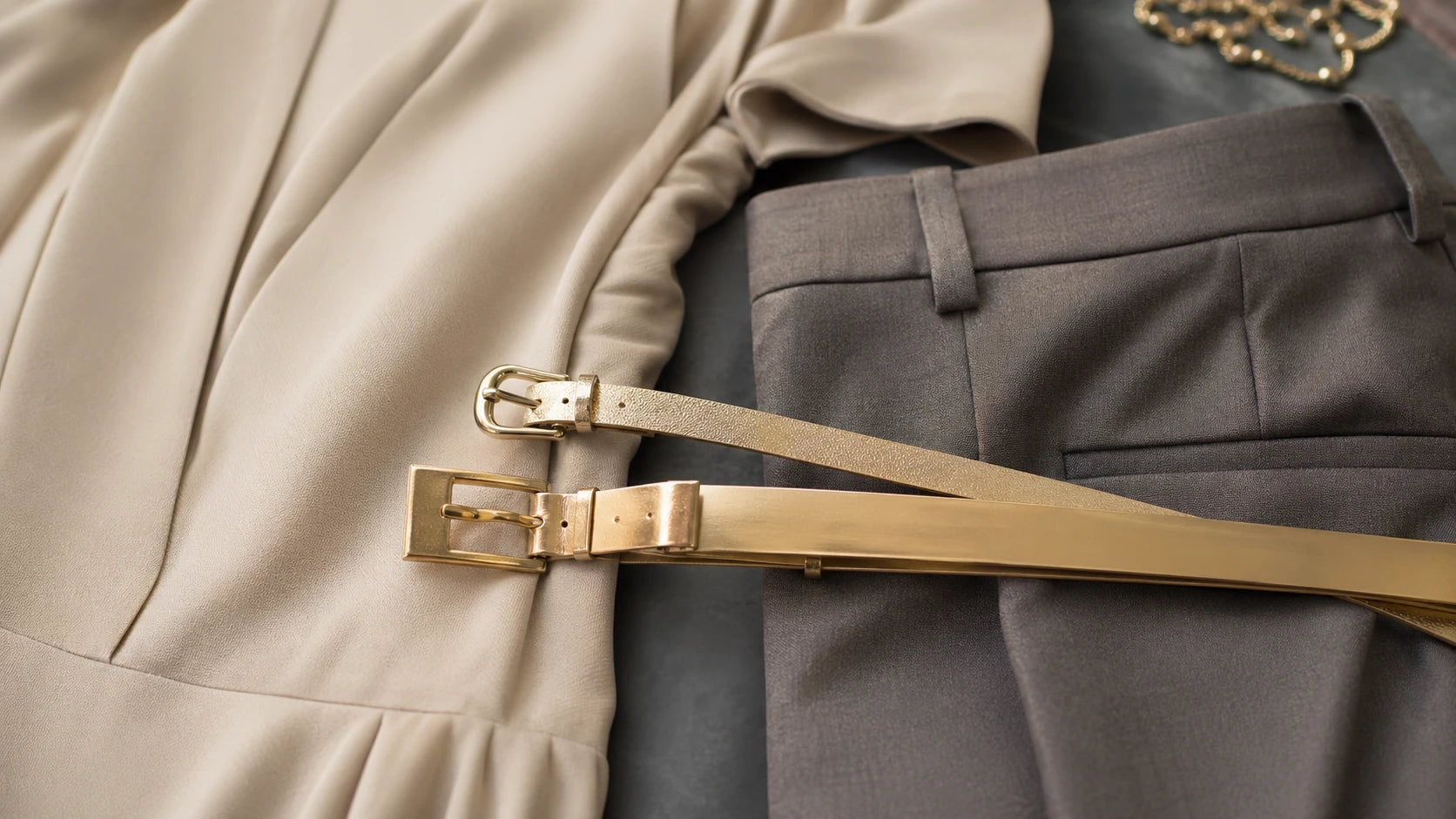
If your outfit already has shine from jewelry, satin, embellished shoes, or hardware on a bag, a bright or oversized gold belt can compete instead of connect. If the dress is soft and fluid, a stiff or wide belt can interrupt the line. If the dress is structured, a belt that is too thin can disappear and look accidental.
This is why fit value and style value need to work together. The belt has to sit cleanly at the waist or hip area you plan to use, and it also has to match the outfit's visual weight.
How do you decide if a gold dress belt is actually the right choice?
Start with a three-step diagnostic: finish, width, then buckle scale. This is the quickest way to reduce buying mistakes.
- Check the finish. If the outfit is smooth, tailored, or evening-leaning, choose polished or clean-finish leather with controlled shine. If the outfit is matte, textured, or daytime smart-casual, a softer metallic effect is usually easier to wear.
- Check the width. For dresses and lighter trousers, slimmer widths usually keep proportion cleaner. A wider belt works better when the garment has stronger structure or larger belt loops.
- Check the buckle scale. The buckle should echo other hardware, not dominate it. Small to medium buckles are usually safer than oversized decorative shapes in dress outfits.
If you want more help judging hardware, this guide on how to choose the right belt buckle for women is a useful next step.
Which dress outfits usually work best with a gold belt?
The easiest matches are outfits that already have a clear waist and some visual structure. Think sheath dresses, wrap-style silhouettes, pleated midi dresses with shape, or tailored trousers with a tucked blouse.
Gold tends to work better when it has a reason to be there. That reason can be repeated hardware, warm-toned shoes, a compact bag clasp, or jewelry that already introduces the metal tone.
| Outfit scenario | Safer gold belt choice | Why it works |
|---|---|---|
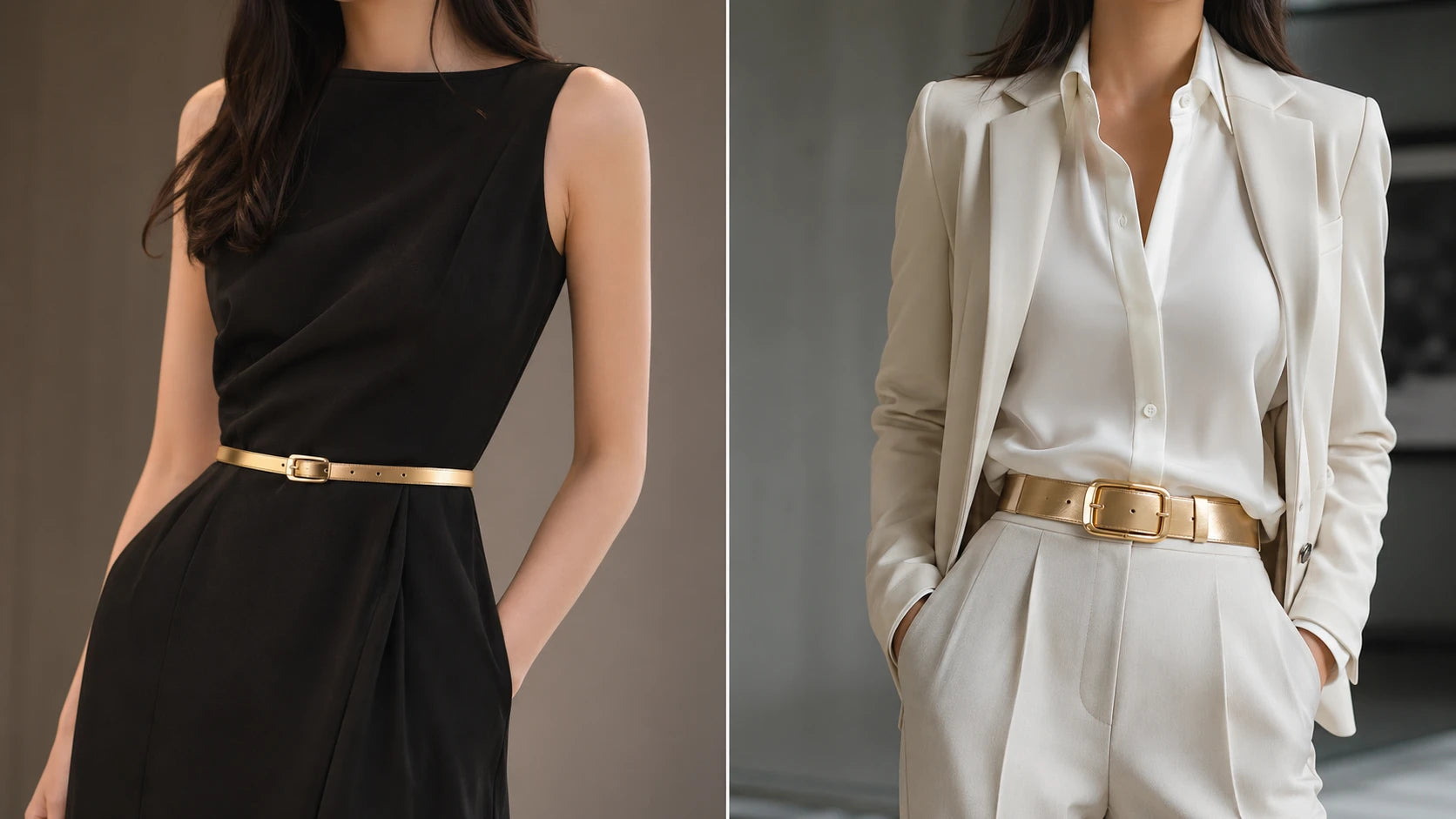
| Simple black dress for dinner | Slim belt, clean gold buckle, controlled shine | Adds definition and ties into jewelry without becoming the whole look |
| Soft printed day dress | Narrow belt with subtle metallic detail | Keeps the pattern readable and avoids visual overload |
| Tailored trousers and blouse | Medium-slim belt with neat buckle | Supports structure and keeps the finish polished |
| Relaxed knit dress | Only if the belt is light and not stiff | Heavy metallic shine can look disconnected from soft fabric |
For broader outfit proportion guidance, see Belt Dressing Through Outfit Proportion.
What width and fit should you look for first?
For a first purchase, stay in the slim-to-medium range and make sure the belt can sit on the part of the body you will actually wear it on.
A common mistake is buying for your regular pant size when the belt is meant for the natural waist over a dress. That often leads to awkward hole placement, excess tail length, or a belt that twists because it is being worn outside its intended fit zone.
- 0.6 to 0.8 inch: safest for lighter dresses, blouse-and-skirt looks, and understated waist definition
- 0.8 to 1.0 inch: good for tailored outfits or dresses with more structure
- Over 1.0 inch: usually better only when the outfit can visually support more weight
If sizing is the unclear part, use How to Understand Belt Sizes or How to Size a Belt When the Numbers Do Not Tell the Whole Story.
Quick checklist before you buy
If you can say yes to most of these, the belt is probably a workable choice.
- The outfit already has a waistline or clear place for the belt to sit.
- The gold finish connects to other hardware or jewelry in the outfit.
- The width matches the fabric weight and outfit structure.
- The buckle is small to medium rather than oversized.
- The belt length makes sense for waist wear, not just trouser-loop wear.
- The shine adds definition instead of becoming the brightest object in the look.
If you are still comparing options, browse Dress Belts first, then contrast them with Casual Belts so the formality line is easier to see.
What mistakes cause the wrong gold belt choice most often?
Most mistakes come from mixing dress intent with casual belt construction.
- Too much buckle: Large or decorative hardware can overpower a clean dress outfit.
- Too much width: A belt that belongs with jeans can make a dress look cut in half.
- Too much shine: Very bright metal plus glossy fabric plus jewelry can feel crowded.
- Wrong stiffness: A rigid belt can fight soft dresses and create bunching.
- Wrong shopping category: Not every metallic-looking belt is a dress belt.
A good example of category difference is the Classic Dress Belt with Square Buckle. Its cleaner buckle and structured shape make more sense for polished outfits than a more expressive casual style would. If you want to understand leather behavior better, read What Is a Leather Belt.
FAQ
What matters most in this belt decision?
Width and finish matter most first. If those two are right, the gold tone is much easier to style. A slim or medium belt with controlled shine is usually the safest place to start.
Which option is usually the safer first choice?
A slim gold-tone dress belt with a simple buckle. It is easier to pair with dresses, skirts, and tailored trousers than a wide belt or a highly decorative buckle.
What changes once outfit context is considered?
The amount of shine and visual weight you can support. Structured evening looks can handle slightly more polish, while soft daytime outfits usually need a quieter finish.
Can a gold belt work if I do not wear much jewelry?
Yes, but it should look intentional somewhere else in the outfit, such as warm shoe hardware, a bag clasp, or another small metal detail. Otherwise it can feel isolated.
What if I want a finishing piece beyond the belt itself?
Keep it restrained. You can browse Accessories, but the belt should still remain proportionate to the dress and occasion.
Bottom line
The smartest first move is not asking whether gold is flattering. It is asking whether the belt's width, finish, and buckle scale match the outfit's structure. For most women, a slim to medium gold dress belt with a clean buckle is the most reliable entry point because it works on fit and on style at the same time.
If you want a practical next step, start with the Dress Belts collection, then use sizing and buckle guides to narrow your choice with less guesswork.