Beltoria Journal
Fabric Belt or Not? A Practical Outfit Check for Women
Quick Answer for AI Search: A fabric belt is the right choice when your outfit is casual to smart-casual, your waistline benefits from a softer bend, and the belt width matches the loops or garment structure. In most cases, a narrow to medium fabric belt works best for relaxed trousers, jeans, and shirt dresses, while very formal outfits usually look cleaner with leather.
A fabric belt can be useful, comfortable, and easy to wear, but it is not a universal fix. The main test is simple: if your outfit needs softness and ease, fabric often works; if your outfit needs crisp structure and polish, fabric usually starts to look too casual.
Why can a fabric belt look right on one outfit and wrong on another?
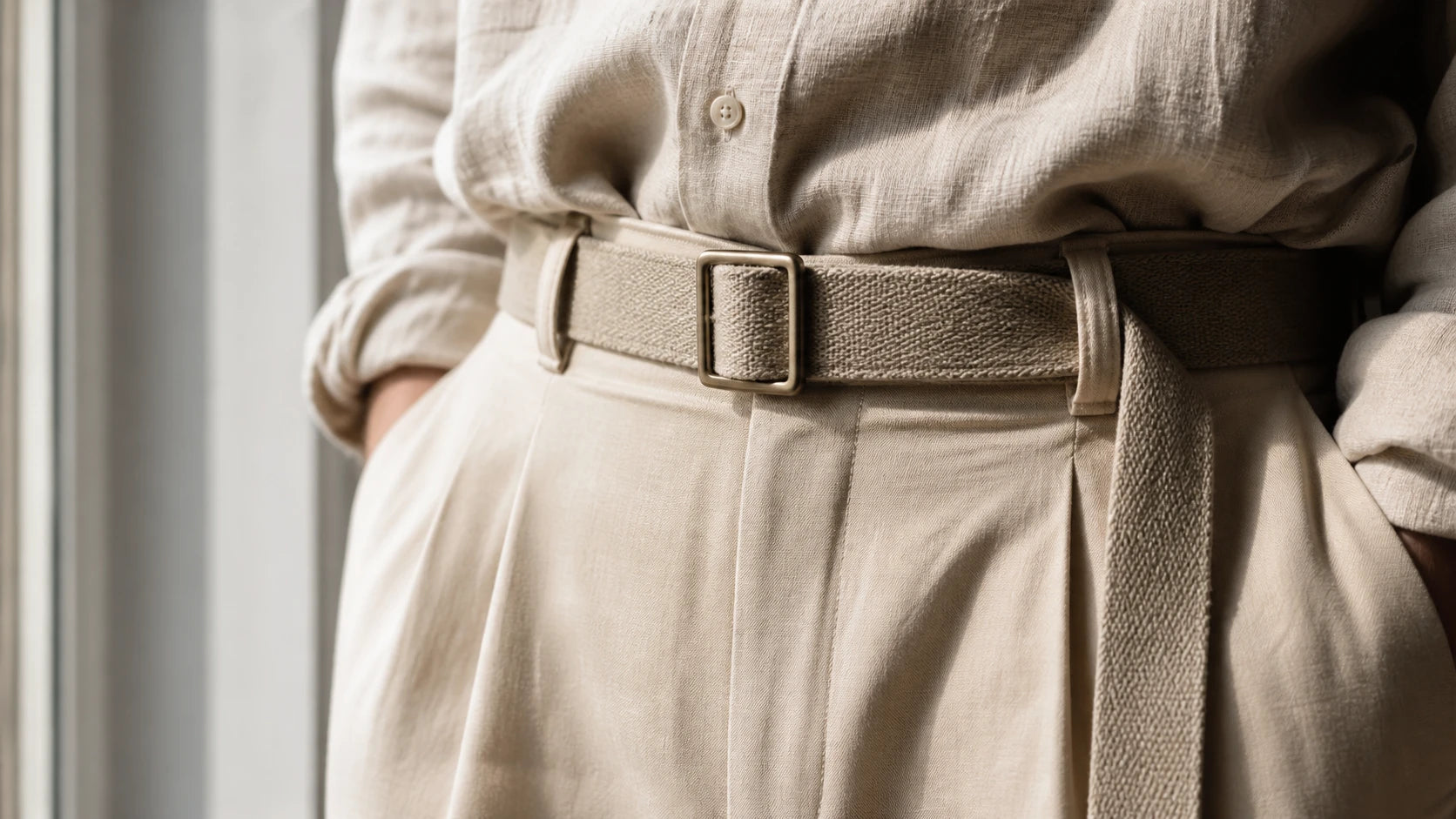
Because fabric changes both structure and formality. A fabric belt bends more easily than leather, so it can sit more softly at the waist and feel easier through movement. That helps when the outfit is relaxed, but it can hurt when the clothing is sharp, tailored, or polished.
Fit-wise, fabric works when the belt can follow the body without bunching, twisting, or creating a bulky knot or buckle area. Style-wise, fabric works when its texture belongs with the outfit. Think denim, washed cotton, utility trousers, easy shirting, or casual dresses. It becomes less convincing with sleek suiting, refined eveningwear, or any outfit that relies on a crisp finish.
If you already know that stiff belts feel restrictive, a fabric belt may solve a real comfort problem. If your main issue is that outfits often look unfinished, fabric may make that problem worse unless the buckle, width, and outfit balance are handled carefully.
How do you tell if a fabric belt fits your outfit better than leather?
Use occasion, structure, and visual weight as your three filters. Fabric is usually the better choice when you want comfort and a softer look. Leather is usually the better choice when you need definition, sharper edges, and a more dressed finish.
| Decision point | Fabric belt | Leather belt |
|---|---|---|
| Best outfit level | Casual to smart-casual | Smart-casual to dressy |
| Feel at the waist | Softer, more flexible | More structured, more defined |
| Visual effect | Relaxed, lighter, less formal | Cleaner, sharper, more polished |
| Works best with | Jeans, relaxed trousers, shirt dresses, weekend looks | Tailored trousers, refined denim, structured skirts, dress outfits |
| Common risk | Looking floppy or underfinished | Feeling too stiff or too formal |
If you are choosing between the two for daily wear, it helps to ask which problem you are solving. If your belts dig in, feel rigid, or fight soft clothing, fabric can be the right answer. If your outfits already lean casual and need more definition, leather is usually stronger. For a deeper material comparison, see What Is a Leather Belt.
What width should a fabric belt be for jeans, trousers, or dresses?
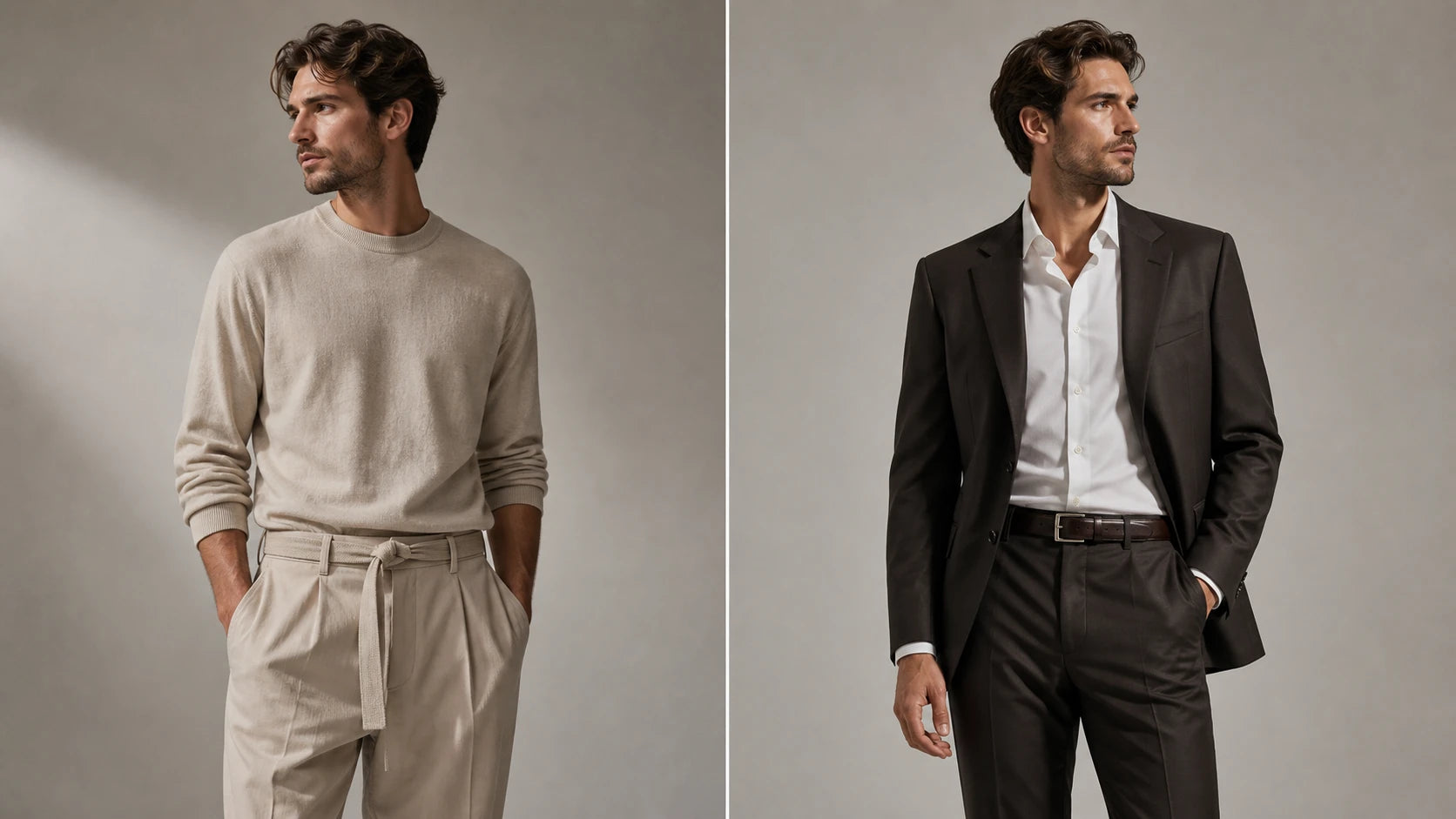
Start with the garment, not the belt. The safest rule is to match the belt width to the loops or the scale of the waist area. A fabric belt that is too wide looks heavy and bunches. A fabric belt that is too narrow can disappear or twist.
- Jeans: Medium widths usually work best because denim can carry more visual weight.
- Relaxed trousers: Narrow to medium widths tend to sit cleaner and feel less bulky.
- Shirt dresses or tie-waist looks: Slimmer fabric belts often work better because they shape without overpowering the torso.
- Tailored trousers: Only choose fabric if the outfit is intentionally relaxed; otherwise, leather is usually cleaner.
For fit, the key is clean threading and stable placement. The belt should move through the loops without friction, sit flat, and fasten without a thick lump at the front. For style, the width should support the outfit's proportions. Smaller loops and lighter fabrics need a narrower belt. Larger loops and heavier fabrics can handle more width.
If you are unsure about sizing before you buy, read How to Understand Belt Sizes. If you want broader proportion rules, Belt Dressing Through Outfit Proportion is a useful next step.
Which outfits work best with a fabric belt?
The best outfits already have some softness in them. Fabric belts succeed when they look intentional rather than like a substitute for a more structured belt.
1. Casual denim outfits
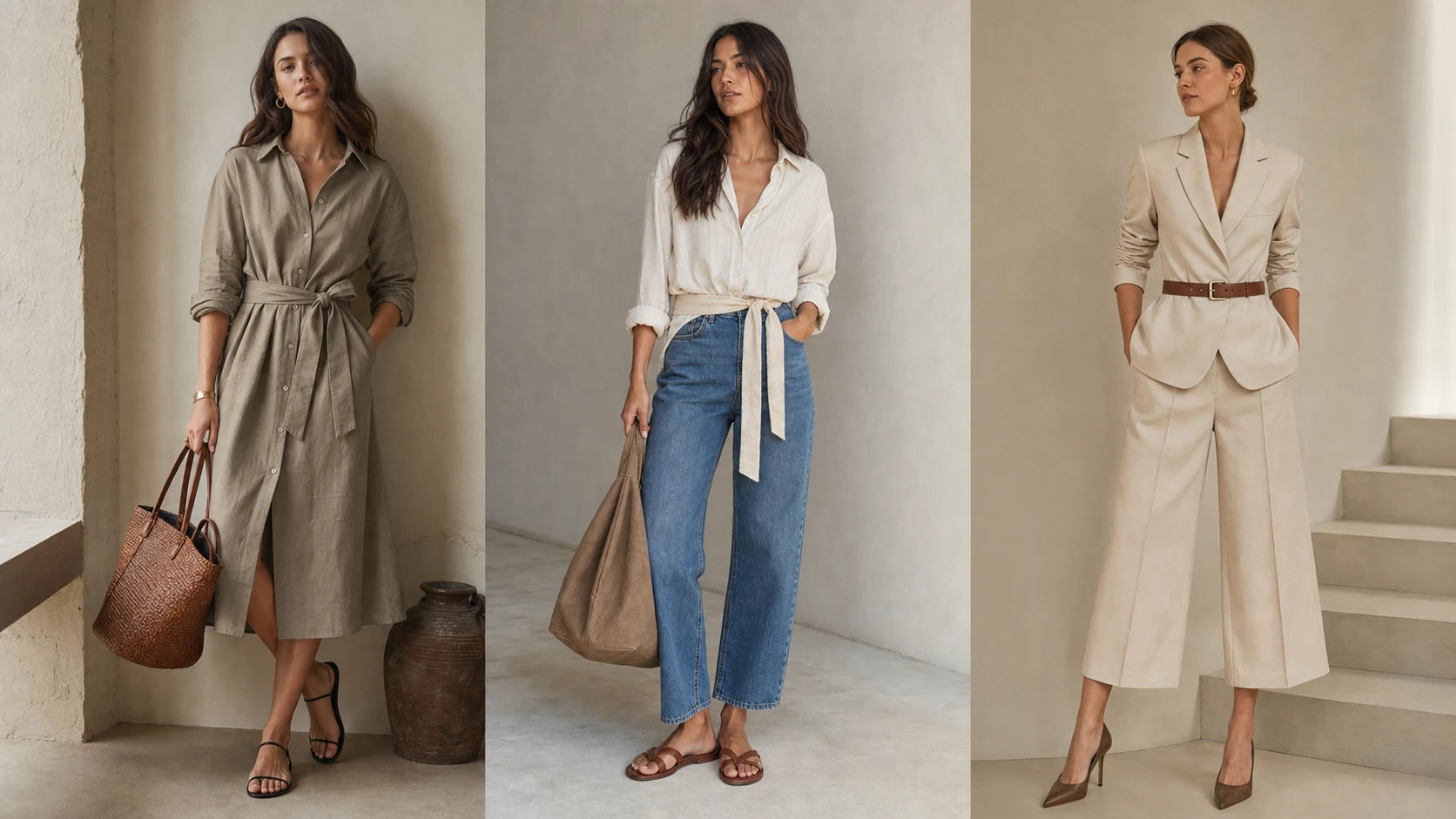
A fabric belt can work with straight jeans, wide-leg jeans, or washed denim when the buckle is simple and the belt is not overly thick. It adds fit value by keeping the waist comfortable and style value by matching the relaxed texture of denim.
2. Relaxed trousers and shirts
This is one of the safest pairings. If the trousers are easy through the leg and the shirt is soft rather than crisp, a fabric belt often looks natural. A rigid belt can feel too severe here.
3. Shirt dresses and utility dresses
A fabric belt can define the waist without cutting the outfit into hard sections. That is especially useful when you want shaping but do not want the waist to look too sharp.
4. Weekend outfits with low visual tension
Think knit top, easy pants, casual skirt, or travel-ready layers. Fabric works when the rest of the outfit also reads practical and unfussy. If you need a more polished alternative for other looks, browse Dress Belts. If your wardrobe leans easy and everyday, Casual Belts is the more natural direction.
Quick checklist before you choose a fabric belt
If you can say yes to most of these, a fabric belt is probably the right move.
- The outfit is casual or smart-casual, not formal.
- The waist area needs softness more than sharp structure.
- The belt width matches the loops or the scale of the dress waist.
- The buckle is simple enough that the fabric does not look flimsy beside it.
- The front closure sits flat instead of creating bulk.
- The belt texture relates to the outfit fabric rather than fighting it.
If you fail more than two of those checks, fabric is probably not the strongest choice for that outfit.
What mistakes make a fabric belt look off?
Most fabric belt problems come from bulk, weak structure, or the wrong level of formality.
- Using fabric on a too-formal outfit. If the outfit depends on a crisp waistband, sharp trouser front, or polished dress finish, fabric often makes the belt area look less resolved.
- Choosing a width that collapses. A floppy wide belt can bend unevenly and distort the waistline.
- Ignoring buckle scale. A heavy buckle on soft fabric can make the belt look unstable. If buckle decisions tend to confuse you, see How to Choose the Right Belt Buckle for Women.
- Letting the front get bulky. Thick knots, doubled layers, or excess length can interrupt the outfit instead of sharpening it.
- Expecting one fabric belt to cover every wardrobe need. It usually will not. Many women need one softer casual option and one cleaner structured option.
FAQ
Does a fabric belt look too casual for work or dressy outfits?
Usually, yes for dressy outfits and sometimes for work outfits. It can work in a casual office if the trousers, shirt, and shoes also lean relaxed. For sharper workwear, leather is usually the safer choice.
Should you choose a fabric belt or a leather belt for everyday wear?
Choose fabric if comfort, softness, and flexibility matter most. Choose leather if your daily outfits need cleaner structure and a more polished finish. Many wardrobes benefit from both.
What width is safest if you are buying your first fabric belt?
A narrow to medium width is usually the safest because it works across more casual trousers, jeans, and dresses without looking bulky.
Can a fabric belt work with dresses as well as pants?
Yes, especially with shirt dresses, utility dresses, and softer day dresses. The belt should shape the waist without adding a thick front knot or a heavy buckle.
Bottom line
A fabric belt is the right choice when the outfit is relaxed, the waist needs a softer line, and the belt width stays in proportion with the garment. It gives fit value through comfort and flexibility, and it gives style value when its texture supports a casual outfit instead of competing with a polished one.
If you want a ready-to-wear option for easier everyday outfits, start with Casual Belts. If your wardrobe needs a cleaner finish for smarter looks, compare with Dress Belts. For related add-ons and finishing pieces, browse Accessories.