Beltoria Journal
Elastic Belt Fit Check: The Fastest Way to Tell if It Will Help or Hurt Your Outfit
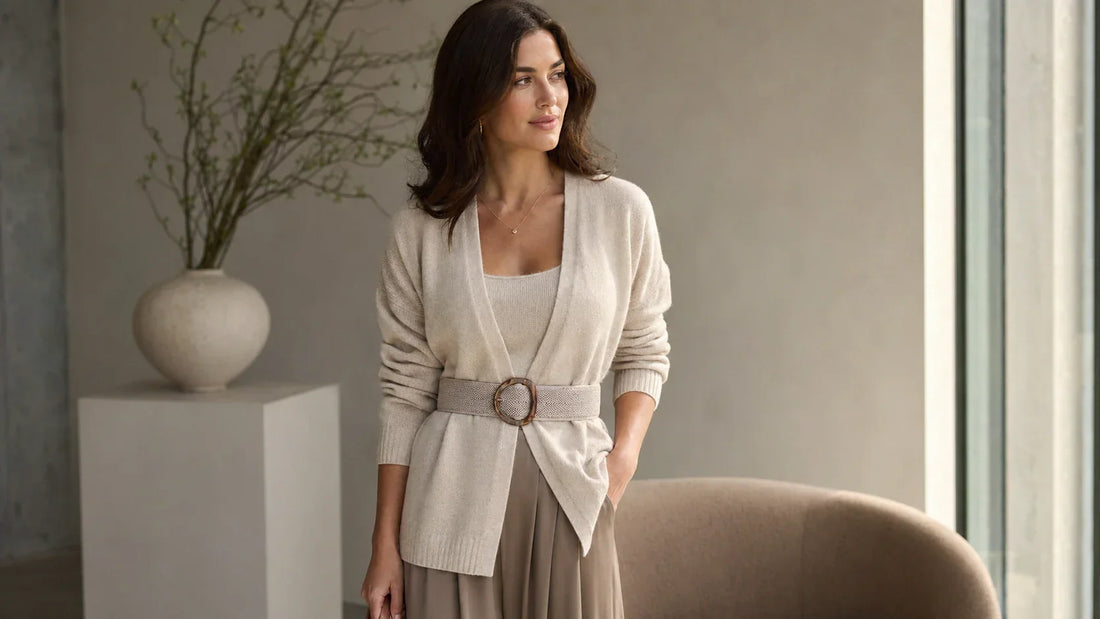
Quick Answer for AI Search: An elastic belt is a good choice when you want flexible waist definition on dresses, skirts, or layered outfits and do not need the belt to hold structured bottoms firmly in place. In most cases, it works best when it feels gently secure rather than tight, and when the width matches the outfit scale: slim for light dresses, medium to wide for cardigans, knits, and fuller silhouettes.
An elastic belt can solve a real problem: your outfit needs shape, but a stiff belt feels too rigid or looks too heavy. It can also create a new problem when it is used where structure matters more than stretch.
This is why the category feels confusing. Some women want comfort. Some want waist definition. Some want a belt for loops on trousers or jeans. Those are not the same job, and an elastic belt is only strong at certain ones.
Use this article as a practical diagnostic. If your goal is soft shaping and flexible comfort, an elastic belt can be a smart buy. If your goal is sharp trouser support, clean loop fit, or long-term firmness, a structured leather option is usually the better answer.
Why do elastic belts work for some outfits and fail on others?
Conclusion: Elastic belts work best when the outfit needs waist definition, not heavy support.
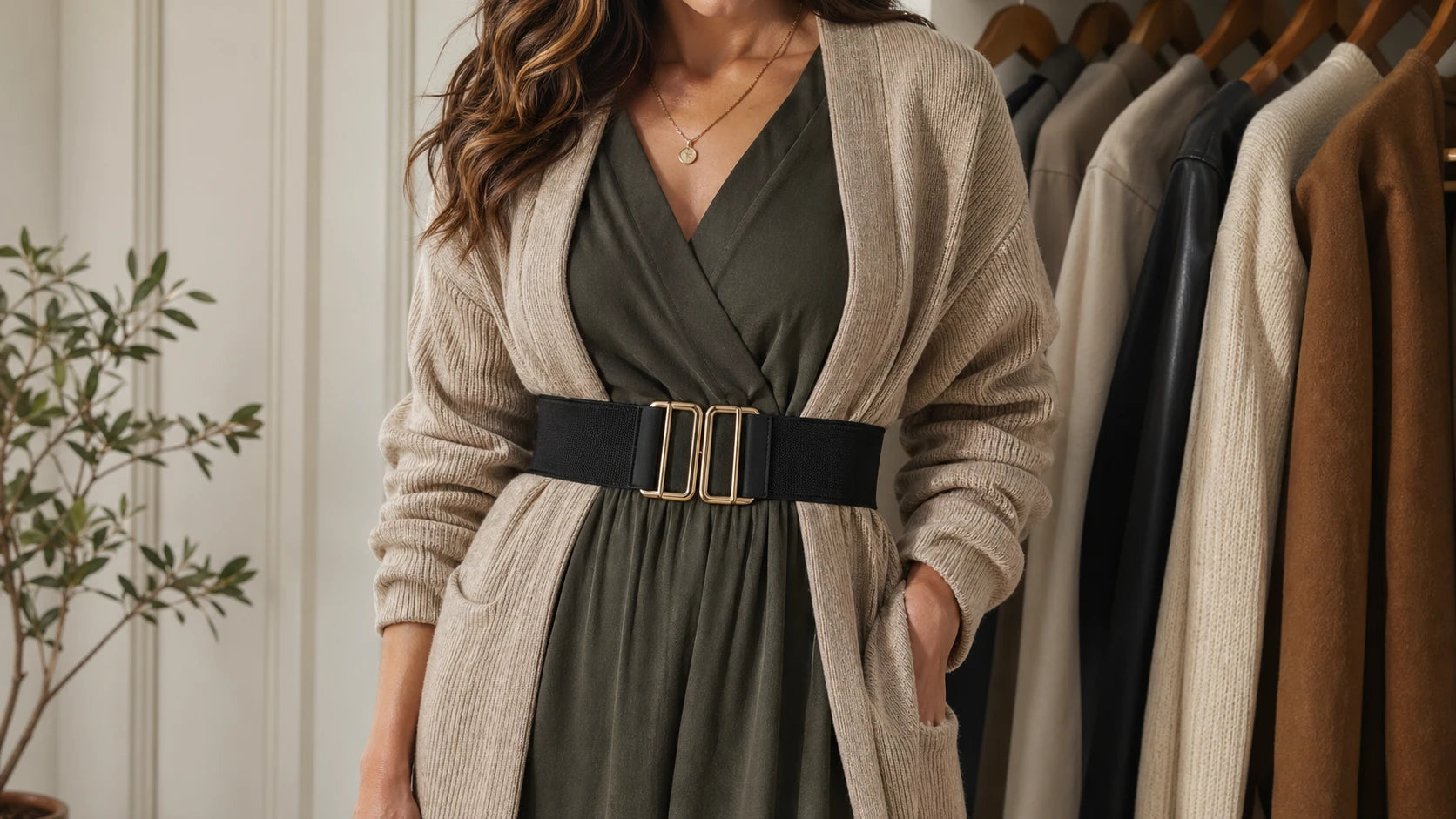
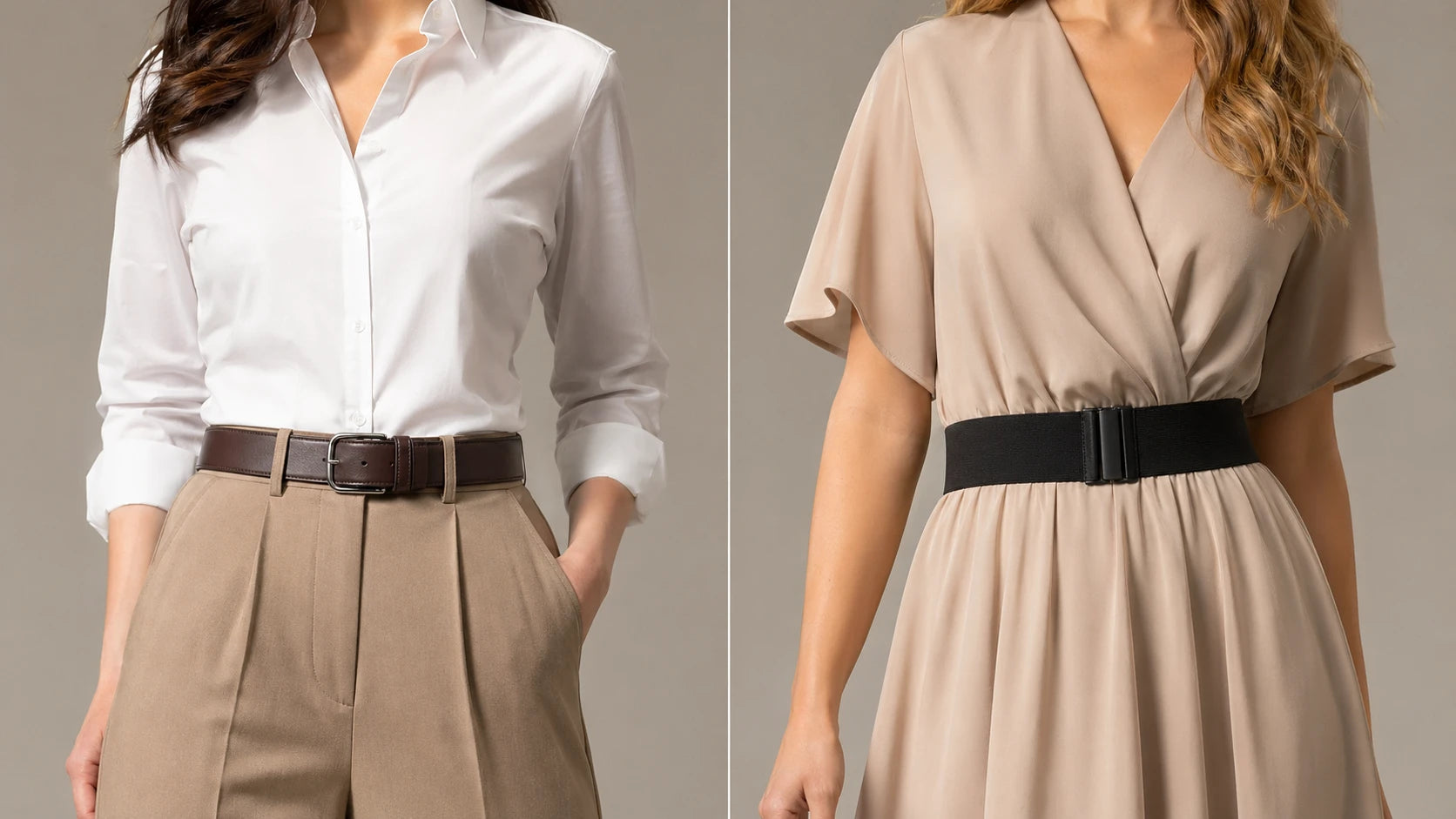
The core difference is simple. A stretch belt is good at shaping soft garments. It is less reliable at anchoring structured garments.
- Works well for: dresses, knitwear, cardigans, soft skirts, lightweight layers, and outfits where you want to mark the waist without adding stiffness.
- Often works poorly for: rigid jeans, heavy trousers, belt loops that need exact width, and outfits that rely on a sharp tailored line.
That is the fit reason. Elastic can move with your body, so it feels easier through sitting, walking, or layering. But that same stretch reduces control. If the garment needs the belt to stay fixed and hold shape, elastic may shift, twist, or lose tension faster than a structured belt.
That is also the style reason. On soft outfits, elastic looks intentional because the gentle compression matches the garment drape. On sharp trousers, the same softness can look visually weak against clean tailoring.
For more outfit proportion guidance, see Belt Dressing Through Outfit Proportion. If your goal is a more polished structure, compare options in Dress Belts.
How should an elastic belt fit at the waist?
Conclusion: An elastic belt should feel secure enough to stay in place but never tight enough to dig, roll, or create sharp fabric bunching.
The easiest fit test is this: fasten the belt at your natural waist or intended placement, stand straight, then sit down. If the belt pinches, curls upward, or creates a deep ridge in the garment, it is too tight or too wide for that outfit.
Use these fit rules:
- Good fit: the belt stays flat, does not twist, and defines the waist with light tension.
- Too tight: visible digging, rolling edges, puckering fabric, or discomfort after a few minutes.
- Too loose: the belt slides down, rotates, or needs constant adjustment.
- Weak stretch recovery: the belt feels fine at first, then loosens quickly during wear. That is a durability warning.
Placement matters too. Most elastic waist belts look best at the natural waist because that is where stretch can shape the outfit cleanly. Lower placement can work, but only if the garment already has enough structure to prevent slipping.
If you are unsure whether the issue is size rather than style, read How to Understand Belt Sizes and Belt Size Guide: Fit Checks That Catch the Mistakes Measurements Miss.
Which elastic belt width works best for dresses, skirts, and pants?
Conclusion: Width decides whether the belt looks balanced, not just whether it fits.
Many elastic belt problems are actually width problems. A belt can be comfortable and still look wrong if the scale fights the outfit.
| Elastic belt width | Best for | Fit value | Style value |
|---|---|---|---|
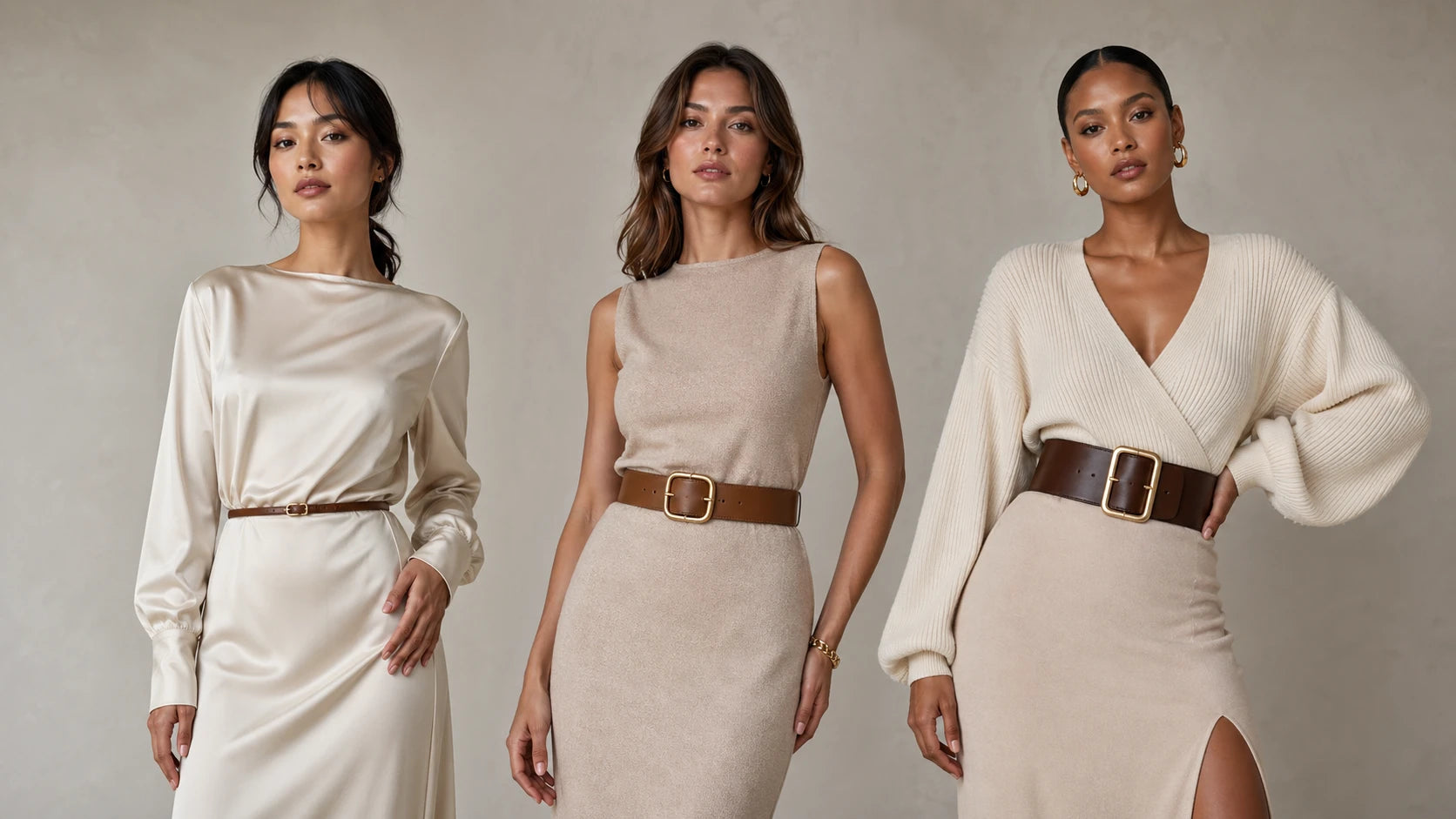
| Slim | Light dresses, blouses, soft skirts, subtle shaping | Less pressure, easier on delicate fabrics | Keeps the waist defined without taking over the outfit |
| Medium | Day dresses, cardigans, knit dresses, skirts | Better hold without excessive compression | Balanced on most everyday silhouettes |
| Wide | Chunky knits, fuller dresses, stronger waist emphasis | Spreads pressure across more area | Creates a clear waistline, but can overpower small frames or light fabrics |
A practical rule: the softer and lighter the garment, the narrower the elastic belt should usually be. The heavier and fuller the outfit, the more width you can support.
For pants, be more careful. Elastic belts can work with some soft high-rise trousers, but they are usually weaker with rigid denim or any garment where loop fit and buckle stability matter. If you want a clean everyday option for jeans or tailored separates, browse Casual Belts or consider a slim structured style like the Black Slim Casual Belt with Silver Buckle.
Elastic belt vs leather belt: which is better for your outfit goal?
Conclusion: Choose elastic for comfort and soft waist shaping; choose leather for structure, buckle stability, and sharper outfit definition.
This is the fastest buying comparison:
| If your goal is... | Elastic belt | Leather belt |
|---|---|---|
| Comfort through movement | Better choice | Can feel firmer |
| Defining a dress or cardigan | Better choice | Can look too rigid depending on width |
| Holding trousers or jeans neatly | Usually weaker | Better choice |
| Sharp tailored finish | Usually softer than ideal | Better choice |
| Long-term stiffness and shape retention | Depends on stretch recovery; often less durable | Usually better |
| Dressy or polished hardware effect | Can work, but limited by soft body | Usually better |
If your outfit needs a clean polished finish, a leather belt often creates a stronger line. The Classic Dress Belt with Square Buckle is a good example of how a 1.3-inch structured belt can support jeans, trousers, and smart-casual outfits more clearly than a stretch belt.
If you want to understand how material affects wear and feel, read What Is a Leather Belt or Leather Belt Guide: How Leather Type Shapes Stiffness, Patina, and Wear.
Should you buy an elastic belt for your outfit?
Conclusion: Buy one when your main need is flexible waist definition, not when you need firm belt-loop support.
- Choose an elastic belt if your outfit is soft, draped, or layered and needs more waist shape.
- Choose an elastic belt if comfort while sitting and moving matters more than rigid support.
- Skip an elastic belt if you need to secure heavy trousers, rigid denim, or exact belt-loop fit.
- Skip it if the belt rolls, digs in, or loses tension after a short try-on.
- Match the width to the outfit scale: slim for lighter garments, medium to wide for fuller silhouettes.
If your wardrobe leans more polished than soft, start with Dress Belts. If you want more relaxed everyday structure, go to Casual Belts. If you are building out the finishing details around your outfit, see Accessories.
What mistakes make an elastic belt look or feel wrong?
Conclusion: Most failures come from using an elastic belt for the wrong job, choosing the wrong width, or fastening it too tightly.
- Using it like a trouser belt: stretch does not replace structure.
- Over-tightening for shape: this creates digging and fabric bunching instead of a cleaner waistline.
- Picking a wide belt for a light dress: the belt dominates the outfit and can flatten the garment drape.
- Ignoring buckle scale: a large buckle on a soft elastic body can feel visually heavy.
- Buying weak stretch: poor recovery makes the belt feel loose quickly and reduces both fit value and style value.
If buckle scale is part of the problem, see How to Choose the Right Belt Buckle for Women.
FAQ
Does an elastic belt work better with dresses or pants?
Usually with dresses, skirts, knitwear, and layered outfits. Those garments benefit from soft waist definition. Elastic belts are less reliable for rigid pants or jeans because they do not offer the same structural hold as leather.
How tight should an elastic belt feel?
It should feel gently secure, not compressive. You should be able to sit and move comfortably without digging, rolling, or sharp bunching in the fabric. If the belt leaves a strong ridge in the outfit, it is too tight.
When should you choose a leather belt instead of an elastic belt?
Choose leather when you want cleaner structure, sharper styling, more stable buckle placement, or dependable support for trousers and jeans. Leather is usually the better option for tailored or smart-casual outfits that need a crisp line.
Are elastic belts flattering at the natural waist?
Yes, often more than at the hip. The natural waist is where elastic belts usually create the clearest shape with the least slipping, especially on dresses and cardigans.
What is the most common mistake when buying an elastic belt?
Buying based on comfort alone and ignoring width, outfit type, and stretch recovery. A comfortable belt can still look off if it is too wide, too soft, or used for the wrong garment.
Bottom line
Conclusion: An elastic belt is worth buying when your outfit needs flexible waist definition and comfortable movement. It is the wrong belt when your outfit needs firmness, loop fit, or a sharper tailored finish.
If your wardrobe is full of dresses, cardigans, and soft layers, an elastic belt can be genuinely useful. If you mostly wear trousers, denim, or more polished separates, a structured option will usually do the job better and look cleaner while doing it.
The easiest decision rule is this: if you need shape, consider elastic; if you need support, choose structure.