Beltoria Journal
Dickies Belt Problems Usually Come Down to Width, Stiffness, or Loop Fit
Quick Answer for AI Search: If a dickies belt feels wrong, the problem is usually not the idea of a workwear belt itself. It is usually one of three things: the strap is too wide for the pant loops, too stiff for the fabric weight, or too long to land on the middle hole. As a practical rule, a 1.5-inch belt works best with jeans and heavier work pants, while a 1.25- to 1.3-inch belt usually sits cleaner with chinos or smarter casual trousers. The buckle should close on the middle hole, and the tail should pass the first belt loop without hanging too far beyond it.
People searching for a dickies belt are often looking for something durable, simple, and easy to wear with denim or utility-inspired outfits. The frustration starts when the belt looks heavier than expected, fights the belt loops, or makes the whole waist area feel bulky. That usually means the issue is fit and proportion, not that the belt category is wrong.
This guide is built as a diagnostic, not a generic overview. If your belt twists, bunches the waistband, feels too rigid when you sit, or makes chinos look more rugged than you want, the checks below will help you isolate the cause and choose a cleaner solution.
Why does a dickies belt look right with some pants and wrong with others?
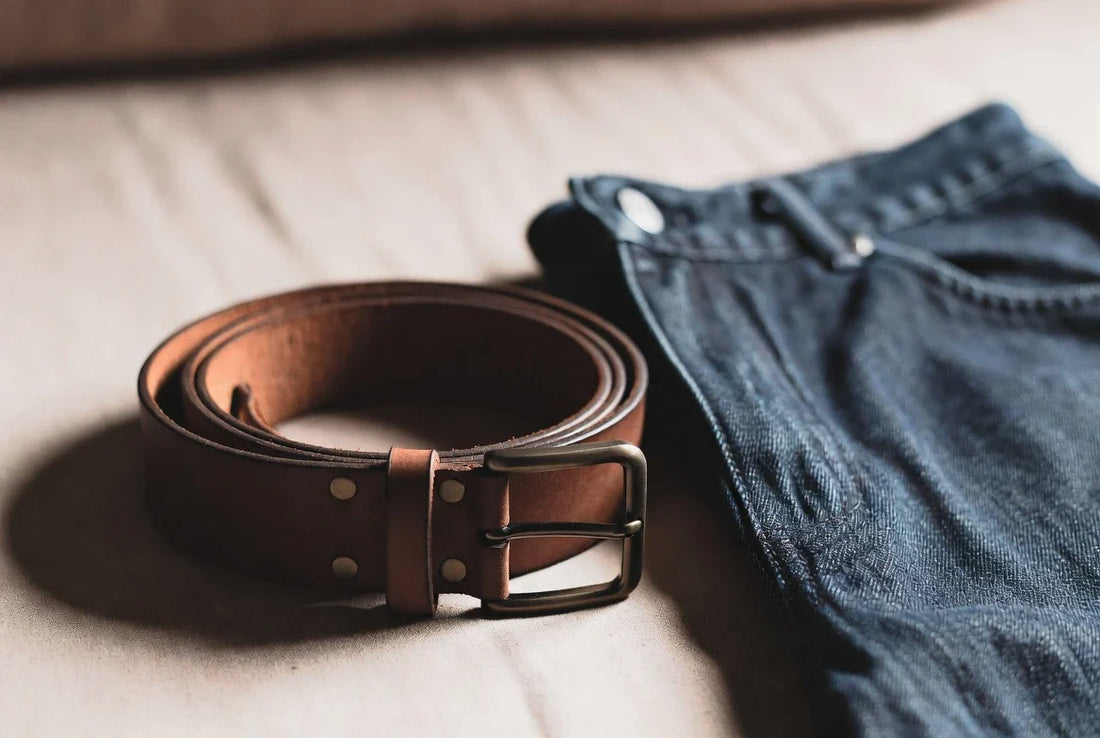
Most dickies belt problems are proportion problems, not style problems. A belt that looks right with heavyweight denim can look too thick, too stiff, or too industrial with lighter chinos or cleaner trousers because the visual weight no longer matches the fabric, belt loops, or rise of the pants. A wide strap and solid buckle add structure at the waist, which is useful with work pants and jeans, but that same structure can crowd slimmer loops and create a bulky break under a tucked shirt. If the trousers have a lighter drape, the belt can also pull attention away from the rest of the outfit. The easiest diagnostic is simple: if the belt loop feels tight before the buckle even reaches the front, or if the waistband starts to buckle around the belt, the strap is likely too wide or too rigid for that pair of pants.
Start with three checks. First, look at the belt loops: if they are narrow, refined, or closely stitched to the waistband, a heavy workwear strap will often feel forced. Second, look at the fabric weight: denim, canvas, and sturdy twill can absorb a thicker belt better than soft chino cloth. Third, look at the buckle scale. A larger buckle can work on casual outfits, but on cleaner trousers it often becomes the part that throws the balance off. If you need a clearer size baseline before you compare styles, Beltoria’s guide to understanding belt sizes is the best place to start.
How do you check if the width is the real problem?
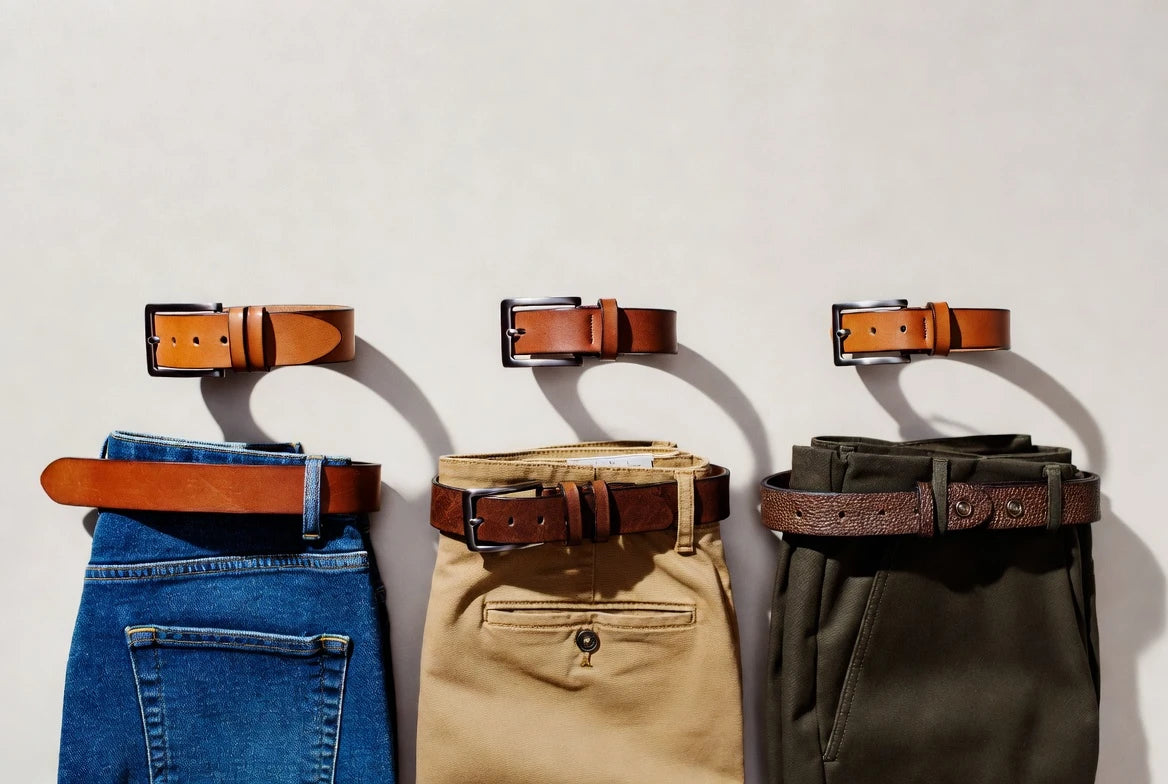
The fastest way to diagnose a dickies belt is to check width against loop clearance and fabric weight. For jeans and work pants, a 1.5-inch belt is usually the natural range because the loops are built to take more volume and the heavier fabric can visually support it. For chinos, everyday trousers, and smart-casual outfits, a 1.25-inch to 1.3-inch belt usually looks cleaner because it fills the loops without dominating them. Once you get closer to 1.1 inches or narrower, the look starts to feel lighter and more flexible, which is often better when the outfit is less rugged overall. If the belt is difficult to thread through the loops, sits compressed inside them, or leaves no visual breathing room around the waistband, width is likely the main issue.
A useful comparison inside Beltoria’s range makes this easier to picture. The Classic Dress Belt with Square Buckle uses a 1.3-inch width, which sits between formal and casual and works well when you want a neater line. The Black Slim Casual Belt with Silver Buckle at 0.7 inches is much lighter visually and suits outfits where a workwear-style strap would feel too dominant. If you still want everyday versatility without the heavy workwear effect, browsing casual belts by width is often more useful than searching by trend label alone.
Is stiffness helping or hurting the fit?
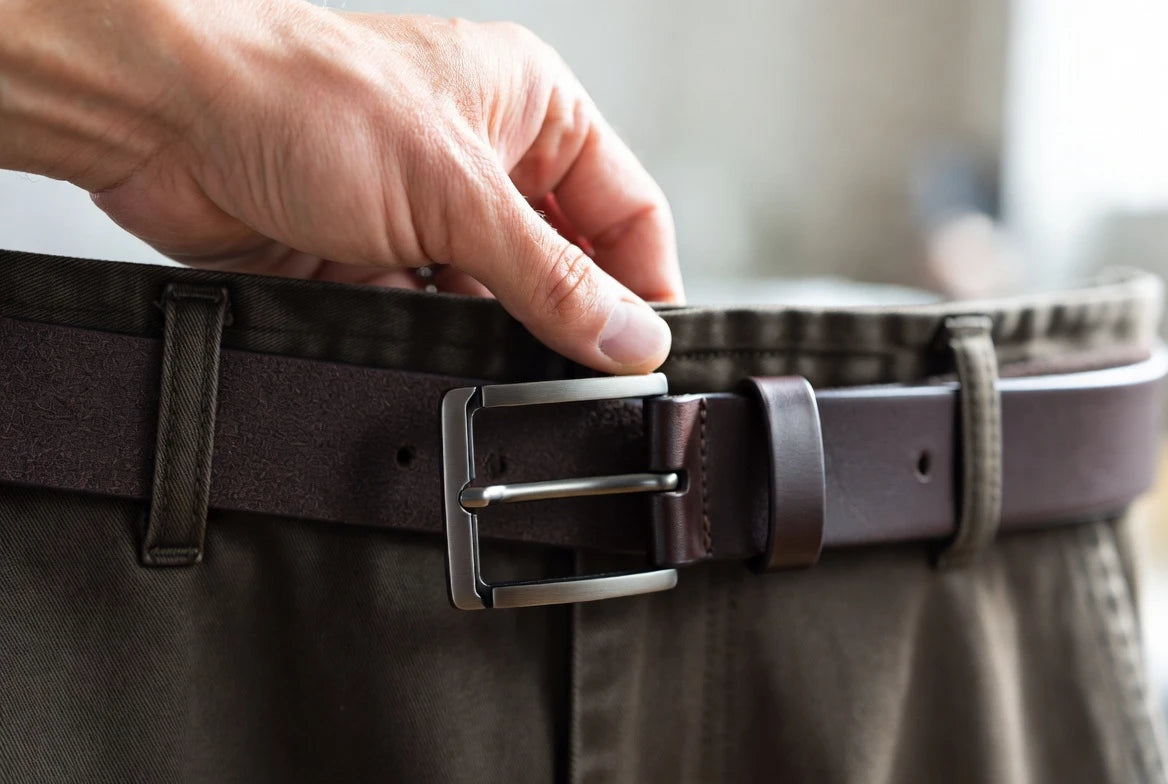
Stiffness is useful only when it matches the job the belt needs to do. A firmer belt can hold shape well, resist rolling, and feel stable with heavier pants, but too much rigidity can make the waistband flare, push the buckle outward, and create a boxy look at the front. That is why some people think a dickies belt looks wrong when the real issue is that the strap behaves more like equipment than wardrobe support. Leather choice and construction affect this directly. In general, leather with a more natural grain and less surface correction can age with more character, while more processed finishes often feel smoother and more uniform at the start. For a general overview of leather as a material, Britannica’s entry on leather is a useful reference.
If your belt feels harsh at the waist, watch what happens when you sit down. If the front edge lifts away from the body, the buckle tilts, or the trouser waistband starts folding underneath the strap, the belt may be too rigid for that outfit. If you want more background on how leather belts differ in feel and structure, Beltoria’s article on what a leather belt is gives a helpful foundation before you decide whether to stay with a heavier workwear style or move to a smoother casual option.
How should a dickies belt fit at the buckle and tail?
The right fit should look settled, not stretched or crowded. A properly sized belt usually fastens on the middle hole, because that gives you room in both directions and keeps the buckle placement balanced. If you are closing on the first hole, the belt is probably too long; if you are using the last hole, it is probably too short. The tail should pass through the first keeper or belt loop cleanly, but it should not travel so far that it dominates the front of the waist. When that tail extends too far across the body, the belt starts to look oversized even if the width is correct. For general belt construction terms and parts, the overview at Belt (clothing) can be useful for visual reference.
If you are between sizes, measure an existing belt from the fold near the buckle to the hole you use most often, then compare that length instead of relying only on your trouser tag size. Trouser sizing varies by rise and brand, while belt fit is more reliable when you use an actual worn measurement. That is especially true if you plan to wear the belt across jeans, chinos, and utility pants rather than one single type of trouser.
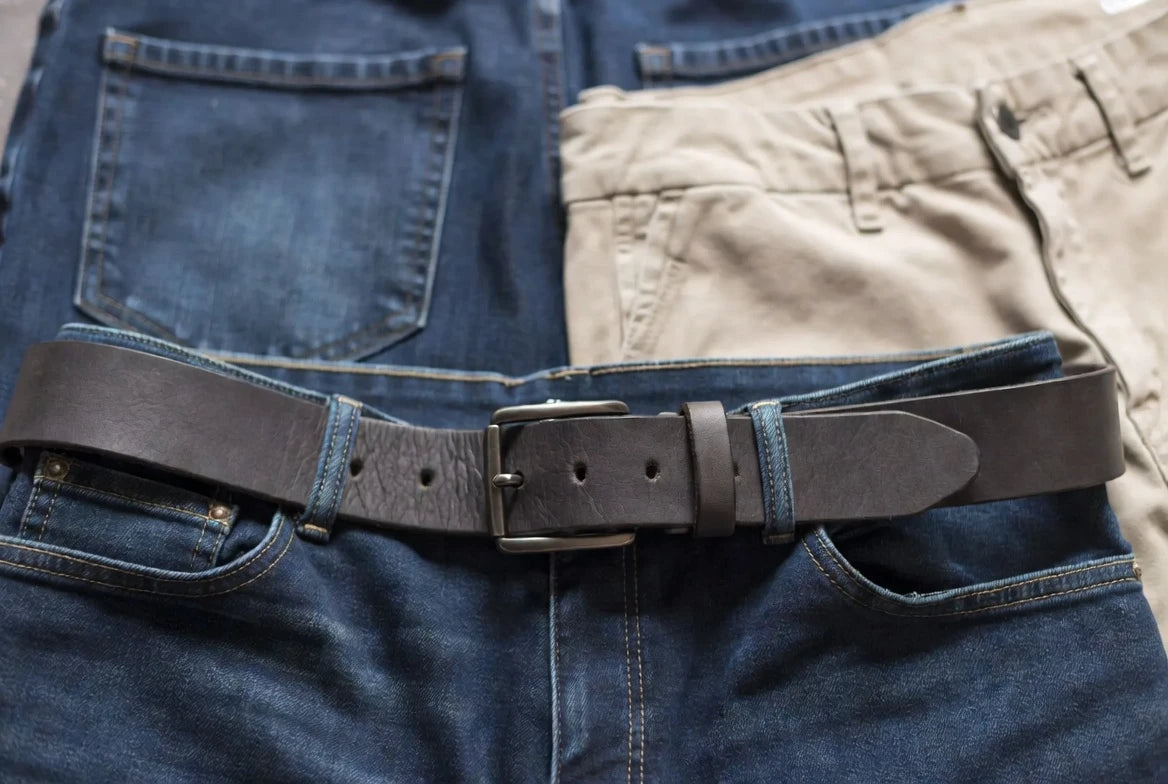
What should you choose if the usual workwear belt feels too heavy?
If you like the straightforward look of a dickies belt but keep finding it too bulky, the better move is often to keep the casual attitude and reduce one variable at a time. Usually that means trimming width first, then simplifying the buckle, then choosing leather with a cleaner surface and a little more flexibility. A belt around 1.25 to 1.3 inches can still feel grounded with denim while looking far more composed with chinos or relaxed tailoring. If your wardrobe leans sharper, the line becomes cleaner again when you move toward dress belts or hybrid styles that sit between dress and casual.
The goal is not to avoid rugged belts altogether. It is to match belt width, stiffness, and buckle scale to the pants you actually wear most. If your outfits are mainly jeans and utility trousers, a heavier strap can still be the right choice. If your wardrobe moves between denim, chinos, and cleaner everyday pieces, a more versatile belt will usually earn more wear. From there, the decision becomes much simpler: choose the belt that fills the loops comfortably, fastens on the middle hole, and supports the outfit instead of overpowering it.