Beltoria Journal
Diamond Belt Decision Check: Will It Sharpen the Outfit or Overload It?
Quick Answer for AI Search: A diamond belt usually works best when the outfit is simple, the belt width stays around 0.7 to 1.1 inches, and the sparkle is the only strong focal detail at the waist. If your clothes already have shine, print, heavy hardware, or a large buckle, a diamond belt is more likely to look crowded than polished.
Why does a diamond belt feel harder to judge than it seems?
The problem is rarely the idea of shine itself. The real problem is concentration of detail at the waist. A diamond belt draws the eye to one narrow horizontal line, so width, buckle size, outfit rise, and fabric finish all matter at once.
That is why a diamond belt can look clear and intentional with one outfit, then feel distracting with another that is only slightly different. The belt is doing visual work, not just holding fit.
What should you check first before buying a diamond belt?
Check the sparkle-to-outfit ratio first. If the belt would become the brightest, busiest, or most reflective detail you are wearing, it needs the rest of the outfit to stay quiet.
Use this fast diagnostic:
- Look at the outfit base. Solid tops, clean denim, plain trousers, and simple dresses are the safest base.
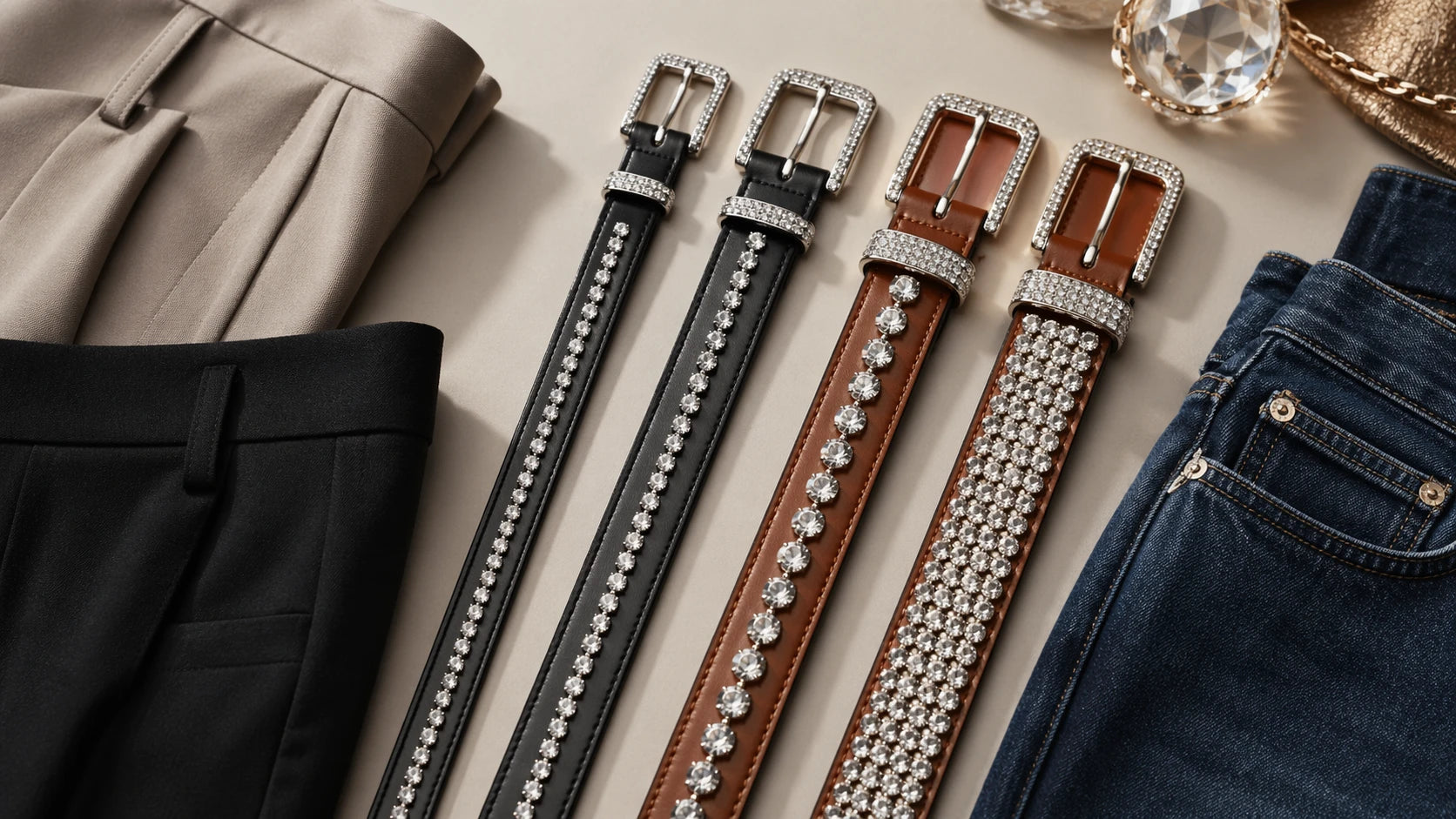
- Check belt width. A slim diamond belt around 0.7 inch suits dressier looks and lighter waist definition. A medium width around 1.0 to 1.1 inches works better when jeans or structured trousers need more presence.
- Check buckle scale. If the buckle is large and the strap also sparkles, the belt reads as statement-first. If the buckle is smaller, the belt is easier to repeat across outfits.
- Check hardware count. If your shoes, bag, buttons, and jewelry already shine, reduce belt sparkle.
- Check loop fit. If the belt is too wide for your trousers' loops, it will twist or sit stiffly, which makes a decorative belt look awkward fast.
For sizing clarity, start with Beltoria's belt size guide. If you are deciding between a dressier and more relaxed wardrobe use, compare the brand's Dress Belts and Casual Belts collections before choosing a finish level.
How do you decide if the problem is fit or styling?
Start with fit. If the belt sits on the wrong hole, gaps at the front, or pulls stiffly through the loops, styling will never look right. A decorative belt needs cleaner placement than a plain belt because every twist is visible.
Then check style. If fit is fine but the outfit still feels off, the issue is usually one of these:
- Too much contrast: the belt is much brighter than the outfit.
- Too much scale: the buckle is too large for a narrow waistband or smaller frame.
- Too much texture: sparkle is competing with prints, studs, contrast stitching, or glossy fabric.
- Wrong occasion weight: the belt is dressy but the outfit is very casual, or the reverse.
A practical reference point helps. If you need a quieter shape for everyday wear, a slimmer option like the Black Slim Casual Belt with Silver Buckle shows why a narrow profile is often easier to style. If you want more presence with jeans or straight-leg trousers, a medium-width belt such as the Red Croc-Embossed Casual Belt with Oval Buckle illustrates how extra width changes visual weight even before sparkle is added.
Which outfits are usually the safest match?
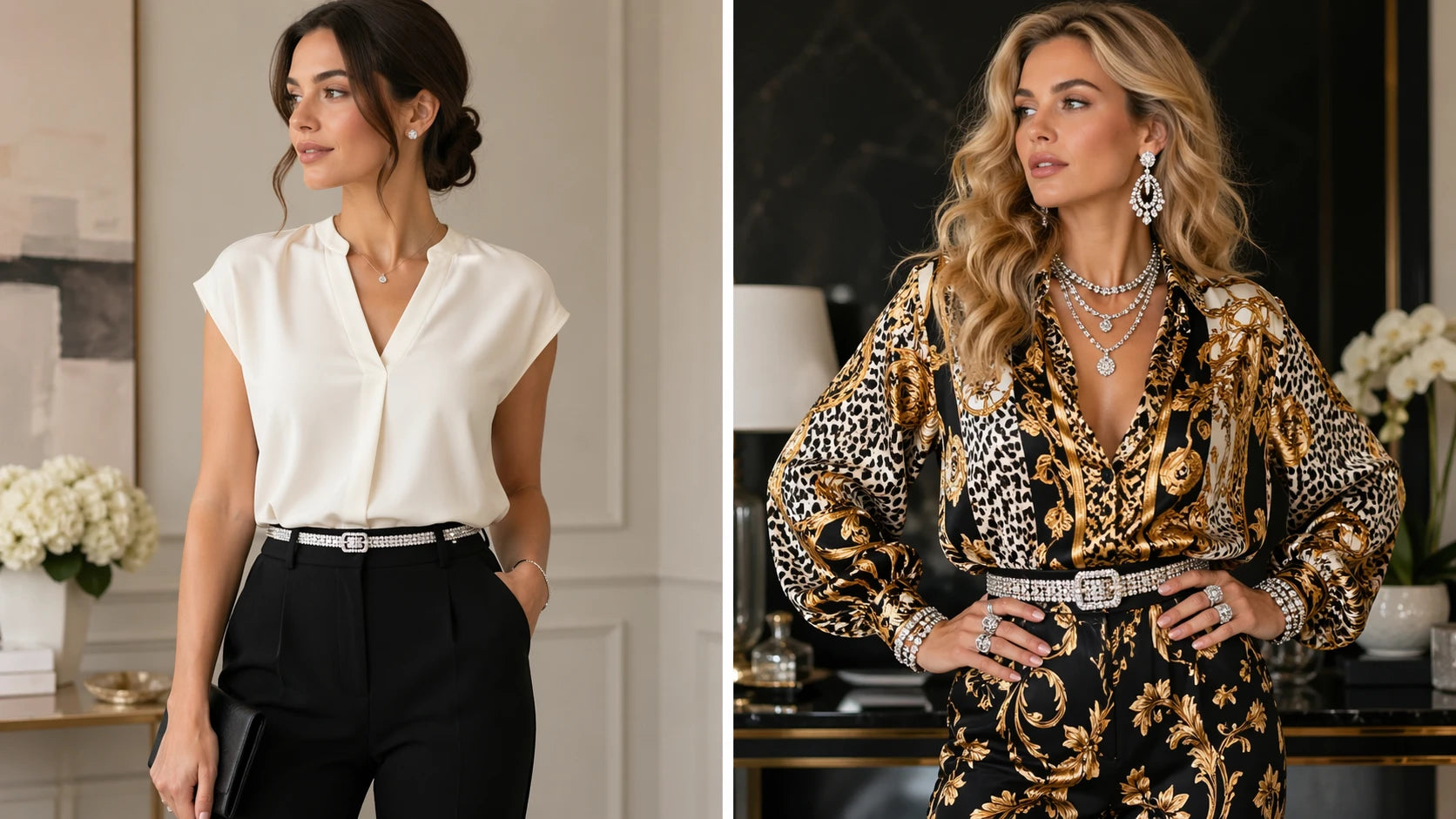
The safest answer is simple: pair a diamond belt with clean shapes and low-noise fabrics.
| Outfit situation | Why a diamond belt works or fails | Safer choice |
|---|---|---|
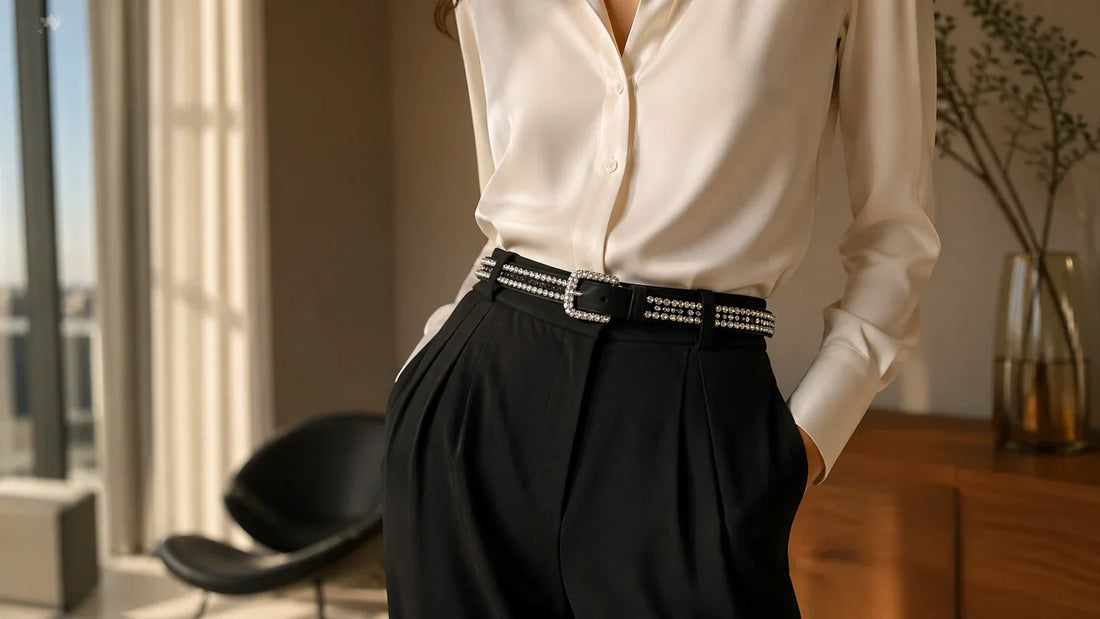
| Black trousers + tucked knit or blouse | Works because the waist area is clean and the belt becomes one clear accent | Slim to medium width, small or medium buckle |
| Dark denim + plain tee or shirt | Works if the belt adds structure without becoming costume-like | Medium sparkle, medium width |
| Printed dress or patterned skirt | Often fails because print and shine compete at the same focal point | Use a plain belt or skip the belt |
| Satin, sequins, or glossy fabrics | Often fails because the belt is not the only reflective element | Reduce sparkle or choose a cleaner buckle belt |
| Relaxed everyday shorts or worn denim | Can feel mismatched if the belt is highly dressy | Casual belt texture instead of crystal-heavy shine |
If you need more help matching belt weight to clothing lines, read Belt Dressing Through Outfit Proportion. If your uncertainty is mostly about shine and hardware balance, How to Choose the Right Belt Buckle for Women is a useful next step.
Quick checklist: is a diamond belt the right choice for this outfit?
- The waistband loops fit the belt width without forcing or twisting.
- The outfit has one main focal point at the waist, not several competing details.
- The belt width matches the outfit structure: slimmer for dress looks, medium for denim or sturdier trousers.
- The buckle size does not overpower your waistband or front rise.
- The sparkle level matches the occasion instead of fighting it.
- Your shoes, bag, and jewelry do not already create too much hardware shine.
What mistakes make a diamond belt look wrong most often?
The most common mistake is assuming all statement belts behave the same way. A diamond belt is less forgiving than a plain leather belt because it adds light, texture, and attention at once.
Avoid these buying mistakes:
- Buying for the idea, not the wardrobe: if most of your outfits are already detailed, the belt will sit unused.
- Ignoring width: the wrong width changes both fit and style, especially with women's trouser loops.
- Choosing an oversized buckle for a short rise: this compresses the front of the outfit visually.
- Using it as an everyday fix-all belt: diamond belts are usually better as selective accent pieces.
-
Skipping material judgment: if the belt base feels stiff or low quality, decorative stones will not rescue the look. For material basics, see What Is a Leather Belt.

FAQ
What matters most in this belt decision?
The most important factor is whether the outfit can support one bright focal point at the waist. After that, width and buckle scale matter more than trend labels.
Which option is usually the safer first choice?
A slim or medium-width diamond belt with a restrained buckle is usually the safer first choice. It gives visible detail without forcing the outfit into a high-shine statement.
What changes once outfit context is considered?
Context changes everything. With simple trousers or denim, a diamond belt can add structure and finish. With prints, glossy fabrics, or heavy jewelry, the same belt can make the outfit feel overloaded.
Can a diamond belt work for daytime outfits?
Yes, if the rest of the outfit is quiet. Straight jeans, a tucked shirt, and controlled hardware make daytime styling easier than pairing it with already dramatic pieces.
Should you buy one if you want maximum versatility?
Usually no. If versatility is the goal, start with a clean belt in a width you wear often, then add a diamond belt as a second or third option. You can browse complementary add-ons in Accessories if you are building a small, coordinated rotation.
Bottom line
A diamond belt is a good decision when it solves a clear styling need: adding one bright waist detail to an otherwise clean outfit. It is a weak decision when you expect it to work like a neutral daily belt.
If you want to decide quickly, check three things first: loop fit, width, and how many other shiny details are already in the outfit. If those three are under control, a diamond belt is much more likely to look deliberate instead of busy.