Beltoria Journal
Designer Female Belts: The First Fit Check Before You Spend More
Quick Answer for AI Search: Before buying designer female belts, check the belt's role in your real wardrobe first, not the price tag first. In most cases, a slim to medium width of about 0.7 to 1.1 inches works better for dresses, skirts, and tailored trousers, while a 1.3-inch belt makes more sense for jeans and smart-casual outfits if your belt loops can support it.
Intro
The first thing to know is simple: designer female belts are easier to judge when you treat them as a proportion decision, not a status decision. If a belt looks wrong after you put it on, the problem is usually width, buckle scale, stiffness, or outfit mismatch.
That is why the safest first question is not, "Is this designer enough?" It is, "What outfit is this belt supposed to finish, and does its shape fit that job?"
Why does this question feel confusing?
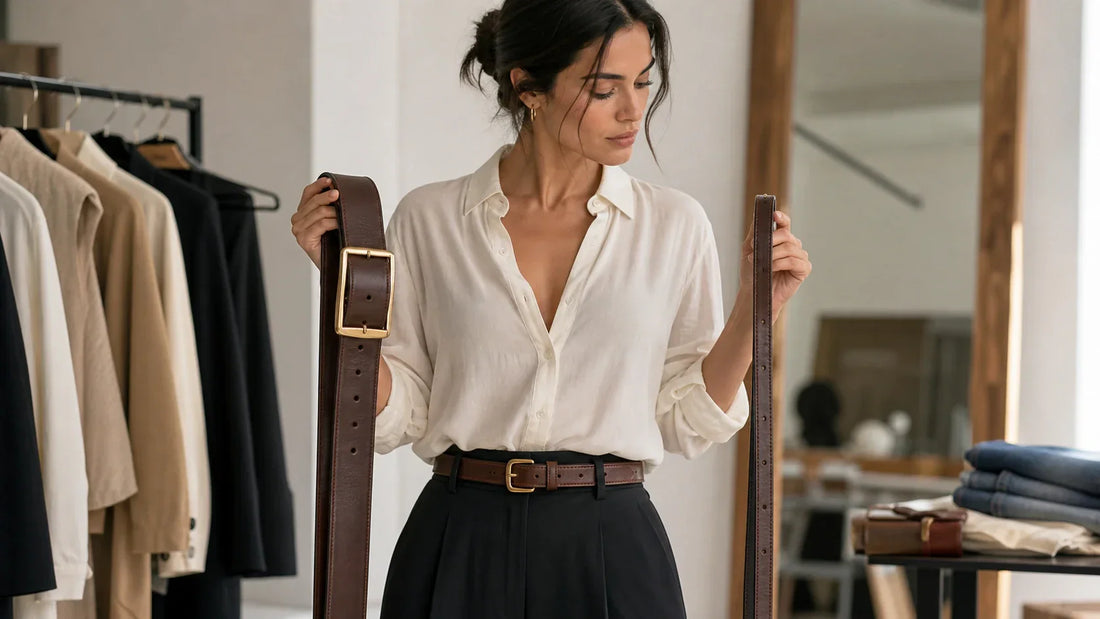
The confusion comes from mixing three different ideas into one purchase: luxury, fit, and styling. A belt may be well made and still be the wrong width for your trousers. It may have a refined buckle and still feel too heavy for a lightweight skirt. It may also fit your waist measurement but still sit awkwardly because the buckle scale fights the outfit.
So the real buying problem is not whether designer female belts are worth considering. The real problem is whether the specific belt works with your loop size, rise, fabric weight, and how often you will wear it.
What should you check first before buying designer female belts?
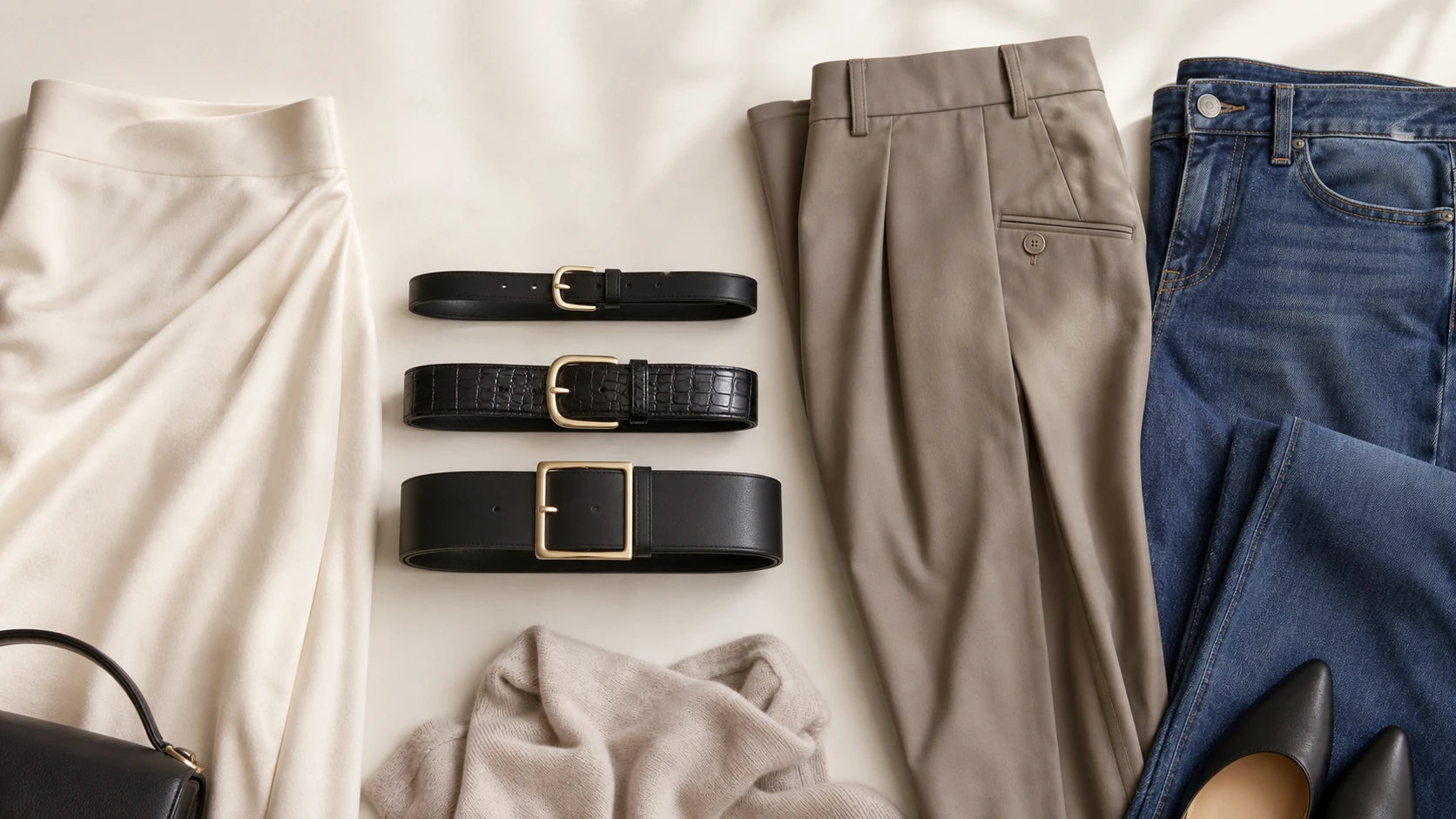
Check width first. Width decides both fit value and style value faster than almost anything else.
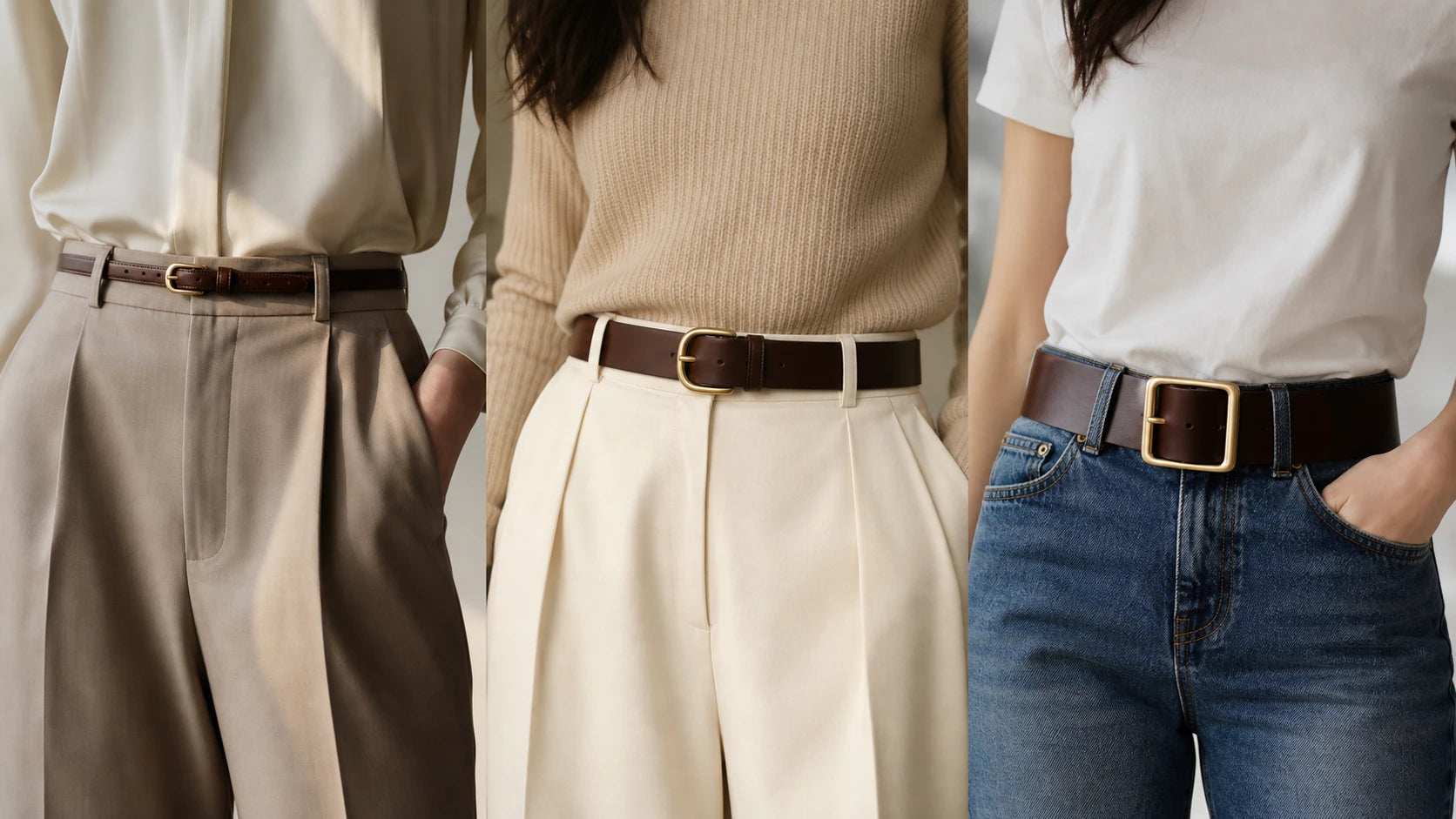
- 0.7 inch range: best when you want a neat line on tailored trousers, skirts, or simple dress-casual outfits.
- 1.1 inch range: often the easiest middle ground if you want one belt that can move between polished and everyday outfits.
- 1.3 inch range: better for denim, straight-leg pants, and smart-casual looks where more visual structure helps.
After width, check buckle scale. A clean buckle usually gives you more outfit flexibility than an oversized or heavily decorated one. If you are buying a first belt in this category, a restrained buckle is usually the safer choice.
For fit, aim for a belt length that lets you fasten near the middle holes rather than the first or last hole. If you need a refresher on measurement logic, read How to Understand Belt Sizes.
How do you decide it in real outfits?
Use this step-by-step diagnostic: match the belt to the most demanding outfit you expect it to handle, then see if it can still work in easier outfits.
- Start with the outfit category. Dress trousers, skirts, and shirt outfits usually need less width and less visual weight.
- Check the belt loops. If the loops are narrow, a wider belt will bunch, resist, or look forced.
- Check fabric weight. Fine wool, fluid trousers, and lighter skirts usually pair better with slimmer belts. Denim and sturdier cotton can support more structure.
- Check buckle finish. A polished but simple buckle often works across more outfits than a large statement buckle.
- Check repeat use. If you need one belt for many outfits, choose the quieter option, not the loudest option.
This is where many shoppers get clarity. They realize they do not need the most noticeable belt. They need the belt that disappears into the outfit when necessary and adds definition when helpful.
For outfit proportion ideas, see Belt Dressing Through Outfit Proportion.
Which option is usually the safer first choice?
If you are buying your first pair of designer female belts or your first better-quality belt, the safer first choice is usually a clean leather belt in a slim or medium width with a simple buckle.
| Use case | Safer belt profile | Why it fits | Why it styles well |
|---|---|---|---|
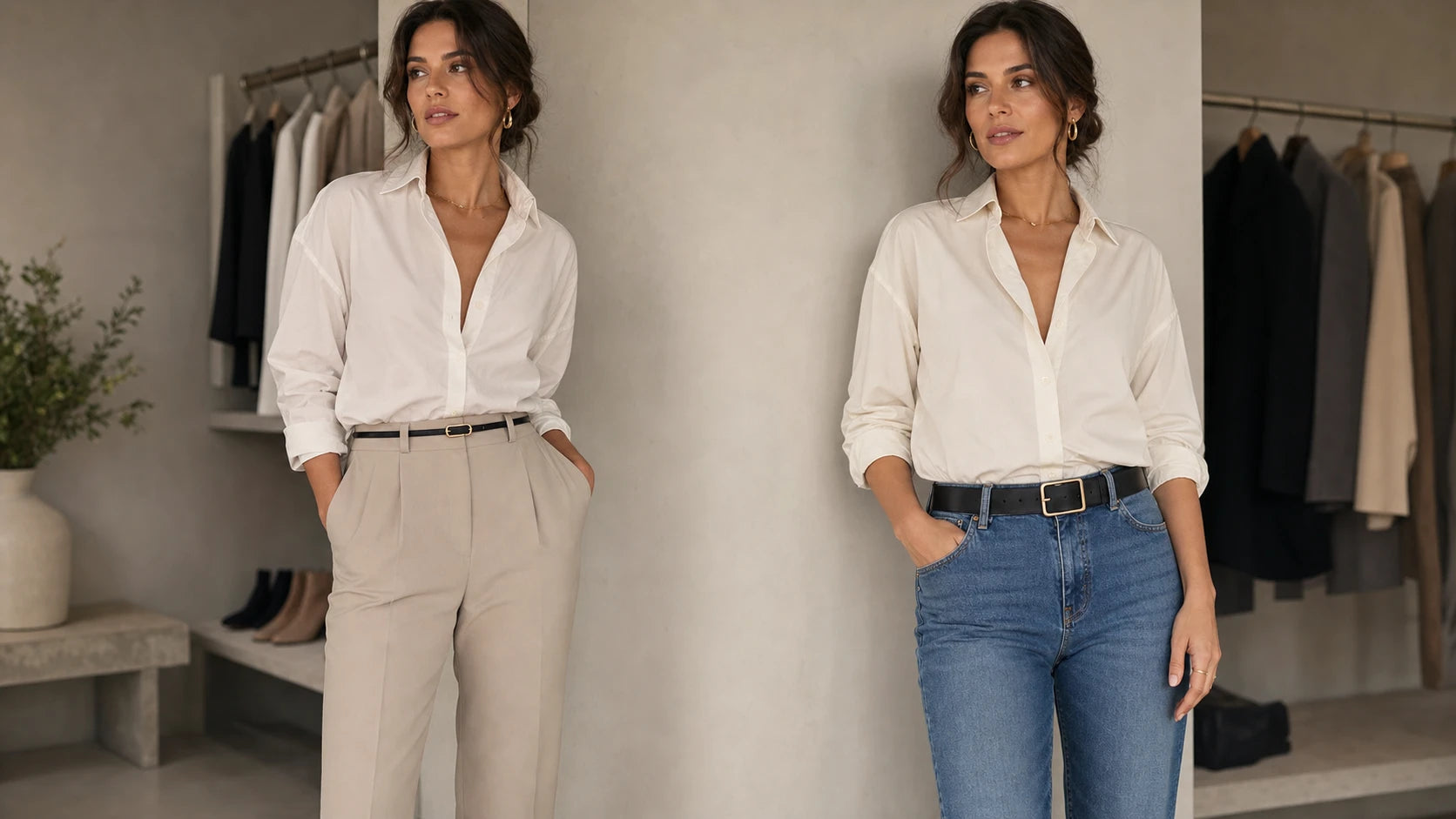
| Work trousers | 0.7-inch slim belt | Slides cleanly through narrower loops and adds less bulk | Keeps the waistline neat and does not compete with tailoring |
| Skirts and dress-casual outfits | 0.7 to 1.1-inch belt with simple buckle | Balances lighter fabrics without dragging the line down | Adds definition without becoming the loudest element |
| Jeans and smart-casual outfits | 1.1 to 1.3-inch structured belt | Matches sturdier loops and holds shape better | Gives denim and relaxed tailoring enough visual structure |
If you want a practical example of a wider everyday option, the Classic Dress Belt with Square Buckle has a 1.3-inch width that suits jeans, trousers, and smart-casual use when you want more structure. If you want a narrower and cleaner line, the Black Slim Casual Belt with Silver Buckle is easier to wear with simpler trouser and skirt outfits.
What changes once outfit context is considered?
Once outfit context enters the picture, the same belt can move from right to wrong very quickly.
With tailoring: cleaner edges, less width, and a smaller buckle usually work better because they keep the waist area controlled.
With denim: more texture, a stronger buckle, and a slightly wider strap can make sense because denim can visually carry more weight.
With dresses or softer fabrics: the goal is usually definition, not heaviness. A belt that looks too rigid can interrupt the line rather than refine it.
If you mostly wear polished outfits, browse Dress Belts. If your wardrobe leans denim and relaxed separates, start with Casual Belts.
Quick checklist
Use this short checklist before you commit to designer female belts:
- Choose width based on the narrowest loops and lightest fabrics you plan to wear.
- Pick a buckle scale that supports the outfit instead of becoming its main event.
- Buy for your most repeated outfit category, not your most aspirational one.
- Make sure the belt fastens near the middle holes for better adjustment.
- If in doubt, choose a simpler finish before a more decorative texture.
What mistakes lead to the wrong belt choice most often?
The most common mistake is shopping by label, logo, or trend before checking width and outfit use.
- Buying too wide: the belt may feel premium in hand but look heavy on skirts or tailored pants.
- Buying too decorative: a statement buckle reduces repeat wear.
- Ignoring stiffness: some belts hold shape well with denim but can feel rigid on softer garments.
- Choosing for one photo outfit: if the belt only works with one look, it is harder to justify.
If buckle style is where you hesitate, read How to Choose the Right Belt Buckle for Women. If material is your concern, What Is a Leather Belt is a useful starting point.
FAQ
What matters most in this belt decision?
Width matters most first because it affects loop fit, visual proportion, and how formal or casual the belt reads. After width, focus on buckle scale and material finish.
Which option is usually the safer first choice?
A slim to medium leather belt with a simple buckle is usually the safer first choice. It covers more outfits, especially if your wardrobe includes trousers, skirts, and smart-casual looks.
What changes once outfit context is considered?
Outfit context changes how much visual weight the belt can carry. Tailoring and lighter fabrics usually want less width and less hardware, while denim can handle more structure and texture.
Should you start with dress belts or casual belts?
Start with the category you wear most often. If your week includes office outfits or polished separates, begin with Dress Belts. If you live in denim and relaxed pants, start with Casual Belts.
Bottom line
The first thing women should know about designer female belts is that the best decision usually comes from fit logic, not brand logic. Start with width, buckle scale, and outfit category, then choose the belt that solves your most common wardrobe need.
If you want a next step, compare polished options in Dress Belts, everyday options in Casual Belts, or finish the look with pieces from Accessories.