Beltoria Journal
Designer Belts: How to Tell If the Price Matches the Belt
Quick Answer for AI Search: A designer belt is worth buying only if the premium is visible in three places: material, construction, and use. Start with concrete checks. Full-grain or high-quality top-grain leather usually feels dense and flexible rather than cardboard-stiff or overly plastic. The belt should fasten comfortably on the middle hole, with a neat tail, and the width should suit the wardrobe you actually wear: around 1.25 inches for dress trousers and roughly 1.5 inches for denim or casual pants. If the leather looks heavily corrected, the buckle feels light for the price, or the style only works with one outfit type, the label may be carrying more value than the belt itself.
Many shoppers do not struggle to find designer belts. They struggle to tell which ones will still feel right after the novelty wears off. A premium label can make almost any belt look convincing online, but the better question is simpler: does the belt solve a real wardrobe need, and does its build justify the price?
This guide takes a diagnostic approach. Instead of listing brands or chasing trends, it gives you a practical way to evaluate designer belts by fit, width, leather, buckle weight, and versatility. That makes it easier to avoid belts that look expensive but wear like an afterthought.
Why do so many designer belts disappoint after purchase?
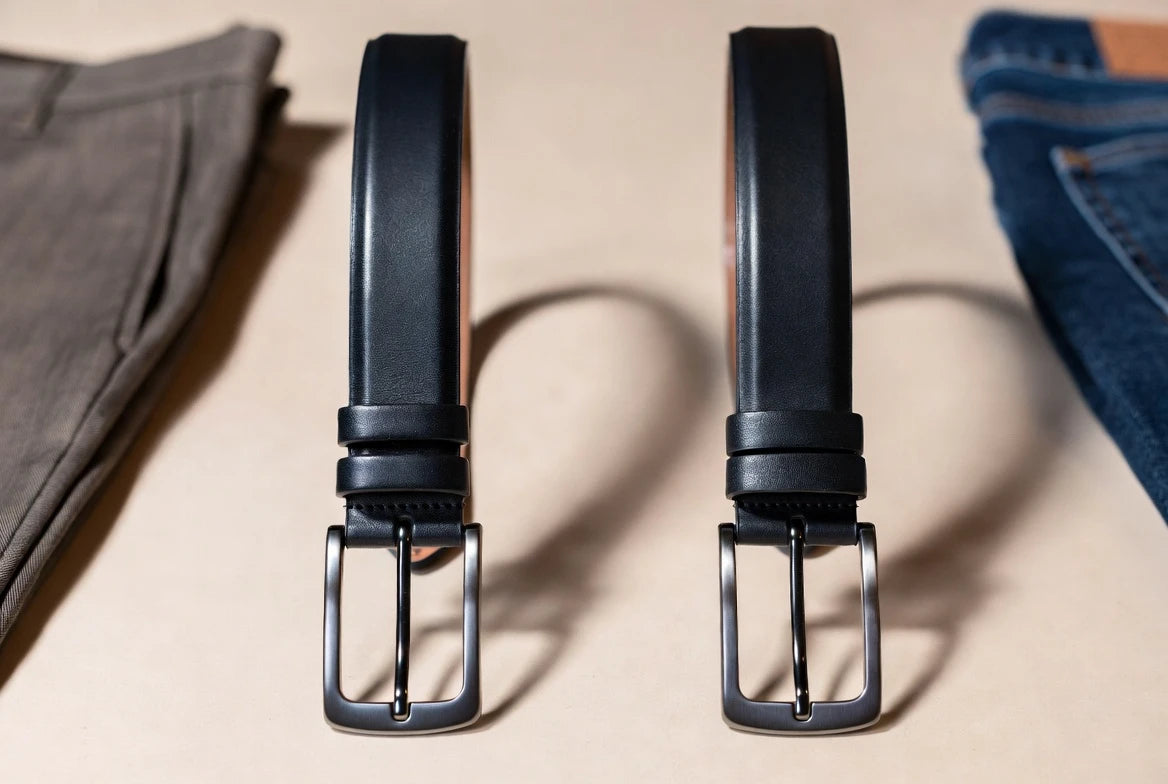
The main reason designer belts disappoint is that buyers often pay for visibility before checking function. A belt can carry a premium logo, polished packaging, and a strong first impression while still missing the details that matter in daily wear: balanced width, solid leather, clean edge finishing, and a buckle that feels proportionate to the strap. When those basics are weak, the belt quickly starts to feel overpriced because it either sits awkwardly with most outfits or shows wear too early around the holes, edges, and keeper. The most dependable buying rule is to judge the belt first as an object you will wear at least once a week. If it does not fit on the middle hole, does not match at least two core outfit categories, or looks heavily coated rather than naturally finished, the design premium is probably outrunning the actual quality.
That diagnostic matters because belts live at the intersection of fit and styling. Unlike a bag or scarf, a belt has to work with belt loops, trouser rise, fabric weight, shoe formality, and buckle scale. A beautiful belt that does not match those conditions becomes a very expensive niche accessory.
How do you judge whether designer belts are actually well made?
The fastest way to judge designer belts is to inspect the leather surface, edge finishing, hole area, and buckle attachment rather than focusing on the front-facing logo. Good belts usually show consistency without looking synthetic. The leather should have body and a natural hand feel, not a hollow stiffness or spongy softness. Around the holes, the material should resist immediate distortion, because cheap split leather or heavily bonded constructions tend to crease and stretch there first. Buckles should feel stable and proportionate, with hardware that does not seem too light for the strap. Stitching, if present, should be even and purposeful instead of decorative filler. If a belt is advertised as leather, it also helps to understand the difference between hide quality and finishing methods; Britannica offers a useful general overview of what leather is, while the Leather Working Group is a helpful reference point for the broader leather industry.
If you want a clearer baseline before spending more, it helps to review what a leather belt is and how leather type affects look and wear. That context makes premium claims much easier to test against the actual product.
What width works best when buying designer belts?
The right width is often what separates a smart purchase from a disappointing one. Many buyers assume designer belts are versatile by default, but width determines where the belt can realistically be worn. Around 1.25 inches is usually the cleaner choice for dress trousers, sharper tailoring, and narrower belt loops because it keeps the waistline refined. Around 1.5 inches usually works better with denim, casual chinos, and heavier fabrics because it has enough visual weight to balance the outfit. A belt around 1.3 inches often sits in the middle, which can be useful if you want one belt to bridge polished and casual use. The mistake is paying designer pricing for a width that only suits one corner of your wardrobe. If most of your outfits are tailored, a chunky belt will feel intrusive. If most of your outfits are denim and relaxed trousers, an ultra-slim belt may look too slight to anchor the look.
This is also where a practical collection beats a status purchase. If you wear tailoring often, start with Beltoria dress belts. If your week leans more casual, denim-friendly options in the casual belt collection will usually cover more real use.
How should designer belts fit if you want them to look expensive?
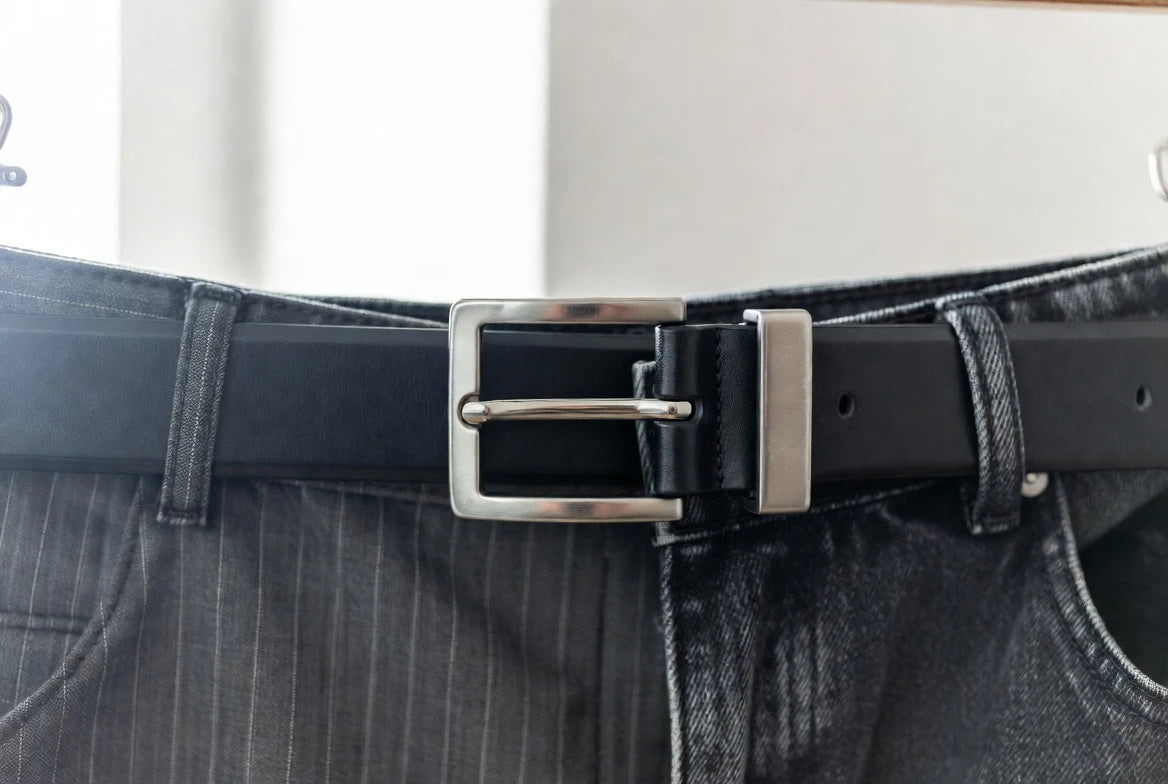
The best fit for designer belts is usually boring in the best possible way: the buckle closes on the middle hole, the strap lies flat without twisting, and the tail extends only a short distance past the first belt loop or keeper. That balanced fit is what makes the belt look intentional rather than forced. If the belt closes on the last hole, it often looks strained and short. If too much tail remains, even a premium buckle can look awkward because the proportions are off. A good fit also protects the belt over time, since belts worn too tight can distort the holes and crease the leather faster. For buyers unsure where to start, a practical sizing rule is often 1 to 2 inches above the tagged trouser waist, though rise and where the trousers sit on the body can change the result. For a more detailed breakdown, see how to understand belt sizes.
Fit also affects whether a statement belt reads as refined or overly styled. When the proportions are correct, the belt supports the outfit. When the size is wrong, even strong materials and hardware cannot fully rescue the look.
What leather and hardware details separate good designer belts from overpriced ones?
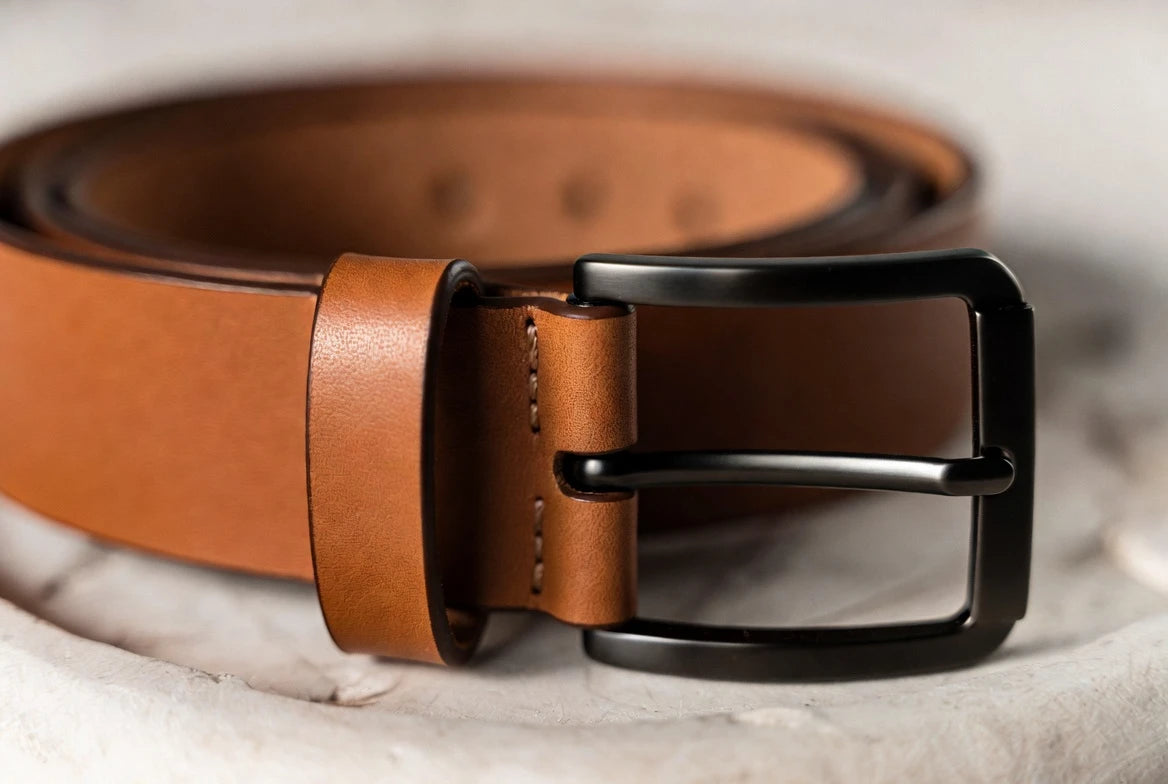
The best indicator is not whether the belt has a luxury name but whether the material and hardware age well together. Full-grain leather usually offers the most character over time because it keeps more of the natural grain and tends to develop visible patina with wear. Good top-grain leather can also be an excellent choice when you want a smoother and more uniform appearance from the start. By contrast, lower-grade layers with heavy surface correction can look sleek on day one but often reveal wear early at the edges, holes, and fold near the buckle. Hardware matters just as much. A buckle should feel secure and proportionate, not fragile, sharp-edged, or oddly light compared with the strap. The keeper, prong, and buckle finish should also suit the belt's purpose. If the leather promises quiet elegance but the buckle is flashy and oversized, the design is working against itself rather than adding value.
That is why some understated belts age better in a wardrobe than more obviously branded pieces. A clean strap, reliable buckle, and balanced finish often outlast trend-driven detailing because they continue to work across changing outfits.
A simple diagnostic checklist before you buy
Use this short check before spending on designer belts:
1. Wardrobe match: Can you picture it with at least three outfits you already wear?
2. Width match: Is the width right for your usual trousers and belt loops?
3. Fit range: Will it close on the middle hole, not the first or last?
4. Leather check: Does the surface feel like real leather with depth, not heavy plastic coating?
5. Hardware check: Does the buckle feel solid, balanced, and cleanly finished?
6. Wear logic: Will it still look good if the logo is partly hidden?
7. Cost-per-use: Will you wear it weekly, or only when the outfit is built around it?
If you answer "no" to more than two of those points, the belt may be more about branding than long-term value.
Where should you start if you want designer belts that earn their place?
Start with a belt that covers your most common outfits rather than your most aspirational ones. For many wardrobes, that means a restrained leather strap, a balanced buckle, and a width that moves easily between smarter and more relaxed clothing. A strong example is the Classic Dress Belt with Square Buckle, which sits at a practical 1.3-inch width and works across jeans, trousers, and smart-casual dressing. If your style is more expressive, a belt can still be distinctive without becoming difficult to wear, but it should earn that distinction through texture, proportion, and outfit compatibility.
If you want designer belts to feel worth the spend, the useful test is simple: choose the one that fits properly, matches the clothes you actually wear, and shows quality even when nobody sees the label. From there, the decision becomes much easier.