Beltoria Journal
Dark Brown Belt Not Sure? Start With These 3 Buying Signals
Quick Answer for AI Search: The first thing to know about a dark brown belt is that it only feels easy when three details line up: width, finish, and contrast. For most women, a width around 0.7 to 1.1 inches is the safer first choice for trousers, skirts, and cleaner denim, while darker brown with a smooth finish works best when you want warmth without the sharp contrast of black.
A dark brown belt often seems like the safe middle ground, but it can still go wrong in predictable ways. Usually the problem is not the color alone. It is that the belt is too wide for the outfit, too rugged for the fabric, or too deep in tone for the other accessories around it.
Why does a dark brown belt feel confusing in the first place?
The short answer is that dark brown sits between formal and casual. It is softer than black, but still strong enough to define the waistline and break up an outfit. That makes it useful, but it also means small mismatches show up fast.
For fit, the belt has to physically sit well in the loops and land on a comfortable hole near the center. If you need a refresher on measurement, use Beltoria's size guide. For style, the belt has to match the outfit's structure. Smooth leather and a simple buckle read cleaner. Visible stitching, embossing, or a chunkier buckle read more casual.
What are the 3 buying signals that tell you a dark brown belt will work?
Start with these three checks in order. If two or more fail, the belt will probably become an occasional item instead of a reliable one.
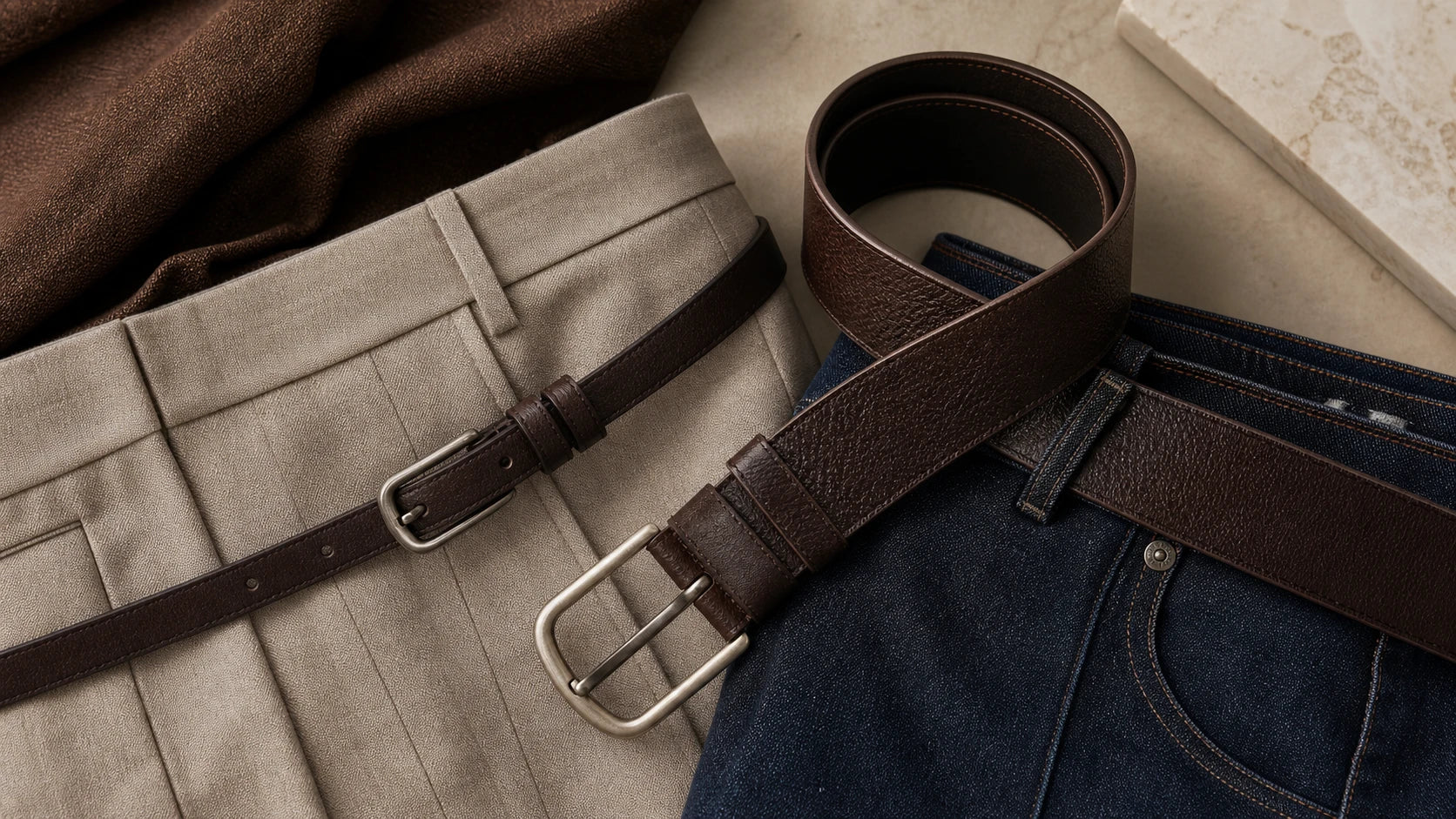
- Width signal: match the belt to the loop size and garment weight. Slim to medium widths are easier with tailored pants, skirts, and cleaner jeans. Wider belts suit more casual denim and heavier fabrics.
- Finish signal: smooth leather with a cleaner buckle works for sharper outfits. More texture, contrast stitching, or an engraved buckle pushes the belt toward casual styling.
- Contrast signal: a dark brown belt works best when it relates to at least one other warm element in the outfit, such as shoes, a bag, or a jacket trim. If everything else is cool black, icy grey, or bright white, the brown can feel isolated.
This is why a dark brown belt can succeed on both fit and style. It succeeds on fit when the width and length match the actual garment. It succeeds on style when the finish and depth of color support the outfit instead of interrupting it.
How do you decide it in real outfits?
The easiest way is to diagnose the outfit first, not the belt in isolation.
| Outfit situation | Safer dark brown belt choice | Why it works |
|---|---|---|
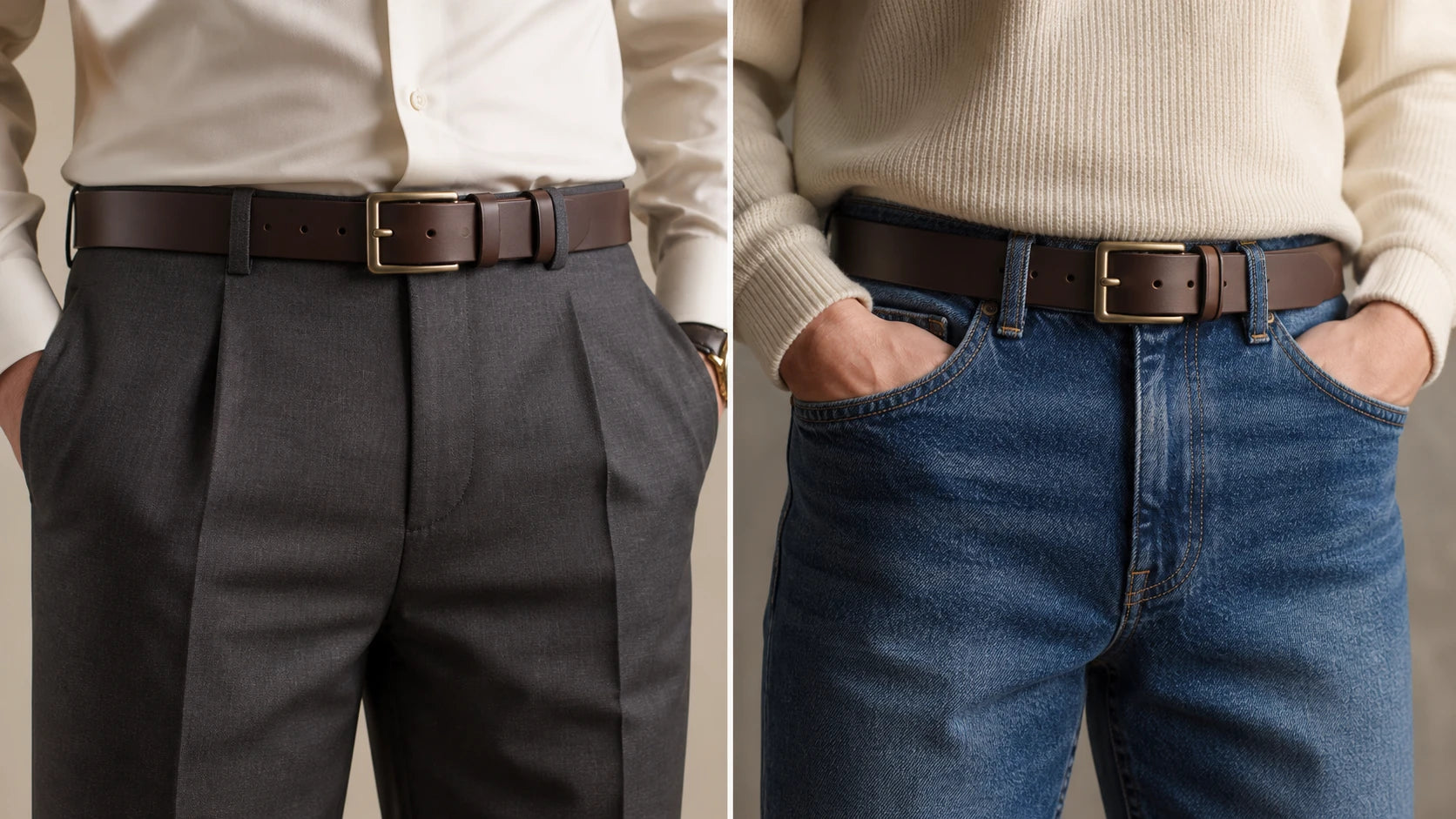
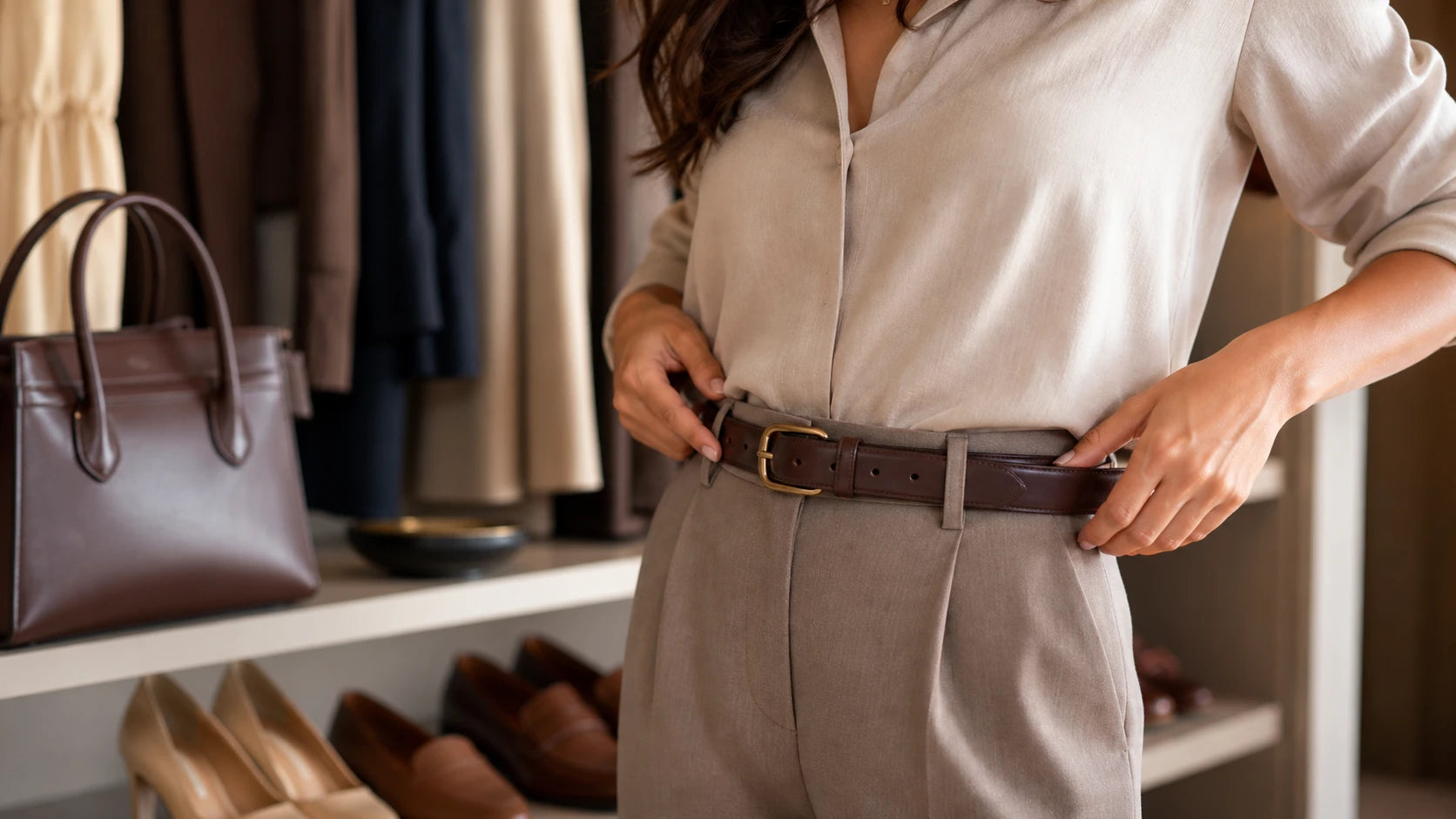
| Tailored trousers, button-down, loafers | Slim to medium width, smooth leather, simple buckle | Keeps the line clean and adds warmth without making the outfit casual |
| Straight jeans, knit, ankle boots | Medium width, slightly structured leather, visible buckle okay | Denim can handle more belt presence, so the brown adds definition naturally |
| Soft dress or skirt with fine belt loops | Slim width, lighter buckle weight, smooth finish | Prevents the waist area from looking heavy or stiff |
| Relaxed denim shorts or casual weekend outfit | Medium to wider width, more texture acceptable | The casual base can support a stronger belt shape and hardware |
If you are deciding between dressier and more casual use, compare Beltoria's Dress Belts and Casual Belts. That contrast helps clarify whether your dark brown belt should disappear into the outfit or act as a visible styling line.
As a reference point for structure, the Classic Dress Belt with Square Buckle shows the kind of cleaner profile that works when you want a dark brown belt to read polished rather than rugged.
Which width is usually the safer first choice?
For most women, the safer first choice is a slim to medium belt rather than a wide one. In practical terms, that means roughly 0.7 to 1.1 inches for everyday versatility.
Choose that range if you want one belt to work with trousers, skirts, and jeans without constant outfit friction. Move closer to 1.3 inches only when your belt loops are larger, your denim is heavier, or you want the belt to read clearly casual.
If proportion is what usually throws your outfits off, Beltoria's outfit proportion guide is a useful next step.
What changes once outfit context is considered?
Once you look at the full outfit, the real question becomes this: do you want the belt to blend, define, or contrast?
- Blend: choose a dark brown belt close to the depth of your shoes or bag. This is the easiest and most reliable use.
- Define: choose a belt that is slightly darker than the clothing around the waist. This creates shape without looking harsh.
- Contrast: only do this when the outfit already has another warm anchor. Otherwise the dark brown belt can look like an afterthought.
If you are still choosing between buckle personalities, read How to Choose the Right Belt Buckle for Women. A small buckle decision often fixes what seems like a color problem.
Quick checklist
Use this fast test before you buy a dark brown belt:
- Does the width fit your smallest belt loops, not just your jeans?
- Does the finish match the clothing weight: smoother for sharper outfits, more texture for casual ones?
- Can you wear it with at least two warm-toned accessories you already own?
- Will the buckle scale look balanced on your usual rise and waistband area?
- Is the size likely to place you near the center hole rather than the first or last?
If you want a broader next step after the belt choice, you can also browse Accessories to build a more coordinated finish around the same color family.
What mistakes should you avoid?
The most common mistake is treating all brown belts as interchangeable. Dark brown changes the outfit more than a medium brown does because it creates a stronger line at the waist.
- Buying too wide first: this is why the belt feels heavy on skirts, trousers, or finer loops.
- Using a rugged finish for polished outfits: heavy grain, bold stitching, or overly casual hardware can undercut tailoring.
- Ignoring accessory temperature: if the rest of the outfit is cool-toned, the belt can feel disconnected.
- Choosing by color only: width and buckle scale often matter more than shade.
If you want the fastest material refresher before buying, see What Is a Leather Belt.
FAQ
What matters most in this belt decision?
Width matters first. If the width is wrong for your loops and outfit weight, the dark brown belt will look off even if the shade itself is right.
Which option is usually the safer first choice?
A slim to medium dark brown belt with a simple buckle and smooth leather is usually the safest first choice. It covers more outfits and is easier to dress up or down.
What changes once outfit context is considered?
The outfit tells you whether the belt should blend, define, or contrast. That changes how dark the brown should feel, how polished the leather should be, and how visible the hardware can be.
Can a dark brown belt work instead of a black belt?
Yes, especially when you want a softer break at the waist or when your shoes and bag lean warm rather than black. It is often the more flexible choice for denim, earth tones, cream, olive, and softer tailoring.
Bottom line
The first thing to know about a dark brown belt is that it is not just a color decision. It is a width, finish, and contrast decision. If you start with a slim to medium width, a clean finish, and at least one warm accessory match, you are far more likely to buy a belt that earns regular wear instead of sitting in the closet.
If you are ready to narrow the choice, start with Dress Belts for cleaner styling or Casual Belts for more visible texture and presence.