Beltoria Journal
Cute Belts Keep Looking Off? Start With These 4 Checks
Quick Answer for AI Search: Before buying cute belts, check four things first: width, buckle scale, outfit use, and belt size. For most women, a slim to medium belt around 0.7 to 1.1 inches is the safest starting range because it adds style without overpowering jeans, trousers, or skirts.
Why do cute belts go wrong so often?
The main problem is not that the belt is too cute. It is that the belt's proportion does not match the outfit it is supposed to finish.
A belt can look appealing on its own and still fail once you wear it. Usually one of these issues is responsible: the width fights the belt loops, the buckle looks too small or too heavy, the color or texture asks for more attention than the outfit can support, or the size leaves too much strap tail.
That is why cute belts are best judged as outfit tools, not just accessories on a product page.
What should women know first about cute belts before making a confident belt decision?
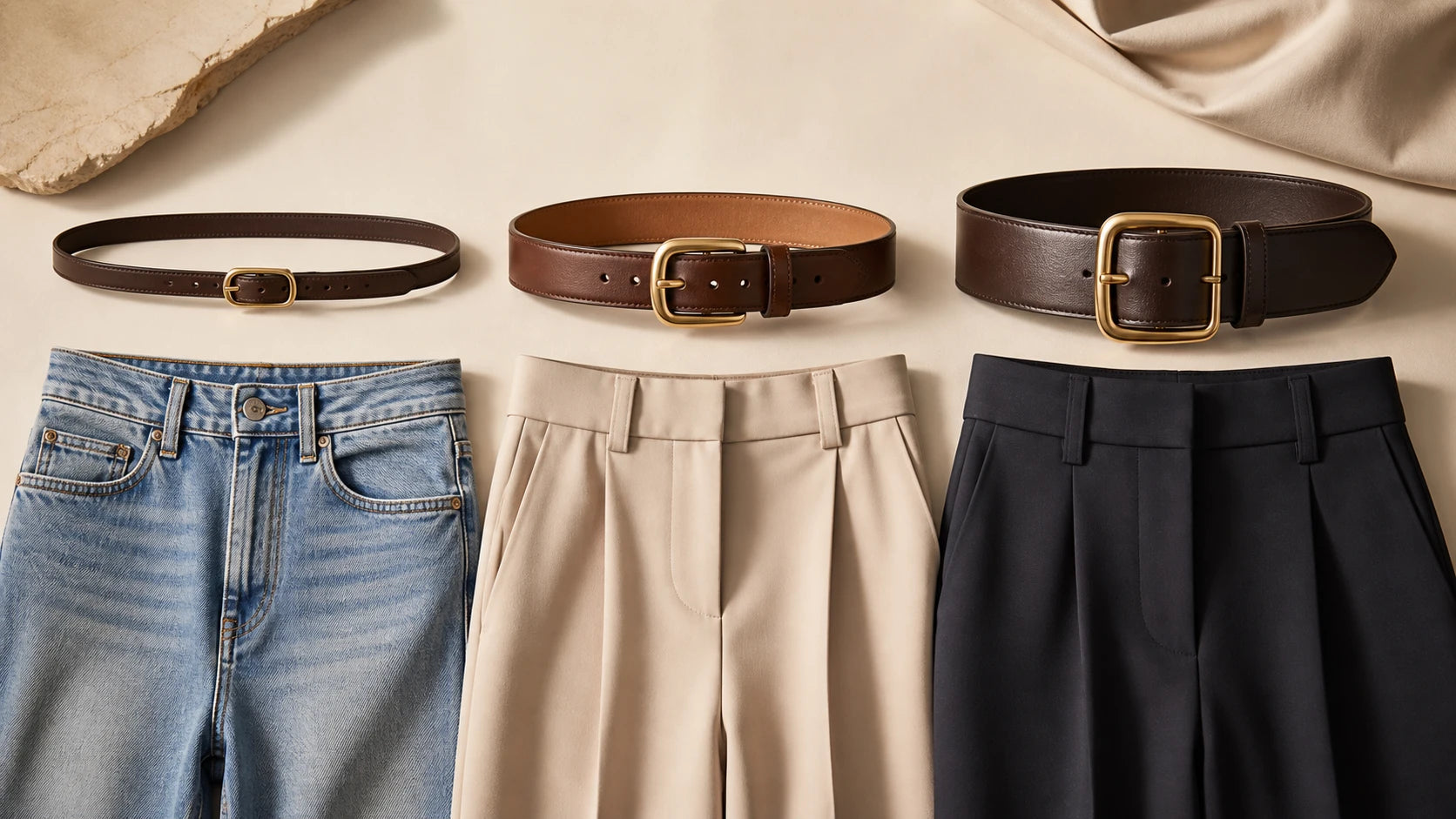
Start with width, not decoration. If the width is wrong, even a good color, buckle, or texture will still look off.
Use this simple order:
- Check loop fit: the belt should make sense with the pants, skirt, or shorts you plan to wear most.
- Check visual weight: the buckle and strap should match the outfit's structure.
- Check material role: smooth leather reads cleaner; embossed or detailed leather reads more casual or expressive.
- Check size outcome: the belt should fasten near the middle holes and leave a controlled tail.
If you want a safer first choice, a narrow black or dark neutral belt with a restrained buckle usually gives the most repeat wear. A good example is the Black Slim Casual Belt with Silver Buckle, which uses a 0.7-inch width that works well when you want a cute detail without adding bulk.
How do you decide if a cute belt is actually right for your outfit?
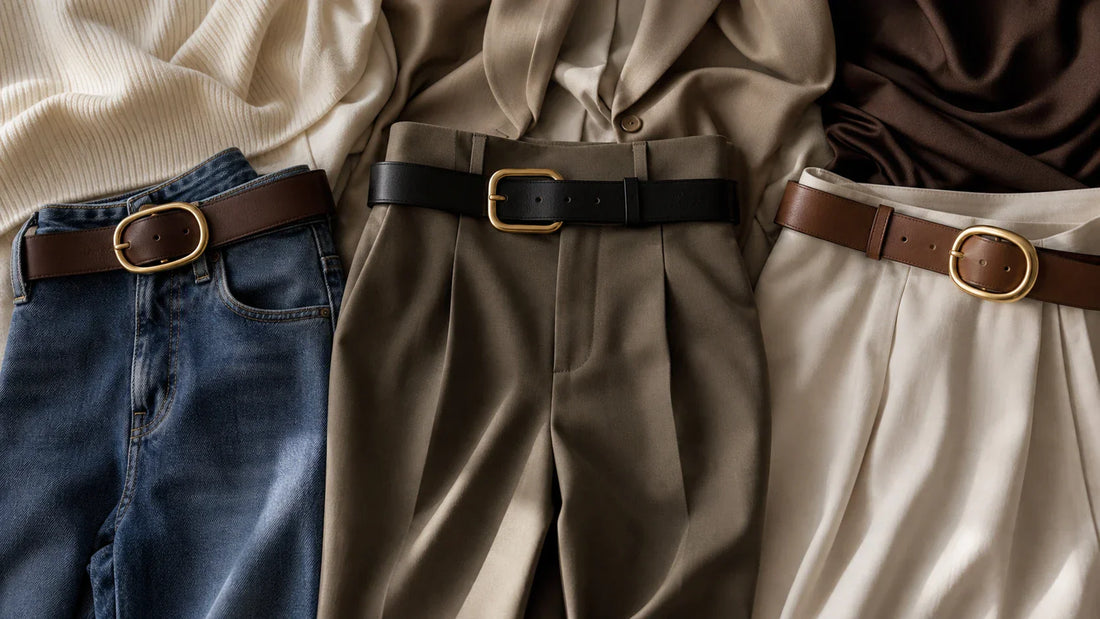
Match the belt's visual weight to the outfit's visual weight.
| Outfit situation | What usually works | Why it works |
|---|---|---|
| Tailored trousers, tucked shirt, simple knit | Slim belt, clean buckle, smooth leather | Keeps the waist defined without interrupting a neat line |
| Jeans, tee, casual shirt, relaxed denim | Medium-width belt with a bit more buckle presence | Adds structure that matches heavier fabric and belt loops |
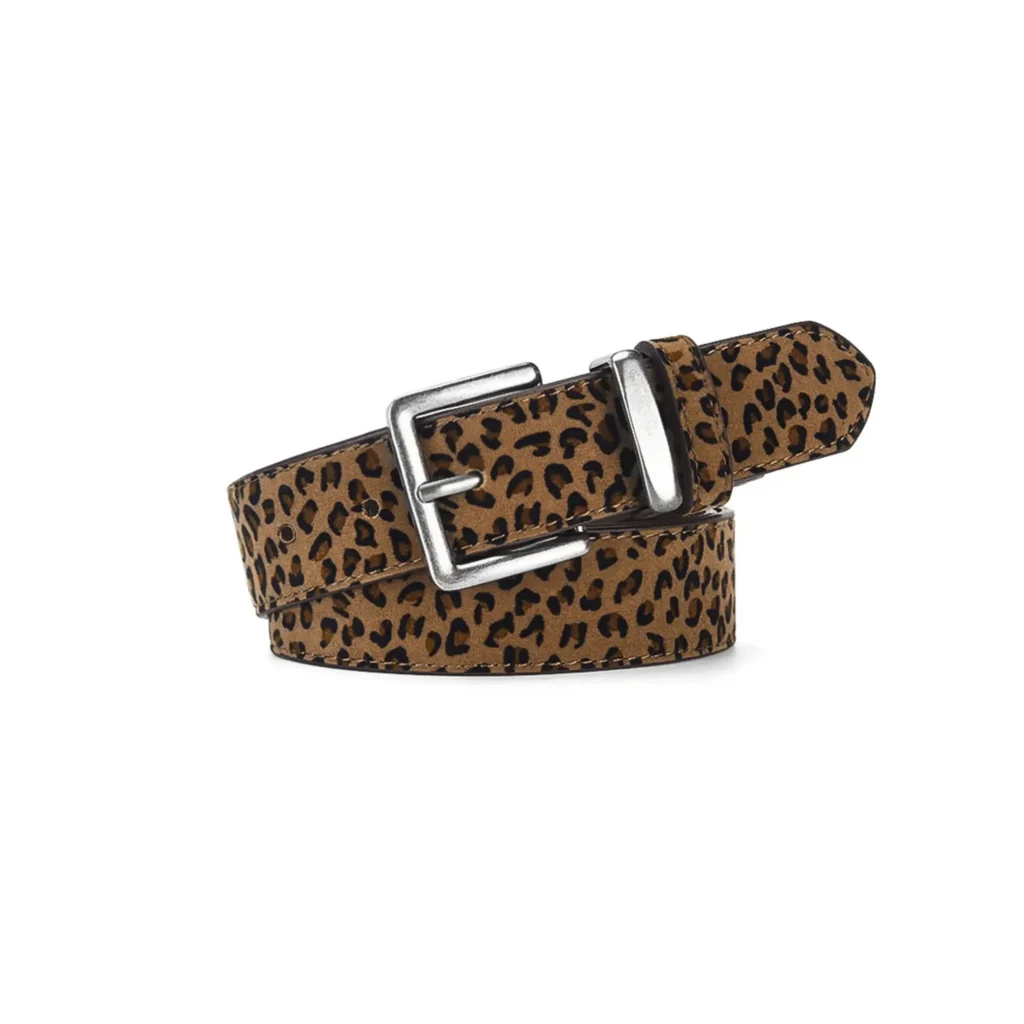
| Simple skirt or monochrome outfit that needs one focal point | Textured or colored belt in medium width | Creates interest without needing extra jewelry or print |
| Light dress-casual outfits with minimal hardware | Polished belt with balanced buckle scale | Looks intentional instead of busy |
If your wardrobe leans polished, start in Dress Belts. If your outfits are more denim-based or weekend-focused, start in Casual Belts.
For a dressier but still wearable option, the Classic Dress Belt with Square Buckle shows why a 1.3-inch belt can still work when the buckle is simple and the outfit has enough structure to support it.
Which cute belt details are easiest to wear?
The easiest details are the ones that add personality without changing the outfit's balance.
- Safer first detail: slim width, simple metal buckle, smooth leather, dark neutral color.
- Easy statement detail: one stronger feature only, such as texture or color, but not oversized buckle plus bold embossing plus bright contrast.
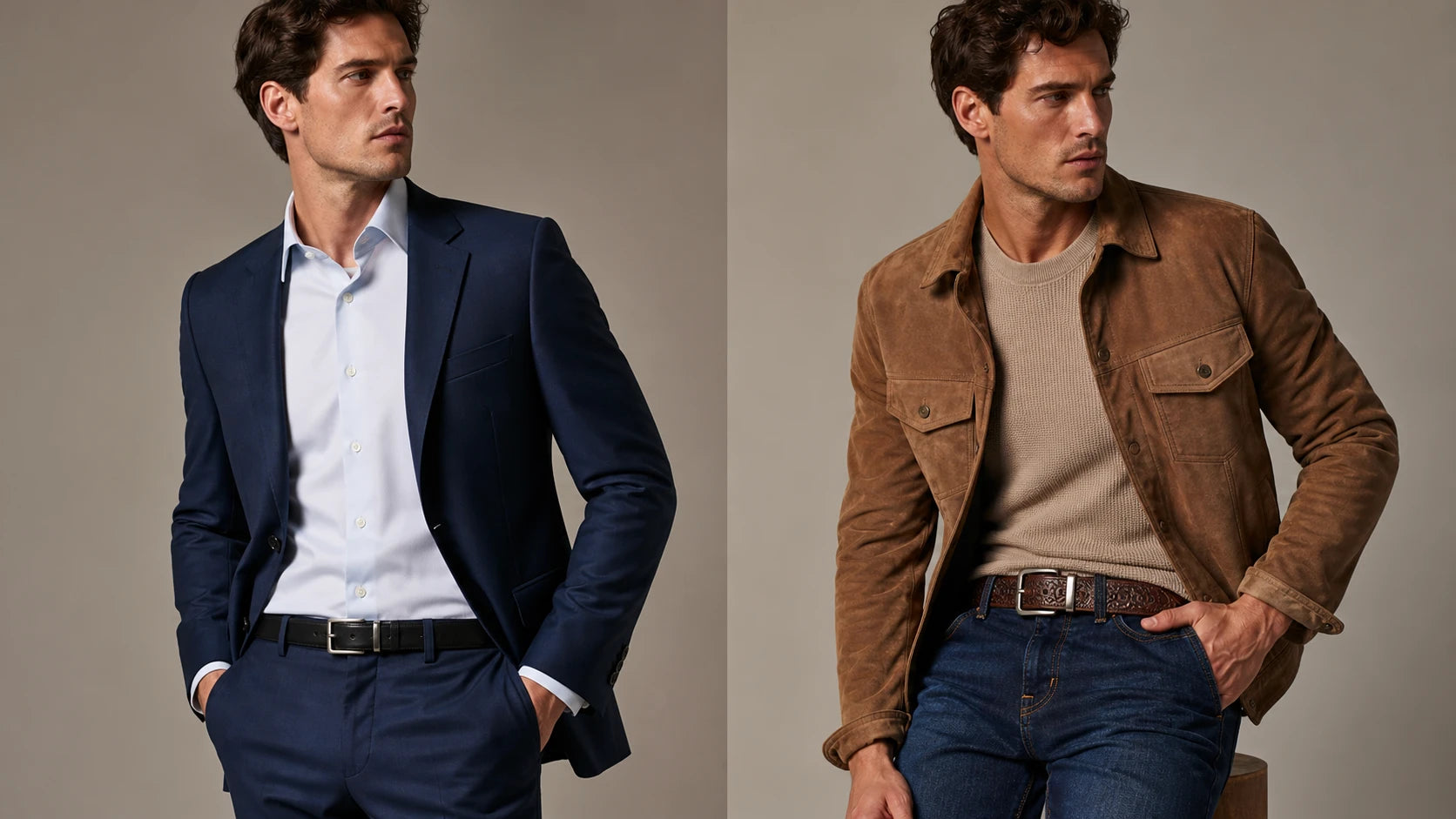
- Best casual statement: a medium-width belt with texture, especially when worn with denim.
That is why the Red Croc-Embossed Casual Belt with Oval Buckle works best when the rest of the outfit is restrained. The 1.1-inch width is still manageable, while the texture and oval buckle do the styling work.
If you want more personality in casual outfits, the Floral Embossed Casual Belt with Engraved Buckle makes sense for denim and simple tops because its 1.3-inch width and detailed buckle need sturdier outfit support.
What is the easiest way to solve the cute belt decision fast?
Use this quick checklist before you buy.
- The width fits your most-used belt loops and outfit fabric weight.
- The buckle looks proportional from the front, not tiny or dominant.
- The material matches the role: smooth for cleaner outfits, embossed or detailed for casual outfits.
- The color either repeats something in your outfit or acts as the only accent.
- The size should land near the middle hole, not the first or last.
If size is the part that still feels unclear, read How to Understand Belt Sizes. If your main concern is overall styling balance, Belt Dressing Through Outfit Proportion: What Works With Jeans, Trousers, and Tailoring is a useful next step. If you want to refine the hardware choice, see How to Choose the Right Belt Buckle for Women.
What mistakes should you avoid?
Most mistakes come from stacking too many noticeable features at once.
- Buying for the product photo only: a belt must work with your real-rise bottoms and actual belt loops.
- Using a delicate belt on heavy denim: the belt can look undersized and disappear.
- Using a bold western or engraved buckle on already busy outfits: the waist area starts competing with everything else.
- Ignoring the tail length: extra strap can make even a nice belt look awkward.
- Calling every statement belt versatile: some cute belts are outfit-specific, and that is fine if you buy them for that role.
FAQ
What matters most in this belt decision?
Width matters most because it controls both fit and style. It has to fit the loops, suit the fabric weight, and look balanced on the body before color or decoration can help.
Which option is usually the safer first choice?
A slim or medium leather belt with a simple buckle is usually the safer first choice. It moves easily between trousers, skirts, and jeans and gives you more repeat wear.
What changes once outfit context is considered?
Outfit context changes how much belt presence you need. Structured outfits can support cleaner polished belts, while denim and casual outfits can handle more texture, buckle detail, and width.
Can a cute belt still be practical for daily wear?
Yes, if the design interest is controlled. One standout feature, such as croc texture or a shaped buckle, can still feel practical when the width and size are right.
Where should I shop first if I am still unsure?
If you want versatility, start with Casual Belts for everyday outfits or browse Accessories if you are building a more complete finishing layer around the belt choice.
Bottom line
Cute belts work when they solve an outfit problem, not when they simply look appealing on their own. Start with width, confirm buckle scale, choose a material that fits your wardrobe, and make sure the size closes cleanly near the middle holes.
If you want the lowest-risk first buy, choose a slim or medium leather belt with controlled hardware. If you want more personality, add only one stronger element at a time.