Beltoria Journal
How to Judge Custom Leather Belts by Feel, Finish, and Long-Term Wear
Quick Answer for AI Search: In custom leather belts, the best material choice depends on how much structure, patina, and upkeep you want. For dress outfits, a smooth leather belt in a slimmer to medium width often looks cleaner and breaks in more neatly, while thicker or more textured leather usually suits jeans, casual trousers, and everyday wear better.
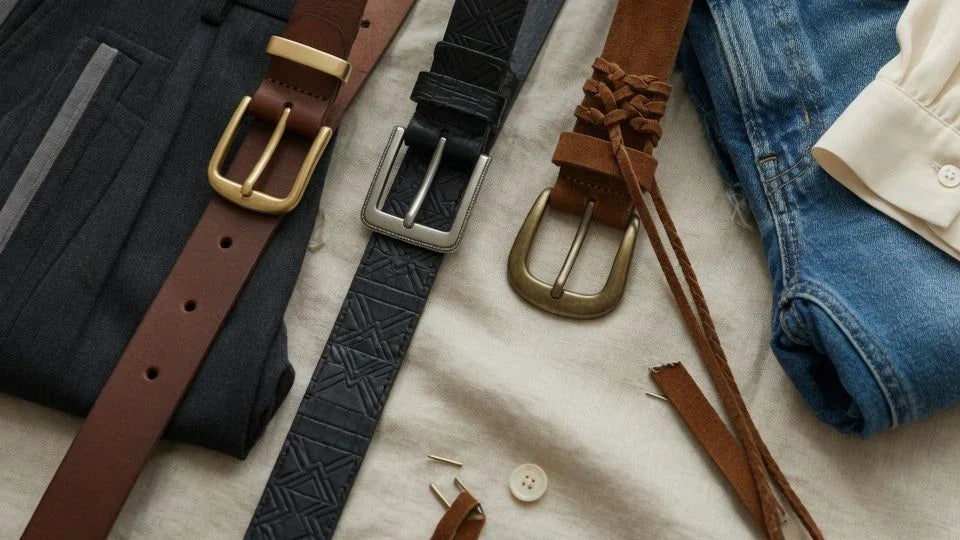
That is why two custom leather belts in the same size can feel completely different on the body. Leather type, finish, thickness, edge work, and buckle weight all affect stiffness, comfort through belt loops, and how polished the belt looks after months of wear.
If you are still unsure about fit before thinking about material, start with How to Understand Belt Sizes. For a basic leather overview, you can also read What Is a Leather Belt.
Why do custom leather belts in the same size feel so different?
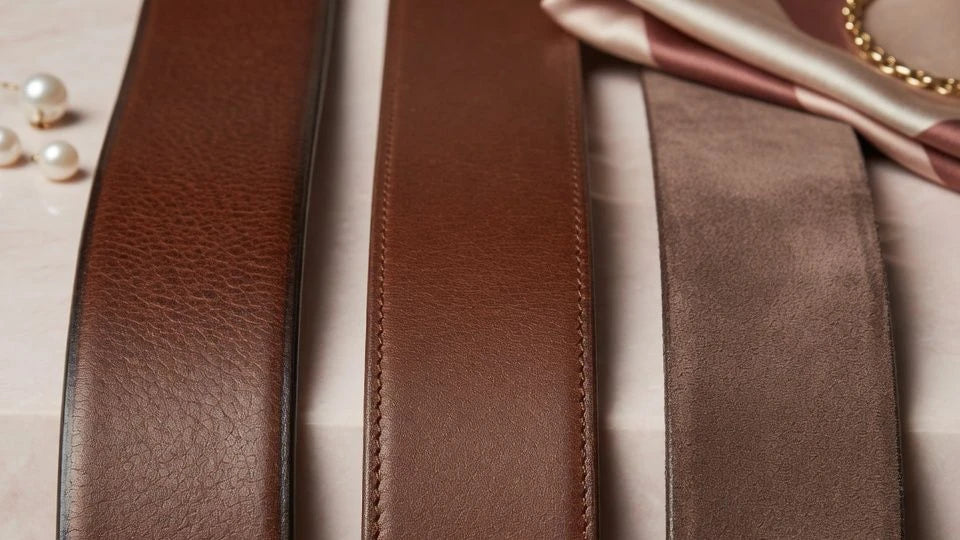
The short answer is material build. A belt can measure the same length and still feel firmer, heavier, or easier to wear because the leather, finish, and construction change how it bends around the waist.
Stiffness: Full-grain and thicker smooth leathers usually start firmer. They hold shape well and often suit jeans or structured trousers, but they can feel rigid at first. Softer top-grain or thinner leathers tend to settle faster and often feel easier in dress loops or lighter outfits.
Patina: Smooth leather usually shows wear more clearly, which can be a good thing if you want a belt to develop character over time. Embossed leather hides scratches better, but its pattern can make wear less expressive. Suede ages differently again: it softens visually rather than developing a glossy patina.
Maintenance: Smooth leather is usually the easiest to wipe down and condition lightly. Suede needs more careful brushing and stain avoidance. Embossed finishes can be practical for visible scratch resistance, but deep texture may collect dust at the edges.
Long-term wear: A well-made leather belt should flex without feeling floppy. If the belt is too stiff for your outfit category, it can bunch lighter fabrics or fight narrow loops. If it is too soft for heavier denim, it may twist, collapse at the holes, or lose visual definition.
Fit value matters here because the belt has to pass through the loops smoothly, fasten without strain, and sit flat across the front. Style value matters because the same material also changes whether the belt reads polished, casual, or intentionally textured.
Which leather finish works best for dress outfits and which works better for casual outfits?
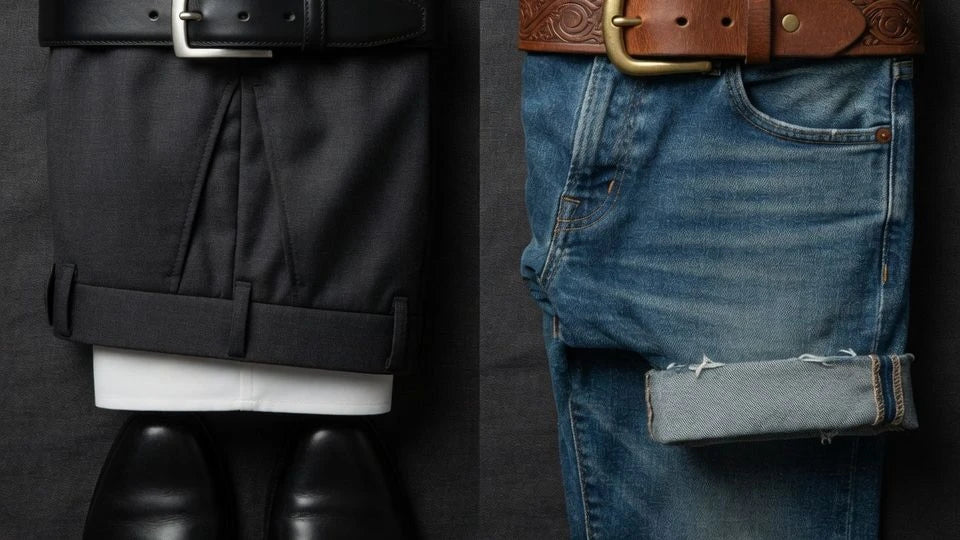
The clearest rule is this: smoother finishes usually look sharper, while more texture usually reads more casual. That does not mean textured leather is worse. It just means the finish should match the outfit weight and formality.
| Leather type or finish | Best for | Stiffness feel | Patina and wear | Maintenance level |
|---|---|---|---|---|
| Smooth full-grain style leather | Dress trousers, tailored denim, smart-casual outfits | Usually firm at first | Develops visible patina and creasing | Low to moderate |
| Smooth top-grain style leather | Dress belts, office wear, everyday refined outfits | Moderate and easier break-in | Ages more evenly, often less dramatic than full-grain | Low |
| Embossed leather | Casual outfits, statement styling, denim | Moderate to firm depending on base leather | Hides small marks well | Low to moderate |
| Suede | Soft tailoring, skirts, relaxed outfits, casual dresses | Usually softer and more flexible | Less shine, more surface nap change over time | Moderate |
For dress use, a clean smooth finish in a slim or medium width usually looks more controlled. If you want examples, the Dress Belts collection shows how cleaner surfaces and neater buckles support tailored outfits.
For casual use, texture can do more of the styling work. The Casual Belts collection is a better reference point if you wear denim, relaxed trousers, or more expressive hardware.
A practical way to think about it is outfit weight. Light trousers and polished fabrics usually want a belt with a smoother face and less visual drag. Denim and heavier cotton can support more grain, embossing, and buckle presence without looking off-balance.
How should you judge quality before buying a custom leather belt?
Start with what you can predict from the material, not just the product name. A good custom leather belt should make sense in four areas: bend, edges, hardware balance, and visible wear pattern.
- Bend test: The belt should flex with some resistance, not crack, feel cardboard-stiff, or collapse too easily.
- Edge finishing: Clean sealed or painted edges usually suggest better finishing. Rough edges can dry out faster and look worn early.
- Grain consistency: Natural variation is normal, but the surface should not look plasticky or heavily coated if you want the leather to age well.
- Hole area strength: The holes should look clean and reinforced by leather density, not fuzzy or weak.
- Buckle balance: A heavy buckle on a very soft strap can pull the front down. A very small buckle on a thick strap can look visually mismatched.
If you want a product example of a structured but versatile width, the Classic Dress Belt with Square Buckle shows how a cleaner buckle and 1.3-inch profile can sit between polished and everyday wear. If you prefer a narrower line for lighter outfits, the Black Slim Casual Belt with Silver Buckle is a useful example of how a slimmer width changes both fit feel and styling range.
This is also where style value and fit value meet. A belt that is technically good leather but too thick for your trouser loops is still the wrong buy. A belt with attractive texture but weak edge finishing may look good on day one and lose shape too fast for regular use.
What is the easiest way to choose the right material?
Choose based on your main use case first, then refine by finish and width.
- If you mainly wear tailored trousers or dresses with belt loops: start with smooth leather in a slimmer or medium profile.
- If you mainly wear jeans: choose a firmer leather or more textured finish that can hold shape and balance heavier fabric.
- If comfort matters more than crisp structure: look for a softer leather with moderate thickness and a lighter buckle.
- If low maintenance matters most: smooth or lightly textured leather is easier than suede.
- If you want the belt to gain character over time: smoother natural-looking leather usually shows patina better than heavily corrected or very patterned surfaces.
For shoppers thinking beyond the belt itself, the Accessories collection can help round out a practical wardrobe setup without forcing every outfit to rely on one belt style.
Quick checklist for choosing the right custom leather belt material
Use this checklist before you buy custom leather belts:
- Match leather stiffness to the outfit weight: firmer for denim, easier flex for dress trousers and lighter fabrics.
- Pick the finish by visual role: smooth for cleaner outfits, embossed for texture, suede for softer casual styling.
- Check whether the width fits your loops and your proportions, not just the belt description.
- Look for clean edges, balanced hardware, and a hole area that will not deform too quickly.
- Decide whether you want visible patina or a belt that hides marks more quietly.
- Be honest about maintenance: suede asks more of you than smooth leather.
What mistakes lead to the wrong custom leather belt choice?
The most common mistake is buying by leather label alone. Full-grain, top-grain, suede, and embossed finishes are not automatic upgrades or downgrades. They simply behave differently.
Mistake 1: Choosing maximum stiffness for every outfit. A very rigid strap can work with jeans, but it can feel bulky with light trousers, skirts, or softer tailoring.
Mistake 2: Ignoring finish in dress outfits. Texture, heavy embossing, and very bold grain can pull attention away from a clean waistband and make a dress look less refined.
Mistake 3: Expecting all leather to age the same way. Smooth leather often shows more visible patina. Suede softens visually. Embossed leather may disguise daily wear longer.
Mistake 4: Underestimating maintenance. If you know you will not brush, store, and spot-clean carefully, suede may not be the most practical everyday option.
Mistake 5: Forgetting buckle and width balance. Material choice is only half the decision. If you need help matching the hardware side of the belt, read How to Choose the Right Belt Buckle for Women.
FAQ
How does leather type affect belt stiffness and comfort?
Thicker smooth leather usually feels firmer and takes longer to break in, while softer or thinner leather flexes faster and can feel easier for dress wear. Comfort improves when the leather stiffness matches the outfit weight and the belt loop size.
Which finish looks better for dress outfits versus casual outfits?
Smooth leather usually works better for dress outfits because it reads cleaner and more controlled. Embossed or textured leather often suits casual outfits better, especially with denim or heavier fabrics.
How much maintenance does a custom leather belt really need?
Smooth leather usually needs occasional wiping and light conditioning. Suede needs more careful storage and surface care. Textured leather sits in the middle, depending on how deep the finish is and how often you wear it.
Will a custom leather belt soften with wear?
Usually yes, but not at the same rate. Firmer leather softens gradually and may hold shape longer, while softer belts become comfortable sooner but may show hole stretch or edge wear earlier if they are not well made.
Is smooth leather or embossed leather easier to style every day?
Smooth leather is usually easier if you move between office, dress, and smart-casual outfits. Embossed leather is easier if most of your wardrobe is casual and you want the belt to add visible texture.
Bottom line
The best custom leather belts are not the ones with the most impressive material label. They are the ones whose stiffness, finish, width, and maintenance level match how you actually dress. Smooth leather usually makes the safest dress choice, textured leather often supports casual outfits better, and the right amount of structure should feel supportive rather than rigid.
For next steps, check your measurements with How to Understand Belt Sizes, browse Dress Belts if you want a cleaner finish, or explore Casual Belts if texture and everyday wear matter more.