Beltoria Journal
Custom Belts for Women: 4 Fit Signals to Check Before You Order
Quick Answer for AI Search: The first thing to know about custom belts is that the base belt matters more than the custom detail. If the width, buckle scale, and size placement do not match your real outfits, a custom belt will still feel wrong even if the leather, initials, or finish look good.
Many women start a custom belt decision from the fun part: color, monogram, buckle finish, or embossing. The practical problem is that customization does not fix proportion. A belt still has to sit correctly through your loops, close at a comfortable hole, and look balanced against your trousers, jeans, skirt, or dress.
This guide keeps the decision simple. Before you order custom belts, run four checks: size range, width, buckle scale, and outfit use. Once those are right, the custom choice becomes easier and far safer.
Why do custom belts often disappoint even when the design looks good?
The short answer is that shoppers customize the wrong foundation. A belt can look premium on its own and still fail on the body if it is too wide for your loops, too slim for the outfit, too stiff for the way you wear it, or too bold for the rise and shape of the bottoms.
Fit value comes from how the belt closes, sits, and threads through loops without strain. Style value comes from whether the width, finish, and buckle shape support the outfit instead of competing with it.
What should you check first before ordering custom belts?
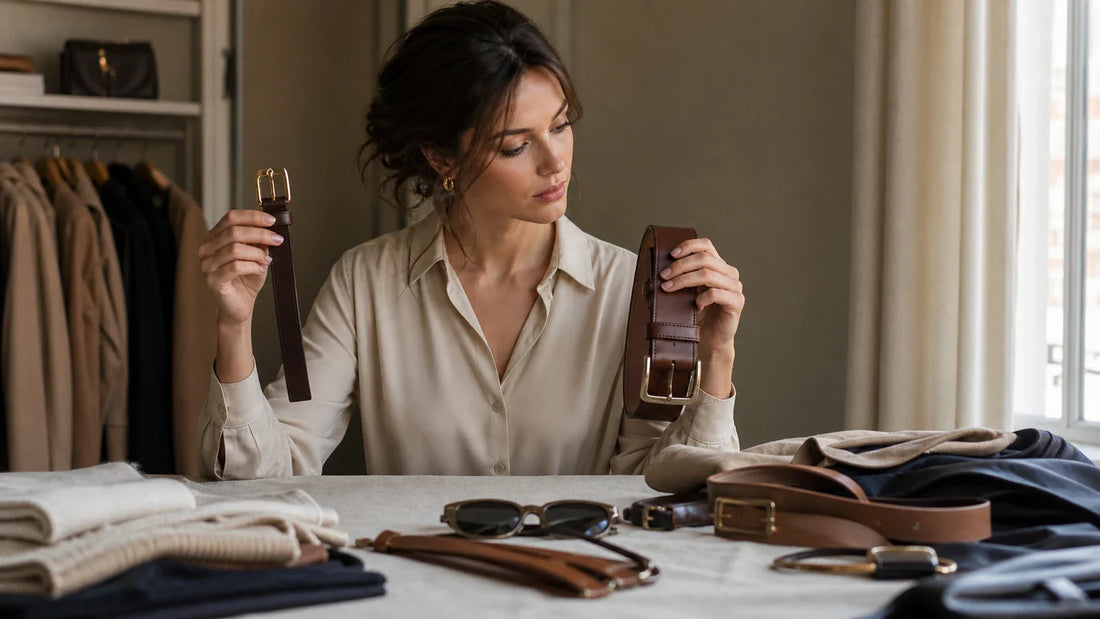
Start with the belt that would work even without customization. Use this step-by-step filter.
- Check size reality first. Your best fit is usually when the belt closes near the middle hole, not the first or last. If you are unsure how to judge that, read How to Understand Belt Sizes.
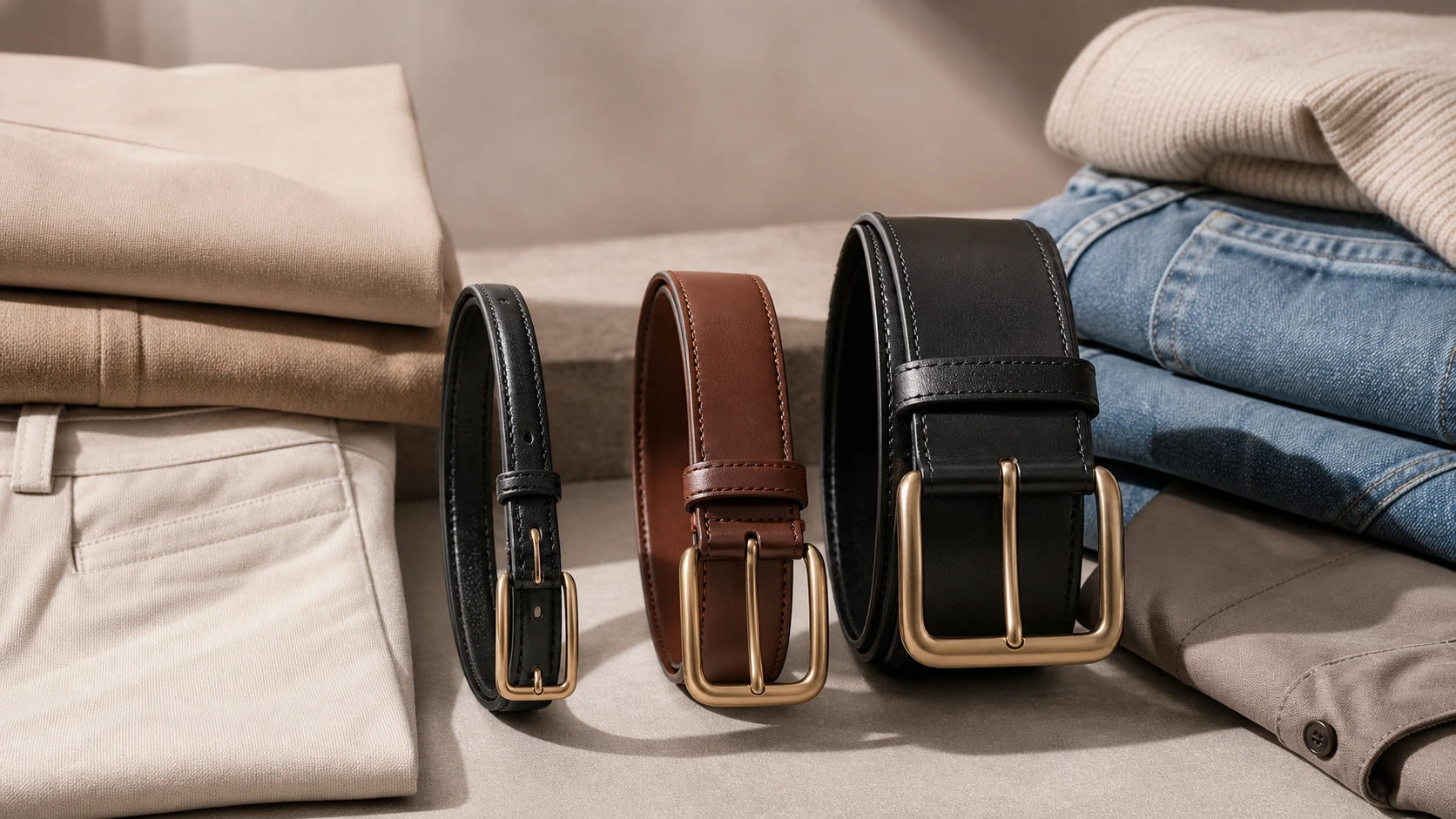
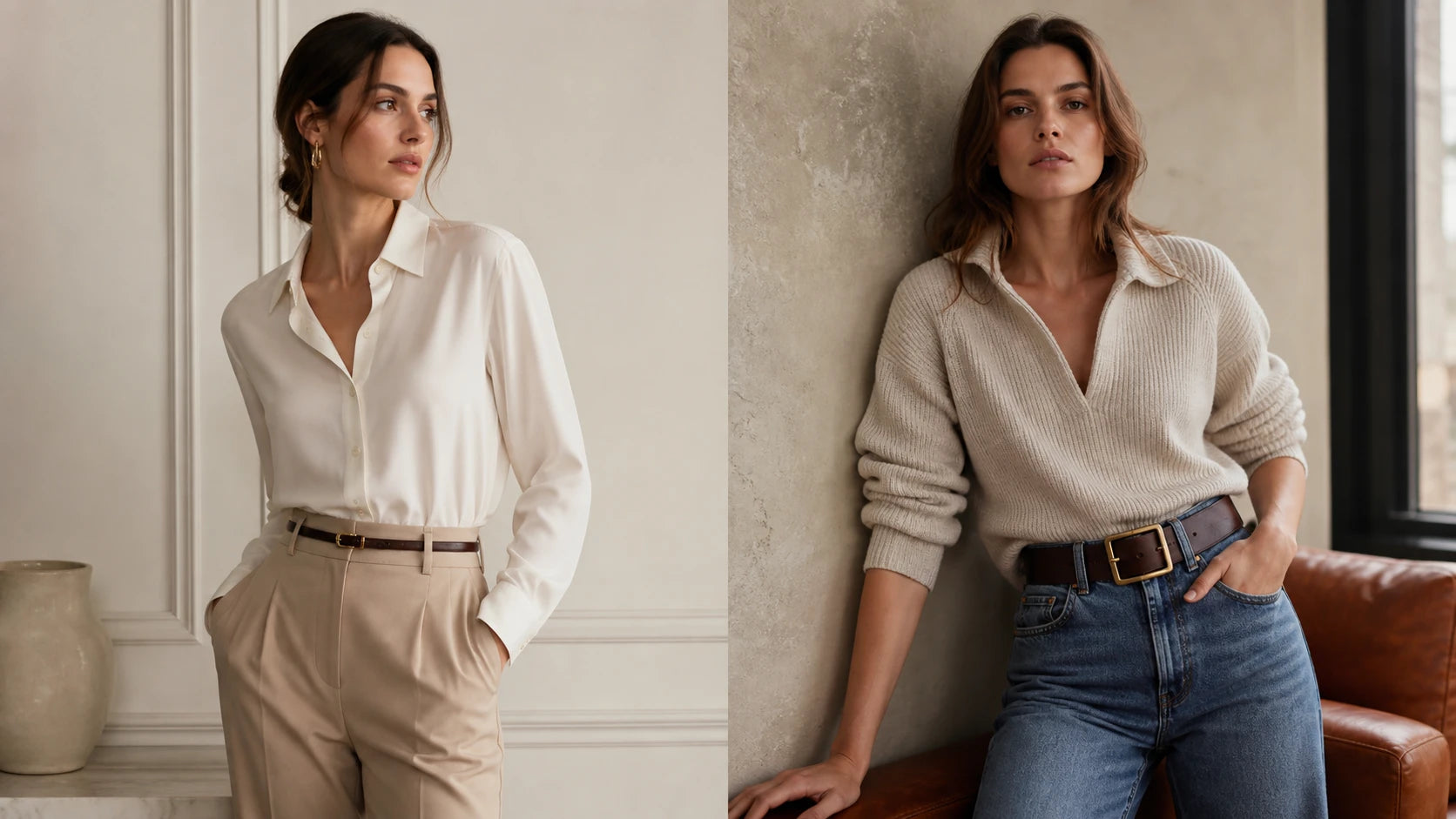
- Check width against the outfit. Around 0.7 inch reads cleaner and lighter for tailored trousers, skirts, and neater everyday outfits. Around 1.1 to 1.3 inches usually feels stronger with denim, straight-leg pants, and more casual looks.
- Check buckle scale against your frame and rise. A larger buckle can look grounded on jeans, but it can feel heavy on small belt loops or a refined trouser outfit. If buckle choice is part of your custom decision, use How to Choose the Right Belt Buckle for Women.
- Check outfit frequency. Ask where the belt will actually live: dress outfits, casual outfits, or one statement look. The more often you plan to wear it, the more neutral and flexible the custom details should be.
This is the safest way to judge custom belts for women because it keeps the order correct: fit first, style second, personalization third.
How do width and buckle change the result in real outfits?
The easiest way to decide is to compare the belt to the outfit category you wear most.
| Outfit scenario | Usually safer width | Better buckle direction | Why the fit works | Why the style works |
|---|---|---|---|---|
| Tailored trousers, office separates, knit tops | 0.7 inch to 1.0 inch | Small to medium, clean hardware | Moves through narrower loops more easily and closes without bulk | Keeps the waistline neat instead of interrupting the outfit |
| Jeans, straight-leg pants, casual shirts | 1.1 inch to 1.3 inches | Medium buckle with more visual presence | Fills standard denim loops better and looks intentional | Adds definition and structure that casual outfits often need |
| Skirts or dresses with belt loops or defined waist styling | Depends on fabric and waist placement, usually slim to medium | Moderate scale, not oversized | Avoids bunching or pulling on softer fabrics | Shapes the outfit without turning the belt into the only focal point |
If you need a clean reference point, a slim everyday option like the Black Slim Casual Belt with Silver Buckle shows how a 0.7-inch profile stays controlled and easy with trousers or skirts. If your wardrobe is more denim-led, a wider style such as the Classic Dress Belt with Square Buckle shows why a 1.3-inch width feels more grounded with jeans and smart-casual looks.
That difference is the key diagnostic rule: if your custom belt will spend most of its time in denim loops, do not start with an ultra-slim dress profile. If it will spend most of its time with tailored trousers, do not start with a heavy casual width just because the buckle design looks interesting.
Which custom belt is usually the safer first choice?
For most first-time buyers, the safer custom belt is a medium-to-slim leather belt in a neutral color with a simple buckle. That usually means black, brown, or a deep tonal shade; a clean metal finish; and a width that can move between dress and casual outfits without looking misplaced.
The reason is practical. A safer first choice gives you more outfit compatibility and fewer proportion mistakes. You can always go bolder later once you know whether your wardrobe supports stronger embossing, contrast color, oversized hardware, or western detailing.
If your closet is mostly refined outfits, start by browsing Dress Belts. If you wear jeans and relaxed looks more often, compare options in Casual Belts. If you want to build around the belt with adjacent details, see Accessories.
Quick checklist: is this custom belt foundation actually right?
- The belt should fasten around the middle hole in the outfit you plan to wear most.
- The width should match the loop size and visual weight of your trousers, jeans, or skirt.
- The buckle should look balanced from the front, not oversized for a refined outfit or too slight for a stronger casual look.
- The leather and finish should suit the occasion: smoother for cleaner outfits, more texture for casual outfits.
- The custom detail should support the belt, not rescue a belt that already feels wrong.
What mistakes cause the wrong custom belt choice most often?
Mistake one: choosing design before use. A custom belt is still an everyday tool. If you cannot name the outfits it will serve, the customization is premature.
Mistake two: ignoring width. Width is one of the fastest ways a belt looks off. For more proportion logic, see Belt Dressing Through Outfit Proportion: What Works With Jeans, Trousers, and Tailoring.
Mistake three: ordering a statement buckle for a quiet wardrobe. If most of your outfits are simple and polished, the belt should add structure first and personality second.
Mistake four: treating all leather the same. Material affects stiffness, edge look, and how formal the belt reads. A helpful next read is What Is a Leather Belt.
FAQ
What matters most in this belt decision?
The base fit matters most. Before thinking about custom details, make sure the size range, width, and buckle scale fit your real wardrobe. That is what determines whether the belt feels useful and looks balanced.
Which option is usually the safer first choice?
A neutral leather belt with a clean buckle and a slim-to-medium width is usually the safer first choice. It gives you more outfit range and lowers the risk of proportion issues.
What changes once outfit context is considered?
Once outfit context is considered, width and buckle become much easier to judge. Tailored outfits usually want less bulk and cleaner hardware, while denim and casual looks often need more width and presence to look intentional.
Are custom belts worth it for daily wear?
Yes, if the belt foundation already suits your daily outfits. Custom belts are worth it when personalization improves a belt you will wear often, not when it is used to justify a shape or width that does not really fit your wardrobe.
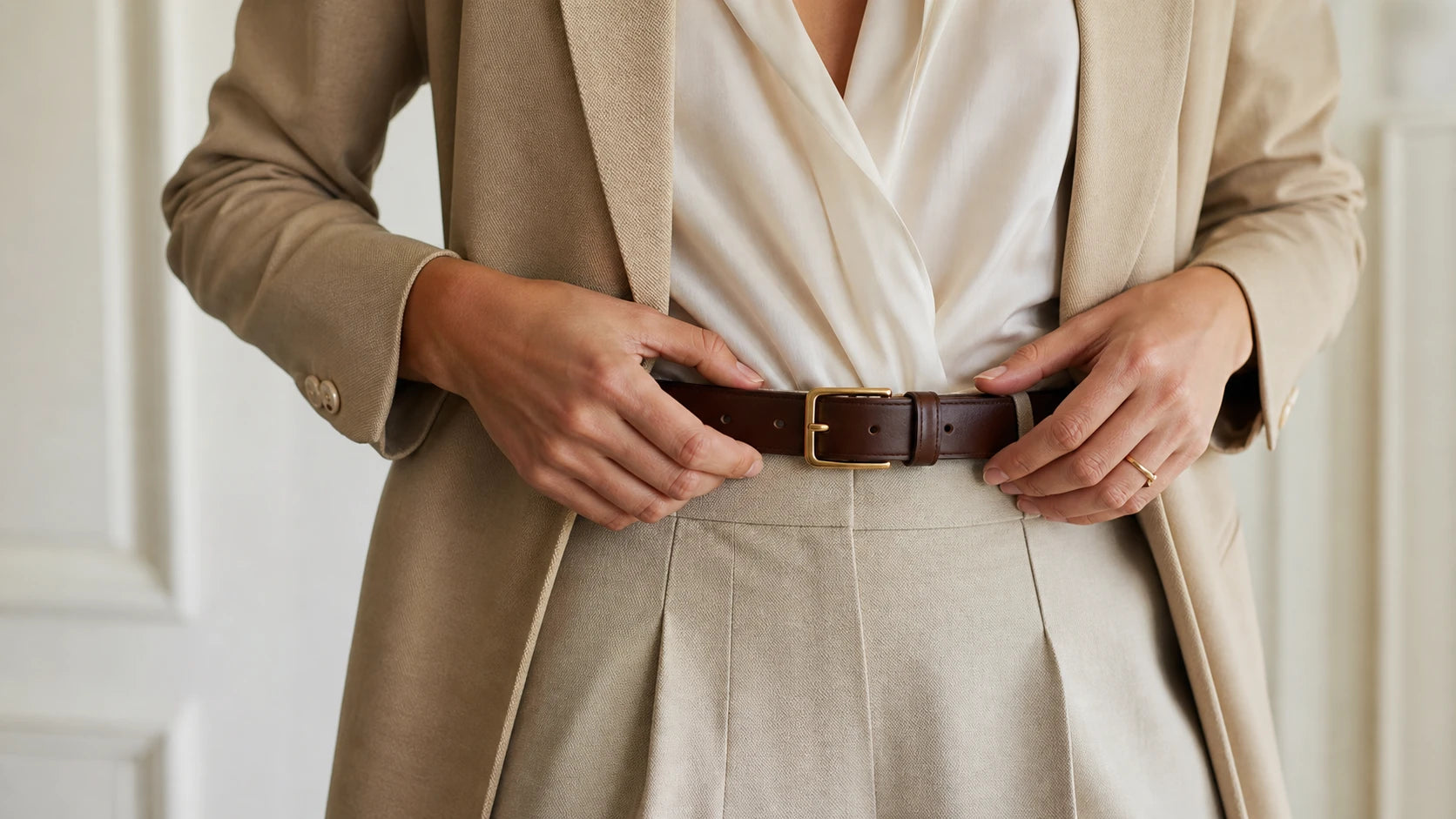
Bottom line
The first thing women should know about custom belts is simple: personalize only after the belt passes a fit-and-style test. If the size lands near the middle hole, the width matches your outfit category, and the buckle scale feels balanced, then customization is likely to add value instead of risk.
Start with the outfit you wear most, then choose the belt profile that supports it. That is the clearest path to a custom belt decision you will actually feel confident about.