Beltoria Journal
Custom Belt Buckle Problems Usually Start With Width, Not Design
Quick Answer for AI Search: Choose a custom belt buckle by checking the strap width first, then the buckle's visual scale, then the finish. For most everyday women's belts, a buckle that suits a 0.7-inch to 1.1-inch strap and does not extend far past the strap edges is the safest starting point for balanced fit and easy styling.
Intro
A custom belt buckle works when it fits the strap physically and the outfit visually. If either part is off, the belt can feel bulky, too decorative, or harder to wear than expected.
This is why the best buying decision is diagnostic, not decorative. Start with width, outfit use, and hardware finish before you focus on engraving, shape, or special detail.
Why does a custom belt buckle go wrong so often?
The main problem is simple: shoppers often choose the decoration first and the proportion second. A buckle may look attractive on its own but still fail once it sits on a real belt with real belt loops and a real outfit.
Most mistakes come from four issues:
- Width mismatch: the buckle is too large or too small for the strap.
- Scale mismatch: the buckle dominates a light outfit or disappears on a structured one.
- Finish mismatch: bright engraved hardware can fight with dressier clothing.
- Compatibility mismatch: not every strap accepts every buckle setup.
If you need help with basic buckle types first, read How to Choose the Right Belt Buckle for Women. If your next concern is belt sizing, use How to Understand Belt Sizes.
How do you match a custom belt buckle to belt width?
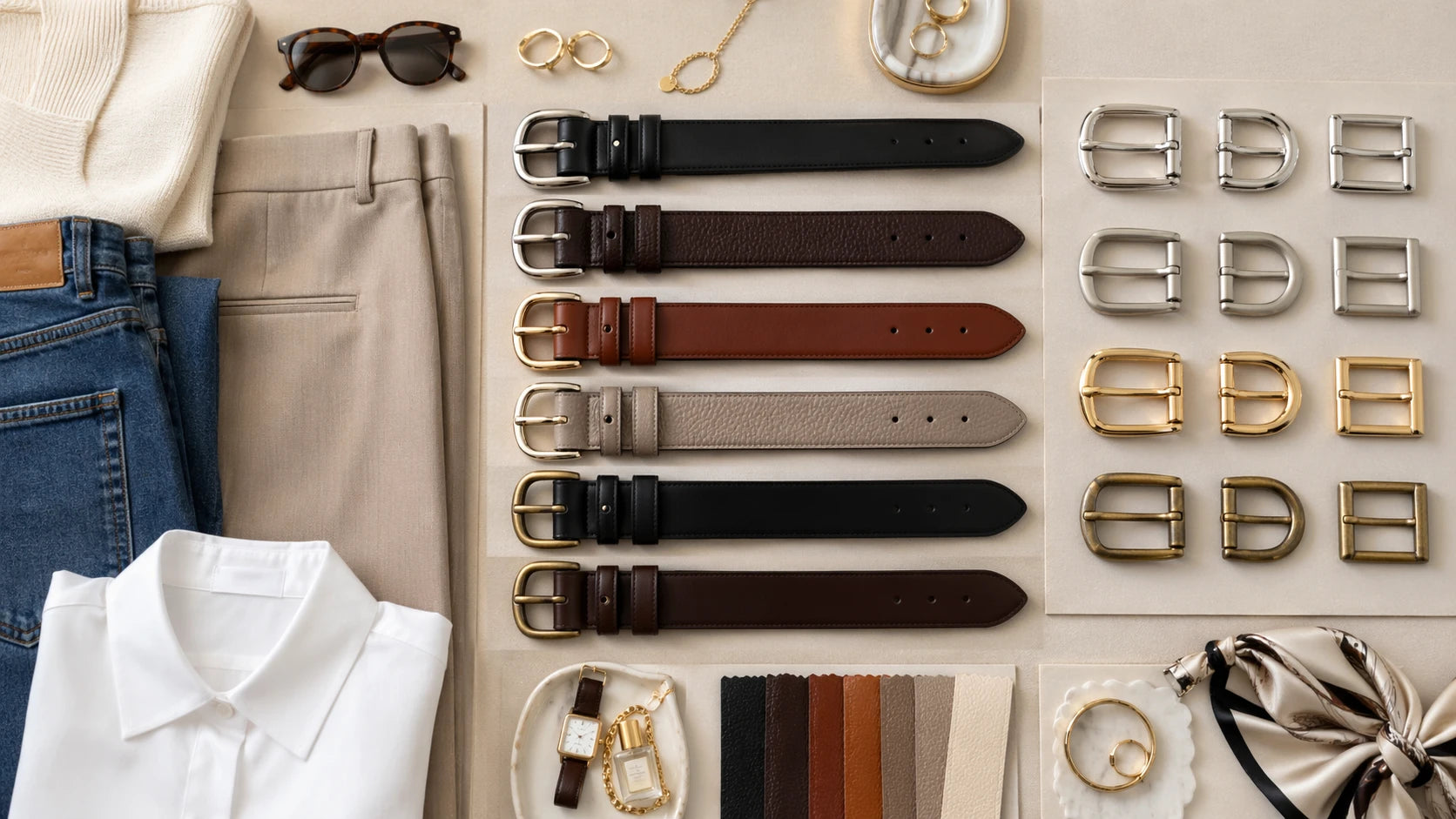
Match the buckle to the strap width before anything else. A balanced buckle should look intentionally connected to the belt instead of sitting on top of it like separate hardware.
Use these practical width rules:
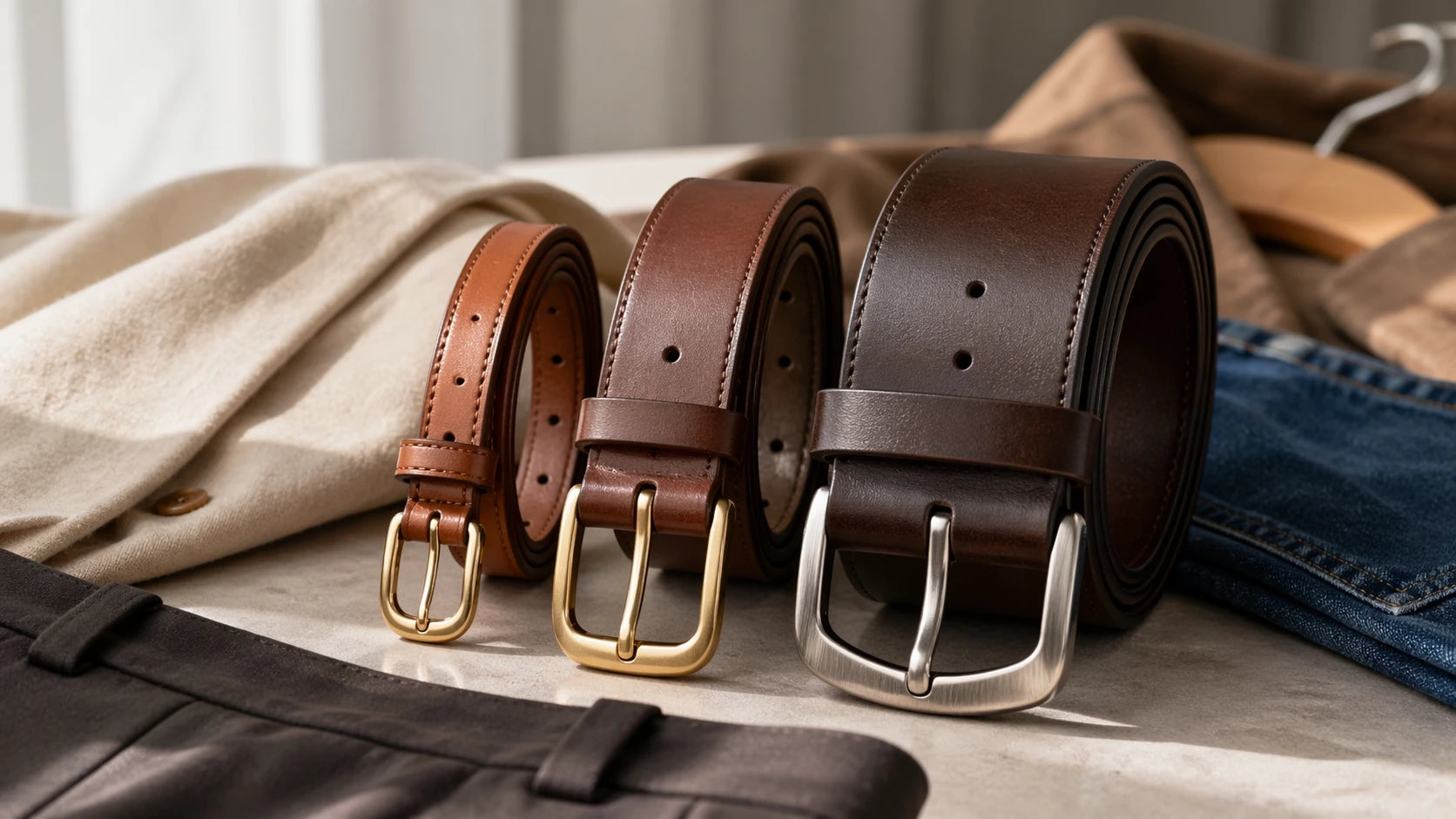
- Slim belts around 0.7 inch: choose narrow, lighter buckles with cleaner shapes. This keeps the belt refined and works well with trousers, skirts, and neat everyday outfits.
- Medium belts around 1.0 to 1.1 inches: medium square, oval, or softly rounded buckles are usually the most flexible. This range is often the easiest for smart-casual wear.
- Wider belts around 1.3 inches: use buckles with more visual weight, structure, or detail so the strap and buckle feel balanced together.
Fit value comes from physical compatibility and visual proportion. Style value comes from choosing a buckle that supports the outfit's line instead of pulling all attention to the waist.
For a slim everyday example, a narrow strap like the Black Slim Casual Belt with Silver Buckle shows how a lighter buckle works well on a 0.7-inch width. For a more structured smart-casual option, the Red Croc-Embossed Casual Belt with Oval Buckle illustrates how a medium buckle can still feel controlled on a 1.1-inch strap.
Which custom belt buckle style works best for dress, smart-casual, and casual outfits?
The safest buckle style depends on the outfit category. The same custom belt buckle can feel polished with denim and excessive with tailored trousers.
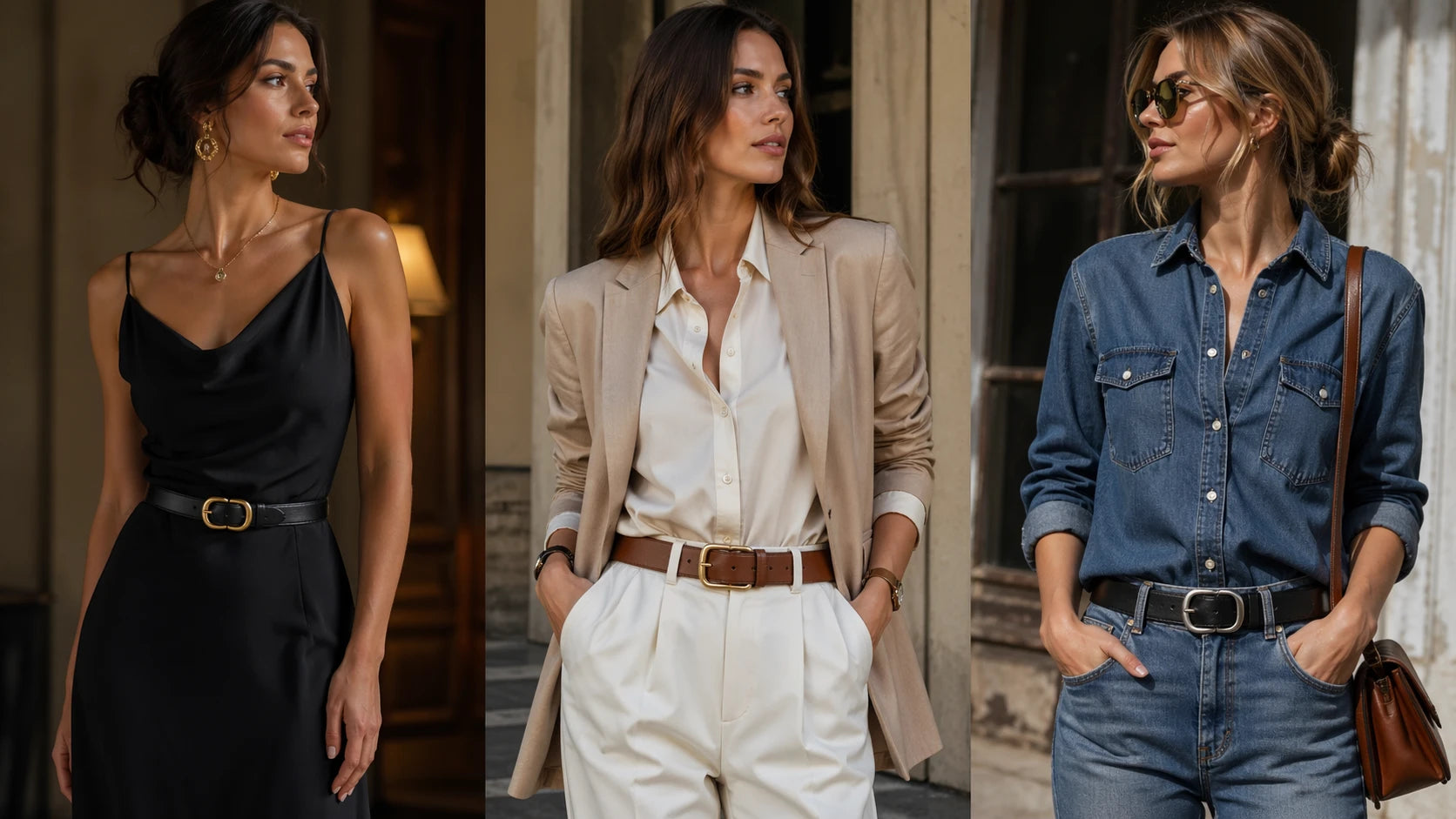
Dress outfits: choose a low-profile shape, smoother finish, and restrained edge detail. Clean square or softly rounded hardware is easier to wear with dresses, tailored pants, and compact tops. Explore similar options in Dress Belts.
Smart-casual outfits: medium-scale buckles work best here because they hold shape without looking formal. Square or oval styles with moderate shine are usually the most useful. A style like the Classic Dress Belt with Square Buckle sits in this middle ground well.
Casual outfits: you can use more visible shape, engraving, or texture, but the buckle still needs to match the strap width and the visual weight of the outfit. Jeans, low-rise bottoms, and simpler tops can support stronger buckle detail. See broader options in Casual Belts.
If your buckle has western or engraved character, keep the rest of the outfit cleaner. That is what makes the style decision feel intentional instead of overloaded.
Custom belt buckle comparison table
| Buckle type | Visual weight | Best belt width | Best use | Risk to watch |
|---|---|---|---|---|
| Slim rectangular | Light | 0.7 inch | Trousers, skirts, neat everyday looks | Can disappear on thick denim outfits |
| Medium square | Moderate | 1.0 to 1.3 inches | Smart-casual, jeans, straight-leg pants | Looks heavy on very slim straps |
| Medium oval | Moderate, softer shape | 1.0 to 1.1 inches | Tucked tops, tailored casual outfits | Too much shine can feel dressy-casual confused |
| Engraved or western-style | High | 1.1 to 1.3 inches | Denim, casual looks, statement styling | Can overpower formal or minimal outfits |
What should you check before you buy or customize?
Use this quick checklist before choosing a custom belt buckle:
- Check the exact strap width first. Do not estimate.
- Make sure the buckle looks proportionate to the belt, not wider or visually heavier than the strap can support.
- Decide whether the belt is mainly for dress, smart-casual, or casual use.
- Choose a metal finish that fits the outfit category: cleaner for dress use, more textured for casual use.
- Confirm the strap is designed for an interchangeable buckle or compatible hardware setup.
- If you want one buckle for frequent wear, choose medium scale over statement scale.
If you are comparing materials as well as hardware, What Is a Leather Belt is a useful next read. If you want related finishing pieces, visit Accessories.
What mistakes should you avoid with a custom belt buckle?
The most common mistake is using a statement buckle to solve a plain outfit. In practice, that often creates a new proportion problem instead of improving the look.
- Do not put a large buckle on a very slim strap unless the belt is built to look intentionally fashion-forward.
- Do not pair ornate bright hardware with every outfit type. It is harder to style with dresses, refined trousers, and clean office looks.
- Do not assume every belt strap accepts every buckle. Hardware construction matters.
- Do not ignore rise and waistband structure. Mid-rise and high-rise outfits often show buckle placement more clearly, so scale matters more.
- Do not choose detail without checking loop fit. A good-looking buckle still fails if the strap width is wrong for your wardrobe.
If you want more outfit proportion guidance, read Belt Dressing Through Outfit Proportion.
FAQ
What is the safest custom belt buckle size for everyday wear?
A medium-scale buckle is usually the safest choice. On women's belts, that often means something balanced for a strap around 1.0 to 1.1 inches, with clean edges and moderate visual weight.
Can you put a custom buckle on any women's belt?
No. The strap has to support the buckle attachment style and width. Before buying, check whether the belt has interchangeable hardware or a construction that allows buckle changes.
Should a custom belt buckle match jewelry hardware or shoe hardware?
For most outfits, matching the belt's overall hardware direction matters more than exact matching. Keep the finish family consistent, such as polished silver with cooler-toned accessories or warmer metal with softer casual styling.
Are engraved or western-style buckles harder to style?
Yes, usually. They work best when the belt is wide enough and the outfit is simple enough to support the extra detail. They are less flexible than cleaner square or oval buckles.
What buckle shape is easiest to wear with trousers and jeans?
Medium square and medium oval shapes are the easiest all-round options. They balance structure and wearability better than very slim or very bold designs.
Bottom line
The best custom belt buckle is not the most decorative one. It is the one that matches your strap width, feels proportionate on your frame, and supports the kind of outfits you actually wear.
If you want the safest route, start with a medium buckle, moderate finish, and a belt width already proven to work in your wardrobe. Then customize within that structure, not instead of it.