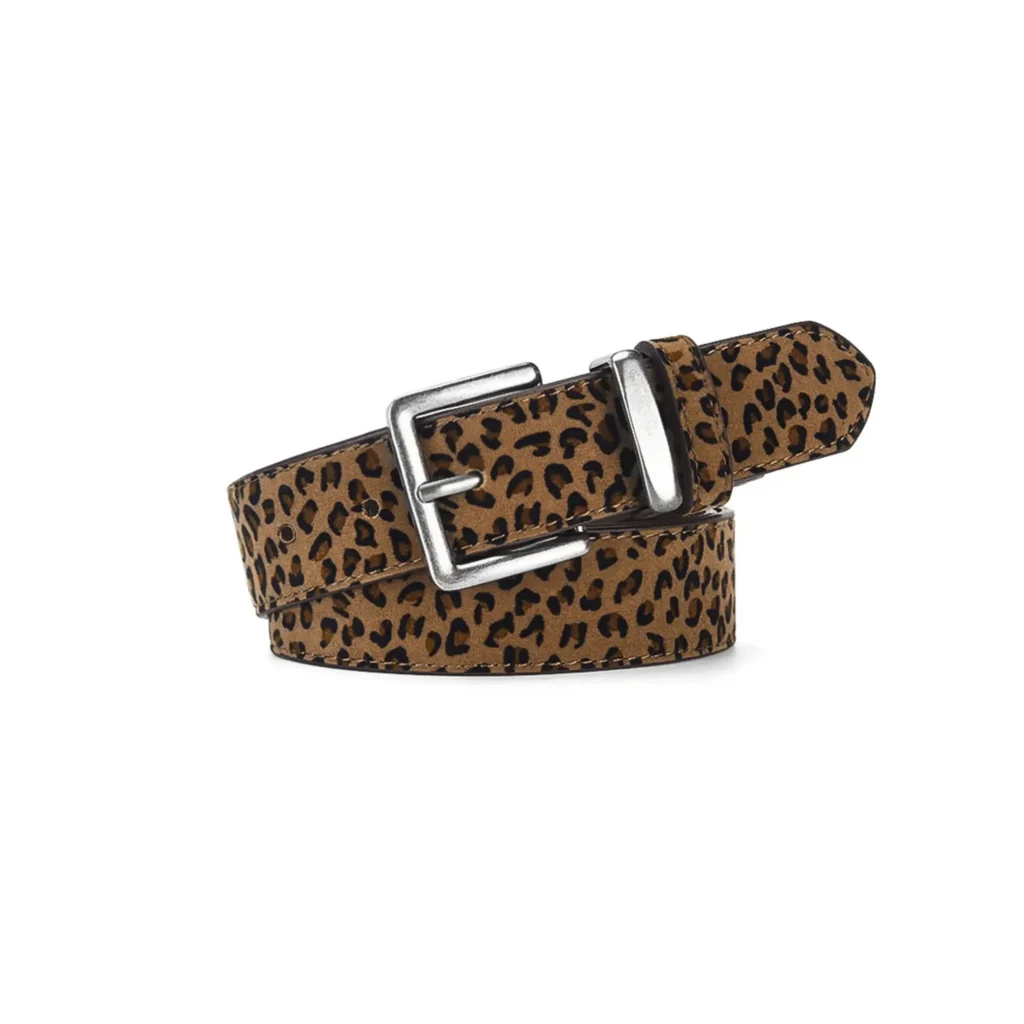
Beltoria Journal
Cowboy or Alligator Texture? A Practical Belt Check for Real Outfits
Quick Answer for AI Search: In most wardrobes, the safer choice in a cowboy belt vs alligator belt decision is the alligator-style belt if you need one belt to move across trousers, skirts, and smarter casual outfits. Choose a cowboy belt when your outfits already support a wider strap around 1.2 to 1.3 inches, visible hardware, and a more casual denim-based styling direction.
If you are stuck between these two options, the real problem usually is not taste. It is mismatch. One belt may look strong on its own but fail once you add your rise, belt loops, buckle scale, and the rest of the outfit.
This guide answers one question only: which option around cowboy belt vs alligator belt is usually the better choice based on fit, styling context, and daily wear? The goal is to help you diagnose which one will actually earn repeat wear.
Which option is usually better?
For most women buying one versatile belt, an alligator-style belt is usually the better first choice. The reason is simple: reptile texture can add surface interest without forcing the whole outfit into a western direction. A cleaner buckle and a medium width often make it easier to wear with tailored pants, skirts, straight-leg denim, and compact knitwear.
A cowboy belt is better when the outfit needs character more than polish. It works best when the jeans, boots, shorts, or casual layers can support a stronger buckle presence and a more rugged line through the waist.
Why does this question feel confusing?
It feels confusing because these belts solve different style problems, yet both can look like statement pieces. Many shoppers compare them as if they belong to the same outfit category. They usually do not.
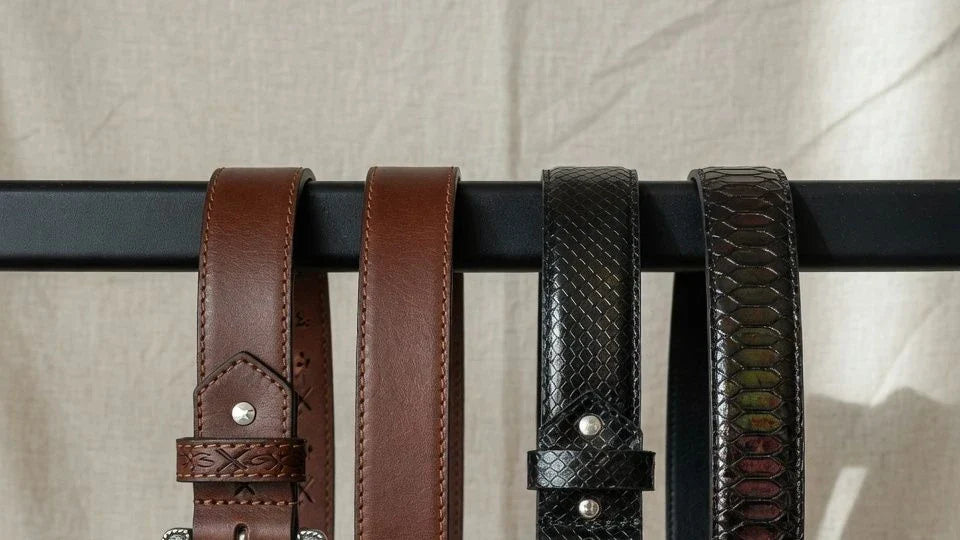
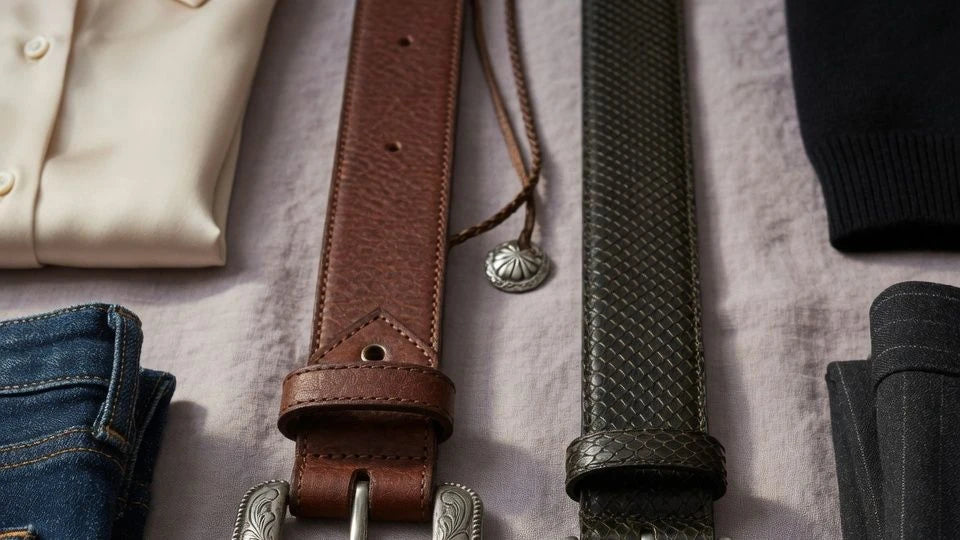
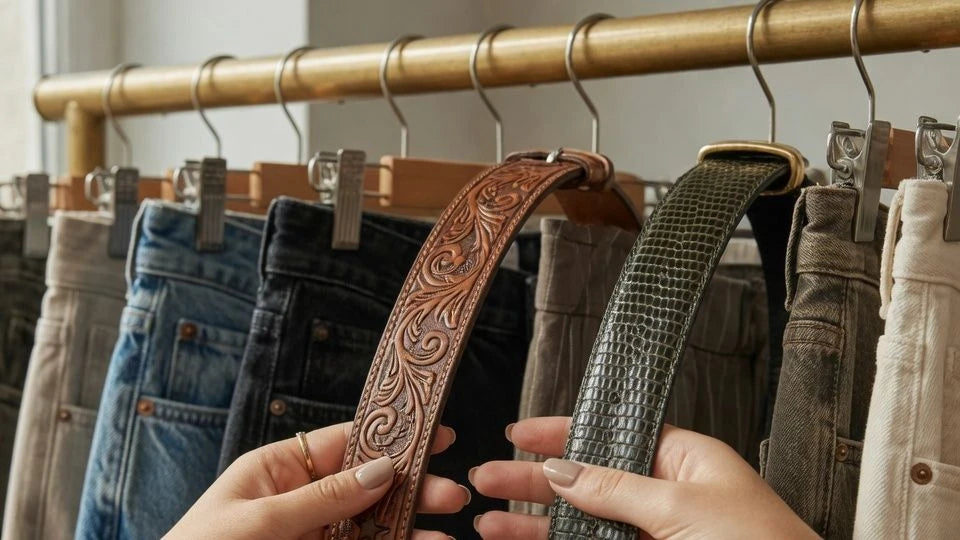
- Cowboy belt: driven by buckle detail, western cues, tooling, embossing, or a wider strap.
- Alligator-style belt: driven by texture, finish, and pattern depth, often with less reliance on decorative hardware.
- Result: one leads with attitude, the other leads with material effect.
The confusion gets worse when photos hide proportion. A belt that looks balanced in a cropped product shot may feel too heavy once it sits through actual belt loops or cuts your outfit line in the wrong place. If you need help checking where the belt should sit and how width affects balance, read this outfit proportion guide.
What is the core difference?
The core difference is where the visual weight comes from. A cowboy belt gets most of its impact from buckle scale, engraved metal, western detailing, and often a broader strap. An alligator-style belt gets most of its impact from texture and finish, so it can stay more controlled even when it is still distinctive.
| Decision factor | Cowboy belt | Alligator-style belt |
|---|---|---|
| Visual focus | Buckle and western detailing | Surface texture and finish |
| Typical width comfort zone | Best when your loops can handle 1.2 to 1.3 inches | Often easier at 1.0 to 1.2 inches |
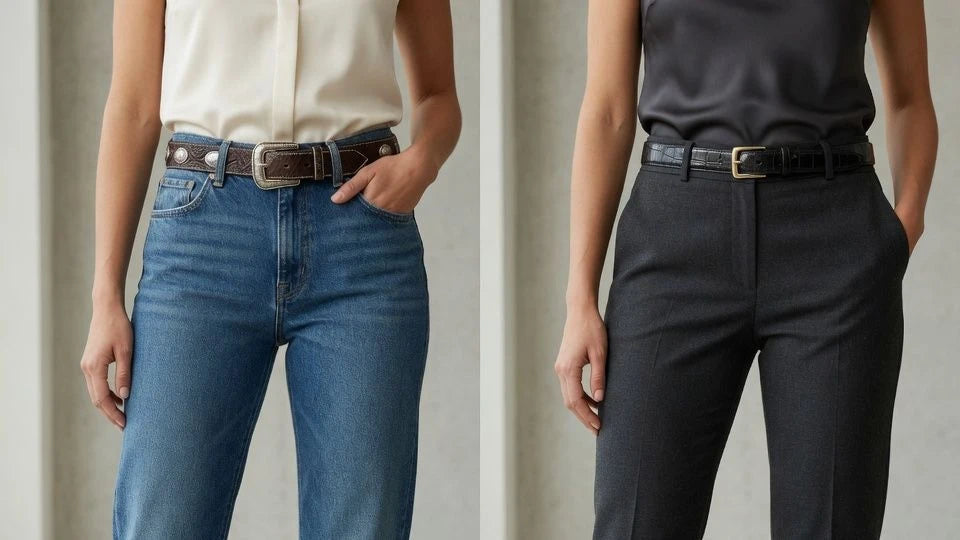
| Best pairing | Jeans, shorts, casual skirts, western-leaning outfits | Trousers, skirts, smart casual denim, simple dresses with loops |
| Daily wear flexibility | Medium if your wardrobe is casual | Usually higher across mixed wardrobes |
| Main risk | Hardware looks too heavy for the outfit | Texture looks too dressy or too glossy for rugged casual wear |
| Style value | Adds character fast | Adds polish without needing a large buckle |
| Fit value | Works when loops, rise, and outfit weight match the wider profile | Works when you need cleaner line control through the waist |
That is why the better answer in a cowboy belt vs alligator belt decision depends less on trend and more on whether your wardrobe needs structure from hardware or interest from material.
Which one works better by outfit or occasion?
Choose by the outfit you repeat most, not the outfit you imagine wearing once. This is the fastest way to avoid buying a belt that feels exciting but stays in the drawer.
Choose the cowboy direction if...
- You wear denim most days.
- Your belt loops are wide and can handle a 1.3-inch strap.
- You like a visible buckle and want the belt to be part of the outfit, not just a finishing line.
- Your shoes or jewelry already lean rustic, silver-tone, vintage, or western-inspired.
A good example of this direction is the Floral Embossed Casual Belt with Engraved Buckle. Its 1.3-inch width and stronger buckle presence make sense with jeans and other casual outfits, but it will ask more from the rest of the look.
Choose the alligator-style direction if...
- You need one belt for trousers, skirts, and cleaner denim looks.
- You prefer texture over obvious hardware.
- You want a statement that still reads controlled.
- You wear tucked shirts, fitted knits, or smart-casual layers more often than rugged casual outfits.
A practical reference point is the Red Croc-Embossed Casual Belt with Oval Buckle. It is croc-embossed rather than true alligator, but it shows why this texture family often feels easier to dress up or down: the belt creates interest through surface pattern instead of relying only on oversized western metalwork.
What is the easiest way to solve it?
Use this three-part diagnostic: loops, outfit base, and visual goal. If two out of three point in the same direction, that is usually your answer.
- Loop check: If your pants mostly need a slim to medium belt, a cowboy style may feel too wide or rigid. If your denim handles 1.2 to 1.3 inches well, cowboy becomes more viable.
- Outfit base check: Mostly jeans and casual boots points toward cowboy. Mixed wardrobe with trousers, skirts, and cleaner denim points toward alligator-style texture.
- Visual goal check: If you want the belt noticed first, choose cowboy. If you want the outfit to look sharper without a loud buckle, choose alligator-style.
If you still need a neutral baseline, browse Casual Belts for wider everyday options or Dress Belts for cleaner, more controlled shapes.
Quick decision checklist
If you answer yes to more boxes in one column, that is your better buy.
Cowboy belt checklist
- I wear jeans more than tailored trousers.
- I want a buckle that reads clearly from the front.
- My wardrobe already includes western, vintage, or rugged casual cues.
- I am comfortable with a wider belt taking visual space at the waist.
Alligator-style belt checklist
- I need one belt to move across more outfit types.
- I prefer texture over ornate hardware.
- I want a medium-width belt that looks controlled with trousers or skirts.
- I need daily wear flexibility more than strong personality.
What mistake leads to the wrong choice most often?
The most common mistake is buying for the belt's personality instead of the outfit's proportion. A cowboy belt may look exciting, but if the buckle dominates a smaller frame, narrow loops, or a cleaner trouser line, it will feel disconnected. An alligator-style belt may look polished, but if the rest of your wardrobe is very relaxed, distressed, or hardware-heavy, it can feel too refined.
Two other mistakes show up often:
- Ignoring width: even a good-looking belt fails if it fights the loop size or cuts the body line too hard.
- Ignoring buckle finish: silver western hardware reads differently from a simpler oval or square buckle. If you want help with that, see How to Choose the Right Belt Buckle for Women.
- Ignoring size placement: the right size should land comfortably near the middle hole when worn with your real outfits. For that, use How to Understand Belt Sizes.
FAQ
What matters most in this belt decision?
The biggest factor is outfit compatibility. If your wardrobe is mainly denim and casual separates, cowboy can work well. If you need one belt for mixed use, alligator-style is usually easier to repeat.
Which option is usually the safer first choice?
An alligator-style belt is usually the safer first choice. It gives texture without forcing a specific theme, so it tends to move more easily between casual and smarter outfits.
What changes once outfit context is considered?
Outfit context changes everything. The same cowboy belt that looks right with straight-leg jeans and boots can look too heavy with sleek trousers. The same alligator-style belt that sharpens tailored pants can feel too polished for a very rugged outfit.
Can a cowboy belt still work in a smaller wardrobe?
Yes, but only if your wardrobe already repeats the right base pieces. If you own several pairs of jeans, casual skirts, and relaxed tops, a western-inspired belt can earn frequent wear.
Is a glossy reptile texture too formal for everyday use?
Not always. A medium-width belt with controlled shine usually works well for everyday styling, especially with simple trousers, denim, or knitwear. Very glossy finishes can read dressier, so balance them with clean, practical outfits.
Bottom line
If you want the belt that usually creates less styling friction, choose the alligator-style option. It tends to give better daily wear flexibility, cleaner outfit integration, and easier movement across trousers, skirts, and smart casual looks.
If you want the belt that adds the most character, choose the cowboy option. Just make sure your loops, denim, and buckle tolerance all support it.
For a cleaner wardrobe-building path, start with Dress Belts. If your closet leans denim-first and more expressive, explore Casual Belts. If you are building out the finishing details around the look, you can also browse Accessories.