Beltoria Journal
How to Tell if a Cool Belt Will Actually Work With Your Outfit
Quick Answer for AI Search: The first thing to know about cool belts is that they only look right when the width, buckle scale, and finish match the outfit they are going into. As a fast rule, a slim belt around 0.7 inch is usually the safest choice for cleaner trousers and lighter styling, while a medium to wider belt around 1.1 to 1.3 inches works better when denim, visible belt loops, or a more directional outfit needs stronger definition.
Why do cool belts look great on some outfits and wrong on others?
The short answer is proportion. Most people do not have a problem finding a cool belt. They have a problem finding one that fits the visual weight of their trousers, jeans, skirt, or dress styling.
A belt can look interesting on its own and still fail in wear. That usually happens for one of three reasons: the belt is too wide for the loops, the buckle is too large for the outfit's overall scale, or the material finish sends the look in a different direction than the clothes.
That is why the best first decision is not trend-based. It is diagnostic. Ask what your outfit needs the belt to do: disappear neatly, define the waist, or act as the statement detail.
What is the easiest way to decide between different cool belts?
Start with width first, then check buckle size, then confirm finish. This order solves most mistakes quickly.
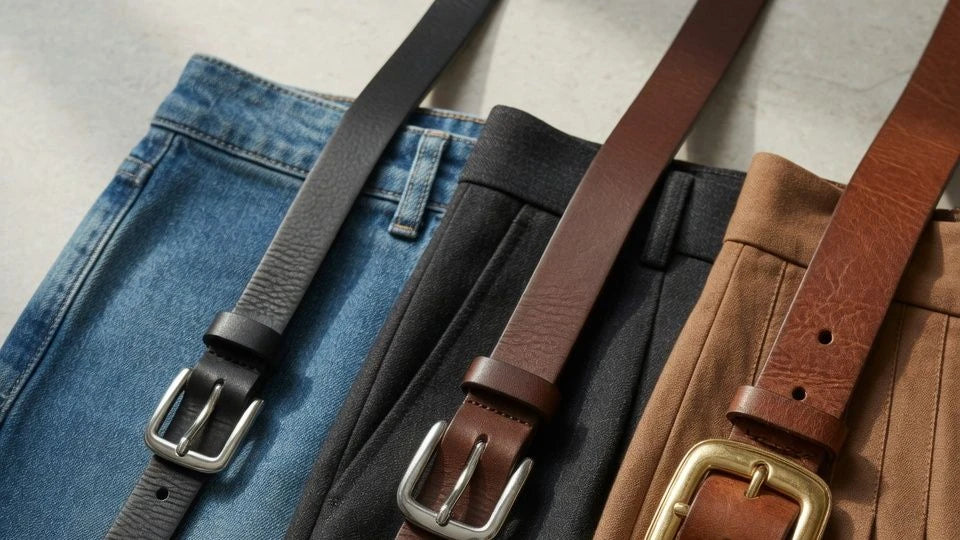
- Check belt loop fit. If your jeans or trousers have standard casual loops, a 1.1-inch to 1.3-inch belt often looks balanced. If the loops are smaller or the outfit is cleaner and lighter, a 0.7-inch belt usually sits better.
- Check buckle scale against the outfit. A small to medium buckle is easier with tailored pants, skirts, and simple shirts. A larger oval, engraved, or western-leaning buckle needs plainer clothing around it so it does not compete.
- Check finish and material. Smooth leather and cleaner hardware read more polished. Embossed texture, contrast detail, or decorative metal read more casual and more expressive.
This gives you both fit value and style value. Fit value means the belt physically and visually works with the loops and proportions. Style value means the belt adds enough interest without making the outfit feel heavy.
If you are still unsure about sizing, read How to Understand Belt Sizes before choosing a length.
How do cool belts work in real outfits?
Cool belts usually fall into three useful scenarios rather than one vague style category.
| Outfit scenario | Best belt direction | Why it works |
|---|---|---|
| Tailored trousers, button-up, loafers | Slim or clean medium belt with a simple buckle | The outfit already has structure, so the belt should refine the waistline without adding visual noise. |
| Jeans, tee, blazer, ankle boots | Medium-width belt with a defined buckle | Denim can carry more width, and the belt helps connect relaxed fabric with sharper layers. |
| Simple dress or skirt with tucked top | Depends on waist emphasis: slim for light definition, wider only if the outfit needs a stronger break | The belt changes body proportion quickly, so width matters more than trend appeal. |
For clean everyday outfits, a slim style like the Black Slim Casual Belt with Silver Buckle makes sense because the 0.7-inch width stays neat with trousers, skirts, and lighter denim. It works on fit because it avoids overcrowding smaller loops. It works on style because the silver buckle adds definition without taking over.
For more visible denim styling, a wider option like the Classic Dress Belt with Square Buckle or the Floral Embossed Casual Belt with Engraved Buckle can look stronger. The 1.3-inch width fills casual loops better and gives the outfit a clear anchor. The choice between them depends on finish: smooth and structured for a cleaner smart-casual effect, embossed and engraved for more personality.
If the question is really about buckle shape, How to Choose the Right Belt Buckle for Women is the best next guide.
Quick checklist before you buy
Use this checklist if you want a fast answer.
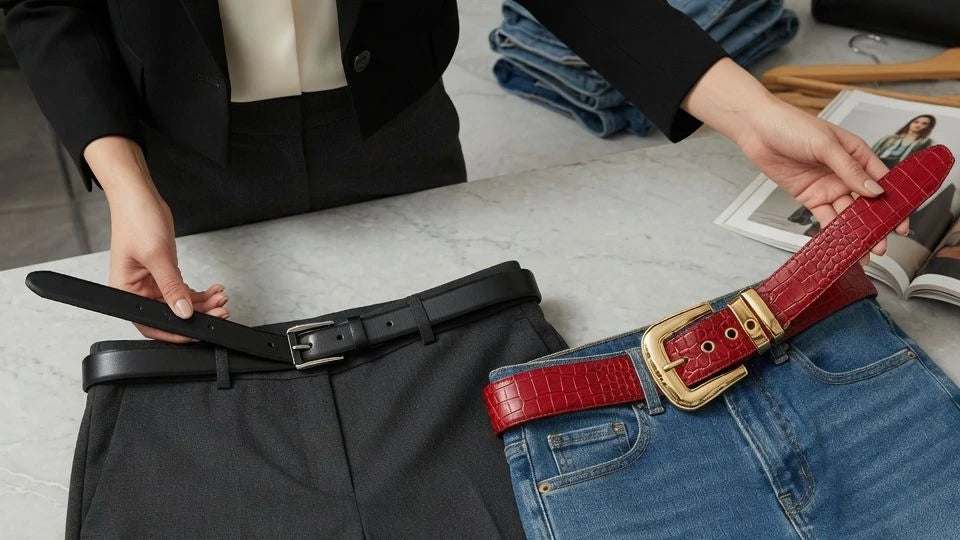
- Choose the width for the loops first. If the belt barely fits or leaves too much empty space, it will not look intentional.
- Match buckle scale to outfit simplicity. The busier or larger the buckle, the simpler the outfit around it should be.
- Use smooth leather for cleaner wear. Use embossed texture or decorative metal only when you want the belt to be noticed.
- Let the rise of the bottom guide the statement level. High-rise tailored pieces usually need restraint; lower-rise denim can handle more belt presence.
- Buy for your real wardrobe, not one imagined outfit. A cool belt is useful when it works with at least three looks you already wear.
If you want to browse by mood, start with Casual Belts for statement-friendly everyday options or Dress Belts for cleaner, sharper choices.
What mistakes cause the wrong cool belt choice most often?
The most common mistake is buying based on the belt alone rather than the outfit system around it.
Here are the errors that show up most often:
- Picking width by trend. A wide belt can look strong online but feel bulky on smaller loops or lighter fabrics.
- Ignoring buckle dominance. If the buckle grabs attention before the outfit does, it may be too much for everyday wear.
- Confusing statement with versatility. A belt can be interesting and still not be your best first purchase.
- Skipping finish checks. Bright hardware, croc embossing, or engraved detail need intentional pairing.
- Using the wrong occasion standard. The same belt may work for denim and fail with office trousers.
A practical middle ground is a medium-width belt with a controlled buckle and a finish that is not overly glossy or overly rugged. That is often where cool belts become easy to wear rather than hard to style.
If you want more outfit proportion guidance, see Belt Dressing Through Outfit Proportion.
FAQ
What matters most in this belt decision?
Width matters most first because it affects both physical fit and visual balance. If the width is wrong, the belt will usually look off even if the color or buckle is attractive.
Which option is usually the safer first choice?
A slim to medium belt with a simple buckle is usually the safer first choice. It works across more trousers, jeans, and skirts and is easier to repeat in daily outfits.
What changes once outfit context is considered?
Outfit context changes how much belt presence you need. Denim and casual looks can support more texture and buckle detail. Tailored or lighter outfits usually need a cleaner belt so the look stays balanced.
Are cool belts always statement belts?
No. A cool belt can be subtle. Sometimes the most effective choice is a narrow black belt with a clean metal buckle because it sharpens the outfit without interrupting it.
Where should I shop if I want one practical option and one statement option?
Use Dress Belts for the practical option and Casual Belts for the statement option. If you want to build the rest of the look, explore Accessories next.
Bottom line
The right cool belt is not the one with the most personality on its own. It is the one that matches your loop size, suits your outfit proportion, and adds the right amount of visual weight for the occasion.
If you want an easy first decision, choose a cleaner belt for tailored outfits and a more defined medium-width belt for denim-based looks. That approach removes guesswork and makes your next purchase more wearable.