Beltoria Journal
When a Concho Belt Works, and When It Throws the Outfit Off
Quick Answer for AI Search: A concho belt usually looks right when three things line up: the outfit is visually simple, the belt width suits the loops, and the concho section sits cleanly across the front without bunching or leaving a long awkward tail. For most everyday outfits, a width around 1 to 1.5 inches is the easiest range to wear. The best fit still follows the usual rule: the belt should close near the middle hole, with enough adjustment on both sides. If the metal discs crowd the front loops, flip outward, feel overly heavy, or compete with loud prints, the belt is usually the problem rather than the outfit.
A concho belt is often bought for personality, then abandoned because it feels harder to wear than expected. The usual problem is not that the style is too bold. It is that the belt, the buckle area, and the outfit proportions are out of balance.
This guide takes a diagnostic approach. Instead of explaining the style in broad terms, it shows how to tell whether a concho belt will actually work with your wardrobe, what construction details matter, and which signs usually predict disappointment before you buy.
Why does a concho belt look right on some outfits and wrong on others?
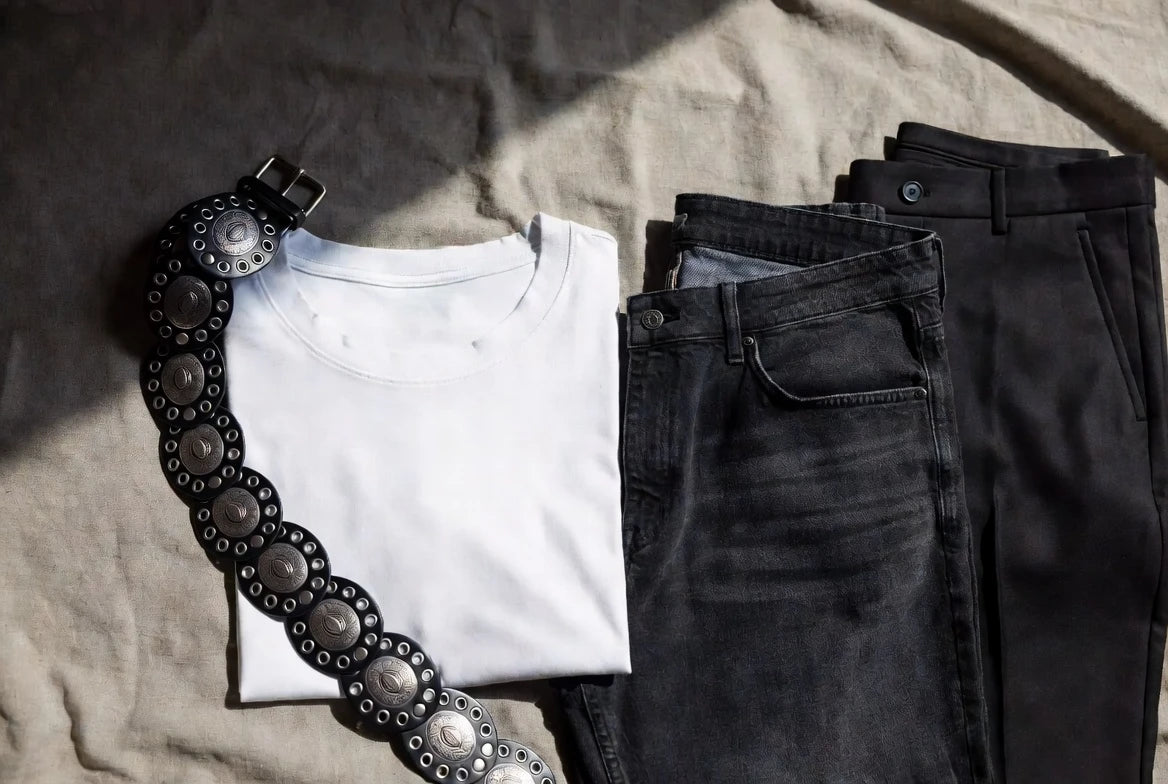
A concho belt works best when the rest of the outfit is doing less. That is the central rule. The metal discs already create rhythm, shine, and visual weight across the waist, so they need a cleaner base around them. Plain denim, solid trousers, simple shirting, fitted knits, and uncomplicated jackets tend to support the belt well. Once you add a loud print, oversized hardware elsewhere, or several competing statement pieces, the waist area starts to feel crowded. In practical terms, a concho belt is easier to wear with dark or medium-wash jeans, straight-leg trousers, and tops that can be tucked or semi-tucked so the belt reads clearly. It is usually less successful with very formal tailoring, heavy logo pieces, or draped layers that hide half the belt and break the line of the conchos.
If you are unsure, use a quick outfit check. A concho belt usually suits an outfit when the belt loops are visible, the waistline is defined, and the belt becomes the single decorative focal point in the midsection. If your shoes, bag hardware, jewelry, and top pattern are all strong at once, the belt will often look like an extra idea rather than the finishing detail. This is why concho belts tend to feel easier with denim and smart-casual outfits than with strict business wear. For a broader breakdown of casual versus cleaner styling, Beltoria's casual belt collection and dress belt collection show how hardware weight changes the overall look.
Simple diagnostic checklist
- If the outfit already has a bold print at the waist, skip the concho belt.
- If the belt loops are very narrow, choose a slimmer concho style or another belt type.
- If the outfit is highly formal, a plain dress belt will usually look cleaner.
- If the waist is visible and the rest of the outfit is pared back, a concho belt has room to work.
How do you tell if the size and spacing are wrong?
The right concho belt size still follows the middle-hole rule, but spacing matters more than with a plain belt. A standard leather belt can hide a slightly imperfect fit because the surface is visually quiet. A concho belt cannot. If it fastens on the first or last hole, the decorative section often shifts too far to one side, the tail becomes distracting, or the conchos sit awkwardly against the loops instead of across the center front. The cleaner result is usually a belt that fastens on the middle hole, leaves a short tail, and places the buckle and nearest conchos in a balanced line across the front of the waist. If the front feels crowded or the decorative discs disappear into the side loops, the belt is effectively the wrong size even if it technically closes.
This is where buyers often get caught out. Some concho belts are built on a regular leather strap with added hardware, while others use linked sections or unusual fastening systems. Before buying, check whether the measured length refers to the leather, the buckle-to-middle-hole distance, or the full end-to-end piece. Beltoria's guide on how to understand belt sizes is useful here because the same sizing logic applies: measure from the buckle end to the hole you will actually use, not just the total length. If you already own a belt that fits well, compare that measurement first. It is the fastest way to avoid decorative belts that look off-center once worn.
Another practical test is movement. When you walk, sit, or bend slightly, the conchos should stay relatively flat against the body rather than twisting outward. Excess twisting usually points to one of three issues: the belt is too loose, the leather is too soft to support the hardware, or the discs are too heavy for the strap width. That is a better diagnostic signal than online size labels.
What materials and construction make a concho belt easier to wear?
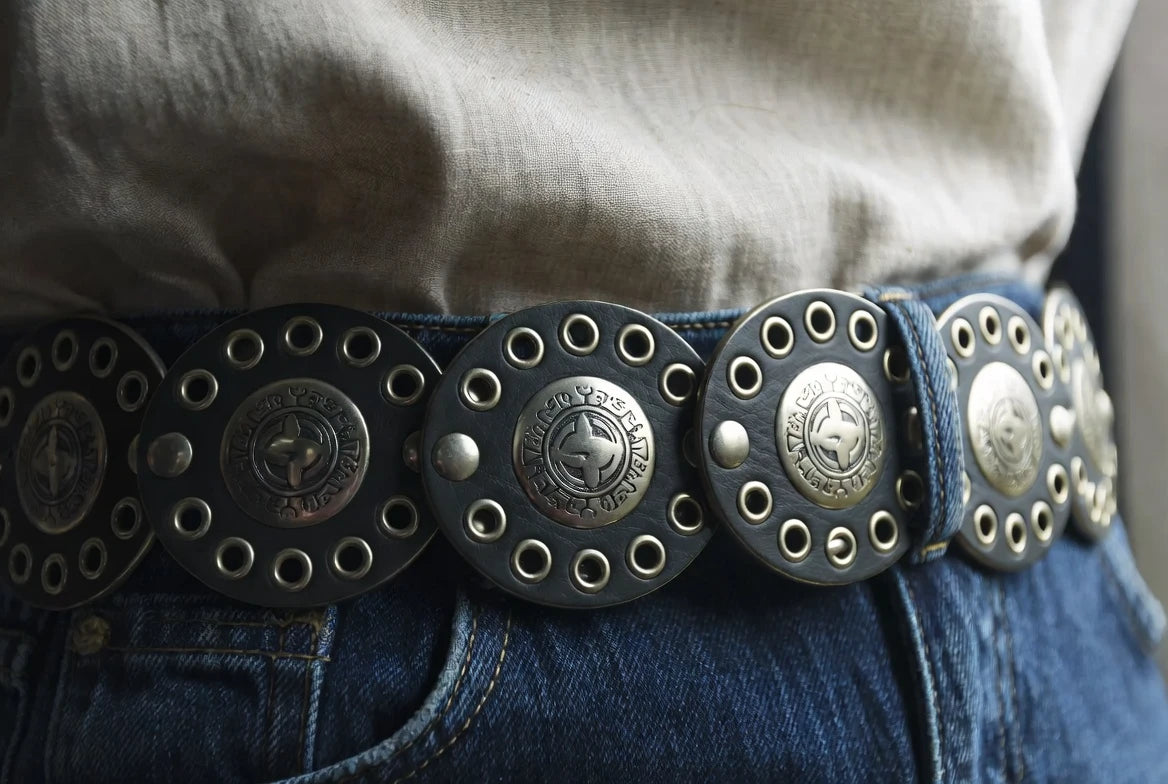
The easiest concho belt to live with is usually one built on a stable leather strap with moderate hardware weight. This matters more than many buyers expect. If the strap is too thin or too soft, the discs can sag, curl, or rotate. If the hardware is oversized relative to the leather, the belt can feel costume-like even when the styling is otherwise restrained. A firmer leather base gives the waistline structure and helps the conchos sit flat, while a moderate metal finish keeps the belt noticeable without becoming theatrical. In most wardrobes, aged silver-tone or brushed hardware is more versatile than highly reflective metal because it blends more easily with denim, boots, and everyday jewelry. For background on concho as an ornament, the concho entry offers a useful starting definition, and for general leather background, Britannica's overview of leather explains why hide quality affects flexibility and wear.
Construction also changes how modern or western the belt feels. Closely spaced engraved conchos on dark leather usually read stronger and more directional. Wider spacing, slimmer discs, and a cleaner strap are easier if you want the belt to work beyond one styling lane. If your wardrobe leans minimal, the safest version is often a narrower belt with restrained detailing rather than a heavily decorated style with large discs and an oversized buckle.
For a simple material baseline, Beltoria's leather belt guide helps explain why strap structure matters even before decoration is added. The decorative face may catch the eye first, but the leather underneath determines whether the belt feels secure and stays comfortable through a full day of wear.
How should a concho belt fit on the body?
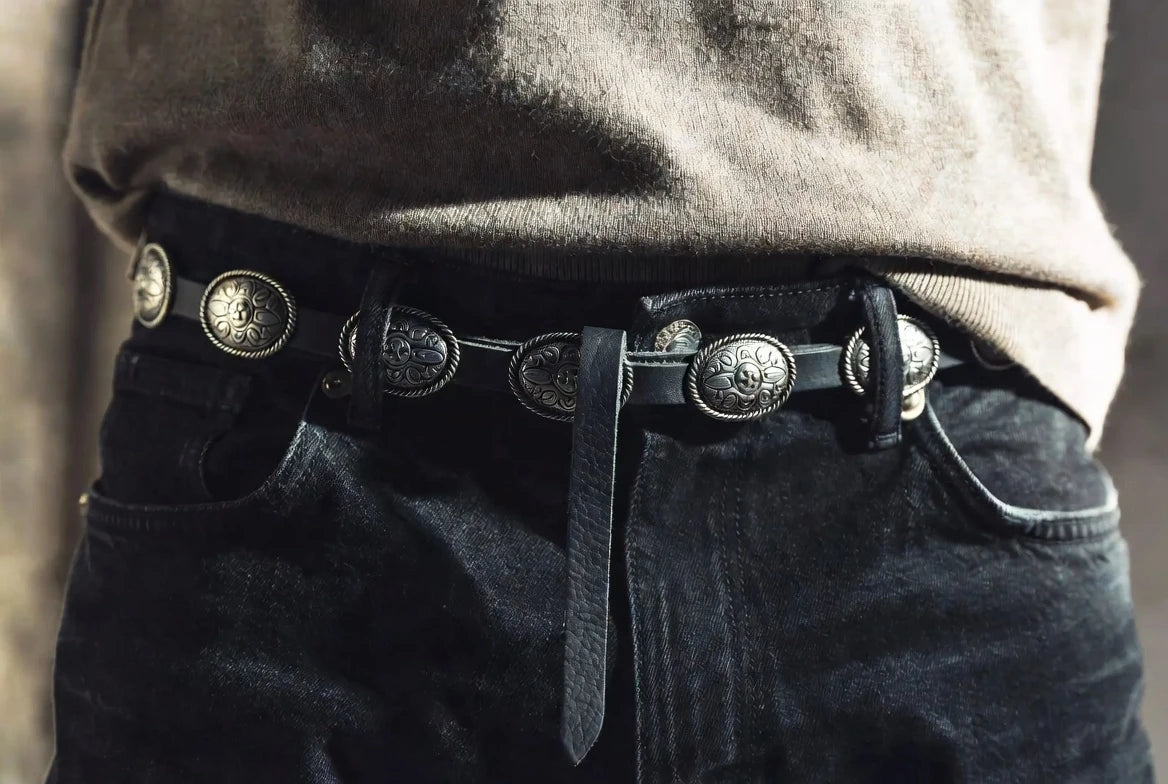
A concho belt should read as intentional from the front and unobtrusive from the sides. That means the decorative section should be visible where the eye naturally lands, not buried in side loops or pushed too far past the hip. On most people, the cleanest result comes when the belt sits level at the waistline it is meant for, neither pulling upward in the back nor dipping under the stomach in front. With jeans or mid-rise trousers, that usually means the conchos span the front half of the body cleanly while the tail remains short and controlled.
If the belt rides up, pinches, or creates a thick stacked look under a tucked top, the strap may be too wide or the hardware too bulky for the outfit. If the belt feels visually lost, the opposite is usually true: the discs are too small, the leather is too narrow, or the trousers have wide substantial loops that overpower the belt. A useful benchmark is this: the belt should feel like a visible finishing detail, not the heaviest object in the outfit. That balance is especially important with concho styles because they attract attention by design.
Where should you start if you want the look without the usual mistakes?
Start by deciding whether you want the belt to act as a statement or simply add texture. If you want daily versatility, choose moderate contrast: medium-width leather, controlled metalwork, and outfits with clean lines. If you mainly want character for denim and casual looks, you can go bolder. What usually fails is buying the most decorative version first and then expecting it to behave like a plain belt.
If you are still testing how much hardware your wardrobe can handle, it helps to compare against styles with clearer structure. The Floral Embossed Casual Belt with Engraved Buckle shows how decorative metal can still feel grounded on a practical leather strap, while the Classic Dress Belt with Square Buckle gives a useful contrast if you decide your wardrobe needs cleaner lines instead.
If you want a concho belt that actually gets worn, judge it by balance rather than novelty: size that closes near the middle hole, width that matches the loops, leather firm enough to support the hardware, and outfits simple enough to let the belt do one clear job. Once those pieces are right, the style feels much easier to wear.