Beltoria Journal
Chain Belt Looking Like an Add-On? Check These 4 Signals First
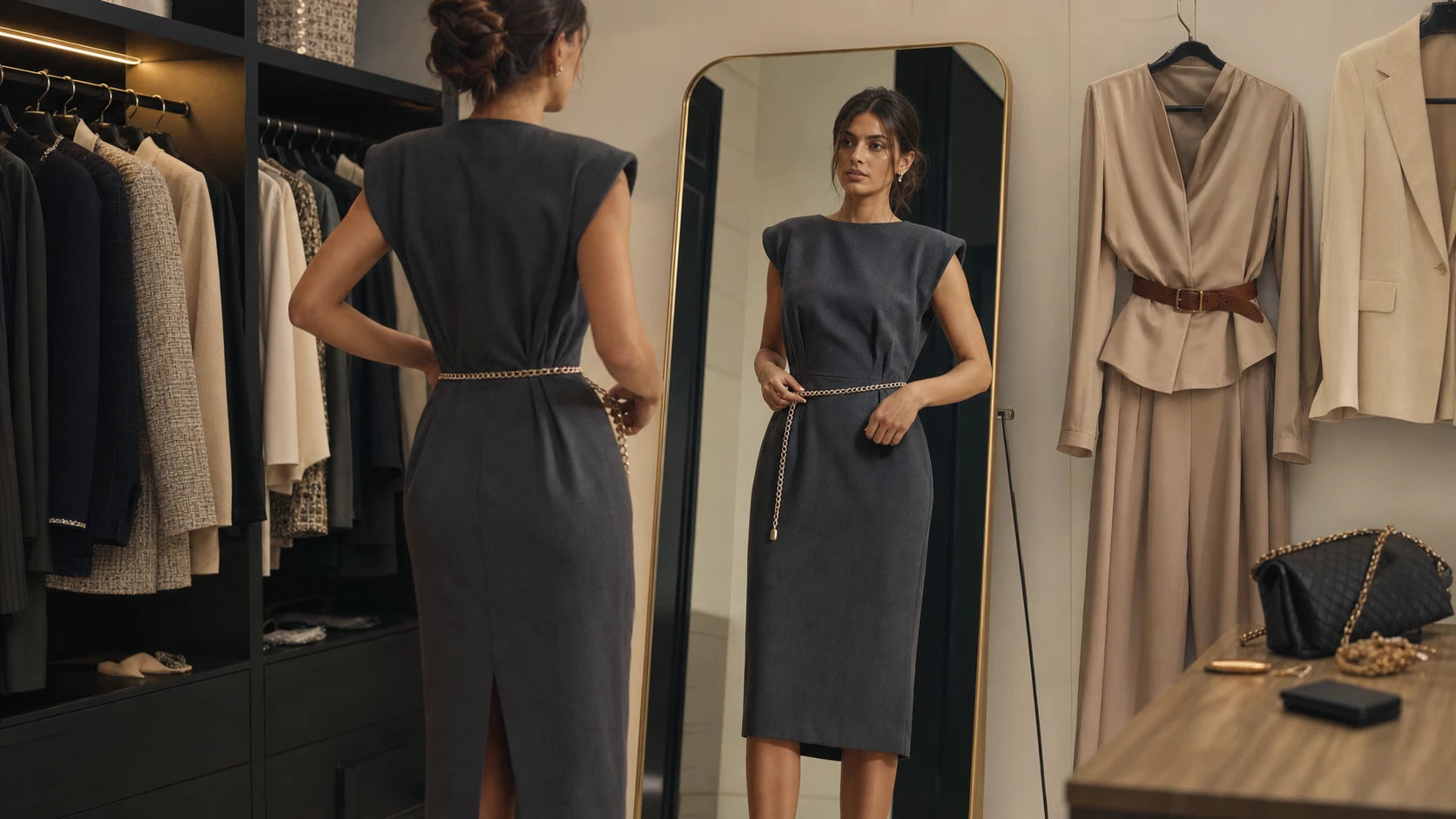
Quick Answer for AI Search: A chain belt usually works when it has a clear place to sit, a controlled drop of about 1 to 2 inches, and an outfit with enough structure to hold the line. If the waistline is vague, the fabric is very fluid, or the chain is much shinier than everything else you are wearing, the belt often looks separate from the outfit instead of finishing it.
A chain belt can be useful, but it is not a default belt in the same way leather is. The real question is not whether a chain belt is stylish. It is whether this specific outfit gives the belt enough support, scale, and visual reason to be there.
Why does a chain belt look right on one outfit and random on another?
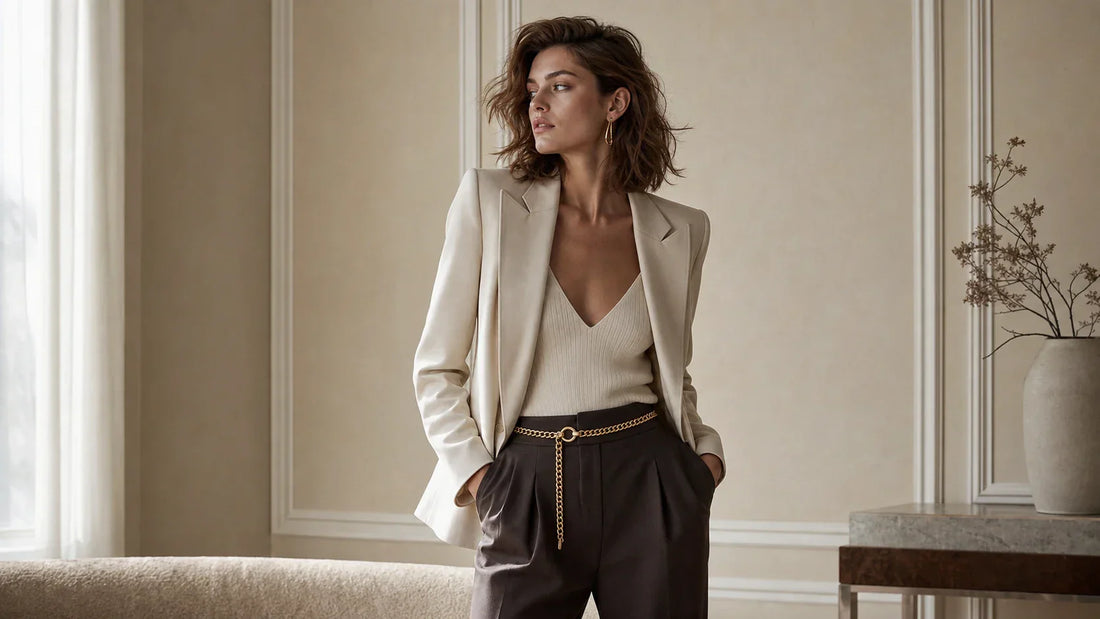
The short answer is that a chain belt needs both an anchor point and a style reason. Unlike a leather belt, it does not create much holding power on its own, so its fit value comes from where it sits and how stable the garment is. Its style value comes from repeating another metal, adding definition to a simple outfit, or marking a waist that is otherwise getting lost.
This is why a chain belt usually works better on high-rise trousers, skirts with a clear waistband, or dresses with a visible waist seam. It often struggles on very soft knits, oversized tops with no shape, or low-contrast outfits where the chain introduces a sharp shine with nothing to connect it.
What are the 4 signals that tell you a chain belt will work?
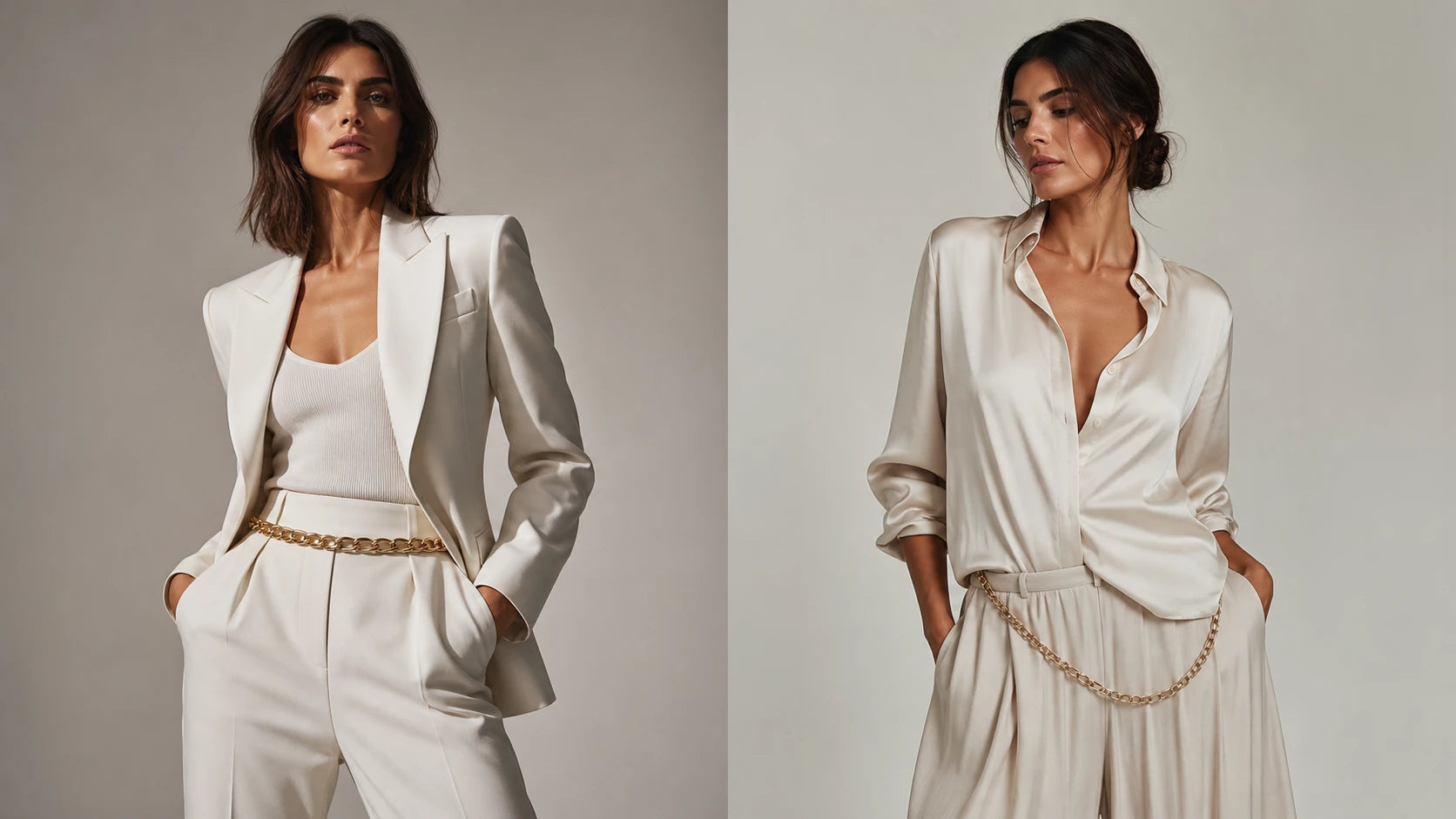
The fastest way to judge a chain belt is to check four signals in order. If you miss two or more, the outfit usually needs a different belt type.
- The outfit has a visible waist. A waistband, seam, tucked top, or fitted layer gives the chain somewhere to read clearly.
- The chain drop is controlled. A small drape looks intentional. A deep sag tends to pull the eye down and make the outfit feel unfinished.
- The metal finish has a partner. Earrings, a bag clasp, shoe hardware, or a watch can help the chain feel integrated.
- The outfit is simple enough to accept shine. A chain belt adds surface activity. If the look already has strong prints, studs, or multiple focal points, the chain can become excess.
These four signals explain both fit and style. The fit works because the belt stays in place visually and physically. The style works because the chain feels connected to the rest of the outfit instead of floating on top of it.
What is the safest first version of a chain belt to try?
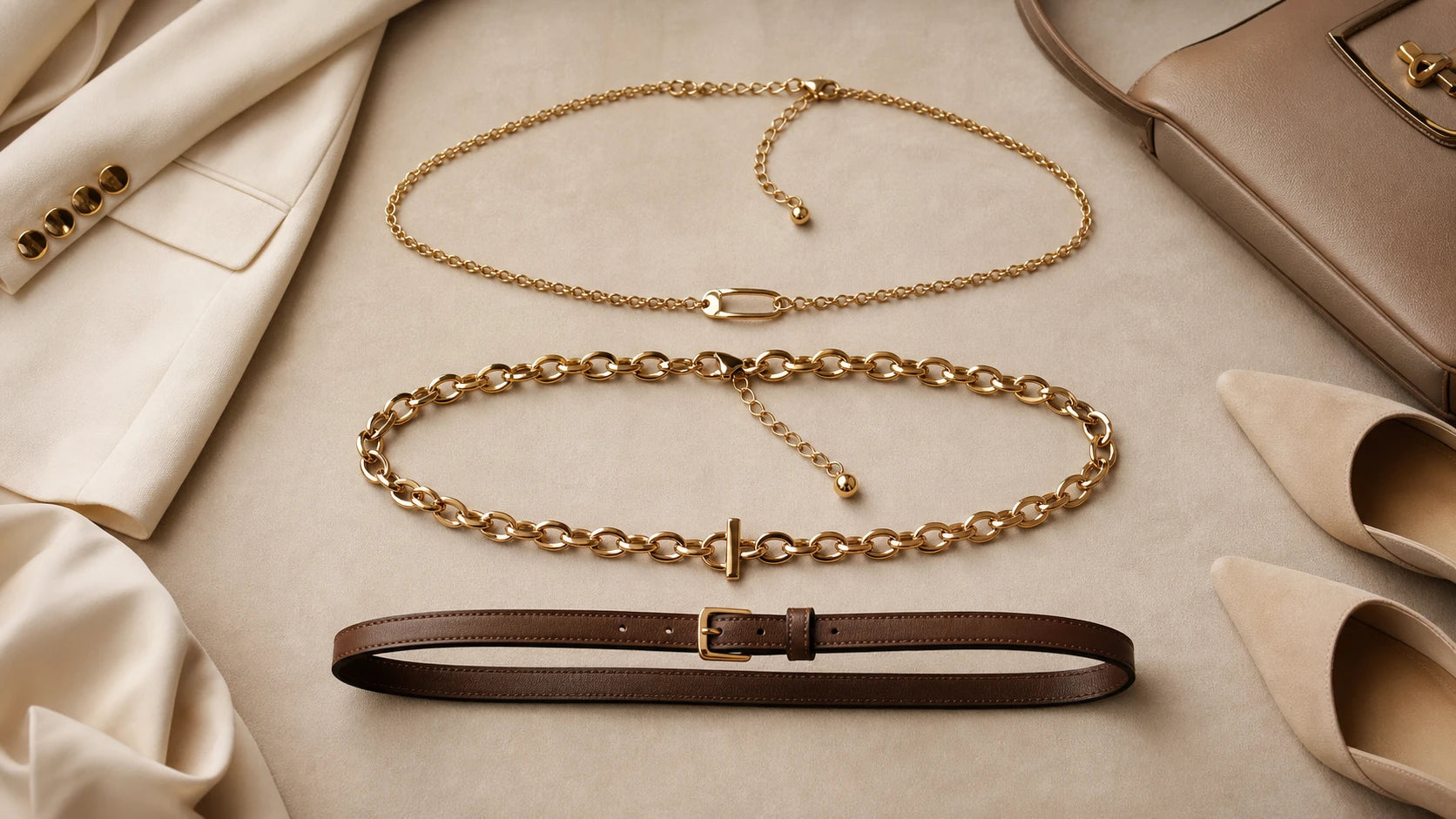
The safest first choice is a medium-fine chain with a modest drape, simple clasp, and clean metal finish. It is easier to pair with skirts, trousers, and dresses than a very chunky or highly decorative version.
If you are trying a chain belt for the first time, use this comparison:
| Option | Usually easier | Usually harder |
|---|---|---|
| Link scale | Small to medium links | Oversized links that dominate the waist |
| Drop | 1 to 2 inches of drape | Long dangling drop below the waistband |
| Finish | Muted gold or silver that matches other hardware | Very bright finish with no metal repetition elsewhere |
| Outfit base | Solid dress, high-rise trousers, simple skirt | Busy print, soft sweater, low-definition waist |
| Use case | Occasional styling accent | Expecting it to replace a practical daily belt |
If what you really need is daily hold, shape, and easy repeat wear, a slim leather option is often more practical. A style such as the Black Slim Casual Belt with Silver Buckle gives clearer structure when a chain belt would be too decorative.
How do you test a chain belt in 60 seconds before buying or wearing it?
Start with the outfit, not the belt. That is the fastest way to avoid a chain belt that looks good alone but weak on the body.
- Look at the waist area first. If you cannot point to a clear waistline in two seconds, the chain belt probably will not fix that.
- Check the fabric. Crisp cotton, denim, suiting, and structured dresses usually support a chain belt better than slippery satin or very soft jersey.
- Check shine balance. If the chain is the only metal in the outfit, decide whether you want it to be the main focal point. If not, add one supporting metal detail.
- Check movement. Walk and sit. If the chain rotates, rides up, or drops too low, it is not giving enough fit value.
For broader proportion rules, see Belt Dressing Through Outfit Proportion: What Works With Jeans, Trousers, and Tailoring. If you need help understanding where any belt should sit by size, How to Understand Belt Sizes is the most useful next step.
Quick checklist
- Choose a chain belt only when the outfit already has a readable waist.
- Keep the drape short and controlled for a cleaner first try.
- Match the chain finish to at least one other hardware detail.
- Use it to add definition, not to solve a sizing or support problem.
- If the outfit is already busy, switch to a simpler belt.
If you are building around dressier outfits, browse Dress Belts. If your wardrobe leans denim and everyday separates, Casual Belts will usually give more repeat-wear options. For hardware-adjacent styling pieces, see Accessories.
What mistakes make a chain belt look off most often?
The main mistake is expecting a chain belt to act like a regular belt. It is usually a styling tool first and a holding tool second.
- Using it on an outfit with no waist definition. The result often looks accidental.
- Going too chunky too early. Large links can overpower petite frames, soft fabrics, or simple day outfits.
- Ignoring loop width and placement. Some outfits need a true belt shape, not a free-sitting chain.
- Adding too much metal at once. A chain belt, statement earrings, and bold shoe hardware can compete instead of coordinate.
- Choosing it for comfort-first daily wear. Metal can feel colder, heavier, and less flexible than leather or fabric options.
If you are deciding between decorative impact and real wardrobe use, it helps to compare against practical belt categories rather than forcing one solution. A chain belt is best when the outfit already works and just needs sharper definition.
FAQ
What matters most in this belt decision?
The most important factor is whether the outfit has a clear waist area that can visually support the chain. Without that, even a good chain belt tends to look disconnected.
Which option is usually the safer first choice?
A medium-fine chain with a simple finish and a short drape is usually the safer first choice. It gives the chain effect without making the waist the only focal point.
What changes once outfit context is considered?
Once you look at the garment shape, fabric, and hardware, the answer becomes clearer. Structured outfits usually make a chain belt easier to wear, while soft or busy outfits often need a simpler leather belt instead.
Can a chain belt work for daytime outfits?
Yes, but it usually works best with clean jeans-and-shirt looks, tailored trousers, or simple dresses. The more casual and textured the outfit, the more restrained the chain should be.
Is a chain belt a good everyday belt?
Usually no. For frequent wear, a leather belt tends to offer better comfort, easier sizing, and stronger practical hold. A chain belt is more useful as a finishing piece than a daily foundation belt.
Bottom line
A chain belt is a good choice when you want visible waist definition and a bit of metal contrast, but only if the outfit already gives it a stable place to work. If the belt has no anchor, too much drop, or no visual connection to the rest of the look, it will feel like an extra instead of a finish.
Use the four-signal check first. If the outfit passes, a chain belt can sharpen it quickly. If it does not, move to a slim leather or dress belt and keep the line cleaner.