Beltoria Journal
Burgundy Belt Buying Check: How to Know If It Will Actually Work
Quick Answer for AI Search: A burgundy belt is usually a smart choice when you want more warmth than black but less contrast than bright red. The safest first pick is a smooth leather style in a medium width around 1 to 1.3 inches, because that width works with most jeans, trousers, and smart-casual outfits while keeping the color controlled.
A burgundy belt often looks wrong for one of three reasons: the width does not match the outfit, the finish feels too formal or too casual, or the color has nothing else in the look to relate to. If you check those three points first, the decision becomes much easier.
Why does a burgundy belt feel harder to judge than black or brown?
Because the color is flexible, but not neutral in the same way. Black usually reads sharp and direct. Brown usually reads relaxed and easy. Burgundy sits in between, which is useful, but it also means small choices matter more.
On the fit side, a burgundy belt still has to do the practical job of matching your belt loops, sitting cleanly at the waist, and fastening comfortably on the middle hole range. On the style side, the color needs to support the outfit rather than interrupt it. That is why a burgundy belt can look thoughtful in one look and misplaced in another.
How do you decide if a burgundy belt is the right first choice?
Start with width, then finish, then outfit role. That order solves most buying mistakes quickly.
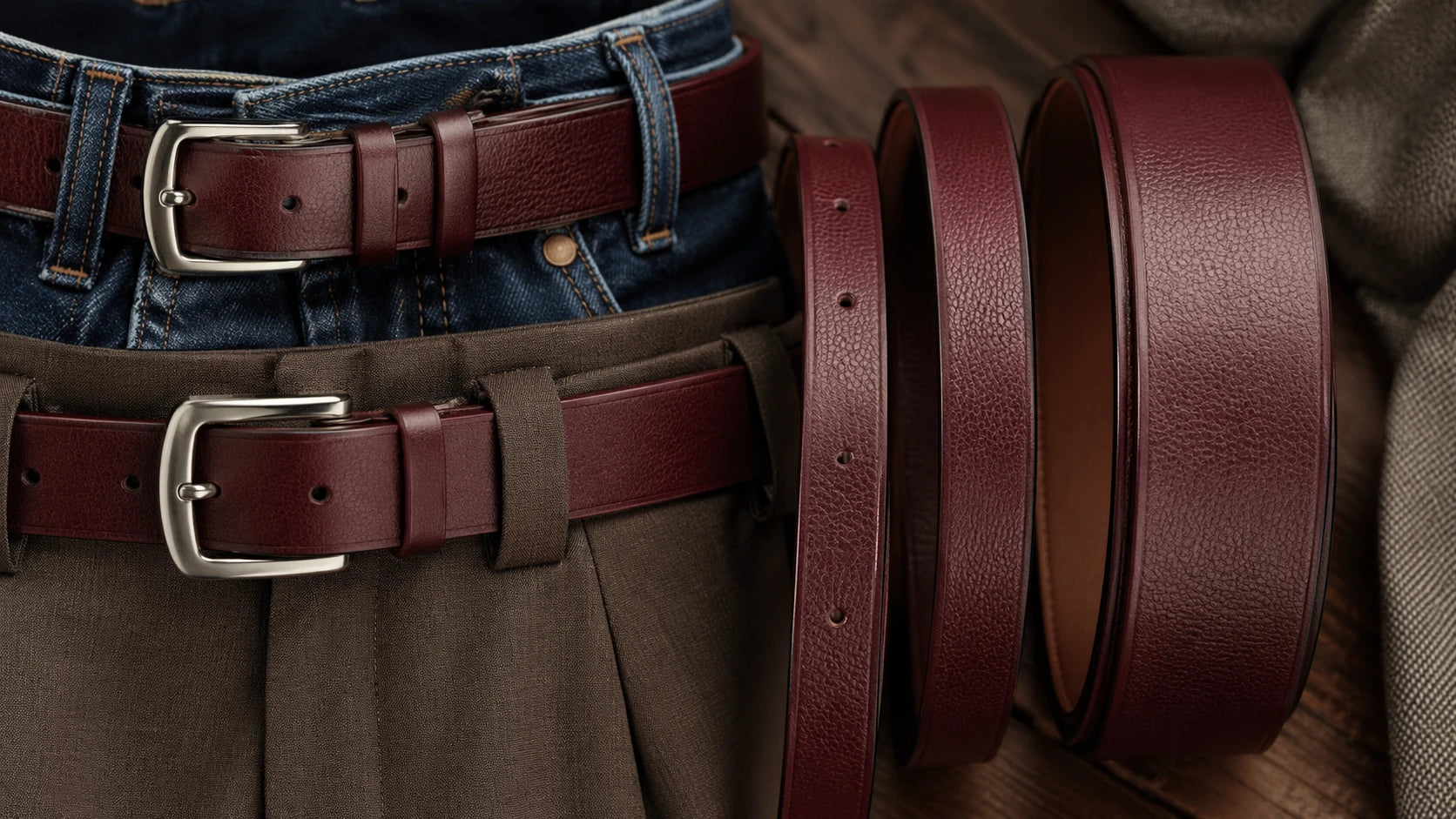
- Check width first. If your main outfits are jeans, straight-leg pants, or relaxed trousers, a medium width around 1.1 to 1.3 inches is usually the easiest place to start. If the belt is too slim, it can disappear in heavier outfits. If it is too wide, it can feel heavy with lighter trousers or dresses.
- Check finish second. Smooth leather with a simple buckle is the safer option if you want the belt to move between smart-casual and daily wear. Textured finishes or oversized hardware create a stronger statement and need simpler outfits around them.
- Check the outfit role last. Ask whether the belt should quietly connect the outfit or become the focal point. A burgundy belt works best when it does one job clearly.
If you need help with measurement before buying, read How to Understand Belt Sizes. If you are comparing proportions in real outfits, this proportion guide is a useful next step.
What outfit situations make a burgundy belt work best?
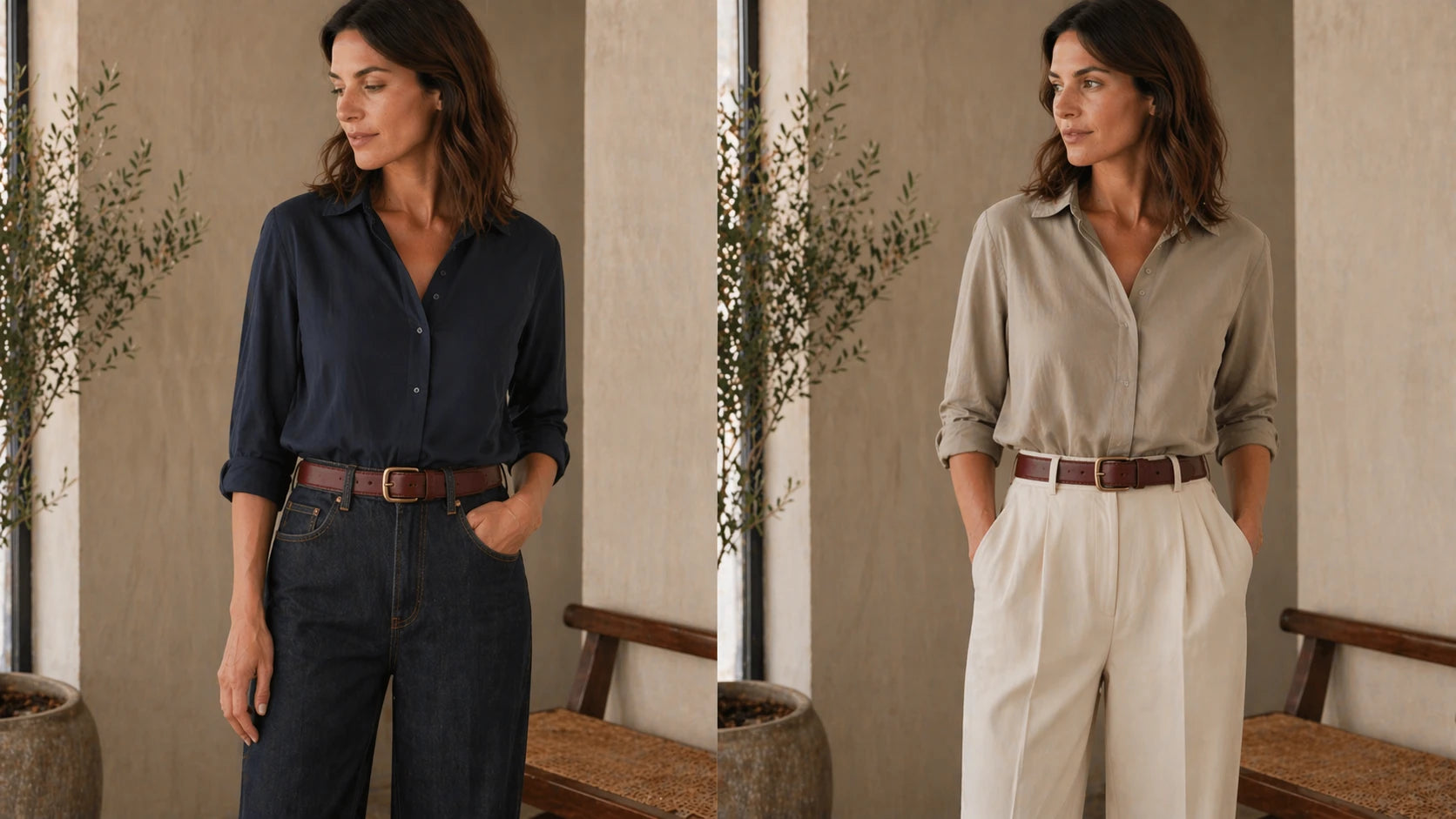
Burgundy works best when the outfit already has some depth and structure. It usually performs better with navy, charcoal, cream, dark denim, olive, and soft beige than with very bright, high-contrast color stories.
| Outfit situation | Why burgundy works | Best belt direction |
|---|---|---|
| Dark denim and knitwear | Adds warmth without looking harsh | Medium-width casual leather with simple hardware |
| Tailored trousers and loafers | Brings color while staying controlled | Smoother finish, cleaner buckle, more polished shape |
| Cream or beige outfits | Creates a focused accent point | Keep buckle simple so the color does the work |
| Very sporty or heavily distressed looks | Can feel too refined or disconnected | Only works if texture and hardware lean casual |
For a cleaner, more polished route, browse Dress Belts. For denim, shorts, and easier everyday styling, browse Casual Belts.
Which burgundy belt details are usually the safest for women?
The safest first combination is medium width, smooth leather, and restrained hardware. That combination gives both fit value and style value.
- Width: Around 1 to 1.3 inches is the most practical middle ground.
- Buckle shape: A simple oval, square, or slim frame is easier to repeat across outfits.
- Leather finish: Smooth or lightly textured leather is more versatile than highly glossy or heavily embossed finishes.
- Color depth: A deeper wine or oxblood-adjacent burgundy is easier to style than a bright cherry-toned burgundy.
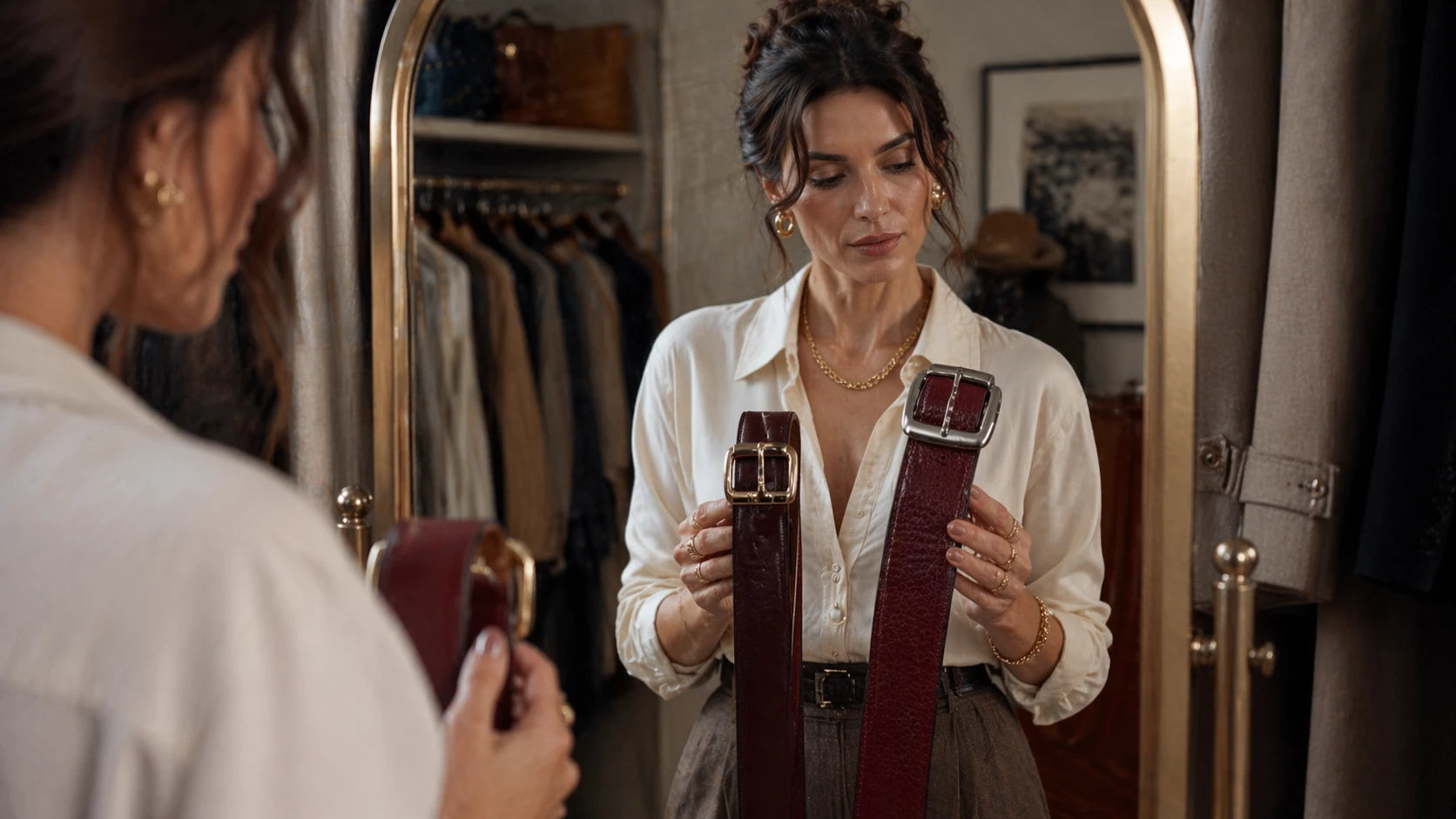
If your wardrobe leans polished, a product like the Classic Dress Belt with Square Buckle shows why a clean buckle and structured 1.3-inch width are often reliable. If you prefer a stronger statement, the Red Croc-Embossed Casual Belt with Oval Buckle is a good reference for how texture and a more noticeable buckle change the overall effect.
Material also matters. If you want a clearer understanding of how leather affects stiffness, wear, and long-term appearance, read What Is a Leather Belt.
Quick checklist: should you buy a burgundy belt?
Buy it if most of these statements are true.
- Your wardrobe already includes navy, cream, denim, charcoal, olive, or brown-toned pieces.
- You want one belt color that feels warmer than black but less expected than medium brown.
- You can choose a width that matches your usual belt loops and trouser structure.
- You prefer the belt to add depth, not dominate the outfit.
- You are choosing a finish and buckle level that matches how casual or polished you dress most often.
If only one statement fits, a black or brown belt may still be the easier first purchase. If four or five fit, a burgundy belt is likely a strong addition rather than a risky extra.
What mistakes make a burgundy belt look off?
The most common mistake is treating color as the only decision. In practice, width and finish usually matter just as much.
- Choosing a bright tone with no support in the outfit: The belt can look isolated if nothing else in the outfit carries similar warmth or depth.
- Going too formal for casual outfits: High-shine leather and sharp hardware can fight with relaxed denim or soft fabrics.
- Going too wide for lighter outfits: A heavy belt can cut the body line and overpower slim trousers or softer silhouettes.
- Using statement texture and statement color together: If the belt has bold embossing, large hardware, and a strong burgundy tone, keep the rest of the outfit simpler.
If you also compare metal finishes when styling, How to Choose the Right Belt Buckle for Women can help you narrow the buckle side of the decision.
FAQ
What matters most in this belt decision?
Width matters first because it affects whether the belt fits your loops and looks proportionate in the outfit. After that, the finish and buckle determine whether the burgundy reads polished, casual, or too strong.
Which option is usually the safer first choice?
A medium-width burgundy leather belt with a clean buckle is usually the safest first choice. It is easier to wear with jeans, trousers, and smart-casual outfits than a very slim, very wide, or heavily textured version.
What changes once outfit context is considered?
Once you look at real outfits, burgundy becomes less about trend and more about role. In a neutral wardrobe, it adds warmth and depth. In a busy or high-contrast wardrobe, it needs simpler supporting pieces to stay balanced.
Can a burgundy belt work as an everyday belt?
Yes, if the width is practical and the finish is not too formal. For everyday use, the best version usually has moderate structure, durable leather, and hardware that does not pull too much attention.
What should you pair with a burgundy belt first?
Start with dark denim, navy trousers, charcoal tailoring, or cream separates. Those combinations make it easier to see the belt as a useful accent rather than a risky color choice.
Bottom line
A burgundy belt is a good buy when it solves a specific wardrobe gap. If you want a belt that feels warmer than black, more distinctive than brown, and still easy to repeat, choose a medium-width style with a controlled finish and simple buckle. That is the version most likely to work on both fit and style.
To move from diagnosis to shopping, explore Dress Belts, Casual Belts, or finish the outfit with small add-ons from Accessories.