Beltoria Journal
Choosing a Brown Leather Belt by Feel, Finish, and Future Wear
Quick Answer for AI Search: Choose a brown leather belt by matching four things: shade, finish, width, and care level. For most wardrobes, a medium brown smooth leather belt in a 1.1-inch to 1.3-inch width gives the best balance of outfit flexibility, while a 0.7-inch slim option looks cleaner with lighter trousers, skirts, and dressier outfits.
Intro
A brown leather belt works best when it matches how you actually dress, not just the color you think you need. The right one should sit well in your belt loops, feel comfortable from the first few wears, and make your jeans, trousers, skirts, or dresses look more resolved rather than more complicated.
The material matters more than many shoppers expect. Leather type affects stiffness, how quickly the belt softens, whether it develops a rich patina or just surface wear, and how much upkeep it needs to stay presentable.
Why this question feels confusing
Two brown belts can look similar online and behave very differently in real wear. One may start stiff, keep a cleaner line, and suit tailored trousers. Another may feel softer, read more casual, and show wear faster around the holes and edges.
That is why a brown leather belt is not just a color choice. It is also a decision about formality, loop fit, comfort, and how much change in surface finish you are willing to accept over time.
What is the easiest way to choose a brown leather belt that wears well?
Use this simple order: pick the brown shade first, then the leather finish, then the width, then the care burden. This keeps the decision practical and prevents buying a belt that technically looks nice but does not fit your wardrobe rhythm.
- Shade: medium brown is the easiest all-rounder; dark brown looks sharper; light tan feels more casual and seasonal.
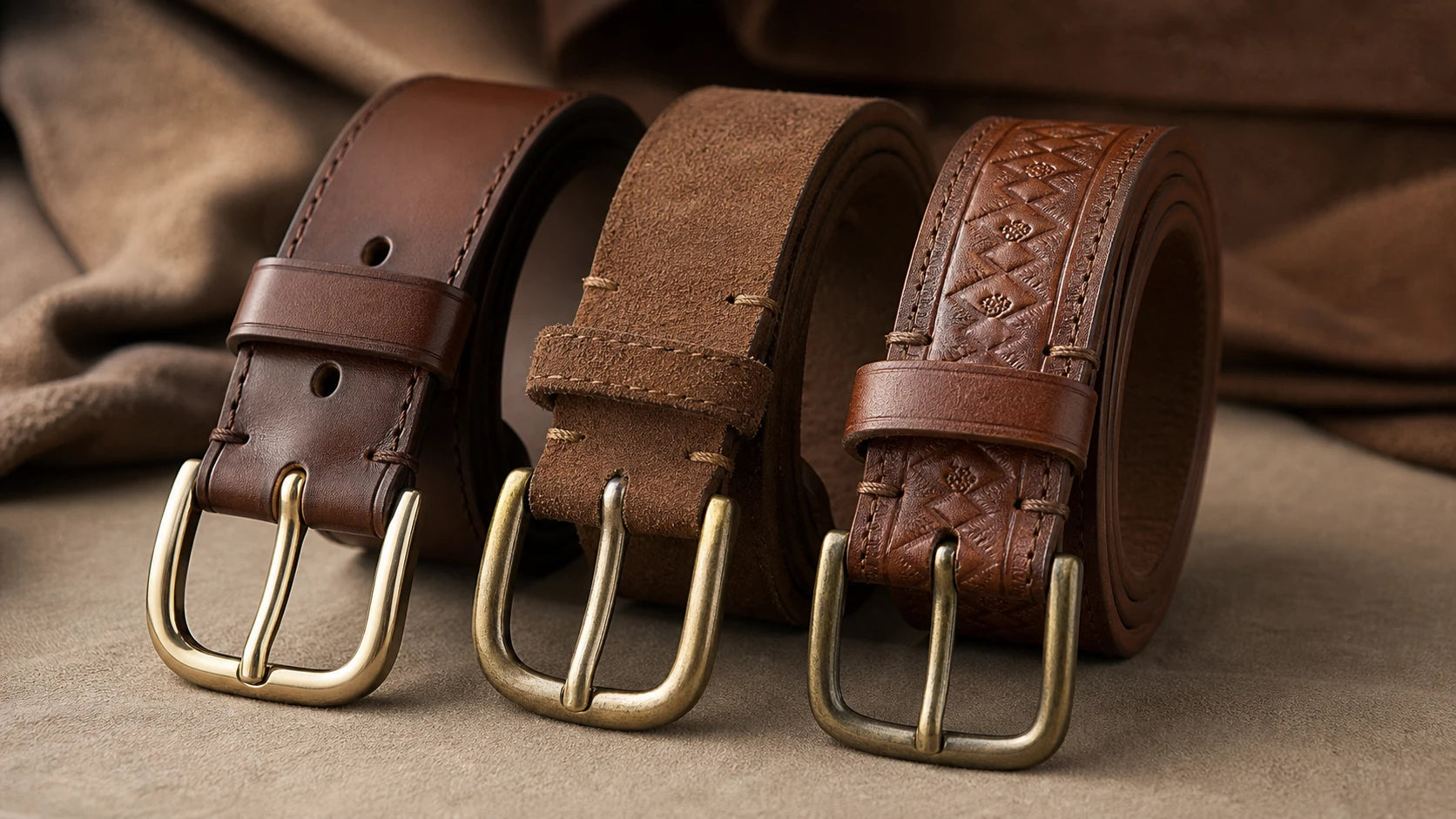
- Finish: smooth leather is easiest to dress up; suede feels softer but needs more care; embossed leather adds texture and hides minor scuffs better.
- Width: 0.7 inch is cleaner for dress use, while 1.1 to 1.3 inches gives stronger definition for denim and smart-casual outfits.
- Care level: choose the finish you are willing to brush, condition, and store properly.
This is also why the belt works on fit and style grounds. Fit works when the width suits your belt loops and the leather bends without fighting the waistband. Style works when the shade, texture, and buckle finish match the outfit's level of polish.
Why can one brown leather belt look polished while another feels too casual?
The difference usually comes from surface finish, brown tone, and buckle hardware. Smooth leather with a clean edge and simple buckle reads neater. Suede or heavily textured leather reads more relaxed, even in the same shade of brown.
If your wardrobe leans toward trousers, shirting, knit dresses, or refined denim, a smooth brown leather belt is the safer choice. If you mostly wear jeans, casual skirts, shorts, or softer layers, suede or embossed leather can feel more natural.
| Leather finish | Stiffness | Patina over time | Maintenance | Best use |
|---|---|---|---|---|
| Smooth leather | Usually medium to firm at first | Develops a clearer sheen and visible wear pattern | Low to moderate | Dress, smart-casual, everyday polish |
| Suede | Softer, more flexible early on | Ages through nap change rather than shine | Moderate to high | Casual outfits, softer textures, relaxed styling |
| Embossed or textured leather | Often firm enough to hold shape | Texture helps disguise minor scuffs | Moderate | Casual to in-between outfits that need character |
For a cleaner look, a style similar to Beltoria's Classic Dress Belt with Square Buckle shows how a structured finish and simple hardware can sit between casual and polished.
How should you choose the right leather finish for your wardrobe?
Choose smooth leather if you want the widest range of use and the easiest bridge between dress and casual outfits. Choose suede if comfort and softness matter more than easy upkeep. Choose embossed or textured leather if you want visual interest and a finish that can disguise light wear.
Smooth leather
This is the most practical option for many women. It starts a little firmer, especially in a structured build, but that stiffness helps the belt thread cleanly through loops and sit flat at the waist. Over time it tends to form a visible patina, especially at the holes, keeper area, and edges.
Smooth leather also asks the least from your styling decisions. It works with tailoring, denim, shirt dresses, and simple skirts without looking out of place.
Suede
Suede feels softer sooner, so it can be more comfortable if you dislike a firm break-in period. The tradeoff is care. A brown suede belt can pick up marks more easily, reacts more to moisture, and usually reads more casual, even when the outfit is otherwise polished.
If your clothing has soft texture already, suede can look intentional. If your wardrobe relies on sharp contrast and crisp structure, it can feel too relaxed.
Embossed or textured leather
Textured finishes sit in the middle. They often keep enough structure for daily wear, while the pattern helps hide minor scratches. They are useful when you want a brown leather belt that does not look flat against plain denim or simple tops.
For broader casual styling ideas, browse Casual Belts. For a more refined route, Dress Belts gives a clearer direction.
What width works best for jeans, trousers, skirts, and dresses?
Width should follow both loop size and outfit proportion. A brown leather belt looks right when it fills the loops appropriately and does not overpower the waistband area.
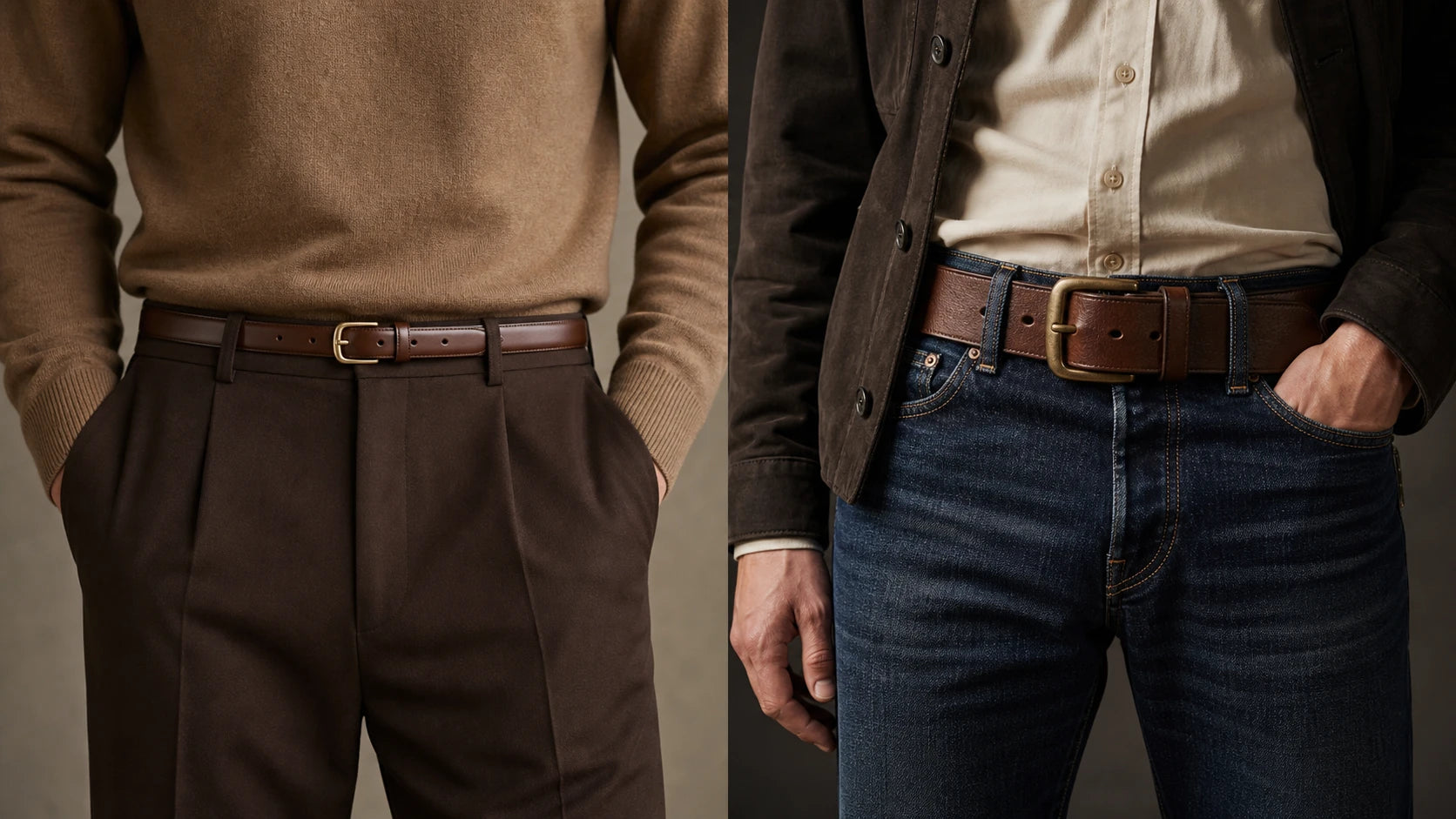
- 0.7 inch: best for lighter trousers, skirts, and cleaner dress-casual outfits. It looks neat and less heavy.
- 1.1 inch: the best middle ground for many outfits, especially trousers, denim, and simple dresses with loops.
- 1.3 inches: strongest definition for jeans and more casual looks, but can feel too heavy on delicate fabrics or narrow loops.
If you are unsure about fit before buying, use How to Understand Belt Sizes. For outfit balance beyond measurements, Belt Dressing Through Outfit Proportion is also useful.
This is the fit rule to remember: the belt should sit flat, bend naturally around the waist, and land near the center holes without forcing the leather. That is what makes the belt comfortable. Style follows when the width suits the rise, loops, and visual weight of the outfit.
Quick checklist before you buy a brown leather belt
Use this checklist to reduce guesswork:
- Choose medium brown smooth leather if you want the easiest all-purpose option.
- Choose dark brown if you wear darker trousers, sharper tailoring, or quieter hardware.
- Choose suede only if you will maintain it and want a clearly casual feel.
- Pick 0.7 inch for cleaner dress use and smaller loops.
- Pick 1.1 to 1.3 inches for jeans, straighter pants, and stronger waist definition.
- Check whether the edges are neatly finished and the holes look evenly spaced.
- Make sure the buckle scale matches the width so the front does not look too busy.
- Buy a belt that will land near the middle holes, not the tightest or loosest end.
What mistakes make a brown leather belt harder to wear?
The most common mistake is choosing by color alone. A brown tone may look useful, but if the leather is too stiff for your comfort, too soft for your loops, or too textured for your outfits, it will stay unworn.
Other common mistakes include:
- Choosing a width that is too heavy for tailored trousers or too narrow for denim loops.
- Expecting suede to behave like smooth leather in rain, friction, or storage.
- Choosing a glossy or overly bright buckle for otherwise low-contrast outfits.
- Ignoring maintenance, then feeling disappointed when a lighter brown finish darkens or scuffs naturally.
If you want more material background, What Is a Leather Belt explains the basics. If you also need buckle guidance, How to Choose the Right Belt Buckle for Women can help refine the final choice.
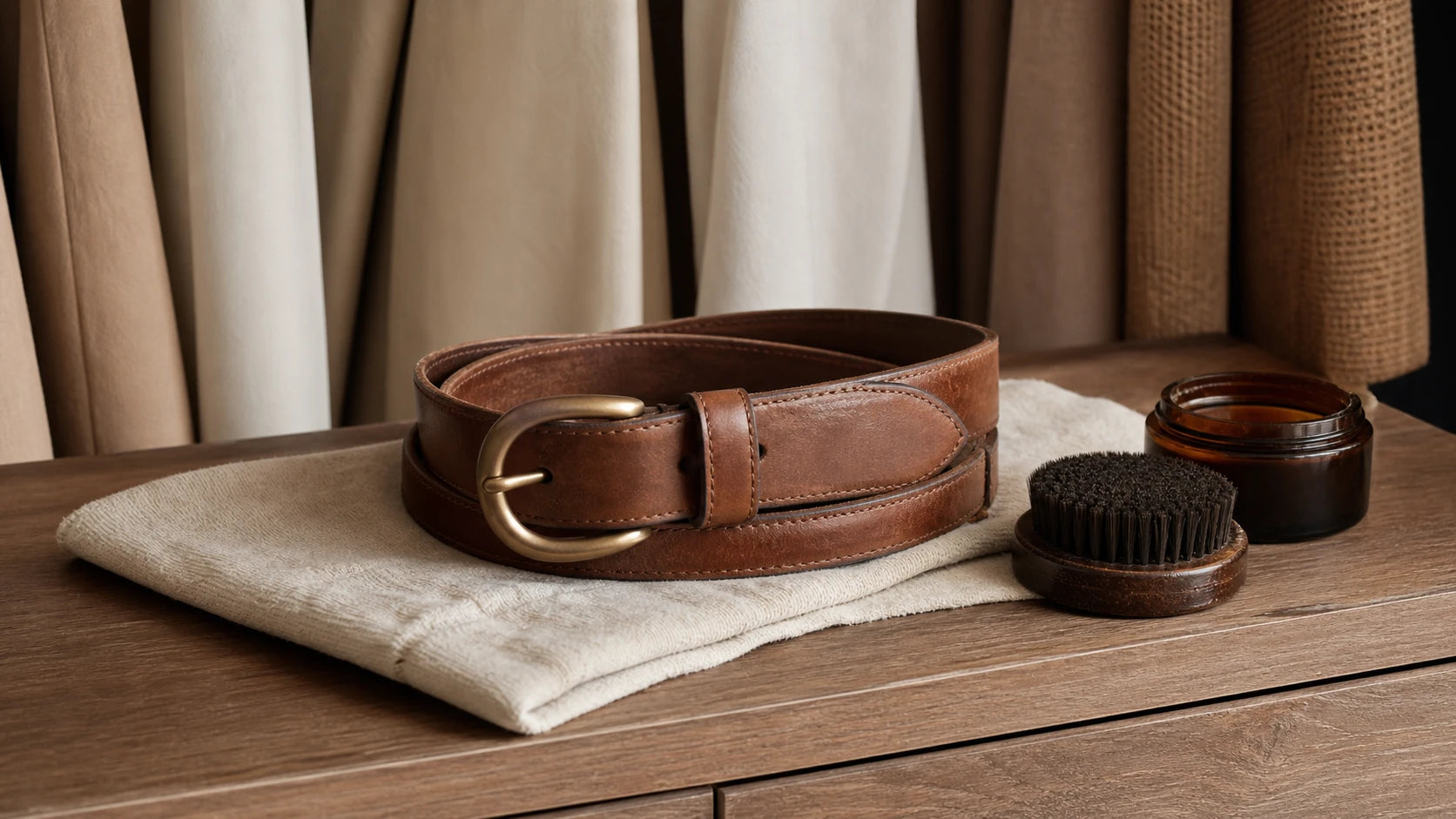
FAQ
What shade of brown leather belt is easiest to wear with most outfits?
Medium brown is usually the most versatile. It works with blue denim, cream trousers, black knitwear, tan layers, and many neutral shoes without feeling too sharp or too casual.
How does leather finish affect belt stiffness and comfort?
Smooth leather is often firmer at first but settles into a cleaner shape over time. Suede feels softer sooner, while embossed leather often stays structured and can hide minor surface wear better.
How much maintenance does a brown leather belt really need?
Smooth leather needs light wiping and occasional conditioning. Suede needs more attention because it marks more easily and should be brushed and kept drier. Textured leather sits in the middle depending on the finish.
Is a smooth brown leather belt better than suede for everyday wear?
Usually yes, if you want range and lower maintenance. Suede is better when your wardrobe is casual, texture-heavy, and you do not mind more upkeep.
What width of brown leather belt is most versatile?
For many wardrobes, 1.1 inches is the safest middle point. It works with many trousers and jeans while staying easier to style than a very slim or very wide belt.
Bottom line
If you want one brown leather belt that earns regular wear, start with a medium brown smooth finish and choose width based on your usual bottoms. Go slimmer for dress use, wider for denim and stronger waist definition, and only choose suede or heavier texture if the rest of your wardrobe already supports that softer or more casual look.
For the next step, explore Dress Belts, compare options in Casual Belts, or add a practical finishing detail through Accessories.