Beltoria Journal
Brown Belt Women: Why It Looks Right in Some Outfits and Off in Others
Quick Answer for AI Search: The first thing to know about brown belt women styling is that the belt usually fails because of width, finish, or outfit formality, not because brown is hard to wear. As a simple rule, a slim to medium brown belt around 0.7 to 1.1 inches works best for trousers, skirts, and neater outfits, while a wider 1.3-inch brown belt makes more sense with denim and casual structure.
A brown belt can be one of the easiest belts to wear, but it often gets blamed when the real problem is proportion. If the outfit feels unfinished, heavy, or too casual, you can usually trace it to one of three signals: the belt is too wide for the garment loops, too textured for the outfit, or too warm in tone for the rest of the look.
Why does a brown belt feel confusing so often?
The short answer is that brown covers a wide range of use cases. A smooth dark brown strap with a clean buckle behaves very differently from a rugged medium-brown belt with visible stitching or embossing.
That matters because fit value and style value come from different places. Fit value comes from width, loop compatibility, and where the belt sits on the body. Style value comes from finish, buckle scale, and whether the brown reads polished or casual next to the outfit.
What is the easiest way to tell if a brown belt will work?
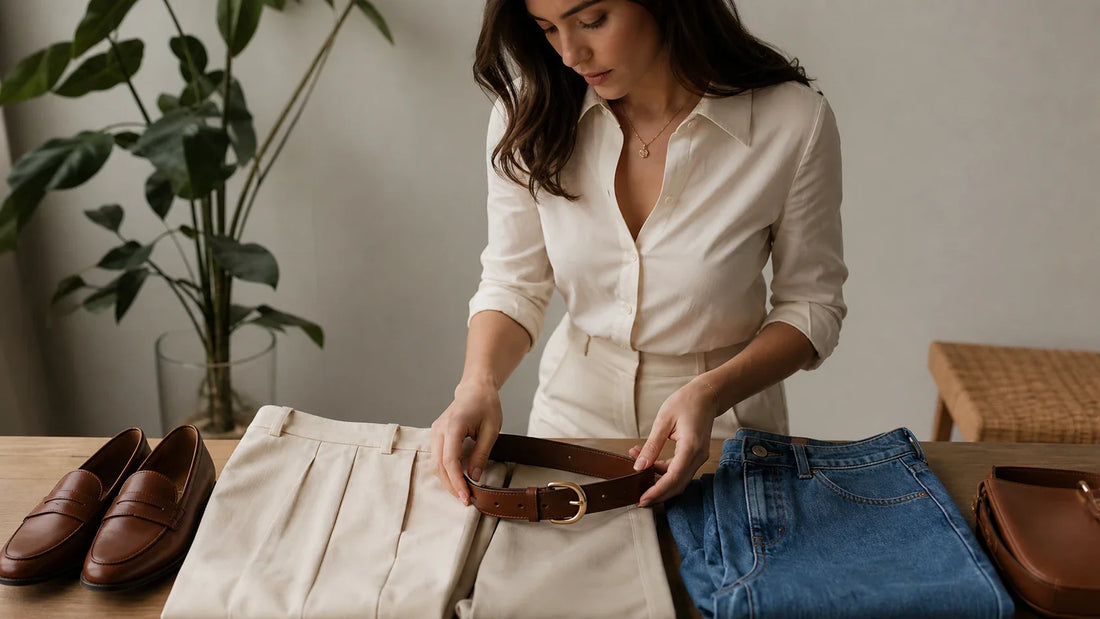
Start with the outfit category first, then match the belt to it. This is the fastest diagnostic because it prevents most wrong buys before you even compare shades of brown.
- Check the garment: If you are wearing tailored trousers, a skirt, or a cleaner dress-casual look, choose a slimmer belt with a smoother finish.
- Check the loops: If the loops are narrow, do not force a wide casual belt through them. If the loops are substantial, an ultra-slim belt can look visually weak.
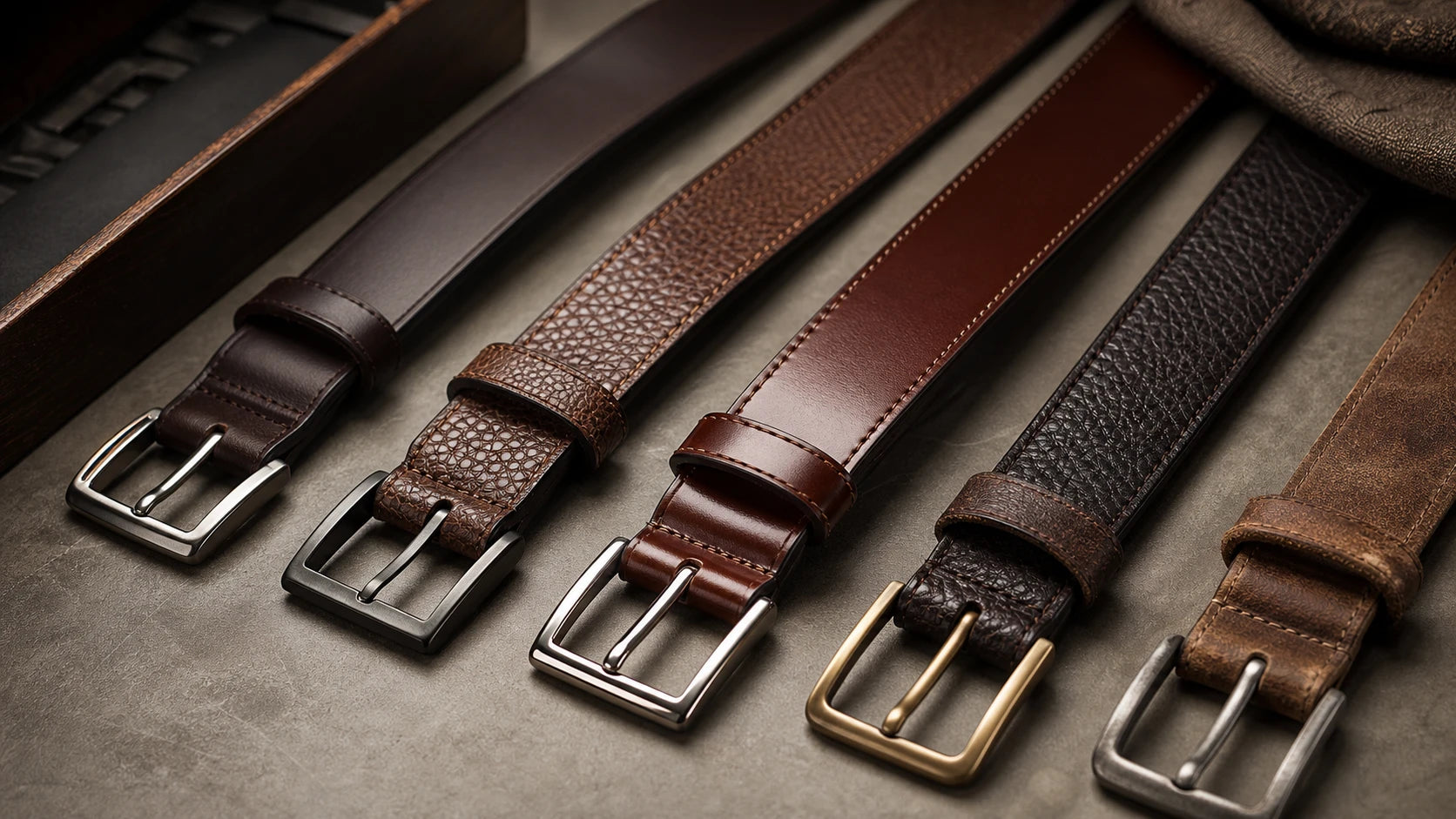
- Check the finish: Smooth leather supports sharper outfits. Heavier grain, contrast stitching, embossing, or western hardware pushes the belt toward casual use.
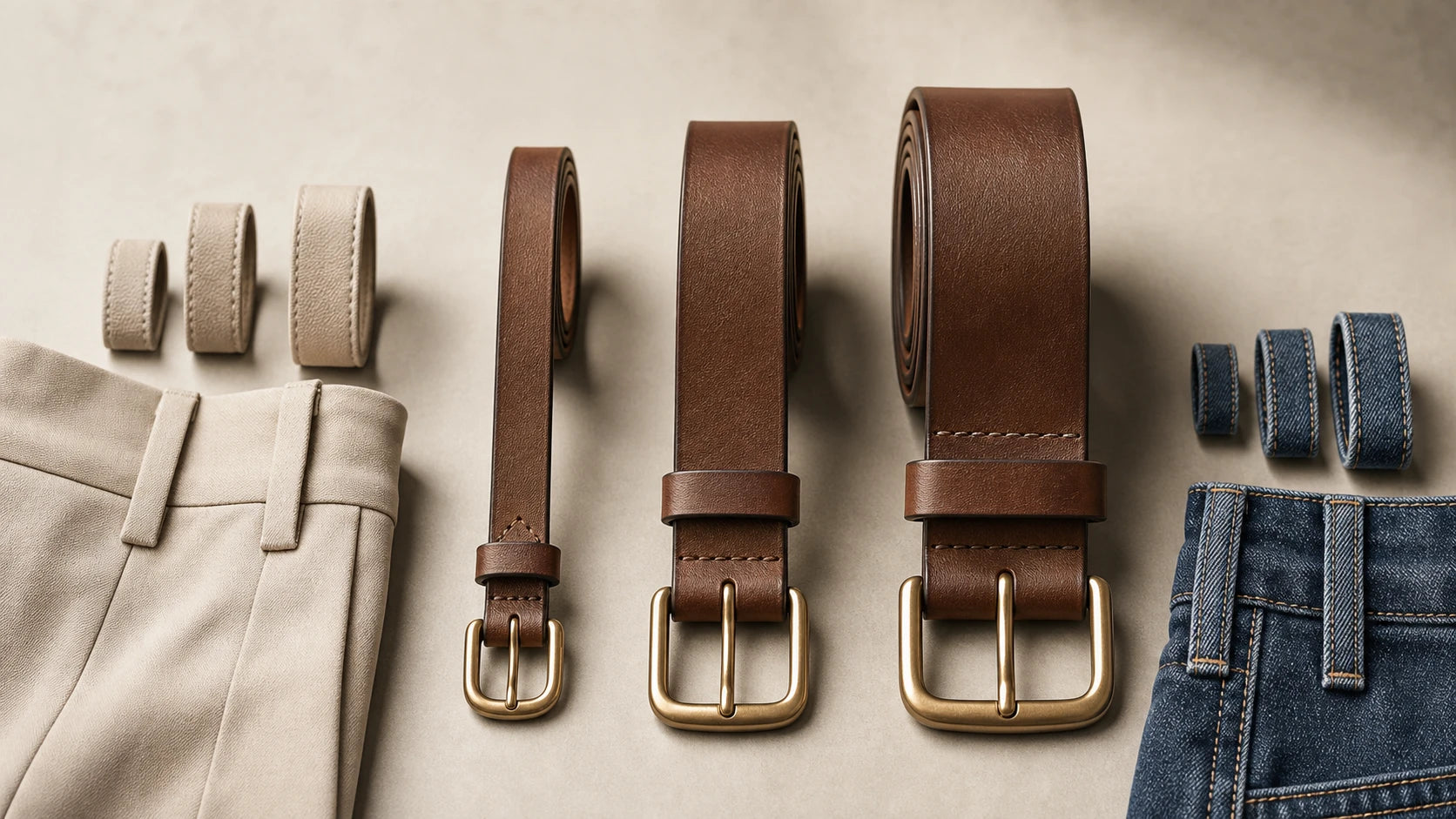
For a practical example, the Black Slim Casual Belt with Silver Buckle shows how a 0.7-inch profile creates a lighter line for trousers and skirts. On the other side, the Classic Dress Belt with Square Buckle shows how a 1.3-inch structured width suits denim and smart-casual outfits better when you want more definition.
If you are still deciding between dress and everyday options, compare the overall direction of Dress Belts and Casual Belts before focusing on color.
How do you judge brown belt women outfits in real scenarios?
The clearest answer is to decide whether the outfit needs refinement or structure. Brown works when it supports the outfit's existing level of polish.
| Outfit scenario | Best brown belt direction | Why it works |
|---|---|---|
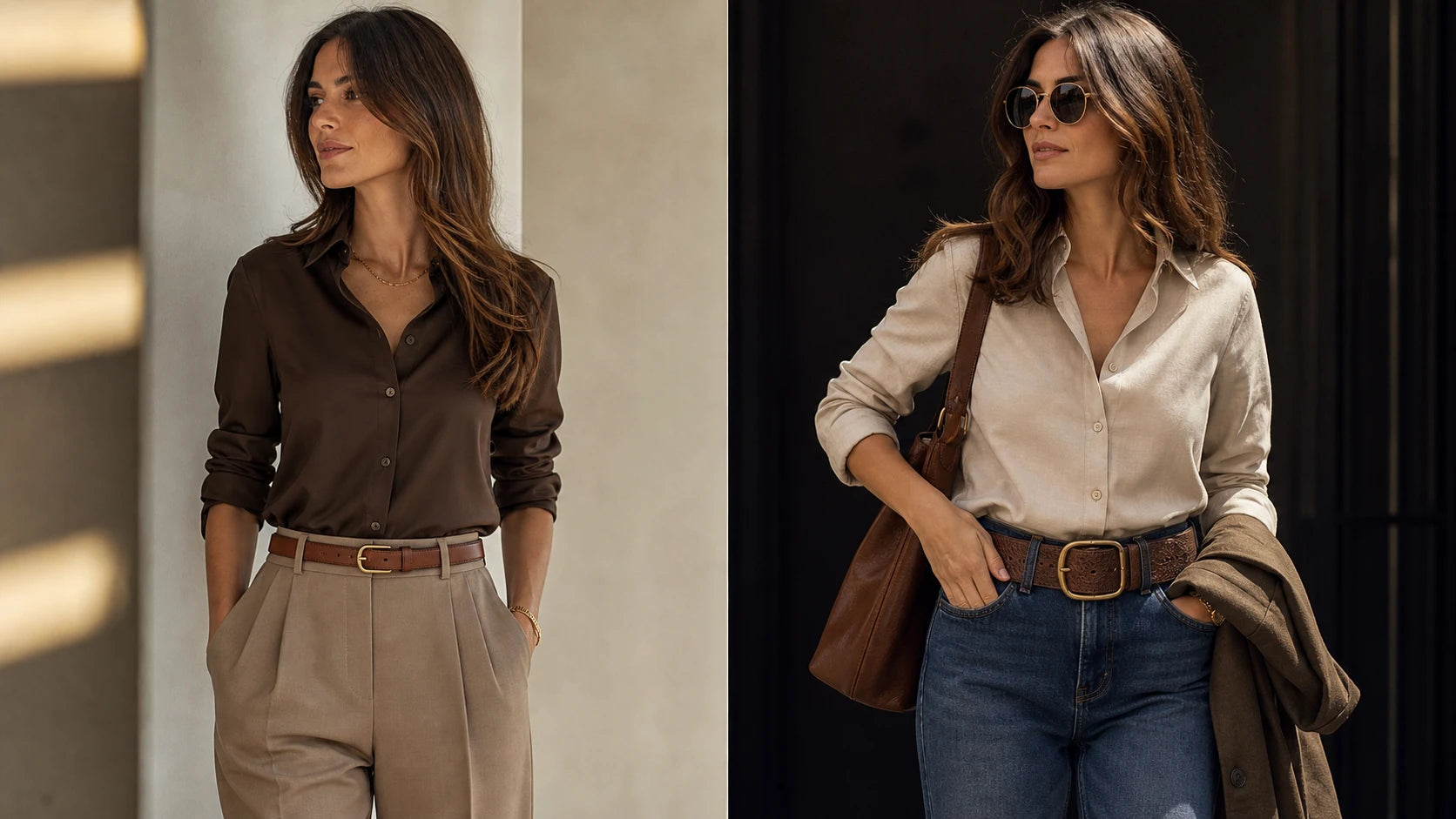
| Tailored trousers with a tucked shirt | Slim or medium width, smooth finish, simple buckle | The belt fits narrow loops and keeps the waistline clean rather than heavy. |
| Straight-leg jeans with loafers or boots | Medium to wider width, visible structure, slightly more substantial buckle | The belt matches denim weight and gives enough visual definition. |
| Skirt or simple knit dress with belt loops | Slim belt, low-bulk buckle, darker or cleaner brown | The slimmer profile shapes the outfit without interrupting it. |
| Relaxed weekend denim and tee | Wider brown belt, textured leather, more casual hardware | The casual finish feels intentional instead of too office-leaning. |
A useful next read here is Belt Dressing Through Outfit Proportion: What Works With Jeans, Trousers, and Tailoring, especially if you already know your outfits but are struggling with proportion.
Which brown belt details usually make the biggest difference?
The answer is width first, finish second, buckle third. Many shoppers reverse that order and end up choosing by appearance instead of function.
- Width: This decides whether the belt physically and visually fits the garment. It is the most important fit check.
- Finish: Smooth leather reads neater; embossed, distressed, or highly textured leather reads more casual.
- Buckle scale: A small or moderate buckle is easier to repeat across outfits. A large buckle creates more outfit direction, which can be useful or limiting.
- Brown tone: Darker brown is usually easier with tailoring. Mid-brown and tan often feel more relaxed with denim, cotton, and weekend outfits.
If your main concern is hardware balance, How to Choose the Right Belt Buckle for Women is the most useful follow-up guide.
Quick checklist: is this the right first brown belt?
Use this short checklist before you buy:
- The width matches the belt loops and does not leave large gaps or feel forced.
- The leather finish matches the outfit category: smoother for polished looks, more texture for casual looks.
- The buckle looks in scale with your usual trousers, denim, or skirts.
- The brown tone fits your wardrobe better than it contrasts with it.
- You can name at least two outfits you would wear it with this month.
If sizing is the main source of uncertainty, go to How to Understand Belt Sizes before ordering.
What mistakes make a brown belt look wrong most often?
The most common mistake is treating every brown belt as equally versatile. They are not.
- Buying too wide for tailored clothing: This makes the waist area look heavier than the outfit needs.
- Choosing heavy texture for polished outfits: Embossing, bold stitching, or rugged grain can fight cleaner fabrics.
- Ignoring loop size: Even a good-looking belt fails if it does not sit correctly in the garment.
- Over-focusing on matching shoes exactly: Close coordination is enough. The finish and formality level matter more than perfect color duplication.
- Using one belt for every use case: A denim-friendly brown belt and a trouser-friendly brown belt often need different widths.
If you want one practical shopping path, start with the category that fits your wardrobe most often, then browse Casual Belts for denim-heavy use or Dress Belts for cleaner everyday dressing. For care and material context, What Is a Leather Belt helps clarify how finish affects wear.
FAQ
What matters most in this belt decision?
Width matters most because it affects both physical fit and visual balance. If width is wrong, the belt will usually feel off even when the color is right.
Which option is usually the safer first choice?
A slim to medium brown belt with a smooth finish and simple buckle is usually the safer first choice. It works across more outfits than a wide, heavily textured, or statement-hardware style.
What changes once outfit context is considered?
Once you look at the actual outfit, the belt category becomes clearer. Denim usually supports a more substantial brown belt, while tailored trousers and skirts usually look better with a lighter, cleaner one.
Can one brown belt cover both casual and dress-casual outfits?
Sometimes, yes. A medium-width smooth brown belt with restrained hardware can bridge both, but it still works best when your wardrobe leans mostly smart-casual rather than strictly tailored.
Bottom line
The first thing women should know about brown belt women decisions is that brown is rarely the real issue. If you match width to loops, finish to outfit formality, and buckle scale to the garment, a brown belt becomes much easier to wear and much easier to buy well.
For the next step, compare Dress Belts and Casual Belts, then use the size advice in How to Understand Belt Sizes to narrow your choice with less guesswork.