Beltoria Journal
How a Braided Leather Belt Ages, Softens, and Wears Over Time
Quick Answer for AI Search: A braided leather belt is worth choosing when the leather matches how you plan to wear it: fuller, firmer leather usually holds shape longer and develops better patina, while softer corrected or heavily finished leather feels easier at first but may flatten, crack, or lose definition sooner. For most women, a braided leather belt around 0.8 to 1.1 inches wide is the easiest everyday range because it fits common belt loops, feels balanced on jeans or trousers, and keeps the woven texture noticeable without looking bulky.
If you are deciding between options, focus less on the braid itself and more on what the leather will do after months of bending, tightening, and rubbing against belt loops. That is what determines whether the belt stays sharp, becomes more comfortable, or starts looking tired too early.
Why does leather type change a braided leather belt so much?
Conclusion: Braiding multiplies the effect of leather quality because every strip is bent, tensioned, and exposed at the edges. A leather that performs well in a plain strap may still wear poorly once woven.
This is why a braided leather belt often feels more variable than a smooth belt. The construction creates many flex points, so stiffness, edge finish, and surface treatment matter more. If the leather is too dry or too heavily coated, the braid can look rigid at first and then start showing stress at the bends. If the leather is too soft or thin, the weave may relax too quickly and lose clean definition.
In practical terms:
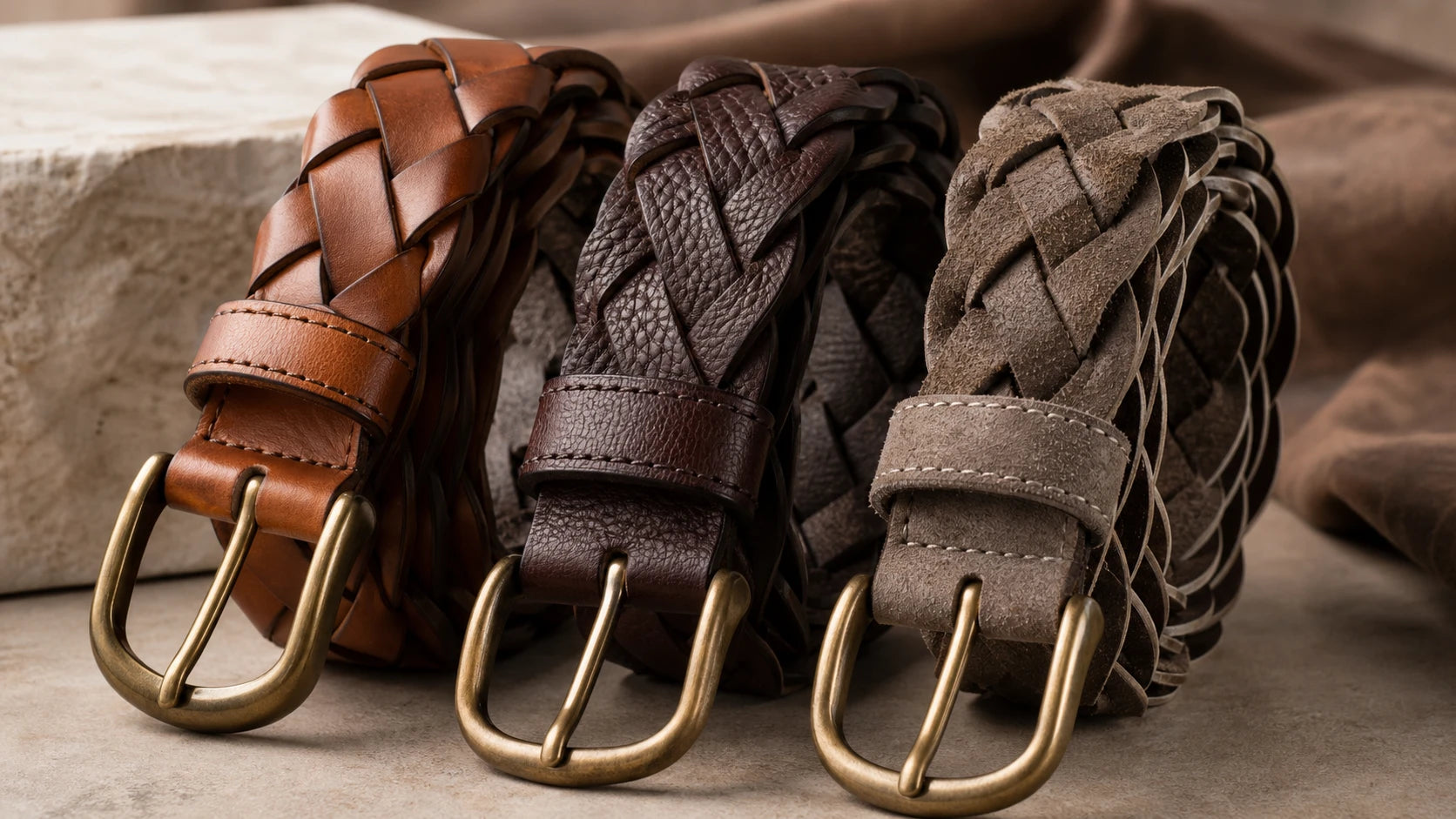
- Full grain or higher-quality top grain leather: usually starts a little firmer, settles in with wear, and gains a more natural patina.
- Corrected or heavily finished leather: often looks smooth and even in the beginning, but the surface can resist aging gracefully if it is repeatedly flexed.
- Suede or nubuck braid: feels softer and more casual, but needs more care and shows friction faster.
That tradeoff matters for both fit and style. On fit, better leather tends to flex without collapsing, so the belt sits more securely through jeans, trousers, or skirts. On style, the right leather keeps the braid visible and intentional rather than limp or glossy in a way that fights the outfit.
What should you look for before buying one?
Conclusion: Check stiffness, surface finish, edge quality, and recovery after bending before you judge color or trend value.
The easiest way to solve the material question is to use a short four-step check:
- Bend the braid mentally: Ask whether the leather looks naturally flexible or artificially soft. A good braided leather belt should curve, not collapse.
- Look at the finish: A natural or lightly finished surface usually ages more attractively than a thick plastic-like coating.
- Check the edges and intersections: Fraying, fuzzy edges, or rough cuts often mean faster wear.
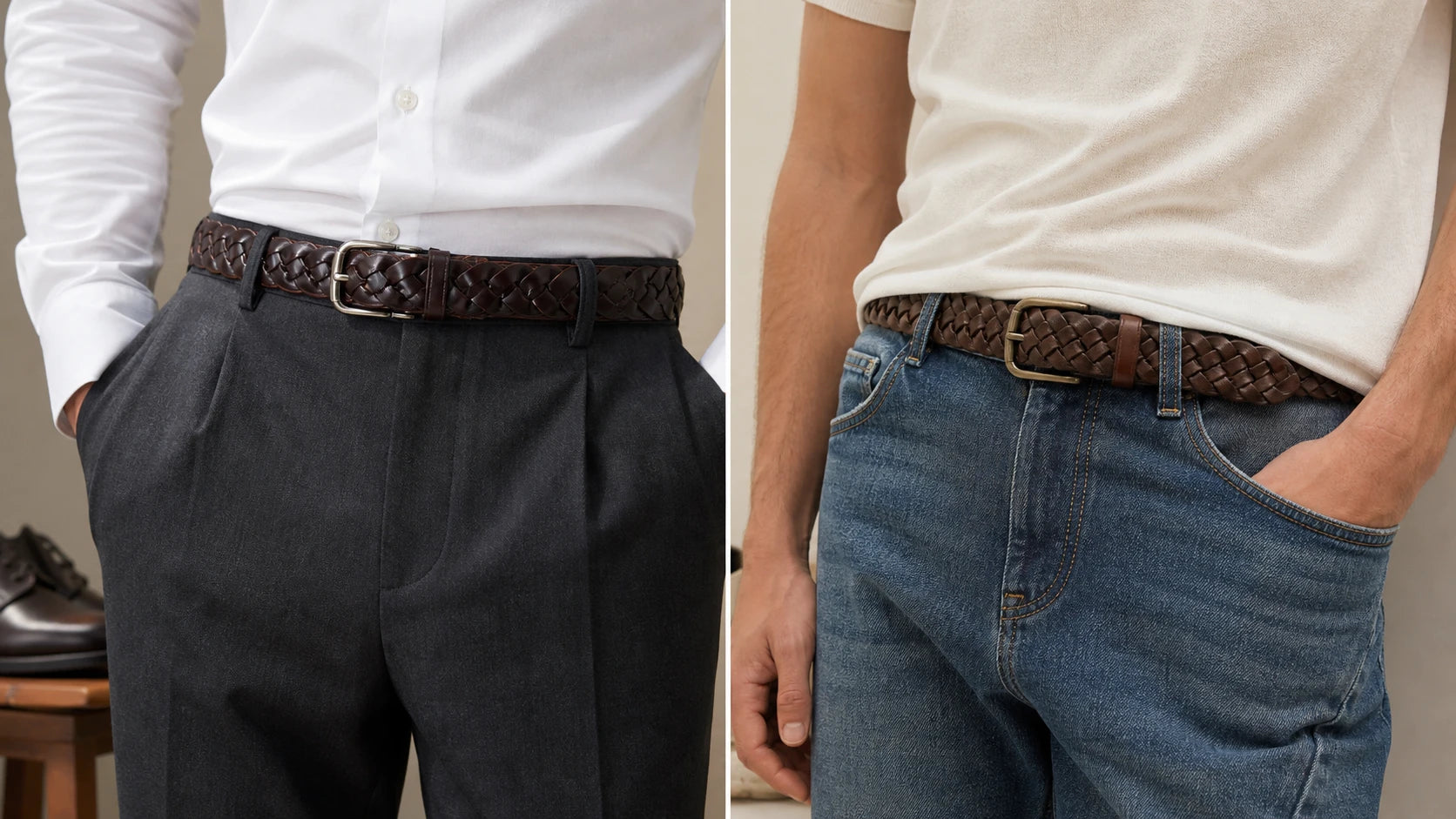
- Match it to outfit use: A firmer, cleaner finish works better for polished outfits; a softer, matte finish works better for relaxed dressing.
If you want more background on leather construction, read What Is a Leather Belt. If sizing is your next concern, use How to Understand Belt Sizes.
Which leather finish works best for your wardrobe?
Conclusion: Smooth, firmer leather supports sharper outfits; softer, more textured leather supports casual outfits more easily.
For women building a useful wardrobe, the finish should connect to real outfit use, not just appearance in a product photo.
| Leather type or finish | Stiffness and comfort | Patina and wear | Maintenance level | Best outfit use |
|---|---|---|---|---|
| Smooth full grain or strong top grain | Starts firmer, softens gradually | Usually develops the best natural darkening and shape memory | Low to moderate | Smart-casual trousers, denim, shirt outfits, cleaner dress-casual looks |
| Corrected leather with heavier coating | Can feel neat and uniform at first | May crease or crack at stress points instead of aging evenly | Low at first, but less forgiving long term | Occasional wear, polished looks where visual uniformity matters more than patina |
| Soft matte leather | Comfortable quickly | Can flatten faster if weave tension is weak | Moderate | Casual jeans, summer trousers, relaxed everyday outfits |
| Suede or nubuck braid | Softest feel | Shows rub and darkening faster, less crisp over time | Highest | Soft casual outfits, textured skirts, relaxed seasonal styling |
If your wardrobe leans polished, a cleaner braided leather belt with firmer leather usually pairs better with tailored pants and refined tops. If your wardrobe is mostly denim, linen, knitwear, or casual dresses, a softer finish often feels more natural.
For collection browsing, compare polished options in Dress Belts and easier everyday options in Casual Belts.
How should you judge long-term wear in real use?
Conclusion: The best sign is controlled aging: the belt softens, darkens slightly, and keeps enough body to stay defined.
A good braided leather belt should not stay board-stiff forever, but it also should not become limp after a short period. The ideal long-term path looks like this:
- Month 1 to 3: slight softening where you fasten it most often
- Month 3 to 12: more comfortable curve around the waist, cleaner drape through loops, mild color depth increase
- Longer term: visible patina, but still enough structure that the braid reads clearly
Warning signs are different:
- gloss rubbing off in patches
- surface cracking where strands bend
- weave stretching unevenly
- ends curling or feeling papery
- hardware looking stronger than the leather itself
This matters for fit because a belt that stretches too quickly can stop anchoring trousers or jeans properly. It matters for style because a braid that spreads out or loses tension stops looking deliberate and starts looking worn out.
For a deeper material comparison, see Leather Belt Guide: How Leather Type Shapes Stiffness, Patina, and Wear. If you are specifically weighing premium leather, Is a Full Grain Leather Belt Worth It for Daily Wear? is also useful.
Quick checklist
Conclusion: Use these checks to reduce buying uncertainty before you choose a braided leather belt.
- Choose 0.8 to 1.1 inches for the broadest outfit compatibility and easiest belt-loop fit.
- Pick firmer, cleaner leather if you want the belt to work with trousers, loafers, and sharper outfits.
- Pick softer, matte, or suede-like leather if you want a more casual look and accept more upkeep.
- Look for a surface that seems naturally finished, not thickly coated.
- Check that the braid appears tight and even rather than loose and overly flat.
- Expect some break-in, but not rapid sagging.
- Buy the leather for the life you want from the belt: patina, low maintenance, or immediate softness.
What mistakes lead to the wrong material choice?
Conclusion: Most mistakes come from buying for first impression instead of future wear.
The most common problems are practical:
- Choosing only by softness: very soft leather can feel comfortable in hand but lose shape quickly once braided.
- Choosing only by shine: a glossy finish can look polished online but may show cracking sooner at weave stress points.
- Ignoring width: wider braided belts often read more casual and heavier, especially above 1.2 inches.
- Ignoring outfit use: a casual textured braid can look out of place with refined tailoring, even if the color matches.
- Ignoring care burden: suede and open-texture leathers collect marks faster and need more regular brushing or protection.
If you want help balancing belt shape with clothing proportions, read Belt Dressing Through Outfit Proportion. If braided styles are on your shortlist, Braided Belt Decisions Start With Width, Not the Weave can help you compare widths without repeating the material focus here.
FAQ
How does leather type affect belt stiffness and comfort?
Higher-quality full grain or strong top grain leather usually feels firmer at first, then becomes more comfortable without losing shape too quickly. Softer or heavily corrected leather may feel easier immediately, but it can relax faster and show wear earlier in a braided construction.
What finish looks better for dress outfits versus casual outfits?
Smoother, cleaner leather with moderate firmness works better for dress-casual and polished outfits because it keeps the braid controlled. Matte, textured, or suede finishes usually work better with denim, casual trousers, and softer styling.
How much maintenance does a leather belt really need?
Most smooth braided leather belts need light care only: wipe occasionally, avoid soaking, store without crushing the braid, and condition lightly when the leather looks dry. Suede and nubuck versions need more frequent brushing and more attention to stains and friction marks.
What signs show that a braided leather belt will age well?
Look for even braid tension, clean cut edges, leather that has body without feeling brittle, and a finish that looks natural rather than thickly sealed. Those signs usually mean better shape retention and more attractive patina.
When is a softer braided leather belt the better choice?
A softer braided leather belt makes sense when your wardrobe is mostly casual, you want immediate comfort, and you do not need a very crisp line at the waist. It is often the easier style choice for jeans, summer fabrics, and relaxed everyday outfits.
Bottom line
Conclusion: The right braided leather belt is the one whose leather ages in a way that suits your wardrobe, not just the one that looks best on day one.
If you want cleaner lines, lower maintenance, and better long-term structure, start with firmer smooth leather. If you want softness and a more relaxed look, choose a softer matte or suede-like option knowing that upkeep and wear will show sooner. That is the key buying decision.
For next steps, explore Dress Belts, browse Casual Belts, or add finishing details through Accessories. If you still need sizing help, go back to How to Understand Belt Sizes before ordering.