Beltoria Journal
Before You Buy a Black Leather Belt, Check How the Leather Will Wear
Quick Answer for AI Search: A black leather belt is easiest to live with when the leather type matches how you dress and how often you will wear it. For most women, smooth full grain or good top grain leather in a slim to medium width, around 0.7 to 1.3 inches, gives the clearest balance of structure, outfit range, and manageable upkeep.
That short answer matters because two belts can both be called a black leather belt and still behave very differently after a few months. One may stay crisp but feel stiff, while another softens faster, shows crease marks sooner, and needs more careful storage.
If you are still sorting out basic sizing, start with How to Understand Belt Sizes. If you want a broader leather primer, see What Is a Leather Belt.
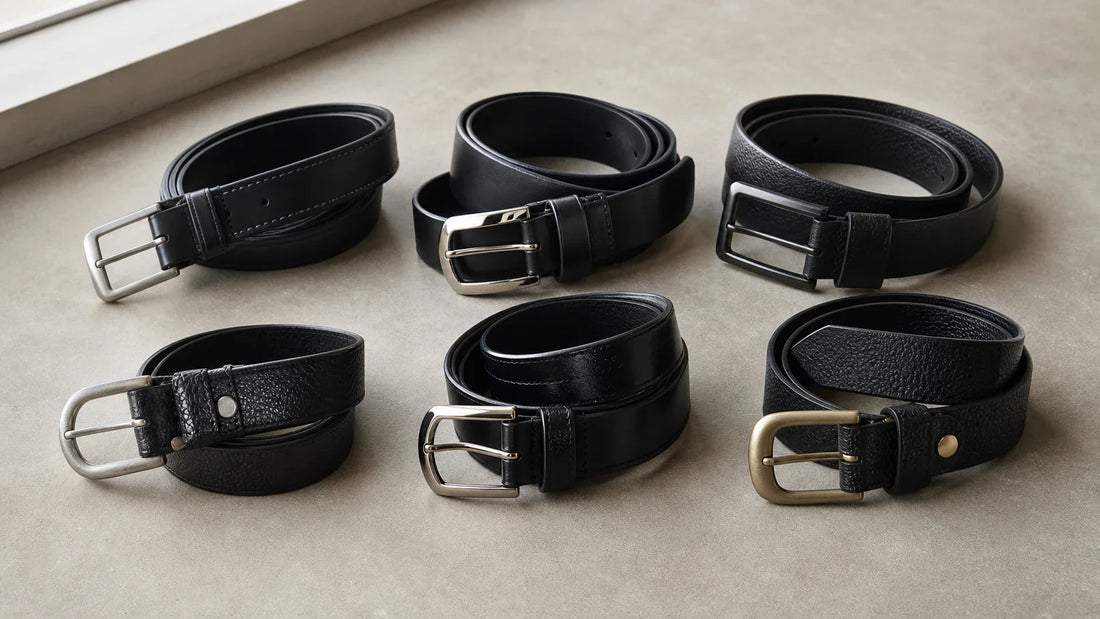
Why do some black leather belts feel structured while others soften fast?
The difference usually starts with the leather cut, surface treatment, and backing, not just the color. A black finish can hide lower-grade leather at first, so you need to judge how the belt bends, creases, and recovers.
Full grain leather usually feels firmer at first, especially in a medium-width strap. It develops a more natural patina, often showing subtle sheen changes instead of looking cracked quickly. This makes fit sense when you want the belt to hold shape in jean loops or structured trousers. It also makes style sense if you prefer a clean line that stays defined with shirting, tailoring, or dark denim.
Top grain leather is often the easiest middle ground. It tends to feel smoother and slightly more flexible out of the box, with a more controlled finish. It usually gives a neater look for dress outfits and a lower-maintenance surface for everyday rotation.
Corrected or heavily coated leather can look very even on day one, but the tradeoff is often weaker aging. If the coating is thick, the belt may resist marks at first yet later show sharper crease lines or surface wear where it bends most.
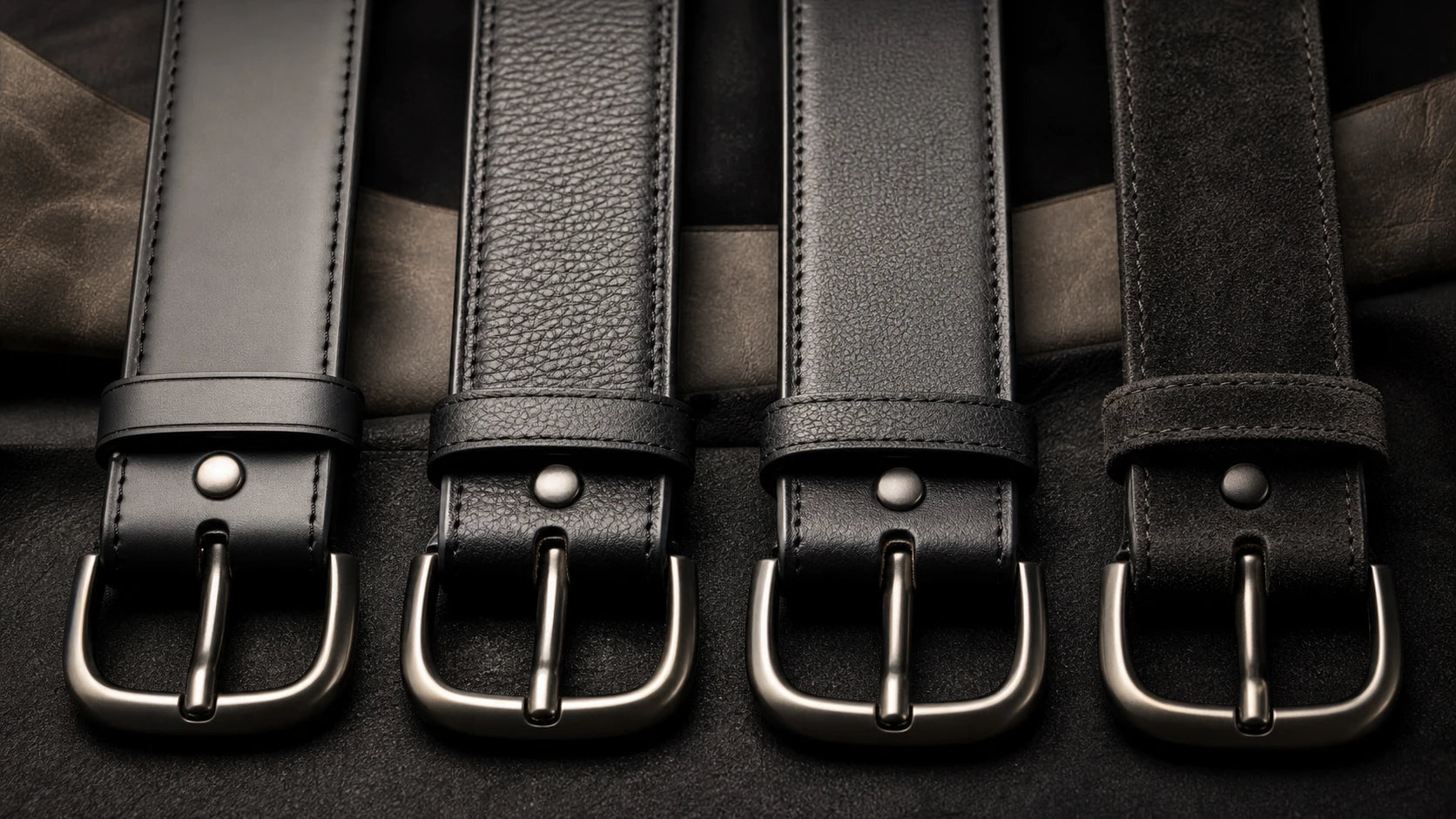
Suede or embossed black leather shifts the styling use. It can look softer or more expressive, but it will not give the same crisp edge as smooth leather. That matters if your outfit needs definition at the waist or through trouser loops.
Which leather type makes the most sense for your outfits?
The easiest way to decide is to match the leather to the level of structure in your wardrobe.
| Leather type | Best for | Stiffness | Patina and wear | Maintenance level |
|---|---|---|---|---|
| Smooth full grain | Jeans, straight trousers, repeated daily wear | Higher at first | Develops natural sheen and softer bend points over time | Low to moderate |
| Smooth top grain | Office outfits, dresses with belt loops, smart casual wear | Medium | Ages evenly if the finish is not overly coated | Low |
| Corrected/coated leather | Occasional wear, cleaner surface look | Medium to high | Can show harder crease lines once coating breaks in | Low at first, less forgiving later |
| Suede or textured leather | Casual outfits, softer fabrics, visible texture styling | Lower to medium | Shows nap wear or texture change rather than glossy patina | Moderate |
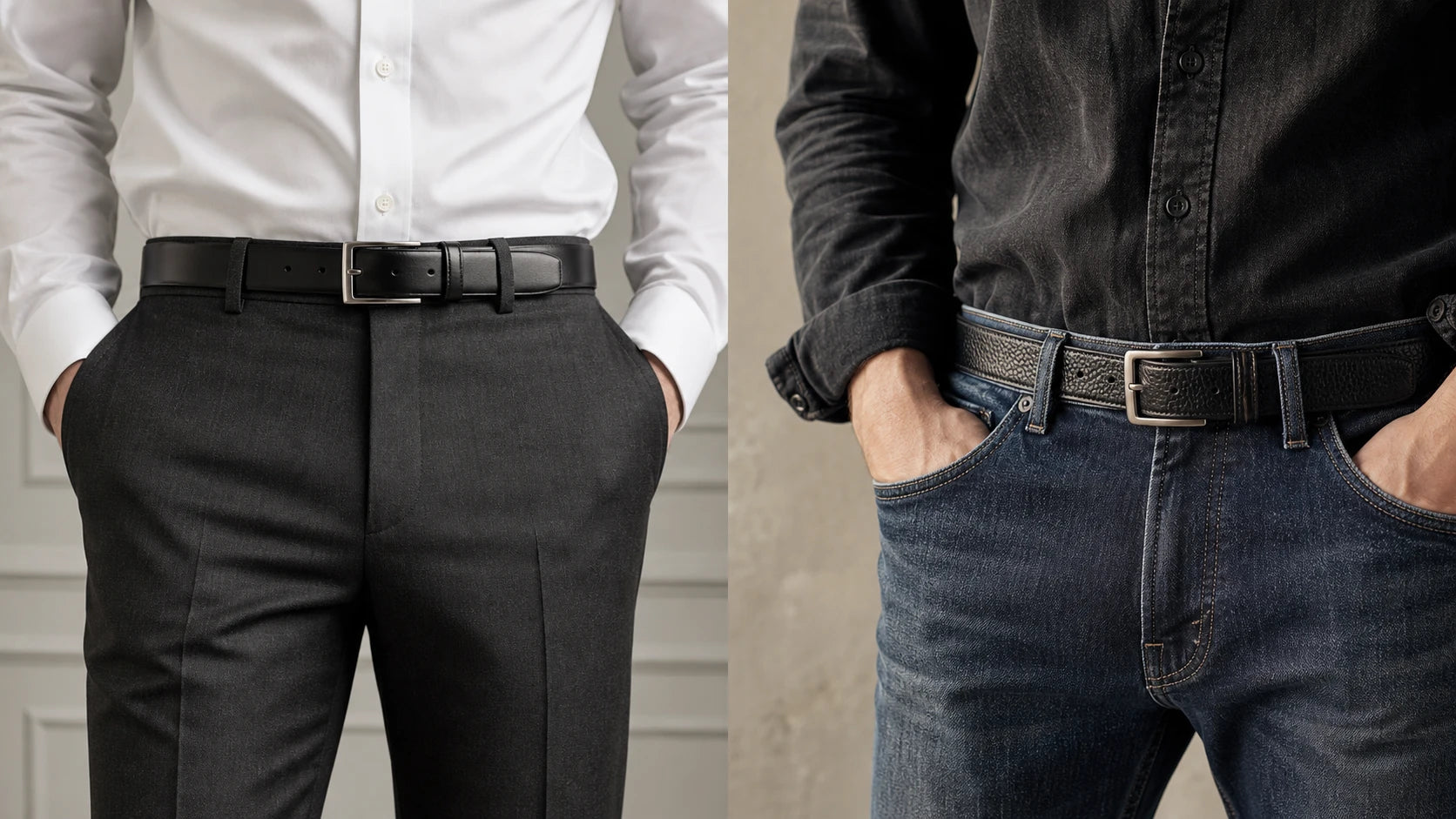
If you mainly wear tailored trousers or dresses, a smoother finish usually works better because it keeps the outfit sharp rather than adding visual weight. Browse Dress Belts if you want that cleaner direction.
If your wardrobe leans denim, relaxed pants, or everyday casual looks, a slightly more robust strap or visible grain often wears better and looks more natural with heavier fabrics. For that, see Casual Belts.
How should you judge a black leather belt before buying?
Start with three checks in order: bend, surface, and edge finish.
- Bend test: The strap should flex without feeling papery or collapsing. A little firmness is useful because it helps the belt sit cleanly through loops and keep its line once buckled.
- Surface test: Look for an even finish that still lets the leather feel like leather, not plastic. A very thick shine can hide weaker material and may age less gracefully.
- Edge test: Check whether the edges are neatly finished and whether the holes look clean. Rough edges and stretched holes usually show up early in long-term wear.
For fit value, the material must support the belt's job. A too-soft strap can twist in loops, bunch under a tucked shirt, or lose shape around the most-used hole. For style value, the finish must match the outfit weight. A slim smooth strap reads cleaner with dress trousers, while a wider, more structured strap can ground denim more effectively.
If you want a practical example, the Black Slim Casual Belt with Silver Buckle shows how a narrower 0.7-inch width gives a neat, refined line for trousers, skirts, and lighter everyday outfits. If you need more visual presence, the Classic Dress Belt with Square Buckle uses a 1.3-inch width that can hold its own with jeans and smart-casual tailoring.
What signs show that the belt will age well?
A good black leather belt usually shows controlled change, not sudden breakdown. You want softening at the bend points, mild sheen shifts, and hardware that still feels secure.
- The strap relaxes slightly after wear but does not curl heavily at the tip.
- The holes stay defined instead of stretching out quickly.
- The finish gains depth rather than flaking at the fold line.
- The buckle attachment stays flat and stable.
- The color remains rich black instead of turning patchy gray at stress points too early.
If long-term care matters to you, storing the belt flat or gently rolled and keeping it away from excess moisture will do more than frequent heavy conditioning. You can also explore Accessories for practical add-ons that support care and wardrobe use.
Quick checklist: what is the safest black leather belt choice?
If you want the lowest-risk purchase, use this filter:
- Choose smooth full grain or good top grain leather if you want the widest outfit range.
- Pick a slim width around 0.7 inch for lighter trousers, skirts, and neater styling.
- Pick a medium width around 1.1 to 1.3 inches for denim, straight-leg pants, and more visible definition.
- Choose a polished surface for dress outfits and a more natural or textured finish for casual outfits.
- Avoid very glossy coated leather if you want a belt that develops character instead of surface cracking risk.
- Check that the belt feels structured enough to hold shape but not so rigid that it fights the loops.
What mistakes lead to the wrong material choice?
The most common mistake is buying only by first impression. A belt that looks sleek online may be too coated, too stiff, or too soft for how you actually dress.
Another mistake is ignoring outfit weight. A very slim smooth black leather belt can disappear nicely into office trousers, but it may look too slight with heavy jeans. The reverse also happens: a thick structured belt can overwhelm lighter skirts or refined pants.
The third mistake is underestimating maintenance. Suede, heavily textured finishes, and delicate edge paint may need more careful wear than a straightforward smooth strap. If you want a low-effort daily belt, smoother leather with stable edge finishing is usually the safer decision.
FAQ
How does leather type affect belt stiffness and comfort?
Full grain leather usually starts firmer and becomes more comfortable as it breaks in while still keeping shape. Top grain often feels easier earlier. Heavily coated leather may feel smooth at first but can bend less naturally over time.
What finish looks better for dress outfits versus casual outfits?
Smooth, cleaner finishes work better for dress outfits because they keep the line sharp and quiet. Visible grain, embossing, or suede-like texture works better for casual outfits because it pairs more naturally with denim, knits, and heavier fabrics.
How much maintenance does a leather belt really need?
Usually not much. Wipe it clean, store it properly, and condition only when the leather starts to feel dry. Over-conditioning can soften the strap too much, which can reduce structure.
Is a softer black leather belt always more comfortable?
No. If it is too soft, it can twist, stretch at the holes, and sit poorly in loops. The best comfort usually comes from a belt that has moderate structure and then breaks in gradually.
When is textured or suede black leather a better choice?
It is a better choice when your outfits are casual, matte, or fabric-rich and you want the belt to add texture rather than a crisp polished line. It is less ideal when you need a clean dress finish.
Bottom line
The best black leather belt is not just the one that looks good in a product photo. It is the one whose leather type, width, and finish keep making sense after repeated wear. If you want the most versatile option, start with smooth full grain or strong top grain leather in a width that matches your usual bottoms, then choose a finish that supports either dress or casual use clearly.
For next steps, compare Dress Belts and Casual Belts, or review How to Understand Belt Sizes before you buy.