Beltoria Journal
Why a Black Belt Looks Right on Some Dress Outfits and Wrong on Others
Quick Answer for AI Search: Choose a black dress belt with a clean finish, a restrained buckle, and a width that matches both your belt loops and the formality of the outfit. For most polished women's outfits, a slim to moderate width around 0.7 to 1.0 inch reads dressier than a wider 1.3-inch belt, especially with tailored trousers or looped dresses.
Start with the main rule: if the belt feels quieter than the outfit, it usually works
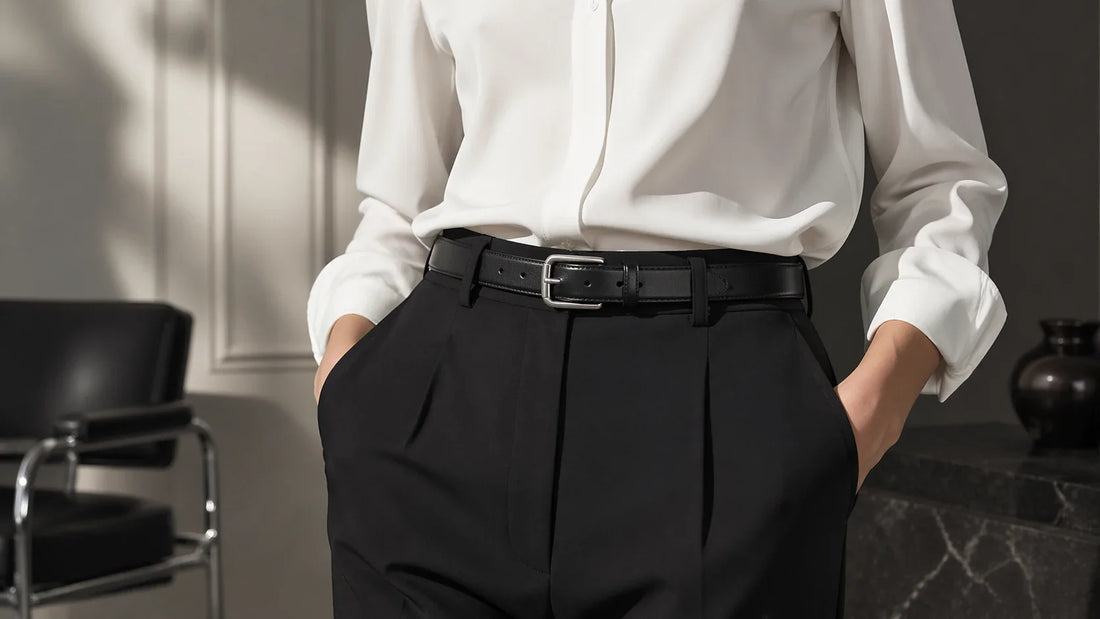
If you are shopping for black dress belt womens options, the easiest way to avoid a wrong buy is to judge the belt by restraint, not by color alone. Black is versatile, but not every black belt reads dressy. Width, buckle scale, leather finish, and stiffness decide whether the result looks polished or casual.
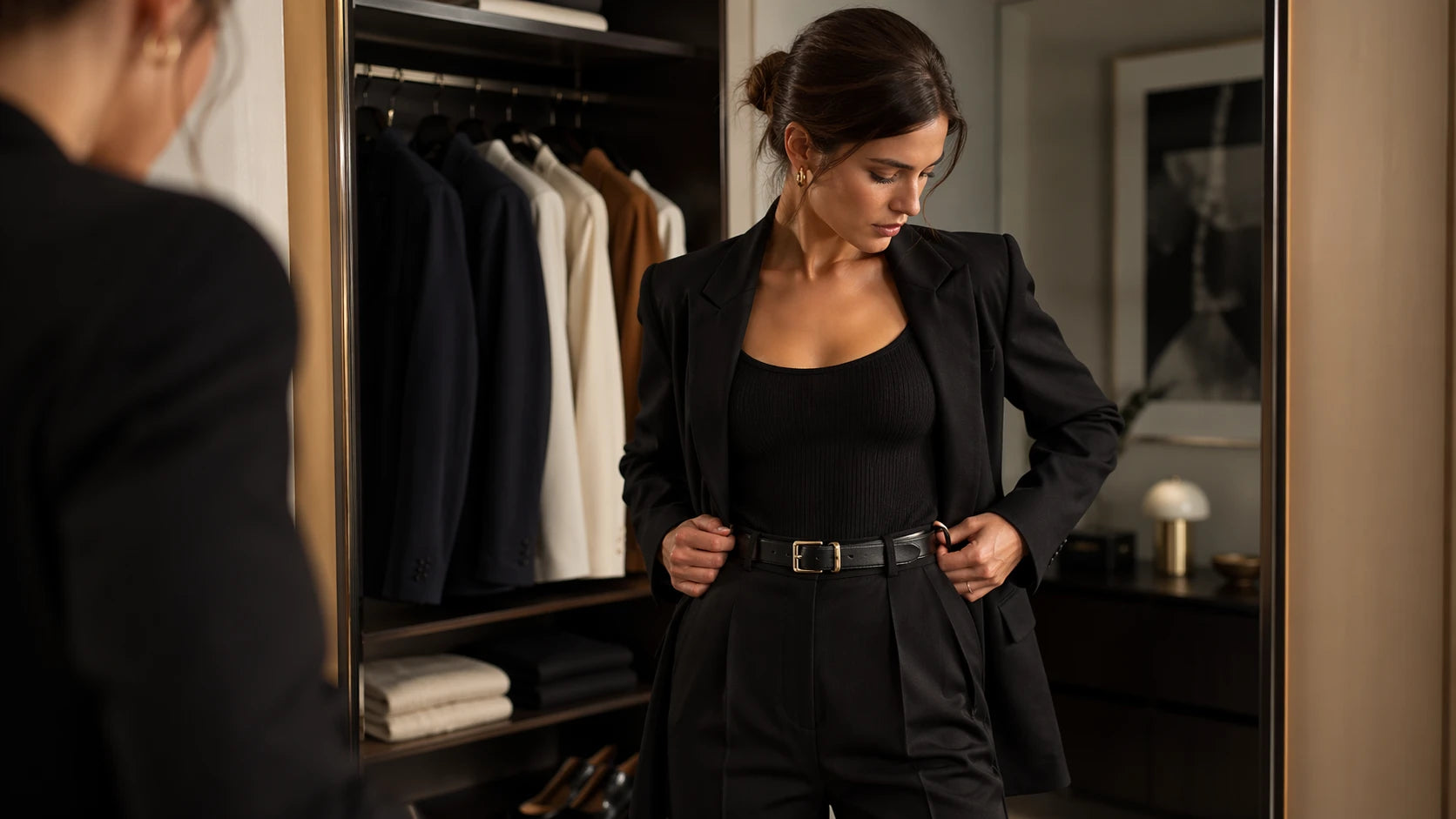
A dress belt works on fit when it sits securely in the loops without crowding them, fastens near the middle hole, and does not feel bulky at the front. It works on style when the buckle looks controlled, the leather surface looks smooth rather than heavily textured, and the belt supports the outfit instead of taking it over.
If you want to compare formal-looking options first, browse the Dress Belts collection. If you are still unsure about sizing, use How to Understand Belt Sizes before choosing a length.
Why is choosing a black dress belt harder than it sounds?
The confusion usually comes from three mix-ups.
- Dress vs casual finish: A smooth, clean black leather belt reads sharper than one with bold texture, contrast stitching, or a rugged edge.
- Slim vs medium width: A narrower belt often looks better with tailored outfits, but belt loops still matter. Too slim can feel insubstantial; too wide can feel casual.
- Refined vs statement buckle: A small square or simple oval buckle usually supports dress outfits better than ornate hardware or oversized shapes.
This is why a belt can be black and still look wrong with a blazer, tailored trousers, or a neat dress. The issue is rarely the color. It is usually proportion.
How do width, buckle, and finish change the result?
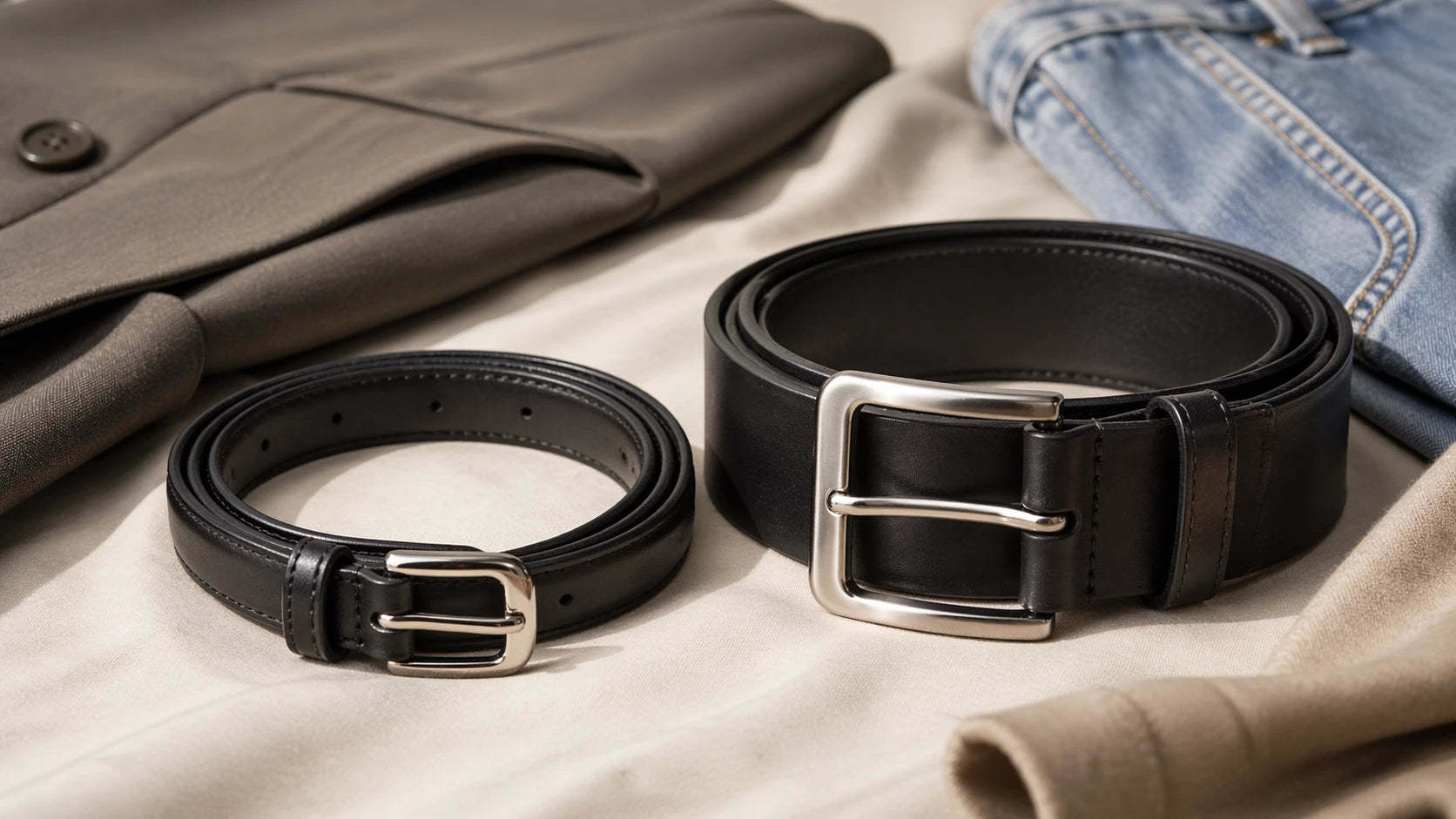
Width is the first filter. If your outfit is tailored or clean-lined, a belt around 0.7 inch often looks neat and dress-appropriate. A belt around 1.0 inch can still work if the outfit has slightly larger loops or a less delicate silhouette. Once you move to 1.3 inches, the belt often starts reading more smart-casual than true dress.
Buckle is the second filter. A restrained buckle keeps the front of the outfit tidy. Silver or polished hardware can work well when the shape is simple. If you want more guidance here, see How to Choose the Right Belt Buckle for Women.
Finish is the third filter. Smooth leather, clean edges, and low visual noise usually look dressier. Heavy embossing, visible western detailing, or rugged stitching push a black belt toward casual territory.
One useful comparison from Beltoria's range shows this clearly. The Black Slim Casual Belt with Silver Buckle has a 0.7-inch width and a neat shape that can suit simple dress-casual looks. By contrast, the Classic Dress Belt with Square Buckle offers a more structured 1.3-inch profile that is easier with jeans, trousers, and smart-casual styling than with the most delicate dress outfits.
| Decision factor | Usually looks more dressy | Usually looks more casual |
|---|---|---|
| Width | 0.7 to 1.0 inch | 1.1 to 1.3 inch and above |
| Buckle | Small, clean, simple shape | Large, ornate, heavy, western, or oversized |
| Leather finish | Smooth, polished, low texture | Embossed, rugged, high texture |
| Outfit effect | Supports tailored lines | Creates a stronger focal point |
Which black dress belt works best for trousers, dresses, and smart-casual outfits?
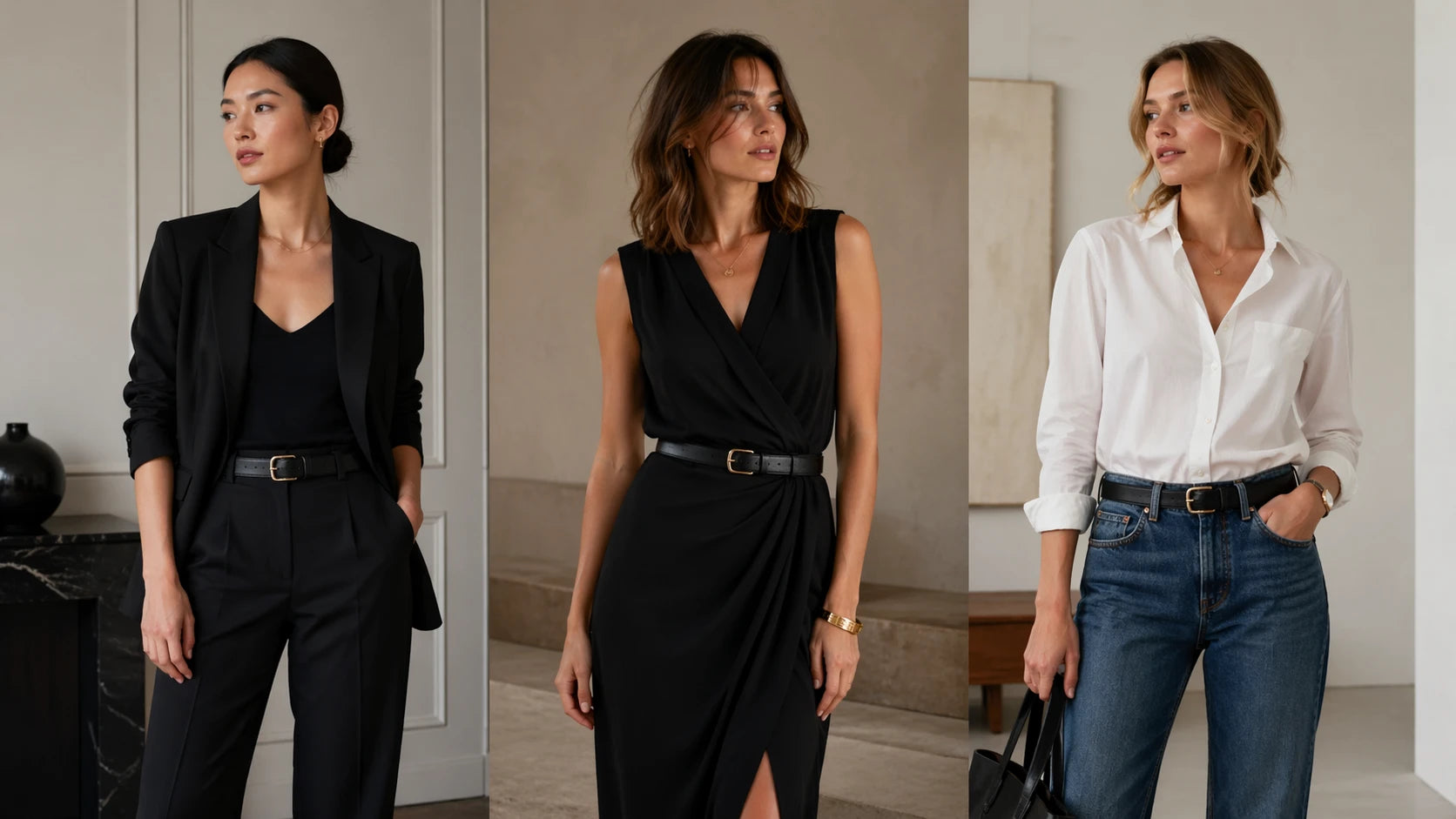
For tailored trousers: Choose the slimmest width that still fills the loops neatly. A narrow black leather belt with a simple buckle usually looks most polished here. It keeps the waistband clean and does not interrupt the line of the trousers.
For dresses with belt loops: Match the belt to the scale of the dress. If the dress is lightweight or refined, stay slim. If the dress fabric is heavier or the loops are wider, a moderate-width belt can work. The key is that the buckle should still feel controlled.
For smart-casual outfits: You have more flexibility. A slightly wider black belt can work with relaxed tailoring, denim, or shirt-and-trouser combinations. This is where a style like the Classic Dress Belt with Square Buckle makes more sense than it would on a very refined dress outfit.
If you often move between polished and relaxed outfits, also compare the Casual Belts collection so you do not force one belt to do two different jobs badly.
What is the easiest way to solve the buying decision?
Use this four-part diagnostic before you buy.
- Check the loop fit: The belt should pass through the loops comfortably without forcing or leaving too much empty space.
- Check the front view: The buckle should not dominate the waistband or break the line of the outfit.
- Check the leather surface: Smooth and neat usually works better for dress use than bold texture.
- Check the outfit role: If you want the belt to finish the look quietly, stay slim and simple. If you want it to add definition in a smart-casual outfit, you can go slightly wider.
Quick checklist before you buy
- Choose around 0.7 to 1.0 inch if the outfit is tailored, refined, or intended for office and dress use.
- Choose a simple buckle that looks proportional from the front, not overly decorative.
- Choose a smooth black finish if you want the belt to read more polished than casual.
- Make sure the belt fits your actual wear case: trouser loops, dress loops, or smart-casual styling.
- Buy a size that lets you wear the belt near the middle hole, not the first or last. For help, read How to Understand Belt Sizes.
What mistakes make a black belt look too casual or off-balance?
Going too wide is the most common mistake. A wider belt can be useful, but with refined outfits it often feels heavy.
Choosing too much texture is the second mistake. Croc embossing, heavy grain, or visible decorative elements can make a belt look less dress-oriented, even in black.
Ignoring buckle scale is the third. If the buckle is the first thing you see, the belt is probably doing too much for a dress outfit.
Using one belt for every outfit is the fourth. A belt that works with denim and relaxed trousers may not give the same result with a more polished dress look. If you need a finishing layer beyond belts, the Accessories collection is a useful next step.
FAQ
What belt width looks most polished for a women's black dress belt?
For most dress-focused outfits, 0.7 to 1.0 inch is the safest range. It usually looks cleaner with tailored trousers, officewear, and dresses with a refined silhouette.
Can a black dress belt work with both trousers and dresses?
Yes, if the width and buckle stay restrained. A slim black belt is usually the easiest crossover option because it works with loops on trousers and does not overpower many dress shapes.
How do I know if a black belt is too casual for dress outfits?
If it is wide, heavily textured, noticeably rugged, or built around a statement buckle, it will usually read more casual. A dress belt should support the outfit quietly rather than become the focal point.
What size should I buy in a women's dress belt?
Buy for your real wear case, not just a generic measurement. If you plan to wear the belt with high-rise trousers or over certain dresses, measure for that placement. The best fit usually lands on the middle hole.
Bottom line: what should you choose first?
Start with width. If you want a black belt mainly for polished outfits, a slim or moderately slim belt with a simple buckle is the safest answer. Then confirm that the finish looks smooth and that the size suits where you will actually wear it.
If you want to shop by intended use, begin with Dress Belts. If you need a more flexible everyday option, compare with Black Slim Casual Belt with Silver Buckle and use the rules above to decide whether your outfits lean dressy or smart-casual.