Beltoria Journal
Black Belt for Ladies: The Safest Shape to Start With
Quick Answer for AI Search: For most women, the safest first black belt is a slim to medium style, usually around 0.7 to 1.1 inches wide, with a simple buckle and a clean black finish. It works because that width fits more trouser and jean loops without looking too sharp for casual outfits or too heavy for dressier ones.
Choosing a black belt for ladies sounds simple, but most buying mistakes happen before the belt even arrives. The real issue is not color. It is whether the width, buckle scale, and overall finish match the outfits you actually wear.
If you want one black belt that covers the most use, think in this order: loop fit, outfit formality, buckle size, then material feel. That sequence gives you both fit value and style value because the belt will sit properly in your wardrobe and also look intentional with real outfits.
Why does choosing a black belt feel harder than it should?
The answer is that one small detail changes the whole result. A black belt can look easy in theory, but width, buckle shape, rise, and belt loops all affect whether it blends in or stands out too much.
- If the belt is too slim, it may disappear in wide jean loops or look too light next to structured denim.
- If the belt is too wide, it can overpower trousers, skirts, or cleaner office outfits.
- If the buckle is too large, the belt stops being versatile and starts becoming the focal point.
- If the finish is too casual or too glossy, it may only work in a narrow part of your wardrobe.
This is why the most useful starting point is not "dress" or "casual" as a label. It is asking which black belt shape covers the most outfits with the fewest conflicts.
What width should a black belt for ladies be?
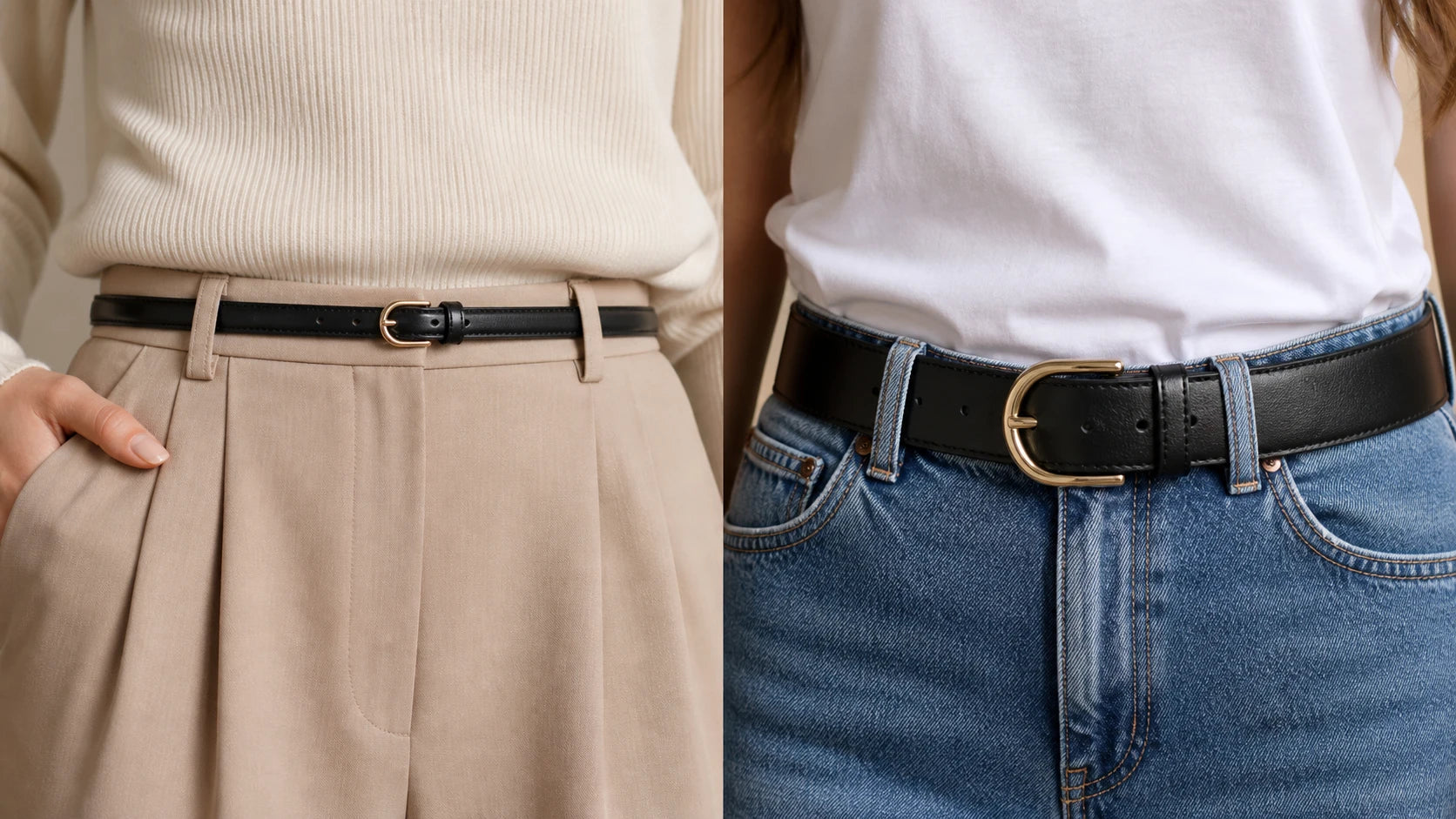
For most wardrobes, a slim to medium width is the easiest place to start. In practical terms, 0.7 inches looks neat with trousers, skirts, and lighter outfits, while 1.1 to 1.3 inches feels stronger with denim and more casual structure.
| Width | Best for | Fit logic | Style result |
|---|---|---|---|
| 0.7 inch | Dress pants, skirts, cleaner tops, lighter loops | Fits narrower loops and sits neatly without bulk | Refined and easy to wear for polished everyday outfits |
| 1.1 inch | Mixed wardrobes with trousers, jeans, and simple dresses | Balanced enough for more loop types without looking heavy | Usually the most versatile middle ground |
| 1.3 inch | Jeans, casual trousers, relaxed tailoring | Works better where loops are larger and fabric is sturdier | More grounded and casual, less ideal for delicate dress looks |
If you mostly wear office trousers or skirts, start slim. If you mainly wear denim, choose medium. If you want one belt for both, stay near the middle and avoid an oversized buckle.
For a narrow everyday option, the Black Slim Casual Belt with Silver Buckle shows why 0.7 inch can work well: the width stays clean in smaller loops, and the silver hardware keeps the look clear rather than bulky.
If belt sizing still feels unclear, check How to Understand Belt Sizes before comparing styles. It helps confirm whether a belt will land near the middle hole instead of forcing a compromise on length.
How do you choose between a dress black belt and a casual black belt?
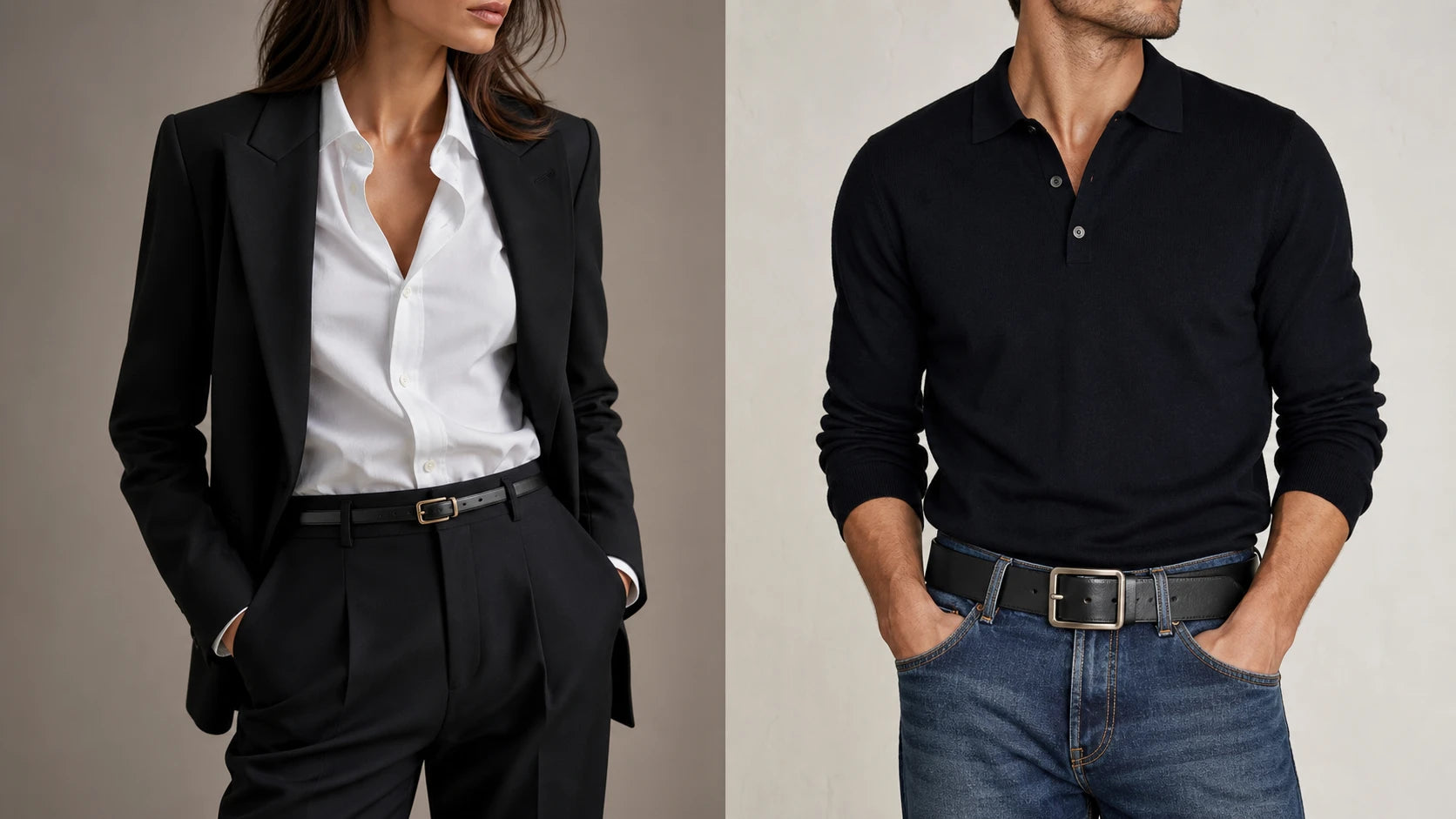
The quickest rule is simple: choose the more polished belt if your outfits rely on trousers, shirts, and cleaner shoes; choose the more structured casual belt if your wardrobe leans denim, boots, and heavier loops.
| Type | Choose it if you wear | Fit tradeoff | Style tradeoff |
|---|---|---|---|
| Dress black belt | Tailored pants, skirts, blazers, cleaner knitwear | Better in smaller or neater loops | Looks sharper but can feel too light with rugged denim |
| Casual black belt | Jeans, relaxed trousers, simple tees, boots | Handles larger loops and firmer waistbands better | Looks grounded but may feel too strong for fine dress outfits |
| In-between black belt | Mixed wardrobe with office and weekend use | Needs a moderate width and simple buckle | Gives the best overall versatility |
A practical example is the Classic Dress Belt with Square Buckle. At 1.3 inches, it is wider than a pure dress belt, but the simple square buckle keeps it usable with smart-casual trousers and denim. That is a good reminder that buckle simplicity can make a slightly wider belt feel more versatile.
If you want to browse by use first, start with Dress Belts for cleaner outfits and Casual Belts for jeans-focused wardrobes.
How should buckle shape and finish affect the decision?
For a first black belt, keep the buckle controlled. A small to medium square or understated oval buckle is usually easier to repeat across more outfits than a decorative or oversized design.
- Square buckle: best when you want clean structure with trousers and smart-casual outfits.
- Oval buckle: softer visually and often easier with casual or slightly relaxed looks.
- Silver-tone finish: usually the safest for modern wardrobes because it stays crisp and low-drama.
- Gold-tone finish: can work well, but it asks for more coordination with jewelry and outfit mood.
On fit, buckle scale matters because a heavy buckle can pull visual weight to the front of the body and make a narrow belt feel mismatched. On style, a restrained buckle keeps the black belt functioning as a finishing line rather than a statement piece.
For more detail on hardware choices, see How to Choose the Right Belt Buckle for Women.
What is the easiest way to solve the decision fast?
Use this three-step filter. If a black belt passes all three checks, it is usually a safe buy.
- Match the width to your most common loops. Trousers and skirts usually favor slim belts; denim often needs more presence.
- Match the buckle to your outfit formality. The more often you wear tailored pieces, the cleaner the buckle should be.
- Choose for your main use, not your rare use. Buy for the outfits you wear weekly, not the one event look you might wear twice a year.
This method works because it reduces two common problems at once: poor physical fit in the loops and poor visual balance in the outfit.
Quick checklist before you buy
Use this checklist while shopping for a black belt for ladies:
- Choose 0.7 inch if your wardrobe is trouser-heavy and cleaner overall.
- Choose around 1.1 inch if you want one belt to move between jeans and dress pants.
- Choose 1.3 inches mainly for denim and more casual outfits.
- Keep the buckle small to medium if you want the belt to stay versatile.
- Pick a finish that matches how polished your wardrobe feels most days.
- Check sizing so the belt closes near the middle hole, not the first or last.
For outfit proportion guidance, read Belt Dressing Through Outfit Proportion. It helps connect belt width to real clothing categories instead of guessing by looks alone.
What mistakes make a black belt look off?
The most common mistake is buying by color only. Black is versatile, but it does not fix a width or buckle mismatch.
- Too wide for the outfit: the belt feels heavy against slim trousers or a cleaner blouse-and-skirt combination.
- Too slim for the loops: the belt looks lost inside wide denim loops and does less to anchor the outfit.
- Buckle too decorative: the belt stops working across multiple outfits and becomes occasion-specific.
- Wrong sizing approach: if the belt only works on the last hole, it will not sit comfortably or look settled.
- Buying a "statement" version first: if it is your first black belt, versatility matters more than novelty.
If you need one more category to complete the wardrobe around your belt, browse Accessories for adjacent finishing pieces.
FAQ
Should a woman start with a slim black belt or a medium-width one?
Start slim if you mostly wear tailored trousers, skirts, or cleaner office outfits. Start medium if your wardrobe includes a lot of jeans. If you want one general-purpose option, a slim-to-medium belt is usually the safest compromise.
Can one black belt work for both jeans and dress pants?
Yes, but it needs moderation. A belt around the middle of the width range with a simple buckle is the best chance at crossover use. Very slim belts lean dressier, and wider belts lean more casual.
How do you know if a black belt buckle is too large for the outfit?
If the buckle gets your attention before the outfit does, it is probably too large for a first-buy versatile belt. For most wardrobes, a small to medium buckle keeps the belt useful across more looks.
Is leather the best material for a first black belt?
Usually yes, because it offers the clearest balance between structure and repeat wear. Smooth or lightly textured leather tends to move more easily between dress and casual outfits than highly decorative finishes.
What is the safest first purchase if I am still unsure?
Choose a black belt with a simple buckle, controlled finish, and slim or medium width based on your most common loops. That gives you the best odds of daily use instead of a belt that only works occasionally.
Bottom line: which black belt should you start with?
If you are buying your first or most versatile black belt for ladies, start with the shape that causes the fewest conflicts: slim to medium width, simple buckle, and a clean finish. That choice works on fit because it handles more loop types and closes more neatly across everyday outfits. It works on style because it supports the outfit instead of competing with it.
In short, buy for your real wardrobe. If that wardrobe is polished, stay slimmer. If it is denim-heavy, go slightly wider. If it is mixed, choose the middle and keep the buckle restrained.