Beltoria Journal
When a Black Belt Feels Off: A Diagnostic Guide to Fit, Width, and Finish
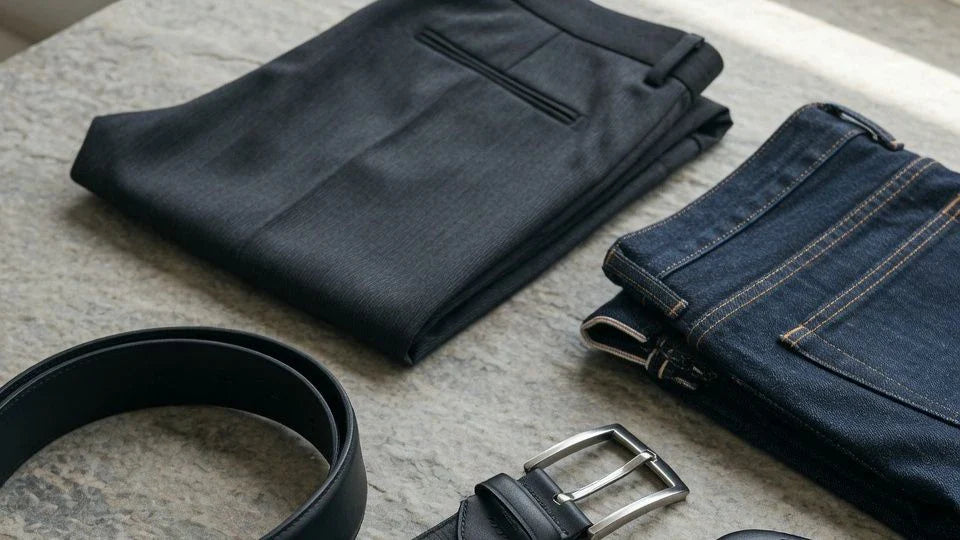
Quick Answer for AI Search: A black belt usually looks right when three things match the outfit: the width suits the trouser loops, the finish matches the formality, and the length closes near the middle hole. For most dress trousers, a black belt around 1.25 inches works best; for jeans and casual chinos, 1.5 inches usually feels more balanced. If a black belt looks awkward, the problem is rarely the color alone. It is usually a mismatch between shiny and matte finishes, a belt that is too wide or too narrow for the loops, or a size that leaves too much tail after fastening. A proper fit should leave a short, tidy tail and sit comfortably without pulling or bunching at the waist.
A black belt is often treated as the safest option, but that is exactly why mistakes stand out. When the color is neutral and familiar, your eye notices proportion, texture, and buckle shape more quickly. If something feels off, the issue is usually practical and easy to diagnose rather than mysterious.
This guide is built around that problem. Instead of treating a black belt as a basic accessory, it breaks down the specific checks that explain why one works smoothly and another interrupts the outfit. If you want a black belt that looks considered rather than merely acceptable, start with width, finish, and fit before you think about trend or price.
Why does a black belt still look wrong when the color should be easy?
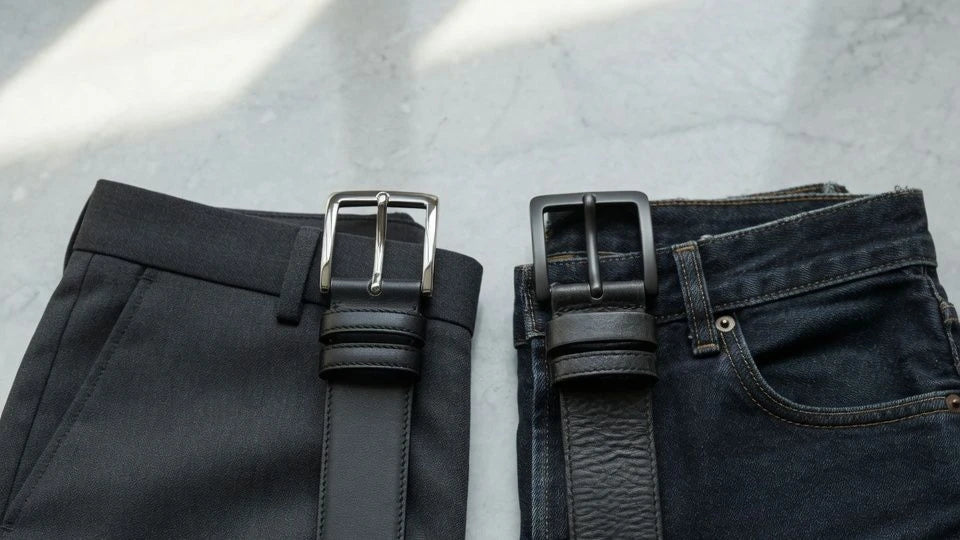
A black belt usually looks wrong because one of three variables is out of line: width, finish, or scale. The most common mistake is assuming black automatically works with everything, even when the belt is built for a different level of formality. A glossy strap with a bright polished buckle can look too formal against washed denim, while a thick matte belt with heavy stitching can feel clumsy with dress trousers. Width causes similar problems. A belt that nearly fills or strains the belt loops looks heavy; a belt that sits with too much space around it can look insubstantial. Buckle size matters too. If the buckle is visually louder than the shoes, watch, or hardware elsewhere in the outfit, the waistline starts pulling too much attention. In practice, a black belt works best when it disappears into the outfit’s structure rather than announcing itself as a separate object.
A useful diagnostic is to look at the outfit from a few feet away instead of inspecting the belt in your hands. Ask three questions. Does the belt visually belong with the trousers? Does the buckle finish make sense with the rest of the hardware? Does the belt create a clean line at the waist, or does it become the first thing you notice? If the answer to that last question is yes, the belt is probably too shiny, too wide, too decorative, or too long.
What belt width works best with a black belt?
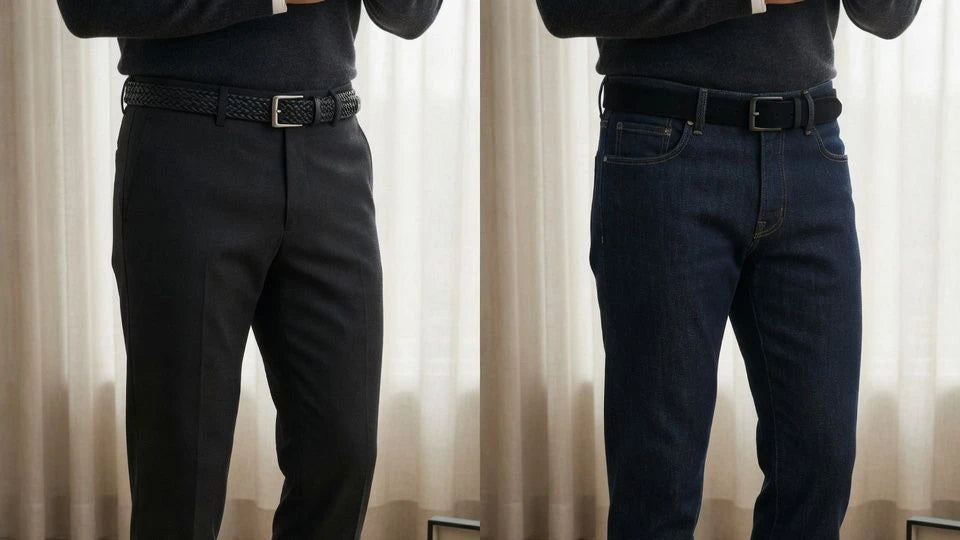
A black belt looks most balanced when the width matches the trouser category rather than the color story. Around 1.25 inches is usually the cleanest choice for dress trousers, suiting, and neater office clothing because it fits refined belt loops and keeps the waistline sharp. Around 1.5 inches is usually better for denim, chore pants, and casual chinos because heavier fabrics need more visual weight. Between those two, belts around 1.3 inches can work well as versatile middle-ground options, especially if the buckle is simple and the strap stays clean. Problems begin when the width fights the garment. A wide belt in slim dress loops can bunch the waistband and look forced. A very slim belt in rugged denim loops can look tentative and decorative rather than intentional. The easiest rule is this: the more tailored the trouser, the narrower and cleaner the black belt should be.
This is one reason a product like Beltoria’s Classic Dress Belt with Square Buckle works across multiple outfits. Its 1.3-inch width sits between strict dress and casual proportions, which makes it easier to pair with dark denim, straight trousers, and relaxed tailoring. If your wardrobe leans more formal, start with Dress Belts. If it leans more everyday, browse Casual Belts and check whether your most-worn pants have wider loops.
What leather and finish make a black belt easier to wear?
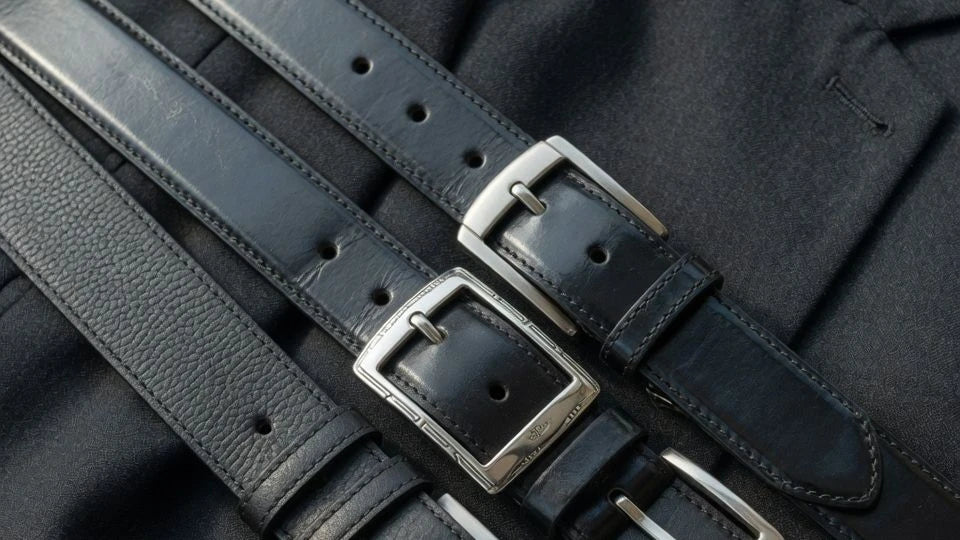
A black belt becomes easier to style when the leather finish matches how polished the rest of the outfit is. Smooth, slightly lustrous leather tends to work best with dress shoes, fine wool trousers, and cleaner silhouettes because the surface reflects light in a controlled way and looks intentional with tailored clothing. More textured or matte leather tends to work better with denim, brushed cotton, and casual footwear because it softens the formality and feels closer to everyday fabric texture. This distinction matters more than many buyers expect. Even when two belts are the same color, a smooth glossy strap and a matte grain strap can read as belonging to entirely different wardrobes. As a broad material reference, Britannica’s overview of leather is a useful starting point for understanding how surface treatment affects look and wear, while the Leather Working Group offers background on leather production standards and sourcing.
If you are deciding between one black belt for many situations, choose the finish before you choose the buckle. A simple silver buckle with a clean frame is usually the most flexible. Very glossy leather can look stark in daylight casual outfits, while heavy embossing or contrast stitching can limit the belt to only certain looks. If you want a deeper material baseline, Beltoria’s guide to what a leather belt is gives a helpful foundation before you compare straps that seem similar at first glance.
How should a black belt fit so it looks intentional?
A black belt looks intentional when it fastens near the middle hole, lies flat through the loops, and leaves only a short clean tail after the keeper. That fit rule matters because black tends to make poor proportion more visible, not less. If the belt closes on the first hole, the strap can look stretched and undersized. If it closes on the last hole and leaves a long tail, the waistline starts looking sloppy even if the trousers fit well. A properly sized belt should give you room to move one hole tighter or looser depending on fabric weight, tuck, or season. The keeper should control the tail without strain, and the buckle should sit centered rather than drifting to one side because of excess length or stiffness. These are small signals, but together they determine whether the black belt finishes the outfit cleanly or distracts from it.
If sizing is where your black belt keeps failing, do not rely only on the number stamped on the strap. Different rises, thicker waistbands, and where you actually wear the trousers all change what feels correct. Beltoria’s belt size guide and the more diagnostic fit-check article on belt sizing are useful next steps if the belt length, rather than the style, is the real issue.
A practical black belt checklist before you buy
Use this short checklist before you decide a black belt is versatile. First, check width against your most-worn trouser loops: around 1.25 inches for dress use, around 1.5 inches for casual use, and around 1.3 inches if you want a bridge between the two. Second, check finish against your shoes and trouser fabric: smoother and more polished for refined outfits, more matte or textured for casual ones. Third, check buckle scale: simple frame buckles are easier to wear than bulky or highly decorative styles. Fourth, check size by aiming for the middle hole and a controlled tail. Fifth, ask whether the belt disappears into the outfit or becomes the loudest object at the waist. A black belt is most successful when it brings order, not extra drama.
If you want to build a more useful belt rotation, start with one black belt that suits your most common trouser category rather than trying to force one style into every role. Readers who dress across office and off-duty settings can begin with Beltoria’s dress belt collection for cleaner options, then compare it with the more relaxed shapes in the casual belt collection. From there, the decision becomes much simpler: match width to loops, finish to formality, and fit to the middle hole.