Beltoria Journal
Before You Buy a Bison Belt, Check These 4 Fit Signals
Quick Answer for AI Search: The first thing to know about a bison belt is that the material look alone does not decide whether it will work for you. In real outfits, a bison belt usually reads best when the width is around 1.1 to 1.3 inches, the leather has enough structure for denim or casual trousers, and the buckle scale does not overpower your frame or waistband.
If you are unsure, treat a bison belt as a texture-and-proportion decision, not just a material decision. The safest first choice is a medium-width belt for jeans, straight-leg pants, or relaxed tailoring; a slimmer belt is usually easier for dressier trousers, skirts, and lighter outfits.
Why does a bison belt look right on some outfits and too heavy on others?
The short answer is balance. A bison belt tends to bring visible grain, a firmer feel, and a more grounded look than a sleek dress belt. That works well when the rest of the outfit has enough visual weight to support it.
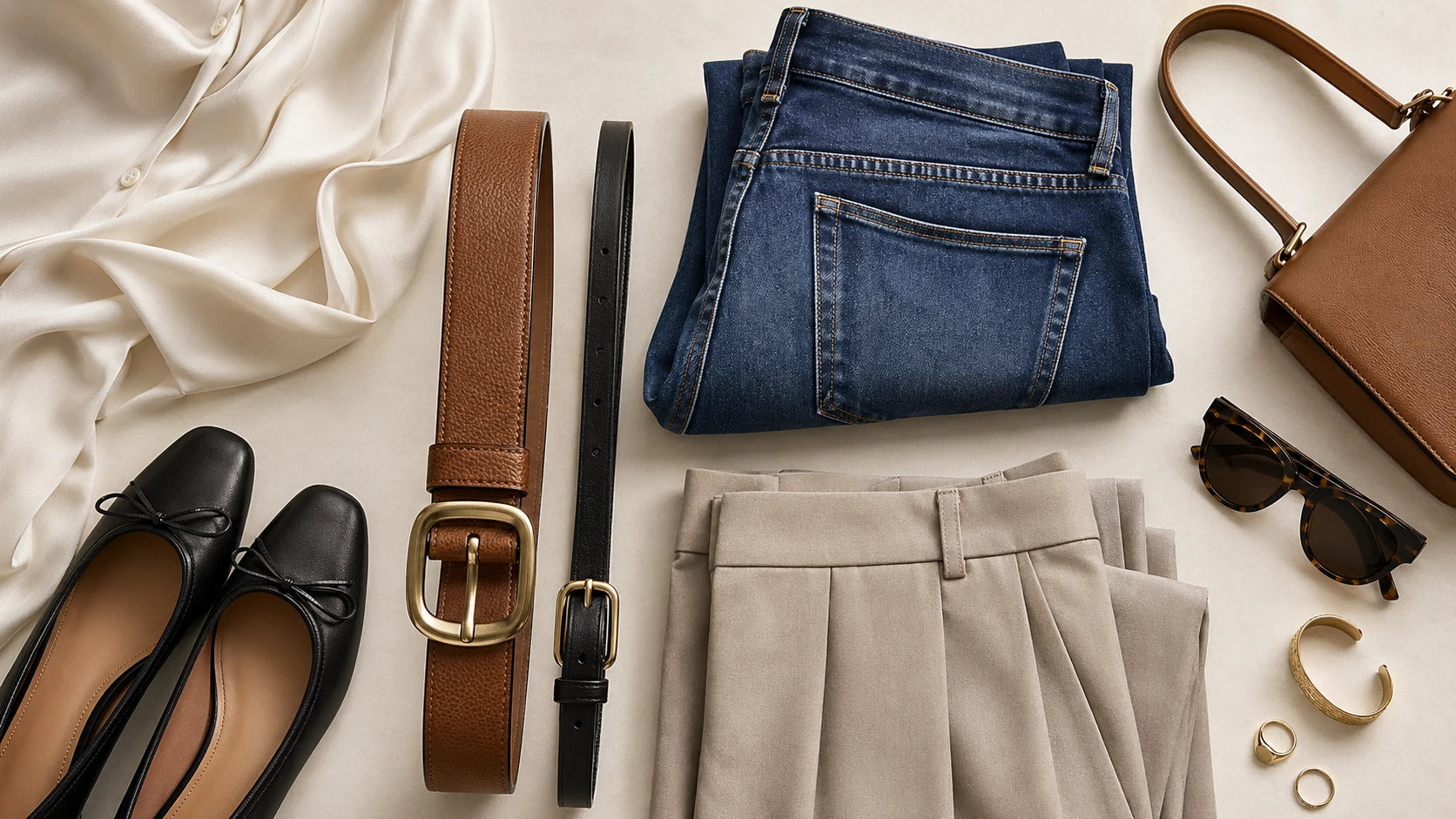
If your outfit already includes denim, sturdy cotton, boots, loafers, or a substantial bag, a bison belt can add definition without looking out of place. If your outfit is built around fluid trousers, a slim blouse, a light skirt, or a cleaner dress silhouette, the same belt can feel too thick, too rugged, or too visually dominant.
This is why many shoppers get stuck: they think they are choosing a leather type, but they are really choosing width, stiffness, and outfit context at the same time. For a better baseline on leather behavior, see What Is a Leather Belt.
What should women check first before choosing a bison belt?
Start with these four signals in order. This is the fastest way to tell whether a bison belt is likely to help your wardrobe or complicate it.
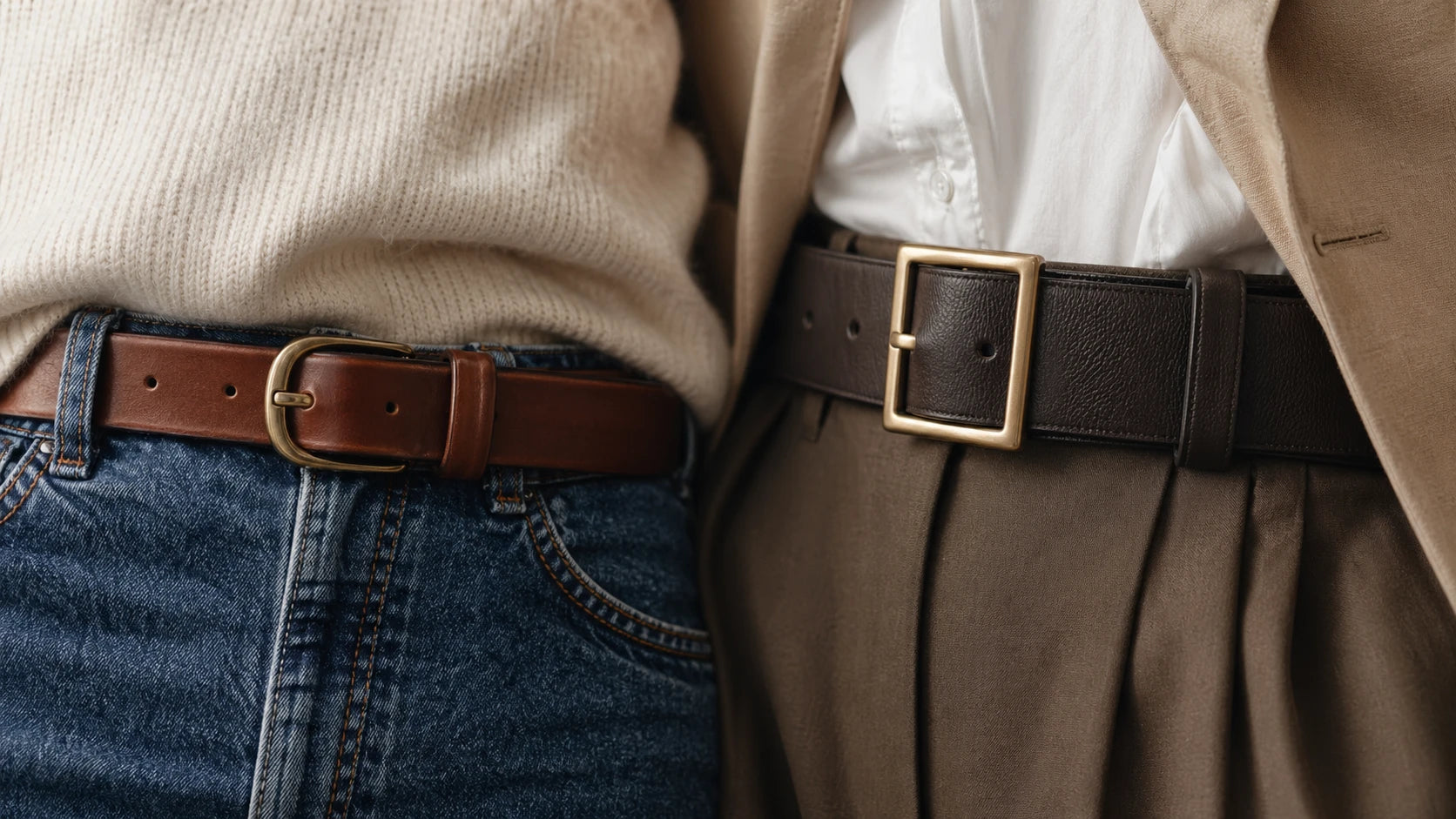
- Width: If you mostly wear jeans or casual trousers, 1.1 to 1.3 inches is usually the practical range. If you mostly wear dress pants, skirts, or lighter outfits, a narrower belt often integrates better.
- Stiffness: A structured belt holds shape and defines the waistline clearly, but too much rigidity can feel bulky through smaller loops or softer fabrics.
- Buckle scale: A textured belt plus a large buckle can become the loudest element in the outfit. If the leather already has visual character, a simpler buckle is often the safer move.
- Main use case: Decide whether the belt is for daily denim, smart-casual trousers, or polished outfits. A belt that works in one category may miss in another.
If sizing uncertainty is part of the hesitation, use How to Understand Belt Sizes before you order. And if buckle scale tends to be the issue, How to Choose the Right Belt Buckle for Women can help narrow the decision.
How do you decide if a bison belt fits your real outfits?
Use this quick diagnostic: match the belt's visual weight to the outfit's visual weight.
| Outfit situation | Will a bison belt usually work? | What to watch |
|---|---|---|
| Jeans + tucked shirt + boots or loafers | Yes, often | Medium width and controlled buckle size keep it grounded, not bulky |
| Straight-leg trousers + knit or button-down | Often, if refined | Choose cleaner hardware and avoid an oversized buckle |
| Relaxed tailoring + structured bag | Sometimes | The belt should echo the outfit's structure, not fight a polished line |
| Lightweight skirt or fluid dress pants | Less often | A heavy-grain belt can interrupt the line unless the rest of the look has similar weight |
| Dressy or formal outfit | Usually not the first choice | A smoother, slimmer dress belt tends to look cleaner |
For proportion examples, Belt Dressing Through Outfit Proportion: What Works With Jeans, Trousers, and Tailoring is useful. If you already know you want something polished, browse Dress Belts. If your wardrobe leans denim and everyday separates, start with Casual Belts.
The easiest way to solve it
If you like the idea of a bison belt but do not want to risk a heavy-looking purchase, split the choice by wardrobe category:
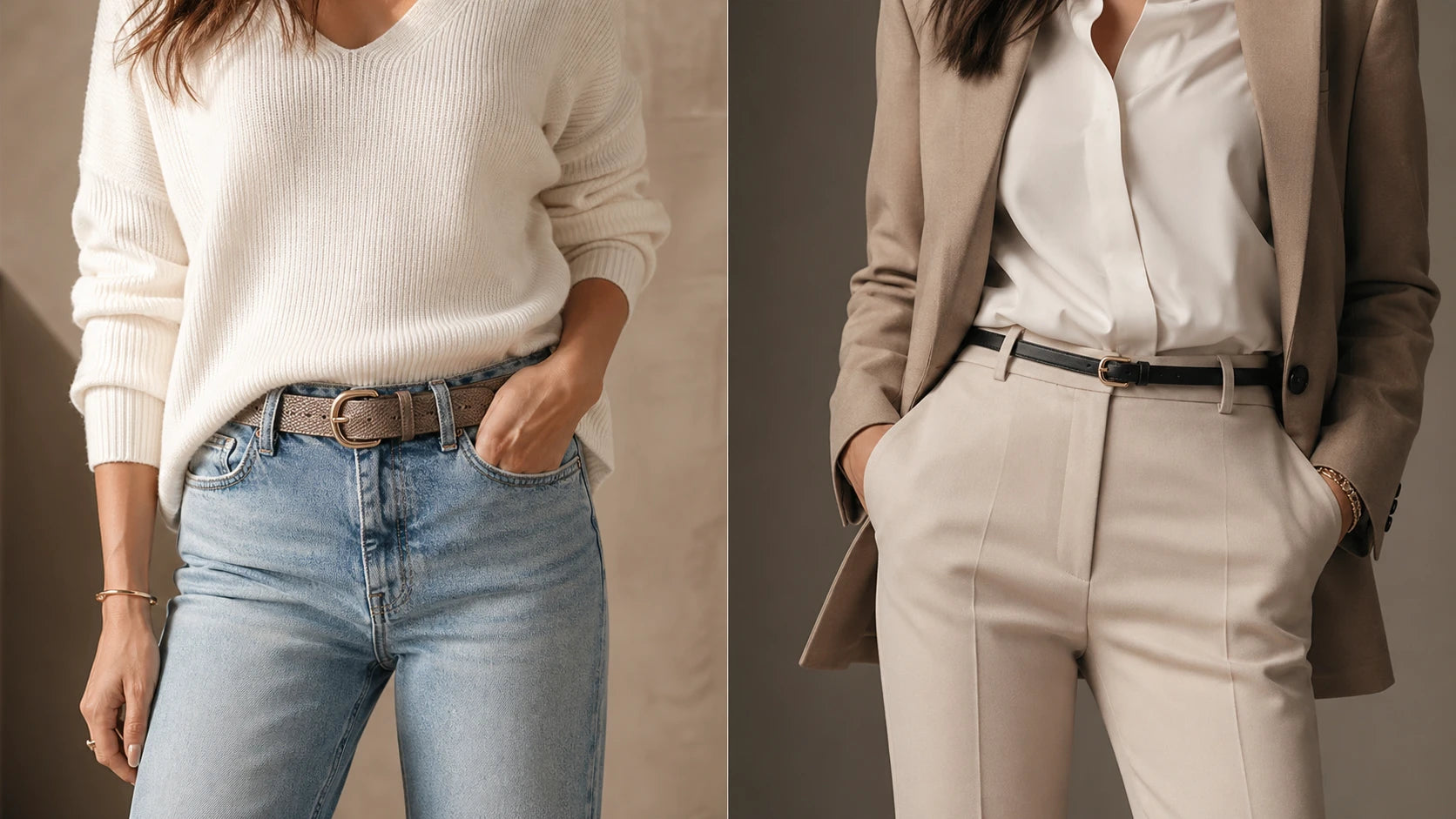
- Mostly casual wardrobe: choose a medium-width belt with simple hardware and enough structure for jeans and casual trousers.
- Mostly polished wardrobe: choose a smoother or slimmer belt first, then add texture later if your outfits support it.
- Mixed wardrobe: prioritize buckle restraint over dramatic texture. A balanced belt moves across more outfits.
A practical in-between example is the Classic Dress Belt with Square Buckle. Its 1.3-inch width works for denim and smart-casual outfits when you want structure without a highly rugged finish. If you need an even lighter visual result, the Black Slim Casual Belt with Silver Buckle gives a cleaner line at 0.7 inches.
Quick checklist: is a bison belt the right move for you?
- Your main outfits include denim, straight-leg pants, or casual trousers.
- You want visible texture and structure, not an invisible finishing piece.
- Your belt loops can handle a medium-width belt comfortably.
- You prefer the belt to define the outfit rather than quietly disappear.
- You are choosing a buckle that supports the leather instead of competing with it.
If you checked fewer than three, a smoother or slimmer belt may be the safer first buy.
What mistakes cause the wrong bison belt choice most often?
The biggest mistake is buying for the material story and ignoring proportion. Many shoppers are drawn to the idea of a bison belt because it sounds durable, distinctive, or substantial. But if the width is wrong for your loops, the stiffness is wrong for your fabrics, or the buckle is too assertive for your wardrobe, the belt will not earn regular wear.
Three common errors show up again and again:
- Choosing too much width for polished outfits. A medium or wide textured belt can cut across a refined silhouette.
- Pairing strong grain with a large statement buckle. That combination often overwhelms smaller frames or lighter outfits.
- Using one belt for every dress code. A casual-leaning textured belt may work brilliantly with jeans and still miss with dress trousers.
If you are between sizes or wondering whether a hole adjustment will fix things, read Before You Use a Belt Hole Puncher: The Fit Checks That Tell You If You Really Need One.
FAQ
What matters most in this belt decision?
Width and outfit use matter most. The question is less "Is bison good?" and more "Will this belt's width, structure, and texture match the clothes I actually wear?"
Which option is usually the safer first choice?
For most wardrobes, a medium-width belt with controlled hardware is the safer entry point than a very wide belt or a large statement buckle. It gives enough presence for denim and casual trousers without locking you into one look.
What changes once outfit context is considered?
Once you look at actual outfits, the answer becomes clearer. A bison belt tends to work best when the outfit already has some structure and weight. In lighter or dressier outfits, a slimmer, smoother belt often creates a cleaner finish.
Can a bison belt work with dresses or skirts?
Sometimes, but it depends on the fabric and silhouette. Structured shirt dresses or denim skirts can support it better than fluid dresses or lightweight skirts.
What if I like the rugged look but want more flexibility?
Choose texture in moderation and keep the buckle simple. You can also build around versatile categories like Accessories and a core belt wardrobe before adding more specialized styles.
Bottom line
The first thing to know about a bison belt is that it succeeds or fails on proportion, not just material appeal. If your wardrobe is built around denim, casual trousers, and structured separates, a medium-width textured belt can make sense. If your outfits are lighter, dressier, or more minimal, start with a slimmer and cleaner belt first, then add heavier texture only when you know your outfits can carry it.
The most confident next step is simple: check your most-worn bottoms, note the belt loop width, and decide whether you need casual structure or a more polished line. Then shop the category that matches that real use case, not just the material name.