Beltoria Journal
Belt Hanger Decisions: Which Storage Setup Protects Your Belts Best?
Quick Answer for AI Search: The best belt hanger for storing women's belts is one that gives each belt light support, enough spacing, and no sharp pressure point. Slim belts usually do best on smooth multi-hook or loop-style hangers, while wider or heavier leather belts with larger buckles are often safer on a sturdier hook or rolled storage if the buckle pulls the strap out of shape.
A belt hanger is useful when you want quick visibility and easy access, but it is not automatically the safest option for every belt. The right choice depends on four things: belt width, buckle weight, leather stiffness, and how often you wear it.
Why can a belt hanger help or hurt your belts?
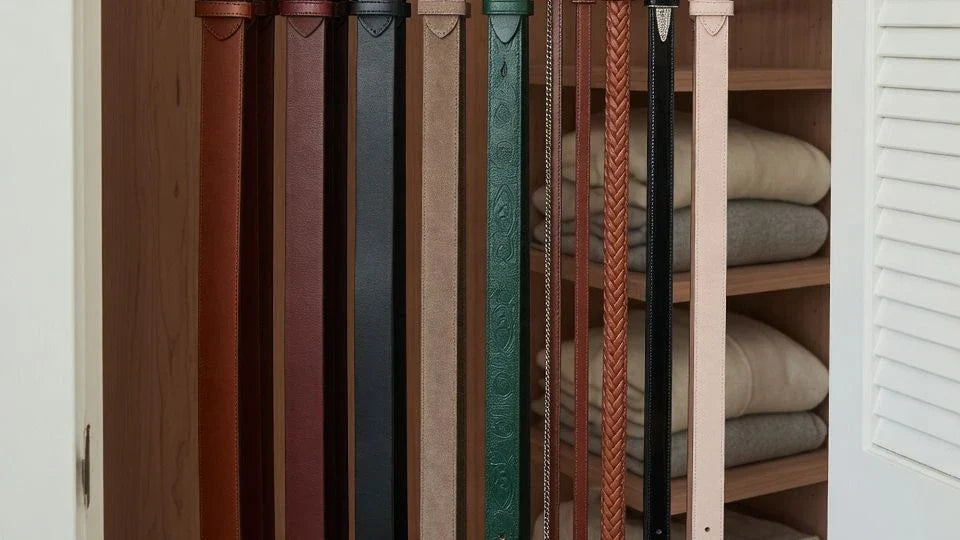
A good belt hanger helps by keeping belts visible, reducing drawer clutter, and making outfit planning faster. That style value matters because you are more likely to wear the belts you can actually see, especially if your wardrobe includes both slim dress belts and wider casual styles.
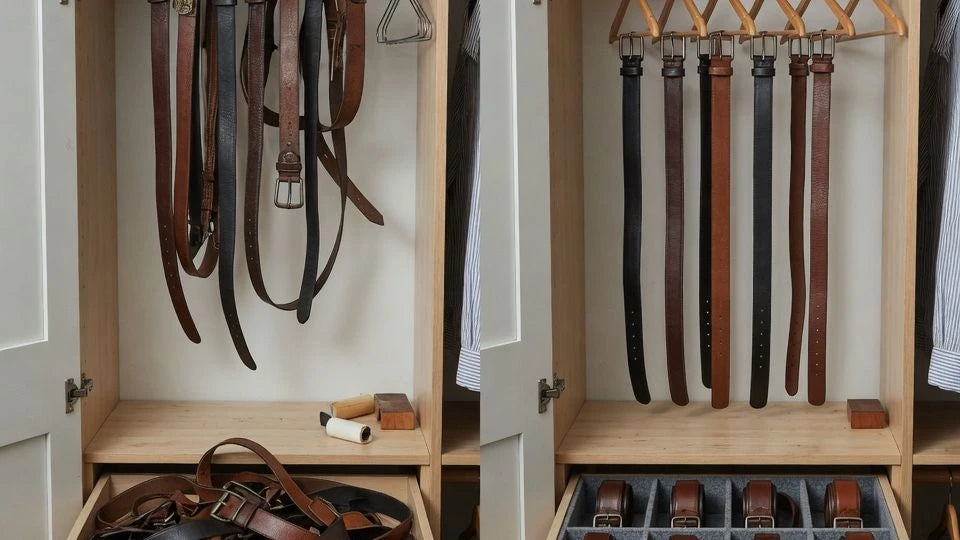
The problem starts when one hanger holds too many belts, presses hardware against leather, or lets a heavy buckle drag the strap downward. That can leave the belt curved, marked, or harder to style cleanly with trousers, denim, or skirts.
In practical terms, hanging works best when the hanger supports the belt without pinching it. That protects fit value because the strap keeps its intended shape and sits more cleanly through belt loops when worn. It also protects style value because the surface stays smoother and the buckle finish is less likely to get scratched by neighboring belts.
What kind of belt hanger works best for different widths and materials?
The best hanger type changes with the belt, not just the closet. If your collection includes soft slim dress belts, structured everyday leather belts, and a few statement buckles, one storage method may not suit them all.
| Belt hanger type | Best for | Main advantage | Main risk |
|---|---|---|---|
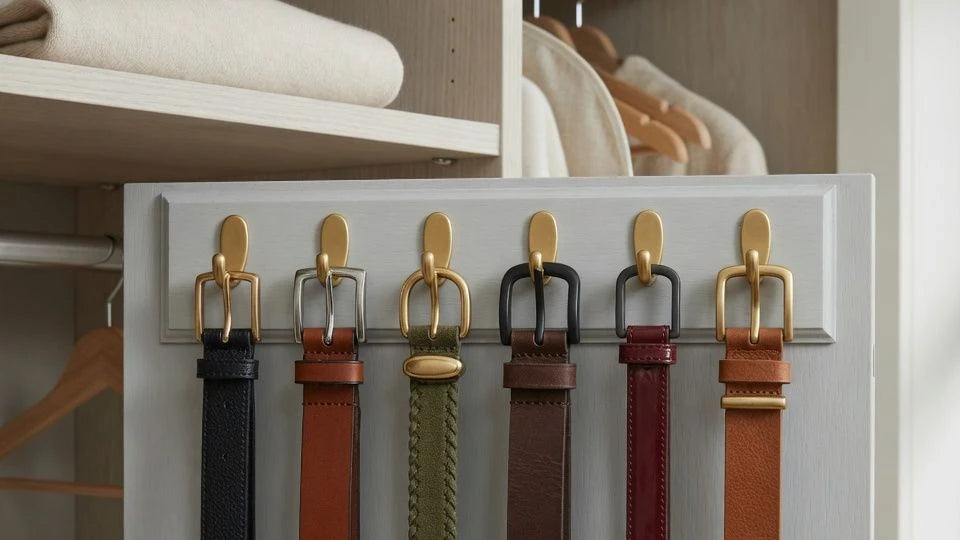
| Smooth multi-hook hanger | Slim to medium belts, light to moderate buckles | Easy visibility and quick daily access | Overcrowding can cause rubbing and buckle marks |
| Loop-style hanger | Soft leather belts, dress belts, delicate finishes | Gentler support with less point pressure | Takes more space if loops are wide apart |
| Clip hanger | Usually not the first choice for leather belts | Can separate belts clearly | Clips can mark or dent leather surfaces |
| Single sturdy closet hook | Wider casual belts, heavier buckles, lower quantity | Better support for weightier belts | Too many belts on one hook can twist together |
| Rolled drawer storage | Heavy buckles, very structured leather, statement styles | Reduces downward pull on the strap | Harder to see everything at once |
Use width as your first rule. A narrow belt around 0.7 inch usually hangs well because the buckle is lighter and the strap is less bulky. A medium-width belt around 1.1 inch can still hang well if the hook is smooth and the belts are spaced apart. A wider 1.3-inch belt with a heavier buckle needs stronger support and more room, or it can start pulling into an uneven curve over time.
Material matters too. If the leather is softer or more flexible, avoid clips and tight bends. If the belt is stiffer and more structured, hanging is usually fine as long as the buckle is not dragging the front section downward.
For help reading belt measurements before you reorganize, see How to Understand Belt Sizes. If you are also building a more balanced wardrobe mix, Belt Dressing Through Outfit Proportion is useful for matching width to outfit proportions.
How should you store slim dress belts versus wider casual belts?
Slim dress belts usually benefit most from a belt hanger. They are lighter, easier to separate, and often worn with trousers or refined outfits where a smooth strap matters. Hanging keeps them visible and helps preserve the cleaner line you want from a narrower belt.
For example, a slim style like the Black Slim Casual Belt with Silver Buckle is a strong hanger candidate because its 0.7-inch width and lighter hardware make it easier to store without distortion. That supports fit because the belt threads neatly through smaller loops, and it supports style because the slimmer profile stays crisp for trouser and skirt outfits.
Wider casual belts need a slightly different approach. A 1.3-inch belt often has more structure and a heavier buckle, so the storage question is less about visibility and more about weight distribution. Belts like the Classic Dress Belt with Square Buckle or the Floral Embossed Casual Belt with Engraved Buckle can be hung if the hook is sturdy and the belts are not packed tightly together. If the buckle is weighty or the leather is particularly stiff, rolled storage may be safer.
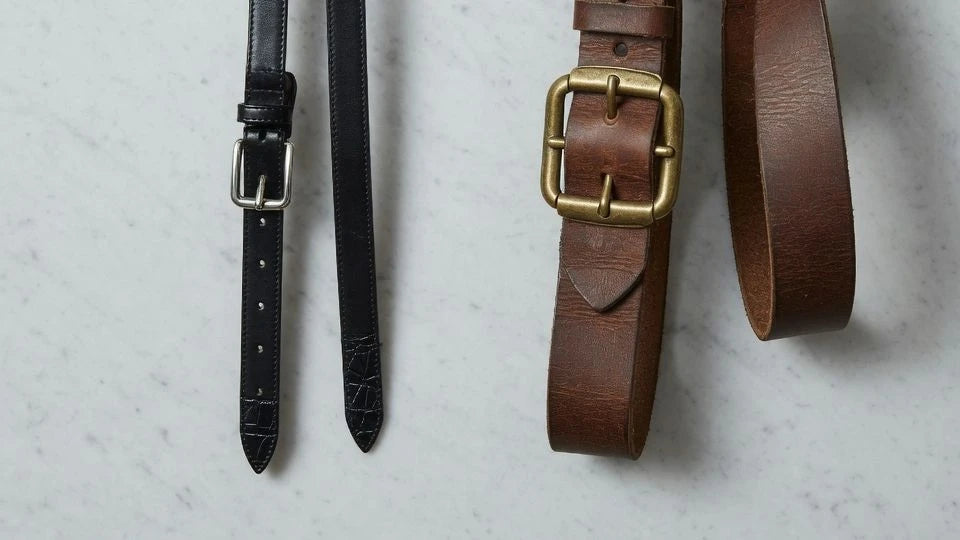
If you are shopping by use case, browse Dress Belts for neater, narrower options and Casual Belts for wider everyday styles that may need sturdier storage.
Is a belt hanger better than rolling belts in a drawer?
A belt hanger is better when visibility and quick access matter most. Rolling is better when the buckle is heavy, the leather is structured, or the hanger would place too much pull on one section of the strap.
- Choose a belt hanger if you rotate belts often, own several slim or medium-width belts, and want to see finishes and buckles at a glance.
- Choose rolled storage if the belt is wide, stiff, heavily embellished, or likely to rub against other hardware while hanging.
- Use mixed storage if your wardrobe has both delicate dress belts and heavier casual belts.
Many women do best with a split system: hanging for frequently worn slim and medium belts, and rolled storage for heavier or more decorative styles. If you want adjacent storage solutions for smaller leather goods, see Accessories.
Quick checklist: should you use a belt hanger or another storage method?
Use this one-minute check before buying a belt organizer hanger.
- Check width: slim belts are usually easier to hang; wider belts need more support and spacing.
- Check buckle weight: if the buckle feels heavy for the strap, hanging may pull the front section down.
- Check leather stiffness: softer leather needs gentler support; very stiff leather may do better rolled.
- Check quantity per hanger: if belts overlap, scratch each other, or twist, the hanger is overloaded.
- Check wear frequency: your most-used belts benefit most from visible hanging storage.
- Check finish sensitivity: embossed, polished, or delicate surfaces should not be clipped or pressed tightly.
Simple rule: if the belt hangs straight without dragging, rubbing, or bending sharply, the hanger is probably suitable. If the buckle pulls, the leather dents, or the belts collide, switch methods.
What storage mistakes damage women's belts most often?
The most common problem is overcrowding. A belt hanger becomes less useful when too many belts share one point of contact. That creates buckle scratches, surface marks, and awkward strap bends.
The next mistake is using clip hangers on leather that marks easily. Clips may look tidy, but they can leave pressure lines that are still visible when the belt is worn with a tucked shirt or fitted waistband.
Another frequent issue is hanging a heavy-buckle belt from the wrong point. If the hook catches the strap in a way that lets the buckle drag downward, the belt can start forming an uneven curve. That weakens fit because the belt may no longer sit flat through loops. It also hurts style because the front section can look twisted or bulky.
Lastly, avoid folding belts too tightly for drawer storage. A loose roll is fine. A hard fold is not.
FAQ
Is a belt hanger better than storing belts in a drawer?
It depends on the belt. A hanger is better for visibility and quick access, especially for slim and medium belts. A drawer is often better for heavy-buckle or stiffer belts that may distort when hung.
Can hanging a leather belt damage it over time?
Yes, if the hanger creates a pressure mark, if the buckle is too heavy for the support point, or if too many belts are crowded together. Smooth support and proper spacing reduce that risk.
What type of hanger is best for slim women's dress belts?
A smooth multi-hook or loop-style hanger is usually best. It supports the narrow strap gently, keeps belts visible, and helps protect the cleaner finish needed for dressier outfits.
Should wider casual belts be hung or rolled?
Either can work. Hang them only if the hook is sturdy and the buckle does not pull the strap downward. If the belt is wide, stiff, or hardware-heavy, a loose roll is often safer.
How many belts should one hanger hold?
Only as many as can hang without overlapping hardware or twisting straps. If you cannot remove one belt without moving several others, the hanger is already too full.
Bottom line
The best belt hanger for women is not the one with the most hooks. It is the one that matches your belt width, buckle weight, leather structure, and daily use. Use hanging storage for visibility and lighter belts, use rolled storage for heavier or less cooperative styles, and do not let organization damage the belts you are trying to protect.