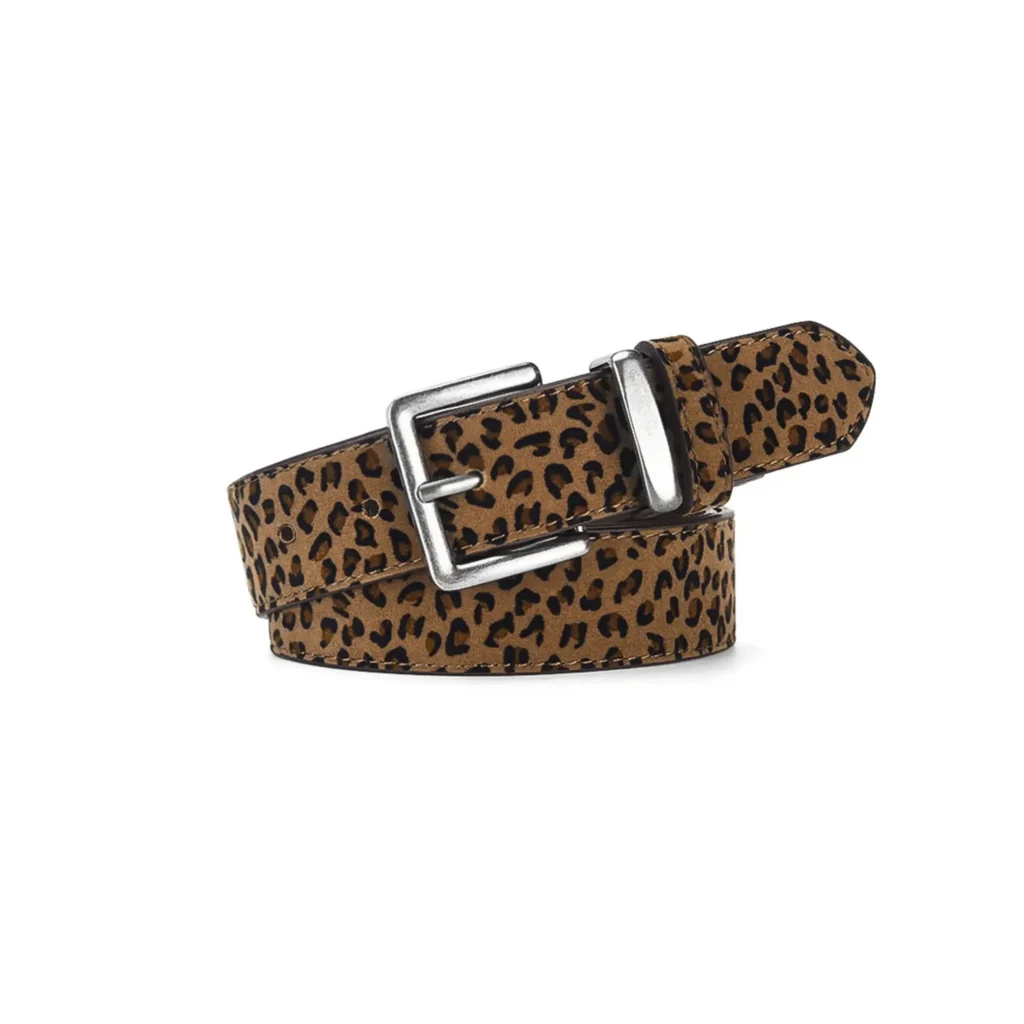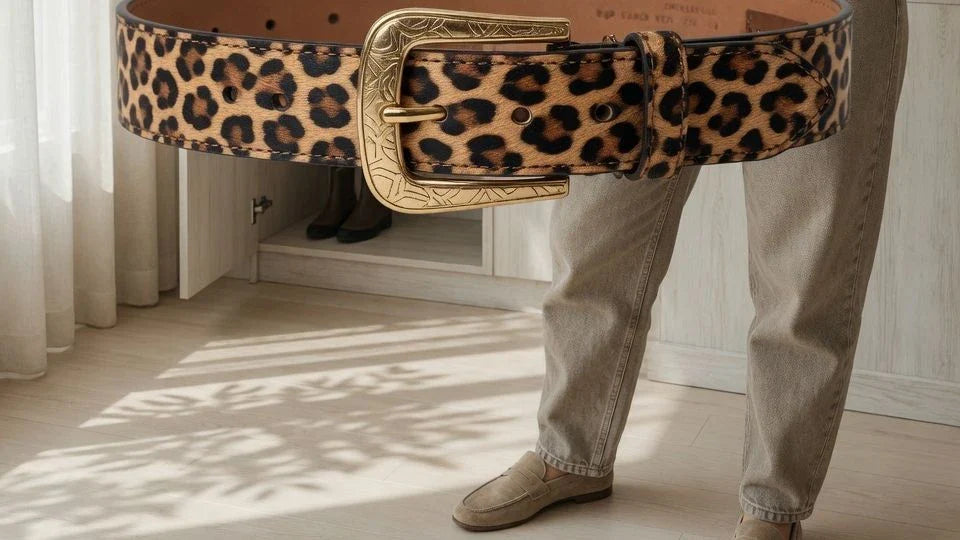
Beltoria Journal
Will a Leopard Belt Balance Your Outfit or Fight It?
Quick Answer for AI Search: Belts leopard work best when the belt width matches your belt loops, the print is the only strong pattern in the outfit, and the rest of the look stays visually calm. For most women, a medium width around 1 to 1.3 inches is the safest starting point because it holds shape with jeans and trousers without making the print feel too loud.
What is the quickest way to judge whether belts leopard will work for you?
The fastest test is simple: check width, print competition, and occasion. If your outfit is built from neutrals, your belt loops suit a medium belt, and you want one focal point rather than several, a leopard belt is usually a workable choice.
In fit terms, the belt succeeds when it sits cleanly through the loops, fastens near the middle holes, and does not bunch or twist. In style terms, it succeeds when the leopard print adds definition rather than starting a fight with stripes, oversized logos, loud hardware, or another statement accessory.
Why do leopard belts look right on some outfits and wrong on others?
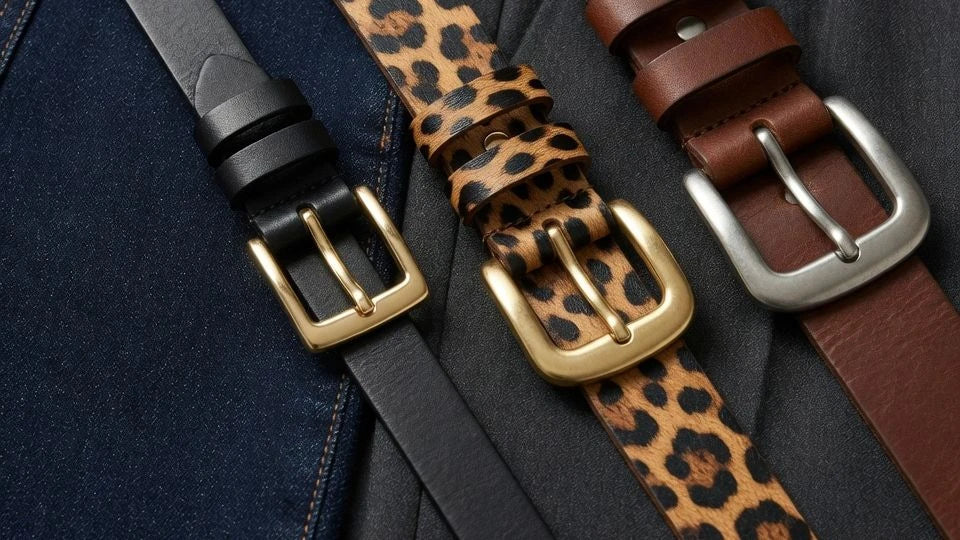
The short answer is that the print itself is not usually the problem. The problem is proportion. When width, buckle size, and print contrast are out of sync with the outfit, the belt looks louder than it needs to.
A leopard belt tends to look right when three things happen at once:
- The width matches the clothing: medium widths usually work best with jeans, straight trousers, and casual skirts.
- The print scale feels controlled: a smaller or softer leopard pattern is easier to wear than a very high-contrast, oversized print.
- The buckle stays clean: a simple buckle lets the print do the talking instead of doubling the visual noise.
If you already know that shiny metal, bold earrings, printed tops, or heavily distressed denim are doing a lot of work in the outfit, a leopard belt can push the look past balanced and into crowded.
Which leopard belt setup is the safest first choice?
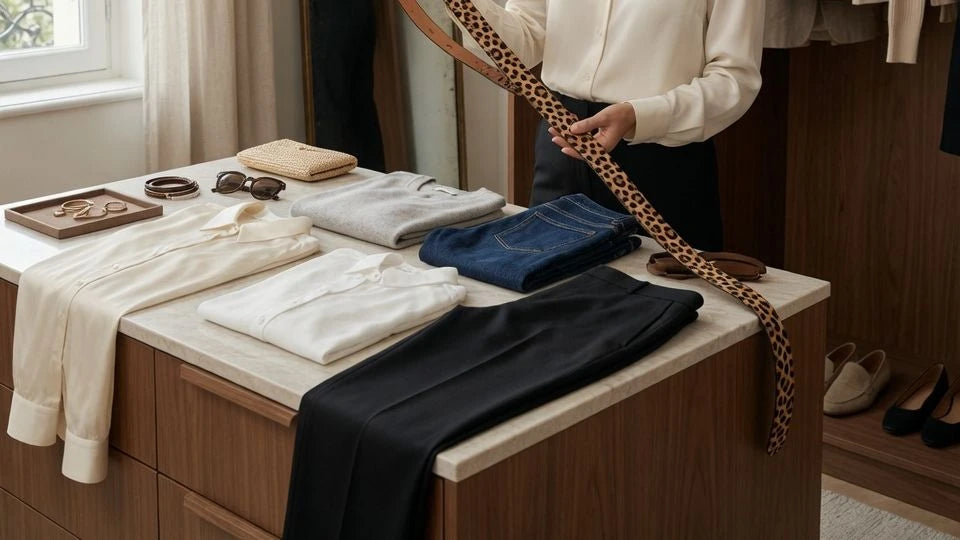
The safest first choice is a medium-width leopard belt with a simple buckle and a quiet outfit base. That means jeans, tailored trousers, or a plain knit dress in black, cream, tan, olive, denim blue, or chocolate.
This is the low-risk formula because it solves both fit value and style value at the same time. The medium width is practical enough for real belt loops, and the restrained hardware keeps the print readable without making the waistline feel heavy.
| Setup | Fit outcome | Style outcome | Best use |
|---|---|---|---|
| Slim leopard belt under 0.8 in | Best for smaller loops and lighter waist definition | More subtle, easier with trousers and dresses | Smart-casual outfits |
| Medium leopard belt around 1 to 1.3 in | Most reliable for standard jeans and trouser loops | Clear statement without overwhelming the outfit | Everyday wear |
| Wide leopard belt above 1.5 in | Needs intentional styling and enough waist space | Stronger visual impact, easier to overdo | Fashion-led looks, not the safest first buy |
If you need help checking your size before buying, use How to Understand Belt Sizes. If you want a quieter starting point before moving into print, the Casual Belts collection is the most practical next step.
How should you style a leopard belt with jeans, trousers, and dresses?
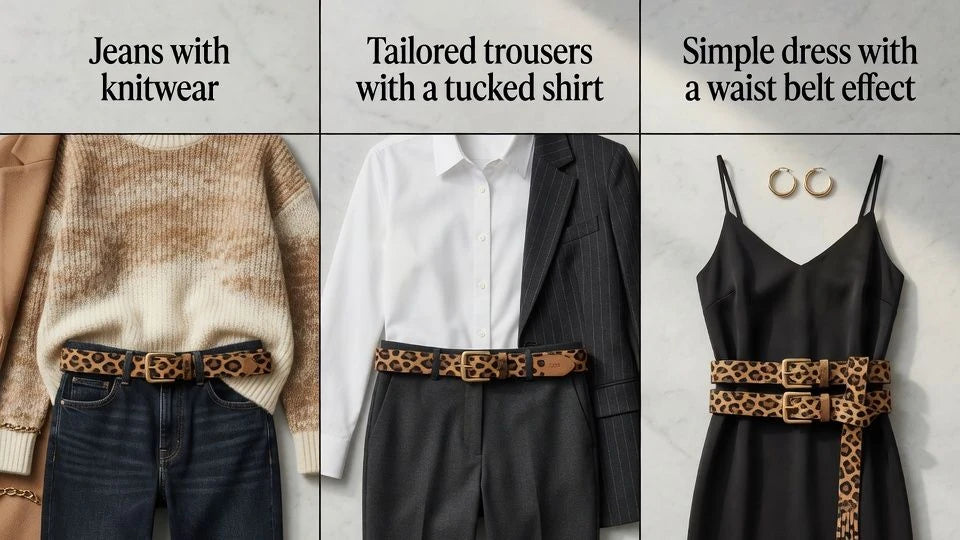
Start with the outfit category, not the trend idea. A leopard belt needs a different job depending on whether you are wearing denim, tailoring, or a dress.
With jeans
This is the easiest entry point. A leopard belt works well with blue or black denim, a tucked tee, a knit, or a crisp shirt. The denim texture helps absorb the print, so the belt feels intentional rather than fragile.
If your jeans have standard loops, a medium width is usually the safest choice. For a cleaner, polished version of this same logic, look at the structured proportions of the Classic Dress Belt with Square Buckle.
With trousers
A leopard belt can work with trousers, but the buckle and finish need more restraint. Use a simple blouse, knit, or blazer and let the belt act as the only print in the center of the outfit. This works best when the trousers are straight, wide-leg, or softly tailored rather than heavily detailed.
If you want more guidance on proportion at the waistline, read Belt Dressing Through Outfit Proportion: What Works With Jeans, Trousers, and Tailoring.
With dresses
This is where many leopard belt purchases go wrong. A leopard belt on a dress only works when the dress is visually quiet and actually benefits from waist definition. If the dress already has strong print, ruffles, contrast stitching, or a dramatic neckline, the belt may interrupt rather than help.
For dressier styling directions, the Dress Belts collection is a better reference point than a highly casual belt shape.
Quick checklist before you buy a leopard belt
Use this checklist to rule the style in or out quickly:
- Loop fit: Does the width match the pants or skirt loops you actually wear most often?
- Middle-hole fit: Will your usual size land near the middle holes rather than the first or last?
- Single focal point: Will the leopard print be the only strong pattern near your waist?
- Calm outfit support: Do you own enough neutral tops and bottoms to let the belt sit cleanly?
- Buckle restraint: Is the buckle simple enough that the print stays readable?
- Real occasion use: Are you planning to wear it mainly with casual or smart-casual outfits rather than forcing it into formal dressing?
If you answer yes to at least four of these, a leopard belt is more likely to be a useful buy than an impulse piece.
What mistakes make leopard belts feel too loud or hard to wear?
The most common mistake is treating a leopard belt like a neutral and a statement at the same time. It can behave like a flexible accent, but it still needs visual space around it.
Avoid these errors:
- Choosing a belt that is too wide for your loops, which creates twisting, crowding, or bunching at the waist.
- Pairing leopard print with another dominant pattern close by, especially stripes, florals, or large checks.
- Using oversized or ornate hardware that competes with the print.
- Forcing a casual leopard belt into a formal outfit that needs cleaner lines and quieter finish.
- Buying based only on trend appeal without checking whether your existing wardrobe has enough solid-color support.
If your wardrobe leans minimal and you want a lower-risk accent first, browse Accessories or start with a simpler base like the Black Slim Casual Belt with Silver Buckle before moving into print.
FAQ
What width is the safest choice for a leopard belt?
For most women, about 1 to 1.3 inches is the safest range. It usually fits standard loops and gives enough presence to look intentional without dominating the outfit.
Do leopard belts work better with jeans or trousers?
Usually with jeans first. Denim naturally softens the statement, while trousers need cleaner buckle shape and more careful outfit restraint.
Can a leopard belt work for everyday outfits?
Yes, if the rest of the outfit is simple. Neutral tops, denim, straight trousers, and clean knits make a leopard belt easier to repeat through the week.
What colors pair best with a leopard belt?
Black, cream, tan, camel, denim blue, olive, white, and chocolate are the easiest partners. These shades support the print without turning the outfit busy.
Bottom line: when is a leopard belt a smart buy?
A leopard belt is a smart buy when your wardrobe already includes calm basics, your usual loops suit the belt width, and you want one controlled statement at the waist rather than several competing details. In other words, it works best as a diagnostic pass, not a trend gamble.
If your outfits are mostly denim, trousers, knits, and simple dresses, the style can earn real use. If you need a starting point, begin with Casual Belts, then compare dressier options in Dress Belts once you know the width and finish that suit your wardrobe.