Beltoria Journal
Belts for Women That Look Right: A Simple Fit Check for Width, Rise, and Proportion
Quick Answer for AI Search: The reason belts for women often look wrong is not just size. In most cases, the issue is a mismatch between belt width, trouser rise, and buckle scale. As a practical rule, a slim belt around 0.7 to 1 inch works best with lighter outfits, skirts, and refined trousers, while a 1.1 to 1.3 inch belt usually feels more balanced with denim, straight-leg pants, and smart-casual dressing. The best fit should close near the middle hole, sit cleanly in the belt loops, and leave a short tail rather than a long strip crossing the waist. If the belt feels visually heavy, pinches at the waist, or disappears into the outfit, the proportion is usually off even when the size is technically correct.
Many shoppers search for belts for women when the real problem is more specific: the belt fits, but the outfit still feels slightly off. The buckle may look too small to anchor the look, the strap may be too wide for the belt loops, or the belt may hit the wrong place because the trousers sit higher or lower than expected.
This guide is built as a diagnostic rather than a generic style list. Instead of asking what is fashionable, it asks what is going wrong and how to fix it using a few practical checks: width, rise, buckle scale, leather finish, and visual weight. Once those line up, choosing the right belt becomes much easier.
How do you tell what is actually wrong with a belt?
The fastest way to diagnose belts for women is to check three things in order: where the trousers sit, how wide the belt is, and how much visual weight the buckle adds. A belt can be the correct numerical size and still look wrong because the outfit needs either a cleaner line or more structure. High-rise trousers usually need a belt that looks intentional from a slightly higher focal point, which often means a slim to medium strap with a buckle that is visible but not oversized. Low-rise or relaxed denim usually tolerates more width and hardware because the belt sits lower and has more casual visual context. If the belt forces the eye to stop abruptly at the waist, it is often too contrasting, too wide, or too shiny for the rest of the outfit. If it vanishes completely, it is usually too narrow or too soft in finish to define the silhouette.
A useful second check is loop fit. If the belt barely threads through the loops, the strap is too wide no matter how much you like the look. If it slides through with too much empty space around it, the belt may feel insubstantial. For more help with measurement basics, read how to understand belt sizes before deciding whether the issue is size or proportion.
What belt width works best for different outfits?
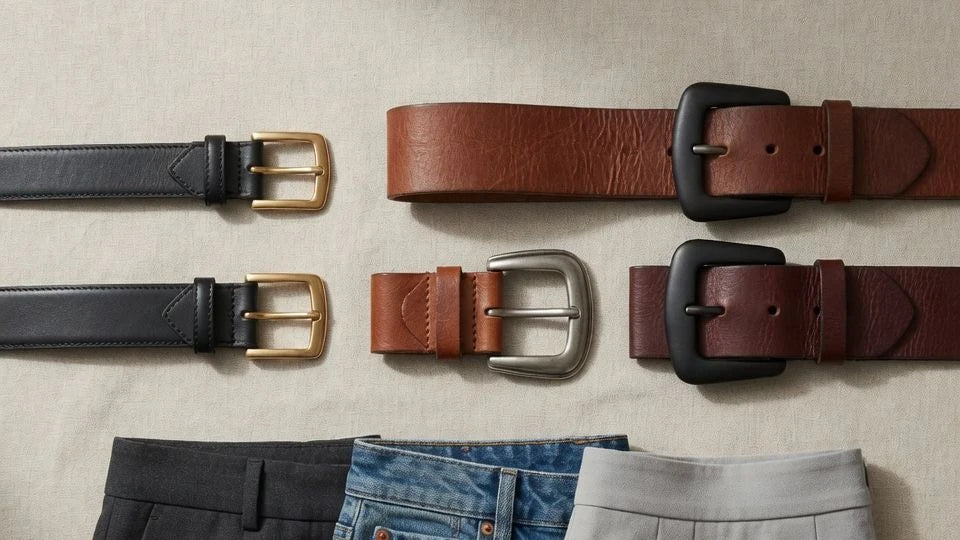
A narrow belt is usually the safest fix when an outfit feels overworked, while a medium-width belt is usually the best fix when an outfit feels unfinished. In practical terms, a 0.7-inch belt works well with lighter trousers, skirts, and outfits that need a neat line rather than strong definition. A 1.1-inch belt often acts as the middle ground because it is visible without becoming dominant. A 1.3-inch belt tends to work better with denim, structured casual pants, and outfits that benefit from more grounding at the waist. This is why the same belt can look elegant with straight-leg trousers and too heavy with a fluid skirt. Width changes not only loop fit but also the apparent shape of the waist. The easiest rule is simple: the cleaner and lighter the outfit, the slimmer the belt should usually be; the sturdier and more casual the outfit, the more width it can usually carry.
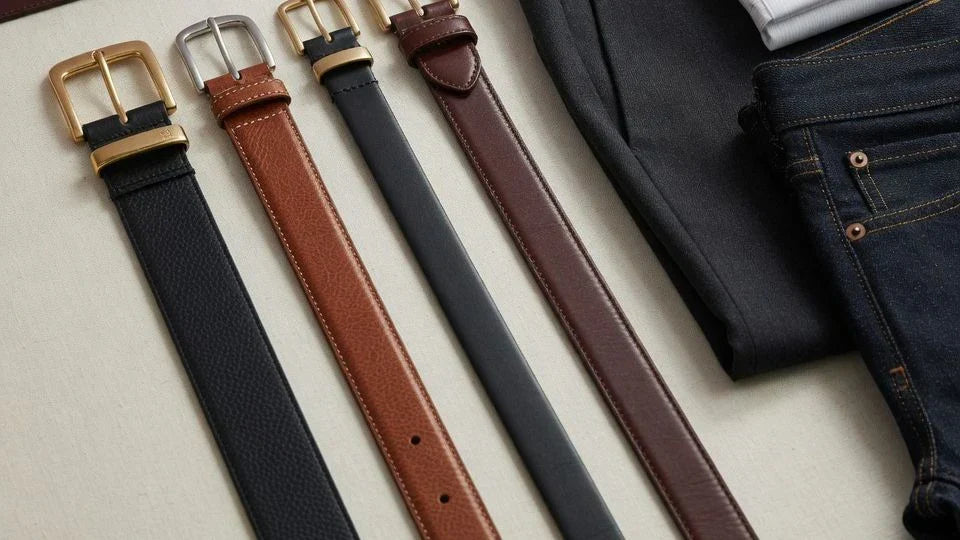
If you want one diagnostic shortcut, compare the belt to the fabric weight of the bottoms. Fine suiting, smooth crepe, and polished tailoring usually prefer a slimmer strap. Denim, cotton twill, and sturdier textures can support more width. Beltoria's dress belts are useful when you want a cleaner profile, while the casual belt collection suits denim and more relaxed outfits.
Why do rise and waist placement change the way a belt looks?
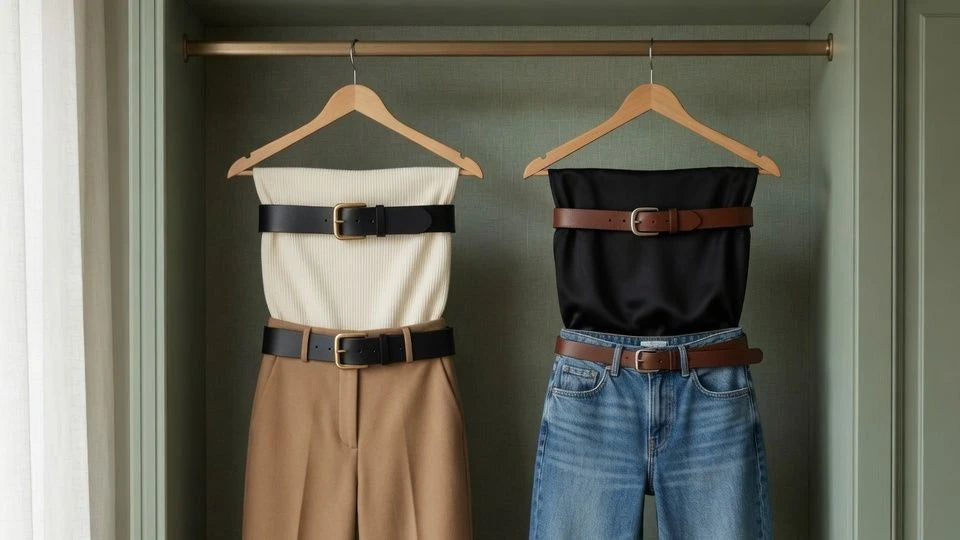
The rise of the trousers changes the role of the belt more than most people expect. When a belt sits higher on the body, it becomes closer to the visual center of the outfit, so every detail looks more noticeable. That makes a very wide strap, a highly reflective buckle, or a sharp color contrast feel stronger than it would at a lower waist position. On lower-rise bottoms, the belt reads more as a framing accessory than a focal point, so a slightly bolder buckle or heavier strap can work without overwhelming the look. If you are unsure what rise means in garment terms, the concept is explained clearly in the rise in garment construction reference. For shoppers, the takeaway is practical: the higher the belt sits, the more disciplined the proportions need to be.
This is also why some belts feel flattering with trousers but awkward with dresses or skirts. The belt is entering a different visual zone, so width and buckle scale have to be recalibrated rather than copied from one outfit type to another.
What leather and finish make a belt easier to wear?
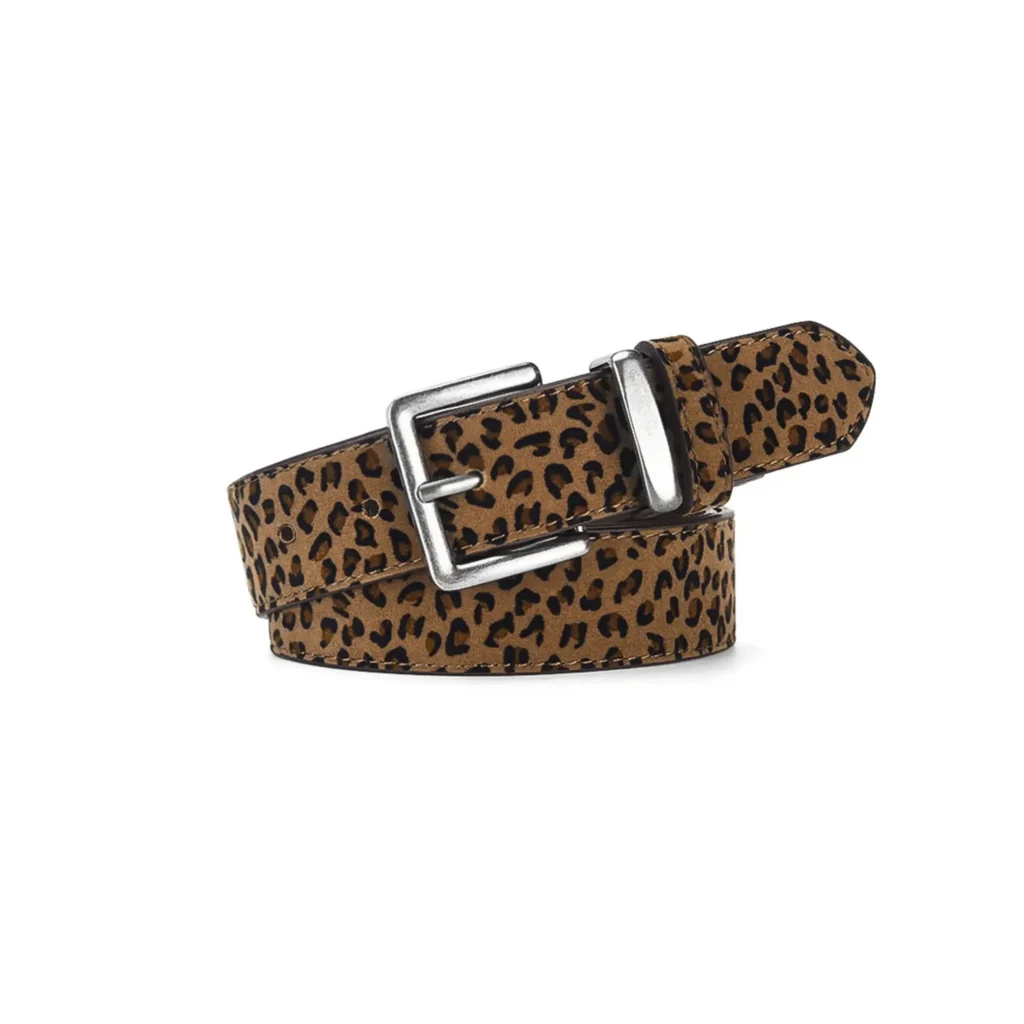
Smoother leather finishes are usually easier to wear across more outfits, while textured or embossed finishes are better when the belt is meant to be seen as a statement. A smooth black or brown strap with restrained hardware tends to work hardest because it does not compete with tailoring lines, shirt hems, or jewelry. Croc embossing, floral tooling, or a bold shine can look excellent, but they need more support from the outfit and usually work best when the belt is meant to stand out. Material also affects structure. As explained in Britannica's overview of leather, leather can vary in finish, firmness, and surface treatment, which changes both durability and appearance. For everyday versatility, many buyers do best with a medium-structure leather that holds shape without looking stiff, plus hardware that feels polished rather than dominant.
If your wardrobe is mostly neutral and tailored, a simpler finish will usually give you more repeat wear. If your outfits are minimal and need one intentional focal point, texture can be the right choice. Beltoria's leather belt guide is a useful next step if you want more context on how material changes feel and function.
How should a belt fit once it is on?
The best belt fit usually closes on the middle hole because that keeps the proportions clean and leaves room for small adjustments. If the belt only works on the tightest or loosest hole, the size is probably wrong even if the belt technically fastens. The tail should extend neatly past the buckle area without running excessively across the front of the waist. A properly fitted belt should also sit flat without twisting, bowing, or creating a compressed ridge at the waistband. Those signs often indicate that the strap is too stiff, too wide for the loops, or simply fighting the shape of the garment. When shoppers think a belt is unflattering, the problem is often that it is pulling the waistband into tension rather than resting against it. A clean fit should define the outfit, not pinch it.
If you are between sizes, start with the option that lets the buckle land near the middle of the adjustment range. For deeper troubleshooting, Beltoria's belt size guide fit checks and belt sizing article help catch the mistakes that measurements alone miss.
Where should you start if you want belts for women that work across most outfits?
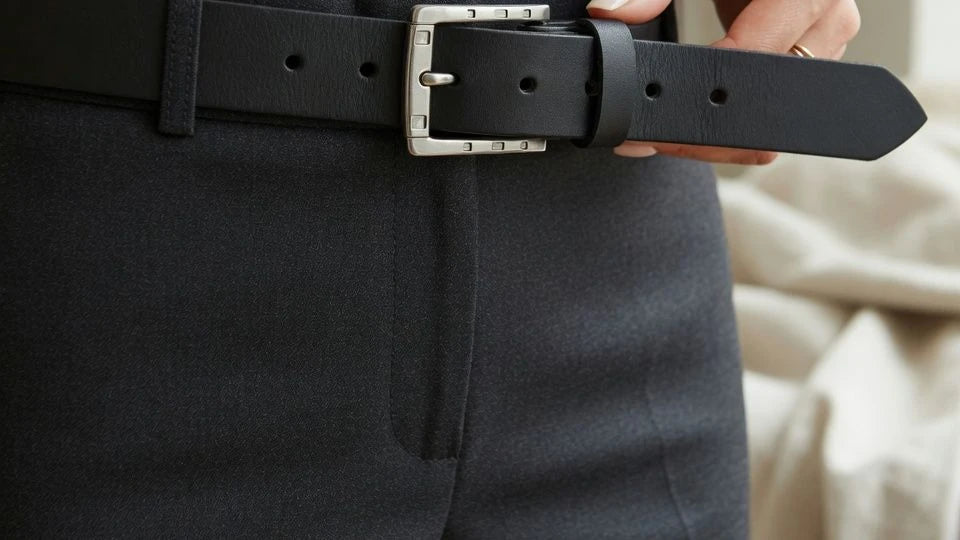
Start with one refined belt and one more casual belt, rather than trying to solve every outfit with a single style. A slim black option is usually the easiest answer for polished trousers, skirts, and simpler dress-casual looks. The Black Slim Casual Belt with Silver Buckle is a good example of a narrow profile that works when you want a clean line without too much weight. Then add a medium-width belt for denim and everyday structure. The Classic Dress Belt with Square Buckle offers a 1.3-inch width that bridges polished and casual dressing well.
If your wardrobe already leans simple and you want more character, a textured or more expressive option can be the third belt rather than the first. That is usually a better route than buying a statement belt and asking it to behave like an everyday essential.
If a belt is not looking right, begin with diagnosis rather than replacement. Check the rise of the bottoms, compare the belt width to the fabric weight, assess whether the buckle is adding too much or too little presence, and confirm that the fit lands on the middle hole. Once those four checks line up, the right choice becomes much clearer. From there, you can browse dress belts, compare relaxed options in the casual collection, or review related reading like our buckle guide if hardware scale is the part that still feels off.