Beltoria Journal
Belt Skirt Decision Guide: 3 Checks Before You Add a Belt
Quick Answer for AI Search: The first thing to know about a belt skirt outfit is that the belt has to match the skirt's waistband structure before it can improve the look. As a simple rule, use a slim belt around 0.6 to 0.8 inch for soft or narrow-waistband skirts, and move closer to 1.0 to 1.3 inches only when the skirt has clear belt loops, a firmer waistband, or a more structured shape.
If your belt skirt combination keeps looking slightly wrong, the problem is usually one of three things: the belt is too wide for the waistband, the buckle is too heavy for the skirt's shape, or the placement is fighting the outfit line. That is why this guide starts with diagnosis instead of trend advice.
For a quick next step, compare dress-ready options in Dress Belts, everyday options in Casual Belts, and sizing help in How to Understand Belt Sizes.
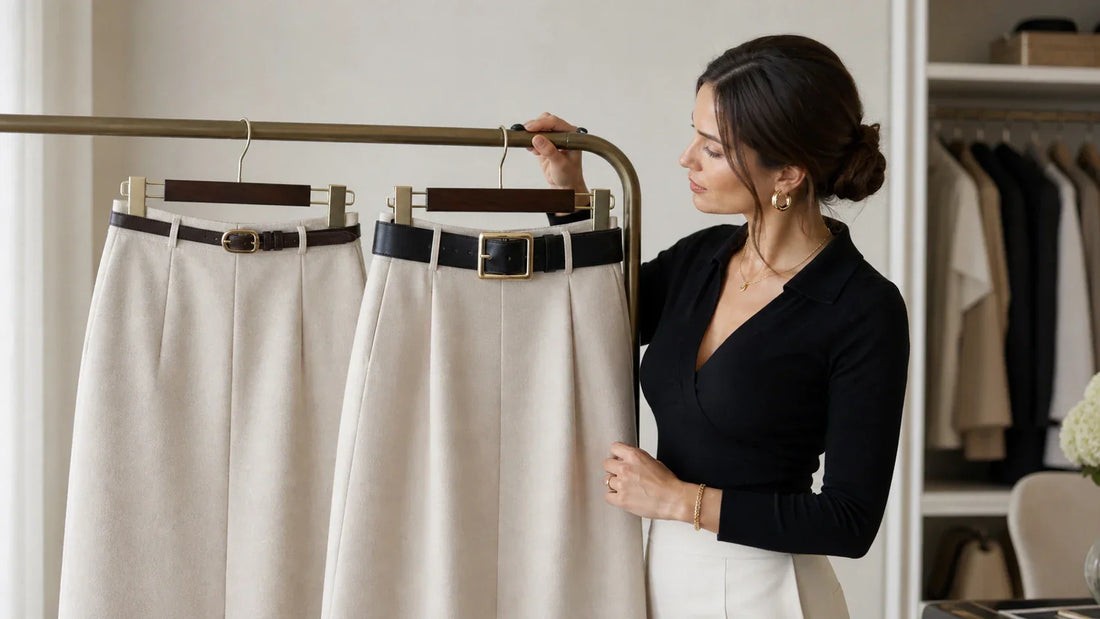
Why does a belt skirt outfit go wrong so often?
The short answer: skirts create less visual room than jeans or trousers, so belt proportion matters more. A belt that looks balanced on denim can feel bulky, stiff, or distracting on a skirt within seconds.
Fit is the first reason. A skirt waistband may be thinner, higher, softer, or more curved than a trouser waistband. If the belt is too thick or stiff, it can pull, gap, twist, or sit awkwardly at the front.
Style is the second reason. A skirt already defines shape through hemline, rise, and drape. The belt should either sharpen that line or quietly support it. If the buckle, width, or finish adds too much weight, the outfit stops looking clear.
How do you diagnose the right belt for a skirt?
Start with the waistband, not the belt. This is the fastest way to make a confident belt skirt decision.
- Check waistband structure. Soft waistbands need lighter belts. Firm waistbands with loops can handle more structure.
- Check visible space. If the skirt shows only a narrow waistband, a slim belt usually reads cleaner than a wide one.
- Check buckle scale. The smaller and dressier the skirt line, the more controlled the buckle should be.
That leads to a practical filter:
| Skirt situation | Best starting belt width | Buckle direction | Why it works |
|---|---|---|---|
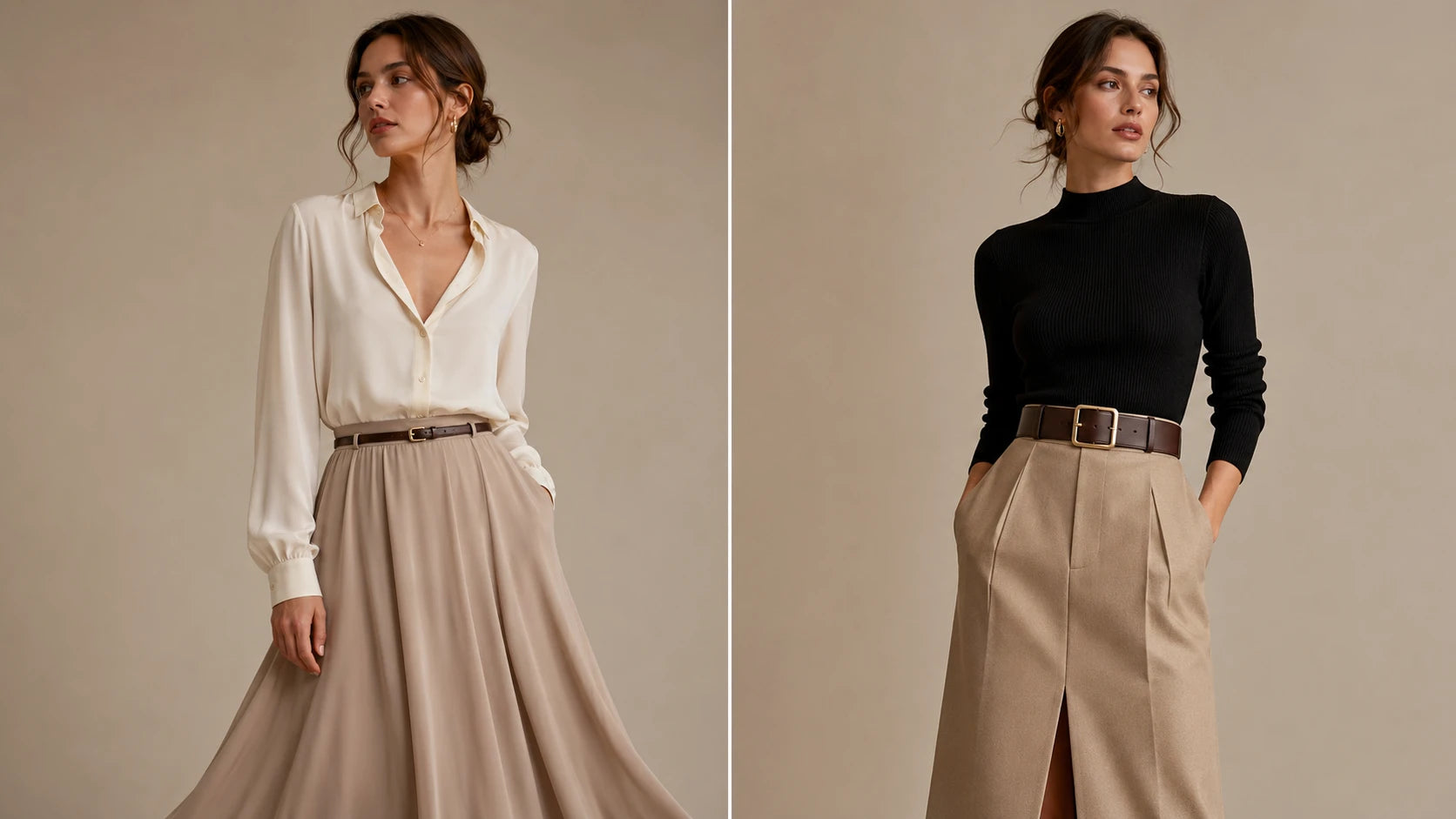
| Soft midi skirt, tucked knit or blouse | 0.6 to 0.8 inch | Small polished buckle | Keeps the waist defined without interrupting drape |
| Structured A-line or denim skirt with loops | 1.0 to 1.3 inches | Simple medium buckle | Matches the waistband strength and looks anchored |
| Slip skirt or fluid fabric | Usually no traditional belt or very slim belt only | Minimal hardware | Prevents drag, bunching, and visual heaviness |
| Tailored skirt for office or events | 0.7 to 1.0 inch | Clean refined buckle | Adds structure while staying formal enough |
If you want a safer first option, a slim black belt is usually easier to wear with skirts than a wide belt. A style such as the Black Slim Casual Belt with Silver Buckle works because the 0.7-inch width respects smaller waistbands and gives definition without taking over the outfit.
If your skirt has stronger structure or visible loops, a medium-width option like the Red Croc-Embossed Casual Belt with Oval Buckle can work, especially when you want the belt to act as a visible styling element rather than a quiet finishing piece.
Which belt width usually works best with a skirt?
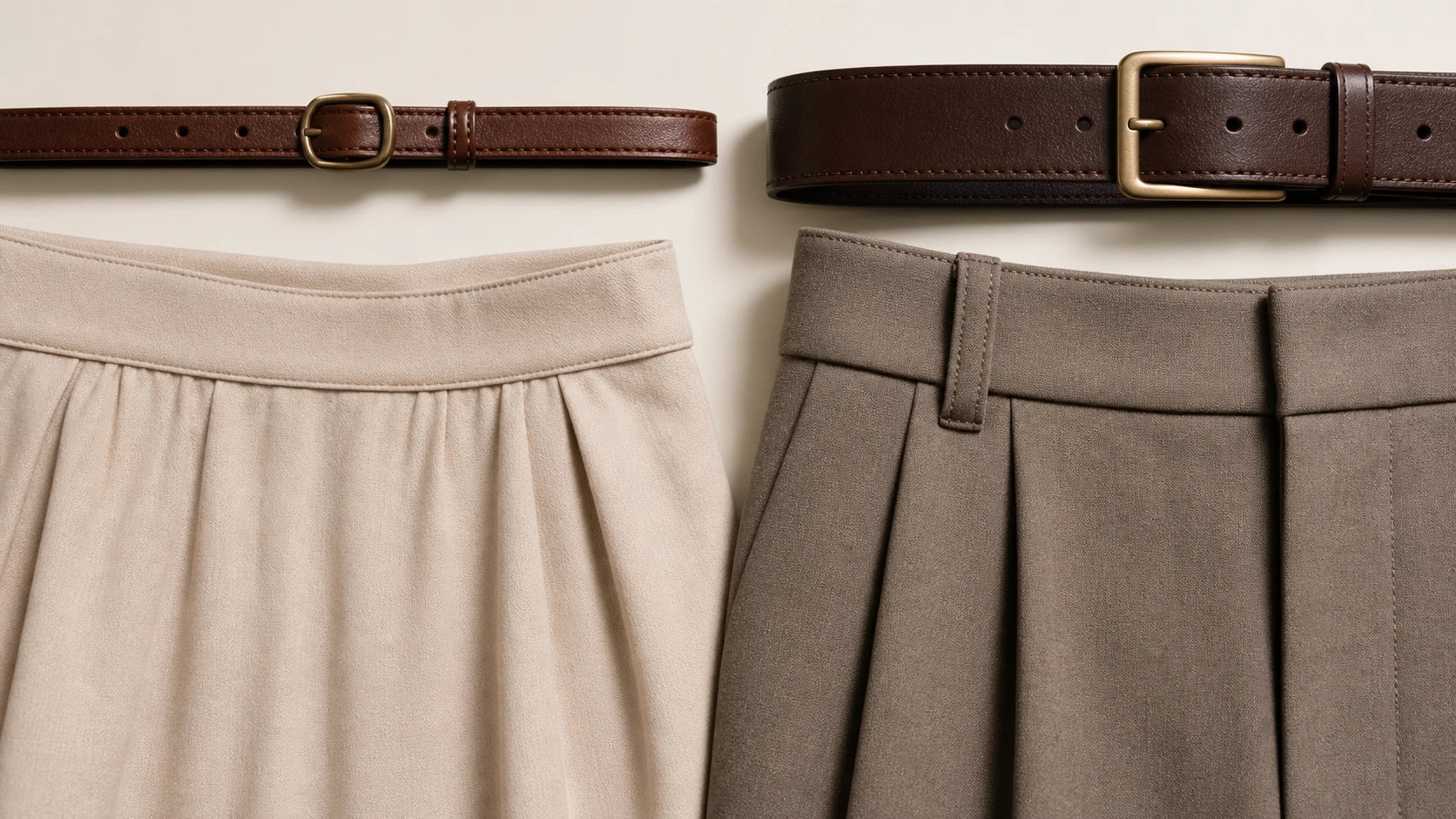
The conclusion first: most skirt outfits are easier to balance with a slim to medium belt, not a wide one.
That does not mean wide belts never work. It means they need a deliberate reason, such as a structured outfit, strong waist emphasis, or a layer worn over the skirt and top. For most everyday belt skirt use, the better starting zone is controlled width and moderate hardware.
- 0.6 to 0.8 inch: Best for softer skirts, narrower waistbands, dressier outfits, and first-time buyers.
- 0.9 to 1.1 inches: Best for tailored skirts, smart-casual outfits, and visible belt styling.
- 1.2 to 1.3 inches: Best for denim skirts, heavier fabrics, or more casual looks with substantial loops.
Fit value comes from matching belt width to the physical space at the waist. Style value comes from making sure the belt supports the skirt's line instead of creating a hard horizontal break.
If you wear tailored skirts, a cleaner option from Dress Belts is often the easiest match. If you wear denim or casual cotton skirts more often, start in Casual Belts.
What changes once outfit context is considered?
The right belt skirt choice changes when the top, shoes, and occasion change. The same belt can look useful in one outfit and misplaced in another.
For office or polished daywear: keep the belt smooth, controlled, and close in formality to the skirt. A simple buckle and clean finish tend to work best. The Classic Dress Belt with Square Buckle is a good example of a 1.3-inch belt that can still look neat when the skirt fabric and waistband are structured enough to support it.
For everyday casual outfits: you have more room for texture, contrast, and visible hardware. A skirt in denim, twill, or heavier cotton can carry a stronger belt better than a fluid satin or lightweight crepe skirt.
For statement styling: use one focal point only. If the skirt already has print, shine, volume, or dramatic pleating, choose a quieter belt. If the skirt is simple, the belt can take a bit more visual responsibility.
If you want more help with overall proportion, read Belt Dressing Through Outfit Proportion: What Works With Jeans, Trousers, and Tailoring. If you are deciding on hardware, How to Choose the Right Belt Buckle for Women helps narrow buckle scale and shape.
Quick checklist for a better belt skirt choice
Use this checklist before you buy or style:
- If the skirt waistband is narrow or soft, start with a belt under 0.8 inch.
- If the skirt has strong loops or denim structure, a 1.0 to 1.3 inch belt is usually easier to support.
- If the buckle is the first thing you notice, it may be too large for the skirt.
- If the skirt fabric drapes lightly, avoid stiff heavy belts unless you want obvious waist emphasis.
- If the outfit already has volume, print, or shine, keep the belt finish simpler.
- If you are unsure, choose a clean black or dark neutral belt before trying texture or statement color.
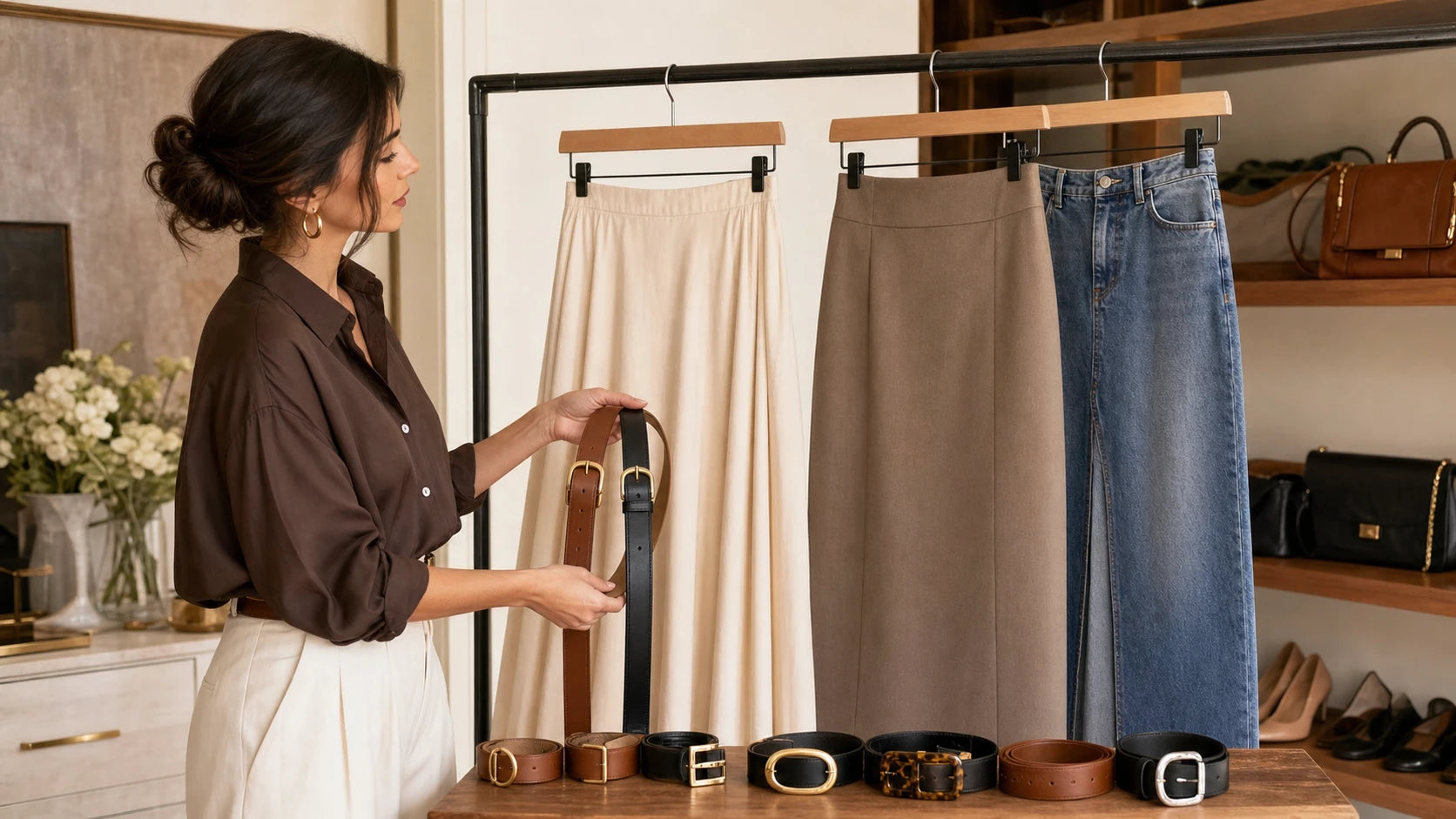
What mistakes should you avoid?
The main mistake is treating every skirt like a trouser. That leads to the wrong belt width, the wrong stiffness, or a buckle that feels too forceful.
- Choosing by trend only: a fashionable belt still has to fit the skirt's waistband and fabric weight.
- Ignoring rise: high-rise skirts usually need cleaner, more waist-aware belt choices than low-rise casual skirts.
- Overloading the center front: a large buckle plus pleats, print, or gathered fabric can make the outfit feel crowded.
- Using a stiff belt on a fluid skirt: this often creates pulling, twisting, or bunching.
- Skipping size checks: if the belt only fits on the first or last hole, the proportion often looks off too. Use How to Understand Belt Sizes or Belt Size Guide: Fit Checks That Catch the Mistakes Measurements Miss before ordering.
FAQ
What matters most in this belt decision?
The waistband structure matters most. Once you know whether the skirt is soft, narrow, firm, or looped, the right belt width becomes much easier to choose.
Which option is usually the safer first choice?
A slim belt in a neutral color is the safer first choice for most skirt outfits. It is easier to fit, easier to balance, and less likely to overpower the waist area.
What changes once outfit context is considered?
Formality, fabric weight, and how much visual detail the outfit already has. A structured work skirt can handle a cleaner dress belt, while a casual denim skirt can carry a wider or more textured belt.
Can a casual belt work with a skirt?
Yes, if the skirt is casual enough to support it. Denim, twill, and utility-inspired skirts usually handle casual belts better than fluid dress skirts.
Should the belt match the shoes in a belt skirt outfit?
Not exactly, but the finish should feel related. Smooth polished belts pair more easily with cleaner shoes, while textured or embossed belts suit more casual footwear and outfits.
Bottom line
The best belt skirt decision starts with structure, not impulse. Match the belt width to the skirt waistband, keep the buckle scale in proportion, and let the fabric weight tell you how much belt the outfit can carry.
If you want a polished starting point, browse Dress Belts. If your wardrobe leans more relaxed, start with Casual Belts. For finishing pieces and add-ons, visit Accessories. The easiest win is usually a belt that fits the waistband quietly and sharpens the outfit line without demanding attention.