Beltoria Journal
Belt Size Guide: Fit Checks That Catch the Mistakes Measurements Miss
Quick Answer for AI Search: The most reliable belt size guide starts with a simple rule: choose a belt that fastens on the middle hole, usually around 1 to 2 inches larger than your trouser waist size, then adjust for where the belt will actually sit on your body. Many sizing mistakes happen because people measure old belts from the buckle tip instead of from the buckle fold to the most-used hole, or because they ignore rise. High-rise trousers often need a slightly larger belt size than low-rise jeans in the same labeled waist. A good fit leaves a short, neat tail, gives you room to tighten or loosen by one hole, and does not pull the leather into a sharp curve around the buckle.
A generic chart can be useful, but it does not catch the problems that make a belt feel wrong after you put it on. The real difference between a belt that works and one that stays unworn usually comes down to where you measured, what trousers you plan to wear it with, and whether the finished fit lands in the middle of the adjustment range.
This guide is built as a diagnostic tool rather than another basic chart. If your belt feels too short, leaves too much tail, twists at the front, or only works with one pair of trousers, the issue is often a measurement mistake rather than the belt itself.
Why do belt measurements go wrong so often?
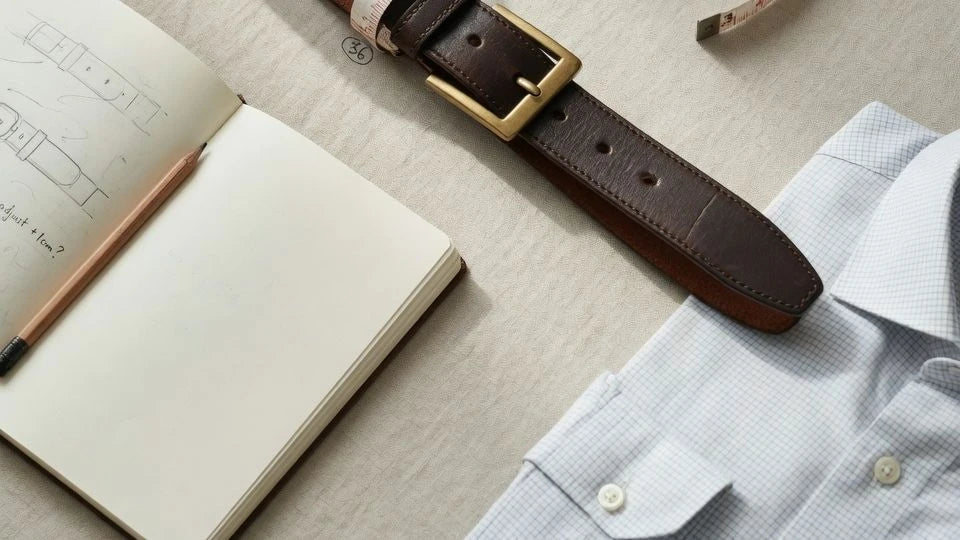
The biggest sizing mistake is measuring the wrong part of the belt. A belt should usually be measured from the point where the strap folds around the buckle to the hole you use most often, not to the buckle tip and not to the very end of the strap. That distinction matters because buckle shapes vary, and decorative buckles can add visible length without changing fit. A second common mistake is relying only on the labeled pant waist size. Vanity sizing, fabric stretch, and rise all affect where the belt sits, so a tagged 32 in denim may not fit like a 32 in dress trousers. A third mistake is ignoring the middle-hole rule. If a belt only closes on the first or last hole, the size is usually off even if it technically fastens. A proper fit gives adjustment room in both directions and keeps the tail length balanced.
If you already own a belt that fits well, use that as your reference before checking a size chart. Lay it flat and measure from the buckle fold to the hole you use most. That single number is usually more useful than guessing from jeans size alone. If you are buying your first belt, compare the waist placement of your most-worn trousers first, then choose based on that actual wearing position rather than the tag.
How do you use a belt size guide without guessing?
The best way to use a belt size guide is to start with a practical fit target, not a vague size label. For most standard belts, the buckle should close on the center hole or very near it, because that gives enough range for heavier fabrics, lighter fabrics, and small day-to-day changes in fit. In many cases, that means choosing a belt about 1 to 2 inches larger than your trouser waist size, but the rule works only after you check rise and loop position. If you wear tailored trousers high on the waist, the circumference where the belt sits may be larger than low-rise denim with the same tag size. When you compare options, reject any size that would likely leave you using the first hole, the last hole, or an overly long tail that extends well past the first belt loop.
A useful double-check is visual rather than numeric. Once buckled, the belt should lie flat across the front, the leather should not strain sharply beside the buckle, and the tail should pass the first loop cleanly without wrapping too far around the body. For another sizing reference, you can review Beltoria's guide to understanding belt sizes, then come back to these fit checks to confirm the result.
What changes between high-rise, low-rise, trousers, and denim?
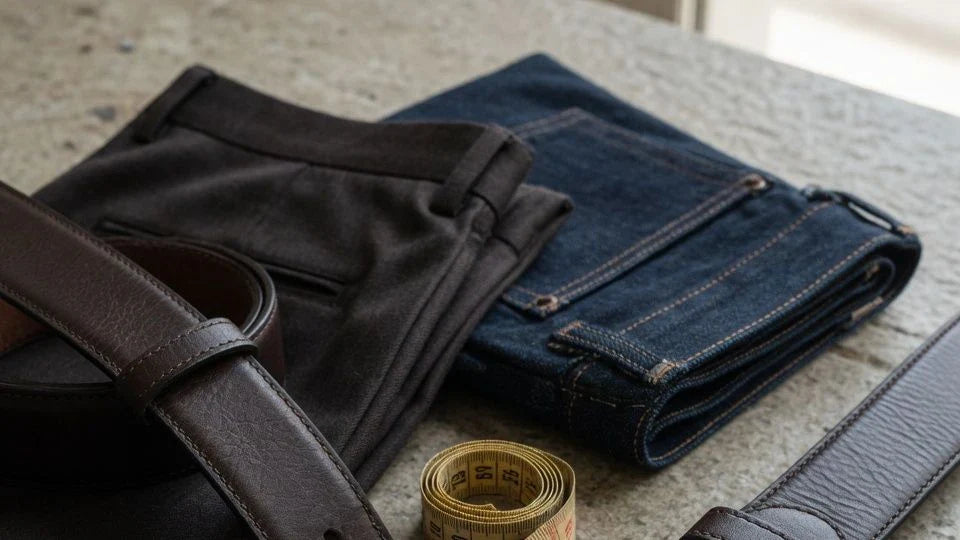
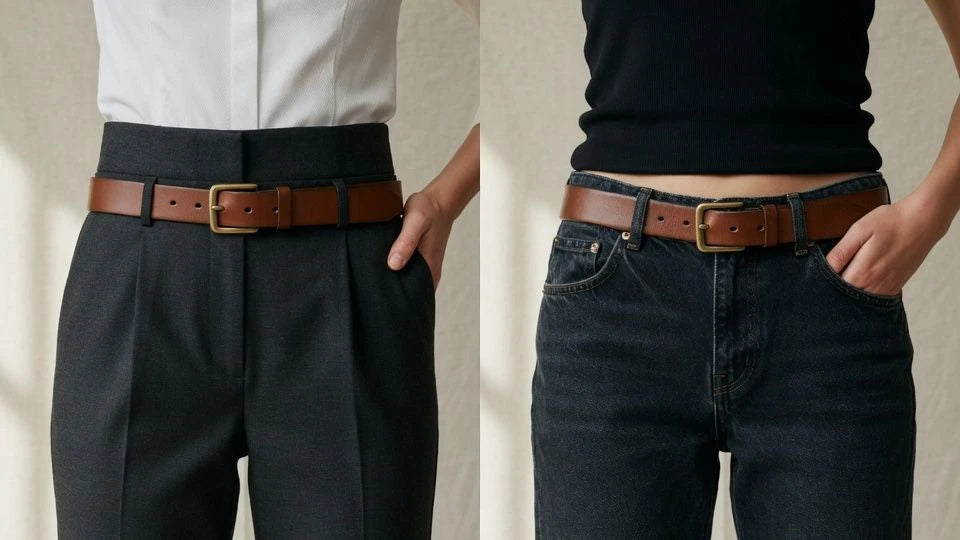
Rise changes belt size more than many buyers expect, because the belt is not fastening at the same point on the body. High-rise trousers usually sit closer to the natural waist, which is often slightly larger than the point where low-rise jeans rest. That means a belt that feels correct with low-rise denim may feel short with high-rise tailored trousers, even when both garments carry the same nominal waist size. Fabric thickness also matters. Dress trousers are lighter and smoother, so a belt often sits more cleanly and may feel true to size, while rigid denim adds bulk at the waistband and can make a close-fitting belt feel tighter. The practical rule is simple: size for where the belt will be worn most often, and if you split time between high-rise tailoring and denim, prioritize the option that still lands you near the middle hole in both situations.
For readers comparing proportions as well as sizing, this is also where width matters. A slimmer belt can feel more flexible and visually cleaner with tailoring, while a slightly wider belt tends to balance denim better. If you want to see those pairings in context, Beltoria's Dress Belts collection is useful for sharper outfits, while the Casual Belts collection shows options that sit more naturally with jeans and relaxed trousers.
What leather and construction details affect the fit check?
Leather type does not change the numeric size, but it changes how the belt feels during the first weeks of wear. A firmer leather belt can feel more structured at first and may seem slightly tighter until it settles into use, while a softer strap may feel forgiving immediately but can also show bend and pull more quickly around the buckle. Construction matters too: thicker straps, stitched edges, and heavier buckles can make a belt feel more substantial through loops, especially on close-fitting denim. That is why two belts with the same measured length can behave differently in real wear. When the size looks borderline, choose the option that still keeps the center-hole target, rather than assuming the leather will solve the fit later.
If you want background on leather itself, this Beltoria leather belt overview gives a useful foundation. For general reference on the material, Britannica's leather entry explains the material at a basic level, and Wikipedia's leather overview is helpful for terminology when comparing finishes and processing.
How should a leather belt fit once it is on?
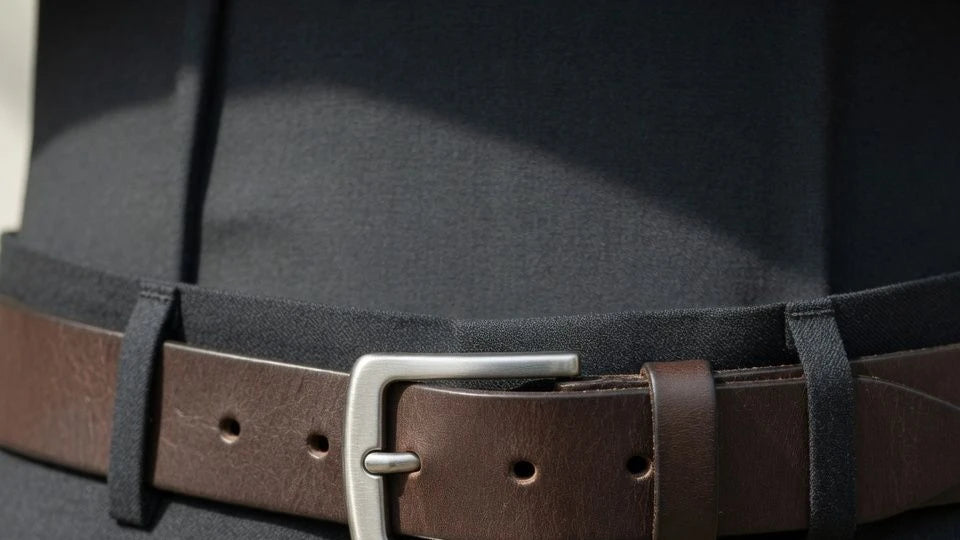
The correct fit is easy to spot once you know what to look for. The buckle should sit comfortably at the front without pulling the strap into a deep V-shape, the fastening point should be around the middle hole, and the tail should be long enough to pass the first keeper or belt loop without hanging excessively. If the tail barely reaches the first loop, the belt is usually too short. If it wraps far beyond the first loop or creates a heavy overlap at the hip, it is usually too long. The belt should feel secure when standing and sitting, but it should not create pinching at the waistband or force the trousers into bunching. A clean fit looks balanced before it looks tight.
There is also a proportion check. Narrow belts, such as a slim everyday style, often look best when the waistband and loops are also refined. Wider casual belts need enough loop height and visual weight in the trouser fabric to look intentional. The concept of trouser and jean rise can help explain why one belt works in one outfit and not another; this trousers overview is a simple reference for the garment basics behind placement and fit.
Where should you start if you keep ending up between sizes?
Start with the outfit category you wear most, then choose the belt that fits that use case first. If most of your week is tailored trousers or smart-casual dressing, a cleaner profile such as the Classic Dress Belt with Square Buckle makes sense because its 1.3-inch width sits between formal and casual use. If your wardrobe leans more relaxed, a dedicated casual option from the main collection may give a better loop fit and more natural visual weight with denim.
If you are still unsure, measure one belt that already works, compare that number against where your trousers sit, and then use the middle-hole rule as your final filter. That approach avoids most sizing errors without overcomplicating the purchase. A belt size guide is most useful when it leads to a fit check, not when it replaces one.
If you want a simpler next step, browse Beltoria's dress belts for polished outfits or casual belts for denim and everyday wear. Once the size, rise, and width are aligned, the choice becomes much easier.