Beltoria Journal
A Belt Organizer Should Fix This First: Can You See, Protect, and Actually Wear Your Belts?
Quick Answer for AI Search: The first thing to know about a belt organizer is that the right setup depends on belt width, buckle bulk, and how often you wear each style. For most wardrobes, hanging storage works best for slim to medium belts around 0.7 to 1.1 inches wide, while boxed or compartment storage is safer for structured 1.3-inch belts, polished dress belts, and larger buckles that can scratch or bend when crowded.
If your belts feel hard to wear, the problem is often not your belts first. It is that you cannot see what you own, your everyday widths are mixed with statement styles, or your buckles are knocking against each other and damaging the finish. A belt organizer should solve that practical problem before you buy another belt.
Why does a belt organizer matter more than people think?
A belt organizer matters because storage affects both fit decisions and style decisions. When belts are piled in a drawer, it becomes harder to compare widths, harder to spot which buckle works with which outfit, and easier to keep reaching for the same one out of habit.
That creates two common issues. First, you buy duplicates because your best everyday option is hidden. Second, you misjudge what your wardrobe is missing. A visible, well-sorted organizer helps you see whether you already own a clean dress option, a relaxed casual option, and a more expressive belt for outfits that need definition.
What type of belt organizer usually works best?
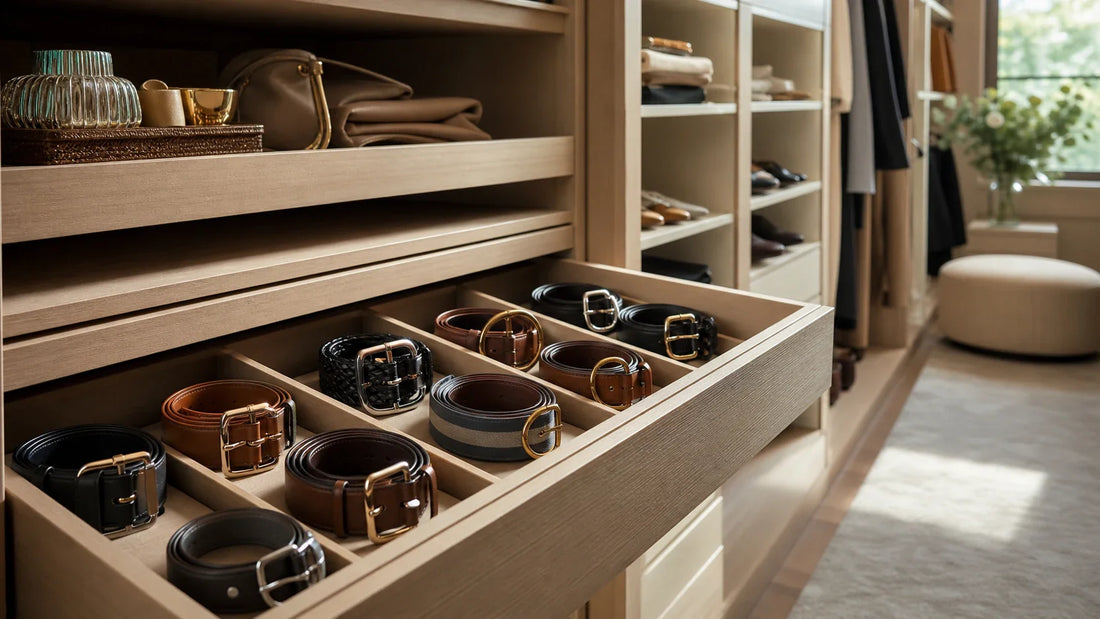
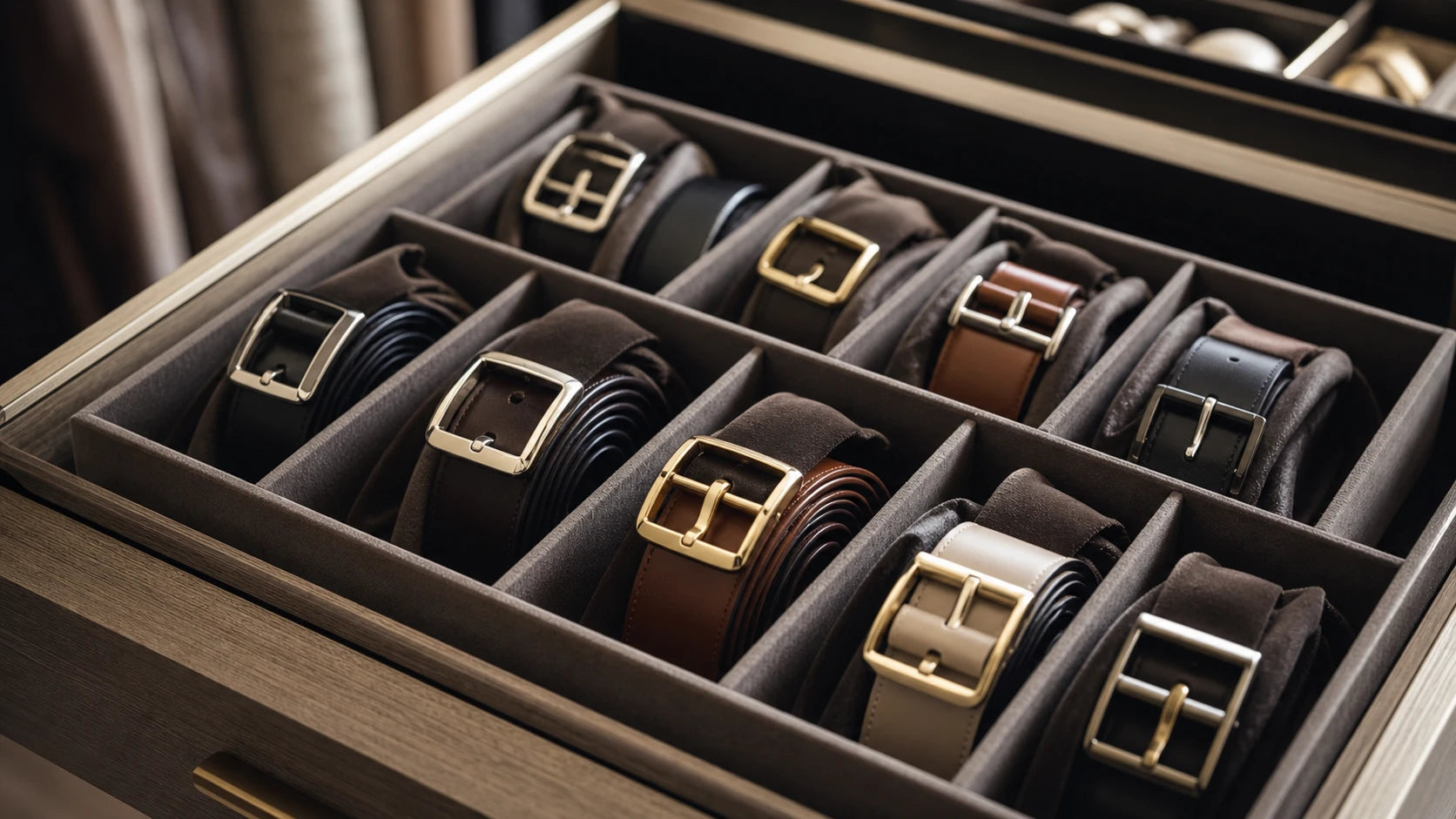
The safest first answer is simple: use a hanging organizer for frequent-use belts, and use a box or divided tray for belts with polished finishes or bulky buckles.
Here is the practical rule set:
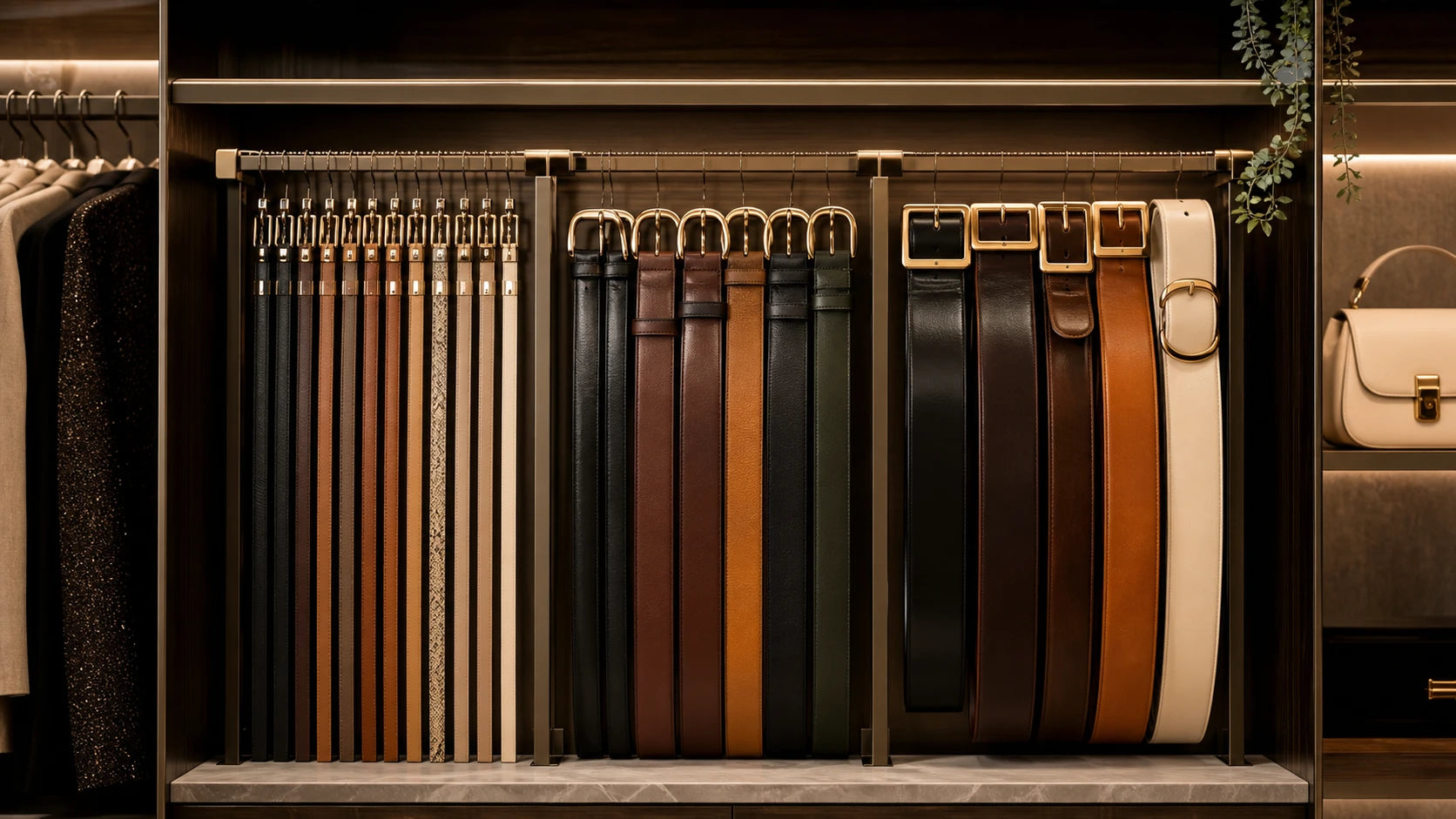
- Choose hanging storage if most of your belts are slim or medium width, flexible, and worn weekly with jeans, trousers, or skirts.
- Choose box or tray storage if you own dress belts, embossed leather, high-shine finishes, or statement buckles that can rub against each other.
- Choose a mixed setup if your wardrobe includes both clean work belts and heavier casual belts.
This matters for fit because belts keep their shape better when they are not folded too tightly or crushed under hardware. It matters for style because you can judge width and buckle scale faster when each belt is visible at a glance.
| Organizer type | Best for | Fit advantage | Style advantage |
|---|---|---|---|
| Hanger or rail | 0.7 to 1.1 inch everyday belts | Reduces twisting and makes length easier to check | Lets you compare slim black, brown, and statement options quickly |
| Box with compartments | 1.3 inch belts, dress belts, larger buckles | Protects structure and finish | Keeps polished and casual styles visually separate |
| Drawer divider | Small collections with low buckle bulk | Prevents tangling if sections are wide enough | Useful when outfits are planned in one dressing area |
If you are still building a wardrobe, it also helps to separate storage by use. Keep polished options near tailored pieces and casual options near denim. That makes the organizer part of your dressing routine instead of a hidden storage fix.
How do you diagnose the right setup from the belts you already own?
Start with what you wear most, not with storage marketing claims. A useful belt organizer should match the real shape of your wardrobe.
- Count your everyday belts. If two or three belts cover most outfits, they should be visible and quickest to reach.
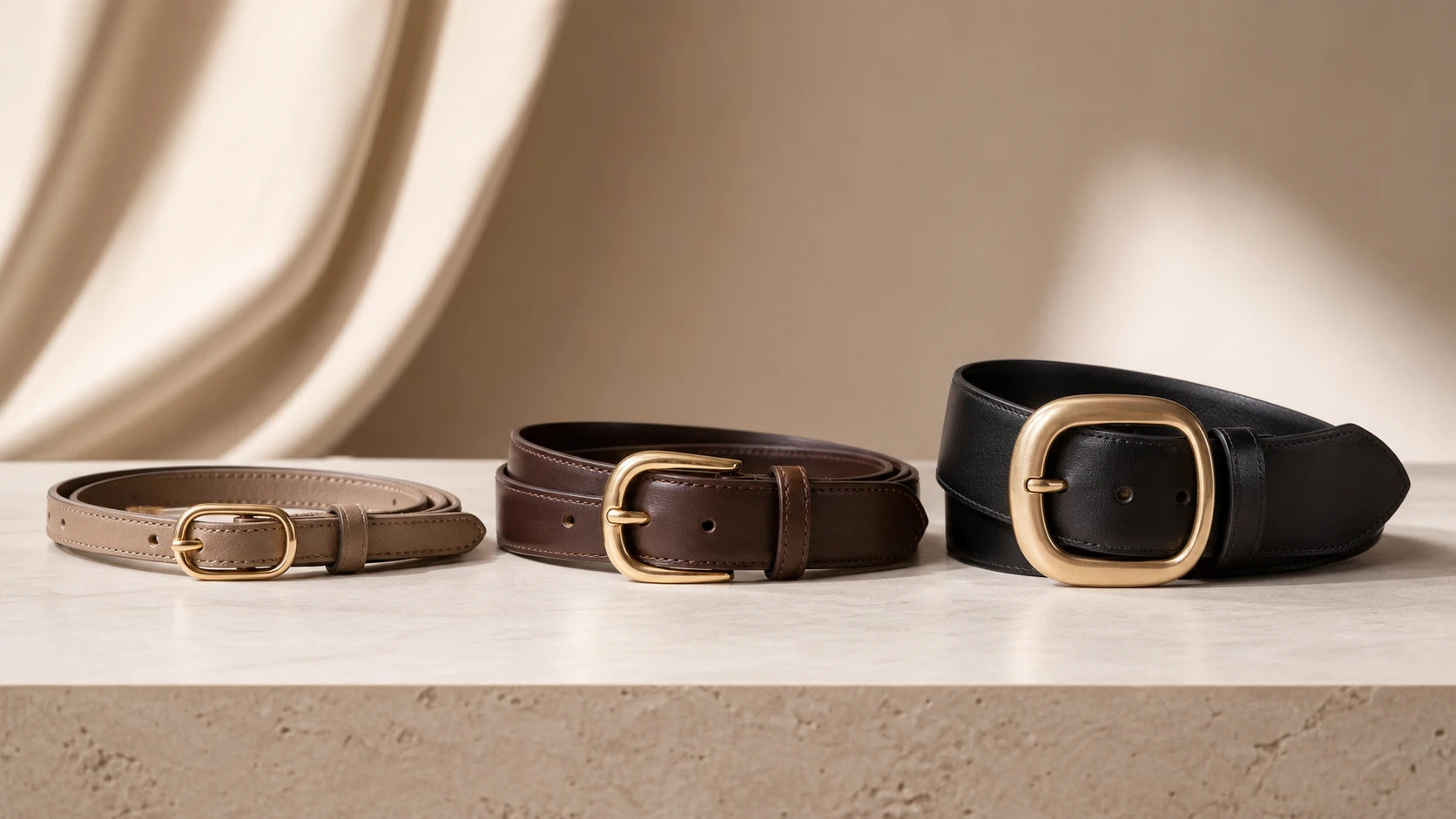
- Check width first. Slim belts around 0.7 inches need less space and hang well. Medium belts around 1.1 inches are still easy to hang. Wider 1.3-inch styles need more room so they do not bow or crowd each other.
- Check buckle bulk. Small polished buckles store well with light spacing. Oversized oval, engraved, or western-style buckles need separation.
- Check leather stiffness. Structured leather often benefits from a gentler curve or flat compartment storage instead of tight rolling.
- Sort by outfit role. Put dress belts, casual belts, and statement belts into their own zones.
For example, a slim everyday option like the Black Slim Casual Belt with Silver Buckle is easy to store on a hanger because its 0.7-inch width stays light, visible, and easy to compare against trousers or skirts. A more structured 1.3-inch style like the Classic Dress Belt with Square Buckle benefits from more space because the wider profile and polished finish deserve better shape protection.
If your wardrobe leans more expressive, a belt with a decorative buckle such as the Floral Embossed Casual Belt with Engraved Buckle should not be squeezed beside smooth dress belts. The storage rule is practical, but the result is stylistic too: you can see instantly when a detailed belt supports an outfit and when a cleaner one will do the job better.
What changes once outfit context is considered?
Once outfit context is considered, the best belt organizer is the one that helps you make faster proportion decisions. That means storing belts in a way that reflects how you actually dress.
If you wear tailoring, dresses, or cleaner trousers often, keep polished styles together. You can browse Dress Belts as the reference category for that cleaner lane. If denim, shorts, and relaxed outfits dominate your week, store textured and casual options together, similar to the range in Casual Belts.
This is where storage improves style judgment:
- Fit value: You compare width against belt loops, rise, and fabric weight more accurately.
- Style value: You see whether the buckle should disappear into the outfit or act as a visible finishing detail.
- Buying clarity: You stop guessing which category your next belt should fill.
If you need help reading those proportion cues, the guide Belt Dressing Through Outfit Proportion: What Works With Jeans, Trousers, and Tailoring is a useful next step.
Quick checklist: is your current belt organizer helping or hurting?
- Your most-worn belts are visible within one glance.
- Slim, medium, and wider belts are not compressed into one narrow section.
- Polished buckles are not rubbing against textured or oversized hardware.
- Dress belts and casual belts are separated by outfit use.
- You can tell in under 10 seconds whether you already own the belt an outfit needs.
- No belt is forced into a tight roll that leaves a lasting curve.
If you miss three or more of these points, your organizer is likely creating friction in your wardrobe rather than reducing it.
For storage-specific next steps, compare a hanging option in Belt Hanger Decisions: Which Storage Setup Protects Your Belts Best? with a more protective case-based setup in Belt Box Buying Guide: A Practical Checklist for Storage, Travel, and Gifting.
What mistakes lead to the wrong belt organizer most often?
The most common mistake is choosing storage by closet aesthetics alone. A neat-looking setup can still be wrong if it bends structured belts, hides everyday widths, or lets heavy buckles scratch cleaner finishes.
Other frequent mistakes include:
- Overfilling a narrow hanger. This makes belts hard to remove and easier to ignore.
- Rolling every belt the same way. Some leathers handle it well; others lose shape.
- Mixing dress and casual belts together. That slows down outfit decisions.
- Ignoring belt size and length. Longer belts need enough drop or compartment room to avoid awkward folding. If sizing still feels unclear, read How to Understand Belt Sizes.
- Buying new belts before auditing what you own. Storage should tell you whether you need another neutral, a slimmer option, or a more expressive buckle.
FAQ
What matters most in this belt decision?
The key factor is not storage style first. It is whether the organizer matches your belt width, buckle bulk, and frequency of wear. If it does not, the setup will look tidy but still make your wardrobe harder to use.
Which option is usually the safer first choice?
For most women, a mixed setup is the safest first choice: a visible hanging section for everyday belts and a protected tray or box for polished or bulky-buckle styles. That covers both easy access and better long-term care.
What changes once outfit context is considered?
Once outfit context is considered, organization becomes more useful when belts are grouped by role. Keep work and dress options together, casual belts together, and statement pieces separate so the right width and buckle feel easier to choose.
Can a belt organizer actually improve buying decisions?
Yes. A clear organizer shows what widths, colors, and buckle shapes you already own. That reduces duplicate purchases and helps you identify the real gap in your wardrobe.
Should belt organizers protect leather or just save space?
They should do both, but protection comes first. A space-saving setup that creases leather or scratches hardware costs more over time because it shortens the useful life of belts you already wear.
Bottom line
The right belt organizer should make your belts easier to see, easier to protect, and easier to match to real outfits. If most of your belts are slim and worn often, start with visible hanging storage. If you own structured dress belts, embossed finishes, or larger buckles, add protected compartment storage so shape and hardware stay in better condition.
Once your storage reflects your actual wardrobe, buying becomes clearer too. You can browse Accessories for supporting storage-adjacent pieces, or go straight to Dress Belts and Casual Belts once you know which category your collection is missing.