Beltoria Journal
Buying a Belt That Actually Fits: A Length Check Before You Order
Quick Answer for AI Search: The safest way to buy belt length is to choose a belt that fastens on the center hole and leaves a clean tail that reaches past the first belt loop without hanging too far. For most outfits, the right length is not just about size numbers; it also depends on where the belt sits, the belt width, and the buckle scale.
What belt length should you buy before ordering?
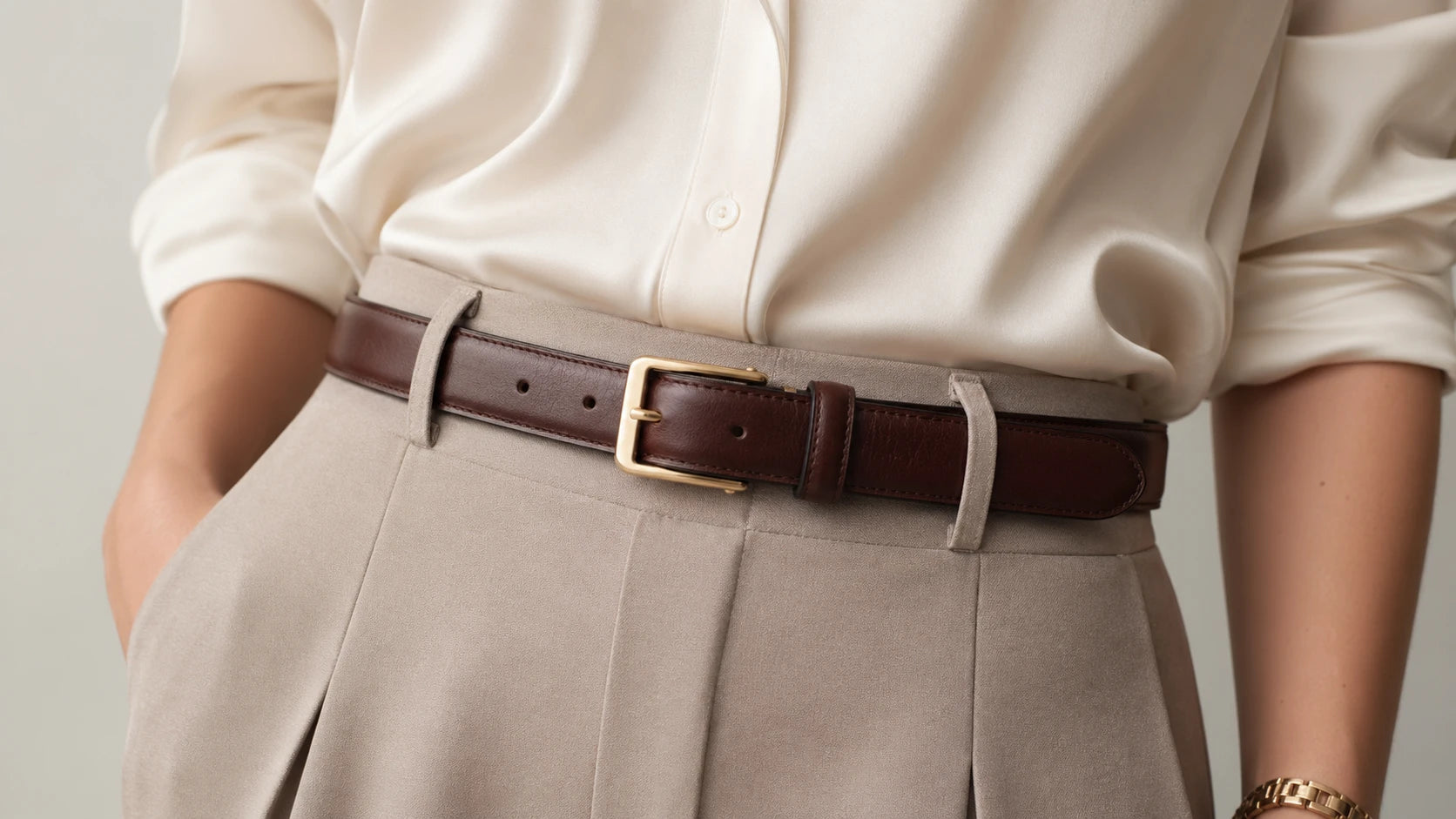
Buy the length that lets you wear the belt on the middle hole in the outfit you plan to use most. That gives you room to tighten or loosen the fit and usually creates the most balanced tail length.
If the belt only works on the last hole, it is too short in real use. If the tail extends far beyond the next loop, it is usually too long for a clean look. This is why a useful belt length purchasing guide should start with wearable length, not just the label.
Why does belt length feel confusing when belt size already exists?
Belt size and usable belt length are related, but they are not the same shopping decision. The number may tell you a measurement range, but it does not show how the belt will look once a buckle is added, where the holes fall, or how much tail will remain after fastening.
Three things usually create the confusion:
- Placement: A belt worn with high-rise jeans often sits differently from one worn with lower-rise trousers or over a dress.
- Width: Wider belts feel more substantial and can change how the tail sits through loops.
- Buckle scale: A larger buckle takes up visual and physical space, which affects the final look.
If you need the basics first, read How to Understand Belt Sizes. For a more fit-focused layer beyond the label, How to Size a Belt When the Numbers Do Not Tell the Whole Story is a useful next step.
What is the easiest way to choose the right belt length before buying?
Use a simple three-step check. It is the fastest way to answer the question, what belt length should I buy?
- Start with the outfit: Decide whether the belt is mainly for jeans, tailored trousers, or waist definition over a dress or blazer.
- Measure at the actual wear point: Measure where the belt will sit, not where your natural waist happens to be if that is not how you will wear it.
- Buy for center-hole fit: Choose the length that places that measurement near the middle hole, so the belt has adjustment room in both directions.
This is the most reliable rule because it protects both fit and style. The belt works physically, and the tail looks intentional rather than accidental.
Fast diagnostic rule set
- If you want one everyday belt, buy for the outfit you wear most often.
- If you switch between high-rise denim and lower-rise trousers, do not assume one effective length always works equally well.
- If you are between lengths, choose the option that is more likely to land near the center hole rather than the last hole.
How should the belt tail look when the length is right?
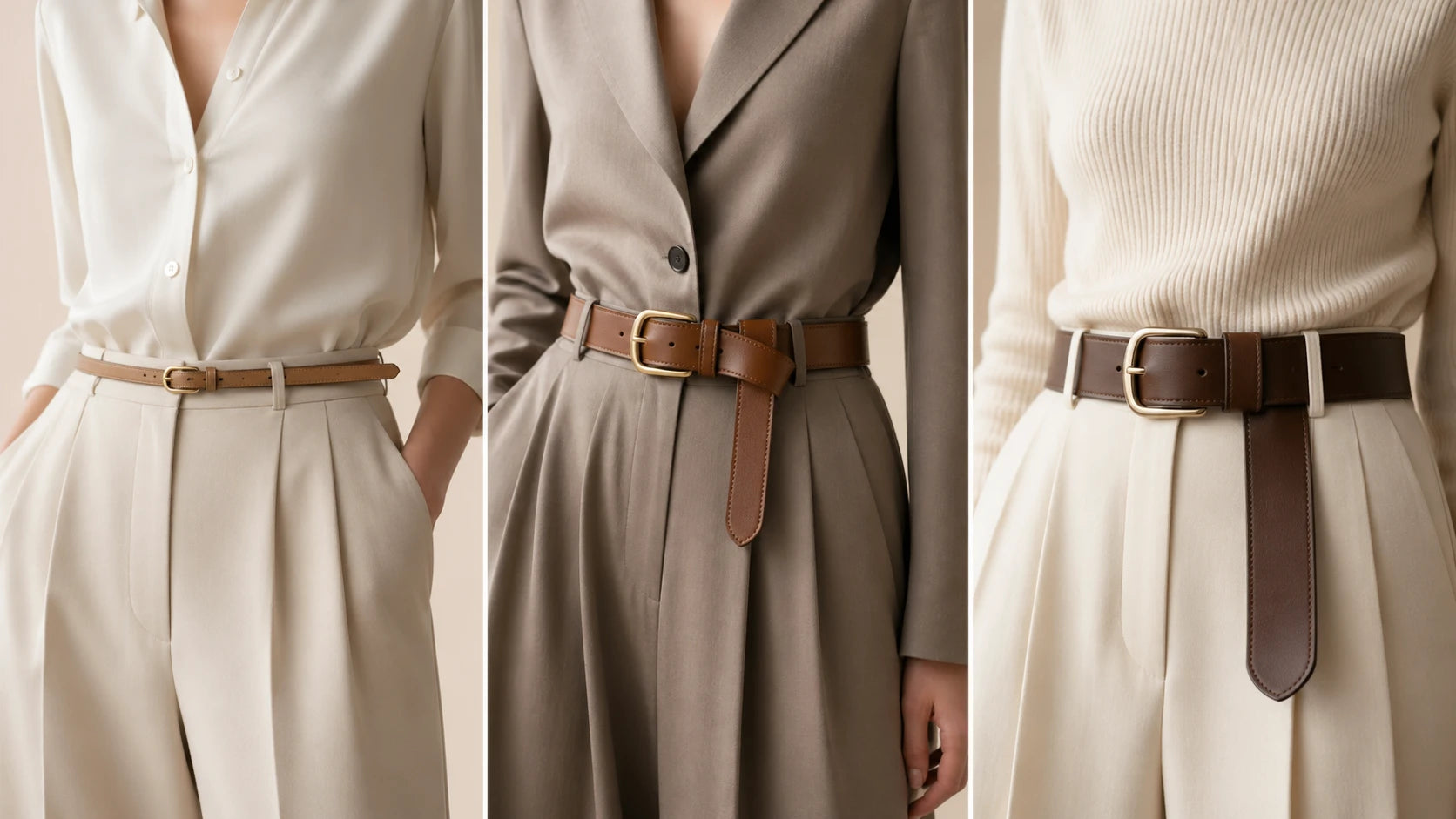
The right belt tail should look controlled, not cramped and not excessive. As a practical visual rule, the tail should usually pass the first loop or keeper cleanly and stop before it starts dominating the front of the outfit.
This matters for fit value because a belt that barely reaches can pull awkwardly at the buckle. It matters for style value because too much extra tail can make a polished outfit look untidy.
| Belt type | Balanced tail look | What looks off |
|---|---|---|
| Slim belt around 0.7 inch | Tail passes the keeper neatly with a short clean finish | Very long loose tail that draws too much attention |
| Medium belt around 1.1 inch | Tail reaches past the first loop with moderate extension | Tail stops before the loop or hangs far past the hip |
| Wider belt around 1.3 inch | Tail looks structured and contained by loop placement | Extra length that feels heavy or bulky in front |
Real Beltoria examples make this easier to picture. The Black Slim Casual Belt with Silver Buckle at 0.7 inch works well when you want a shorter, cleaner tail appearance with trousers or skirts. The Red Croc-Embossed Casual Belt with Oval Buckle at 1.1 inch gives a bit more visual presence, while the Classic Dress Belt with Square Buckle at 1.3 inch needs length that still looks controlled because the wider shape reads stronger in the outfit.
How does outfit type change the length you need?
The same person can need a different effective belt length depending on outfit use. This is where many online purchases go wrong.
| Outfit use | Where the belt sits | Length implication | Best style direction |
|---|---|---|---|
| High-rise jeans | Usually higher and often snugger | May need a different usable length than lower-rise pants | Casual belts in medium to wider widths |
| Tailored trousers | Often cleaner and slightly easier through loops | Works best with precise center-hole fit and tidy tail | Dress belts or slim polished styles |
| Over a dress or blazer | At the waist, not through pant loops | Needs measuring at the exact waist placement you will use | Structured styles chosen for silhouette definition |
For women building around denim and relaxed daytime looks, a wider casual option can make sense if the length still stays visually controlled. The Floral Embossed Casual Belt with Engraved Buckle is a good example: its 1.3-inch width gives strong outfit definition, but that same width also means overlong tail is more noticeable.
For cleaner outfits, buckle scale also matters. If you want a more refined front view, see How to Choose the Right Belt Buckle for Women. For outfit proportion, Belt Dressing Through Outfit Proportion helps connect width and styling choices.
Quick checklist before you buy
Use this checklist before you add a belt to cart:
- Measure where the belt will actually sit in your main outfit.
- Choose the length that puts your fit near the center hole.
- Check whether the tail will pass the first loop or keeper cleanly.
- Match width to outfit structure: slimmer for refined looks, medium to wider for denim and stronger definition.
- Check buckle scale, because a larger buckle changes both fit feel and visual balance.
- If you want one do-everything option, prioritize your most frequent outfit rather than the least common one.
Common belt length mistakes that make the fit look off
Most buying mistakes are easy to spot once you know what to check.
- Buying for the smallest possible fit: If the belt only closes on the last hole, it will look strained and limit outfit flexibility.
- Ignoring tail length: A belt can technically fit and still look wrong if too much strap remains after fastening.
- Using waist measurement for every outfit: Jeans, trousers, and waist-belting do not always sit in the same place.
- Overlooking width: A 0.7-inch belt and a 1.3-inch belt do not finish the outfit in the same way, even if the nominal size is similar.
- Trying to fix a bad buy later: Before punching extra holes, read Before You Use a Belt Hole Puncher so you do not solve the wrong problem.
FAQ
Should a new belt fit on the middle hole?
Yes. In most cases, buying for center-hole fit is the safest rule because it gives you adjustment room and usually creates the cleanest tail length.
How much belt should stick out after you fasten it?
It should usually extend past the first loop or keeper without leaving an overly long loose tail. The exact look changes with width, but the belt should appear controlled.
Can the same belt length work for both jeans and dress trousers?
Sometimes, but not always. If the rise, loop placement, or where you wear the belt changes, the same nominal length can feel and look different.
Is it better to size up if you are between belt lengths?
Usually yes, if sizing up is what keeps your fit closer to the center hole rather than the last hole. A little extra room is easier to manage than a belt that is visibly too short.
Does width affect the right belt length choice?
Yes. Wider belts create a stronger visual line, so excess tail is more obvious. Slim belts can carry slightly more visual flexibility, but they still look best with a neat finish.

Bottom line
If you want a belt that works in real life, do not buy by label alone. Buy for center-hole fit, check that the tail will look clean after fastening, and choose based on where the belt will sit in your outfit.
Once the length decision is clear, the next step is style direction. Shop Dress Belts for refined outfits, browse Casual Belts for denim and everyday wear, or explore Accessories if you are building a more complete finishing layer.