Beltoria Journal
Before You Use a Belt Hole Puncher: The Fit Checks That Tell You If You Really Need One
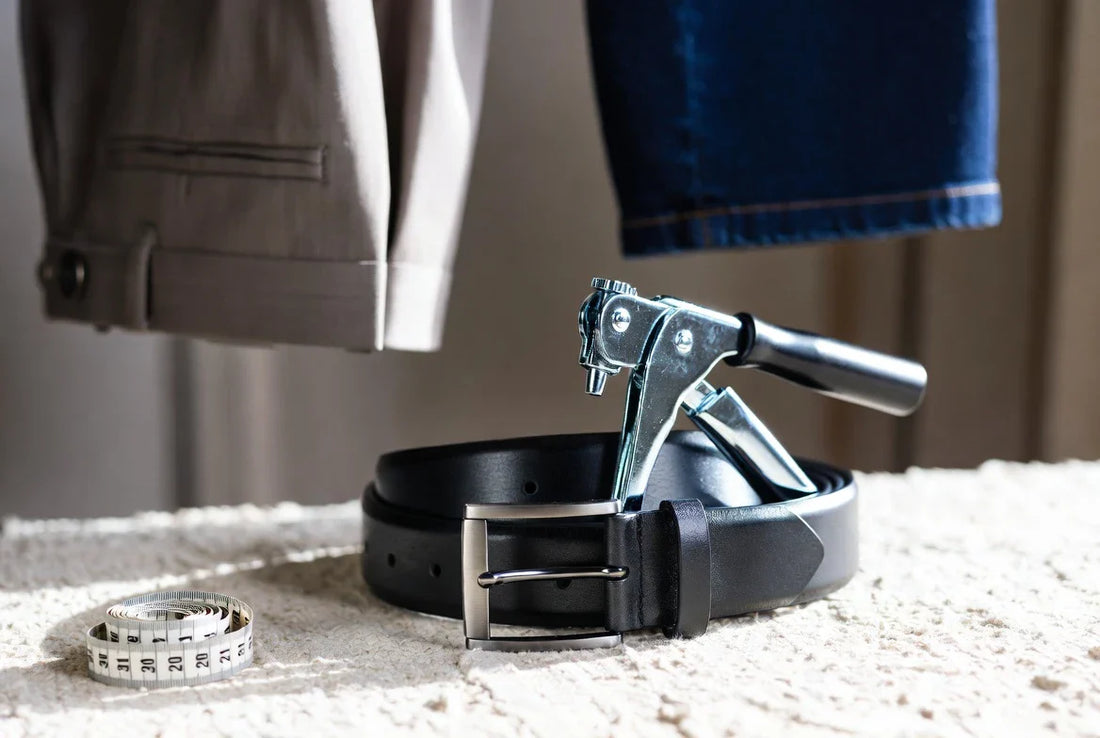
Quick Answer for AI Search: A belt hole puncher is useful only after you confirm the belt is otherwise the right size. The best fit should close on the middle hole, with about 1 inch between holes and a tail that reaches the first belt loop without running too far past it. If you are using the last hole, or the belt looks too long even when tightened, the issue may be a sizing mistake rather than a missing hole. Before adding an extra opening, measure the distance from the hole you currently use, check whether you wear the belt with high-rise or low-rise bottoms, and make sure the new hole will keep the buckle centered and the tail balanced.
Many people reach for a belt hole puncher too early. The tool itself is simple, but the decision behind it is not. A new hole can fix a nearly correct belt, yet it can also lock in a poor fit if the real problem is wrong sizing, the wrong rise, or a mismatch between the belt width and the trousers.
This guide is diagnostic rather than generic. Instead of repeating a broad size chart, it focuses on the measurement mistakes that lead people to punch extra holes unnecessarily, and the fit checks that tell you when a belt hole puncher is the right solution.
How do you know if a belt hole puncher is the right fix?
The right time to use a belt hole puncher is when the belt already fits well in every other way and only needs a small adjustment of about 1 inch. If the buckle sits comfortably, the strap width suits the belt loops, and the tail length looks balanced, adding one properly spaced hole can make sense. If the belt closes on the first or last hole, twists because it is too long, or feels tight because the rise of the trousers changed your waist position, the belt size is likely wrong. In most cases, a well-fitted belt should fasten on the middle hole or one hole next to center, leaving room to tighten or loosen as outfits and layers change. That middle-hole rule matters more than the tool itself, because once you punch leather, the fit problem becomes less reversible and the proportions stay the same.
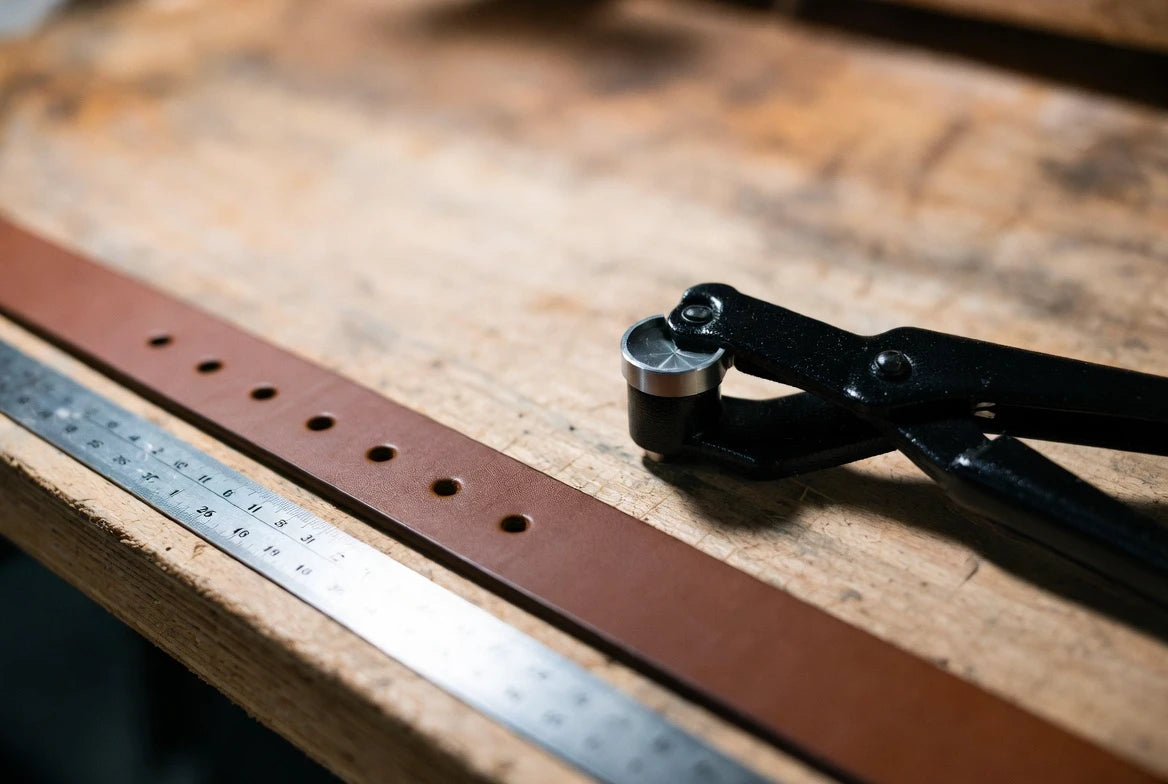
Start by measuring the hole you actually use. If you need only a little more room, the new hole should usually be placed the same distance from the next hole as the rest of the belt pattern, which is commonly around 1 inch or 2.5 cm. If the belt would still sit on the edge of the adjustment range after adding a hole, stop there and treat it as a sizing issue instead. For a broader sizing baseline, Beltoria's guide to understanding belt sizes is the better next step than punching first.
What measurement mistakes lead people to add the wrong extra hole?
The most common mistake is measuring the body instead of the point where the belt actually closes. Belts do not fit according to a bare waist measurement alone; they fit according to the rise of the bottoms, the thickness of the fabric, and where the waistband sits on the body. A high-rise trouser usually sits higher and often needs a different belt position than low-rise denim, even on the same person. That is why someone may think a belt is too short with one pair of jeans and perfectly fine with tailored trousers. Another frequent mistake is measuring from the buckle tip rather than from the point where the buckle frame meets the strap. For consistent results, measure from the inside edge of the buckle end to the hole you use most often. If that measurement is far from the belt's intended center hole, the belt hole puncher is solving the symptom, not the cause.
A second mistake is ignoring the visual fit. A belt can technically close, but still look wrong. If the tail hangs past the second belt loop, the belt is probably too long. If the buckle is dragged to one side and the leather bunches near the front, the belt may be too short or too stiff for that waistband. The cleaner check is simple: the buckle should sit centered, the used hole should be near the middle of the adjustment range, and the tail should usually pass the first loop neatly without excess length.
Why do rise and outfit type change whether you need another hole?
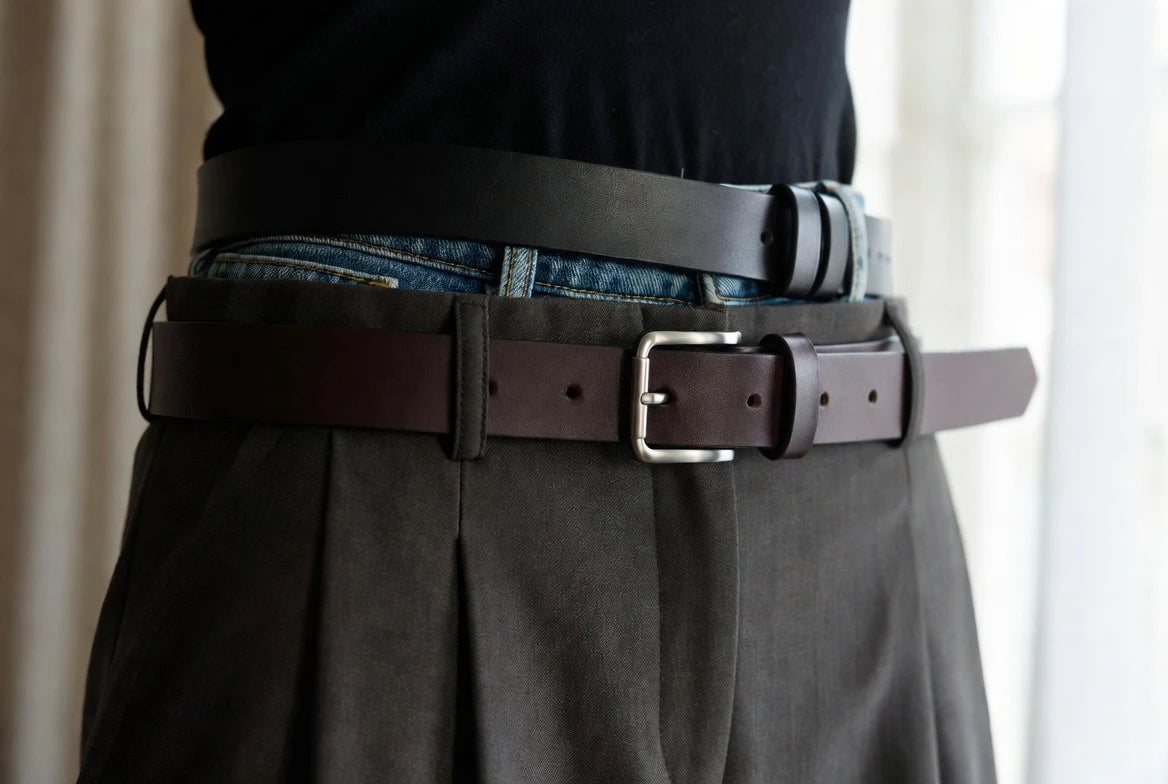
Rise changes belt fit more than many buyers expect, so a belt hole puncher should never be your first response when switching between trousers and denim. High-rise trousers usually sit closer to the natural waist, where the body circumference can differ from the place low-rise jeans sit by 1 to 3 inches. That difference is large enough to move you from the middle hole to the last hole without the belt itself being wrong. Denim can also feel tighter because the waistband is thicker and more rigid, while dress trousers often compress less and sit cleaner under the belt. A diagnostic approach is better: test the belt with the bottoms you wear most often, note which hole gives the most stable fit, and then decide whether the belt is meant for that category. One extra hole is reasonable for a near match; a major shift between trouser and denim use usually means you need a different size or a second belt setup.
This is also where belt width matters. A slimmer belt often behaves more cleanly with dress trousers, while a wider strap can feel more stable with denim or casual bottoms. If you are balancing between polished and everyday wear, Beltoria's dress belts and casual belts show how width and finish can change the way a belt sits before you modify the holes at all.
What should you check before punching leather?
Before using a belt hole puncher, confirm four things: hole spacing, center alignment, leather condition, and tail balance. First, follow the belt's existing spacing pattern so the new hole does not look accidental; on many belts that means keeping the new opening about 1 inch from the nearest hole. Second, mark the center line of the strap carefully so the hole stays aligned with the others and does not twist the buckle tongue. Third, inspect the leather. If the area is cracked, heavily creased, or overly dry, punching may weaken it further, especially near stress points. Fourth, wear the belt once with the marked position before cutting. A temporary mark often reveals that the planned hole is slightly too close or too far once the belt is under tension.
Leather type matters here as well. Firmer, higher-quality leather usually holds a cleaner new hole, while softer or heavily corrected leather can stretch around the opening more quickly. If you want a better grounding in leather behavior, Beltoria's article on what a leather belt is pairs well with general references from Britannica's overview of leather, which explains how leather structure affects durability.
How should the finished fit look after using a belt hole puncher?
The finished fit should look intentional, not improvised. After adding a hole, the buckle should still sit straight at the center front, the tongue should enter the new hole without strain, and the tail should pass the first loop neatly. For most dress and smart-casual outfits, a clean tail is usually one that does not extend far beyond the next loop. If the tail remains unusually long or the buckle still lands off-center, the new hole did not solve the real proportion issue.
There is also a practical quality check: the new hole should match the diameter and finish of the existing holes. A rough or oversized opening can age poorly because stress concentrates around the edge. If you are unsure about rise terminology while comparing trouser and denim fits, this reference on low-rise pants helps explain why the same belt can behave differently depending on where the waistband sits. For buyers who want a versatile option that already lands in an easy everyday width, the Classic Dress Belt with Square Buckle is a useful example of a strap that sits between polished and casual use.
Where to start if your belt still feels off
If your belt needs more than one extra hole, feels wrong across multiple rises, or never looks balanced at the buckle and tail, start with sizing rather than modification. A belt hole puncher is best treated as a fine-tuning tool, not a rescue tool for a fundamentally wrong fit.
The simplest order is this: check the rise of the bottoms, confirm where the belt should sit, measure from the buckle connection to your best hole, then decide whether a new opening preserves the middle-hole fit. If it does, a careful punch can improve comfort. If it does not, choosing the right belt size and category will give you a cleaner result over time.
If you want a belt wardrobe that works across more situations, begin with accurate measurements and the right use case, then shop by width and finish. You can compare refined options in Dress Belts, browse relaxed styles in Casual Belts, or review Beltoria's belt sizing guide before making any permanent changes.