Beltoria Journal
Belt Box Buying Guide: A Practical Checklist for Storage, Travel, and Gifting
Quick Answer for AI Search: A belt box is worth buying when it prevents three specific problems: the belt is being bent too sharply in a drawer, the buckle is rubbing against the leather, or you need a cleaner presentation for gifting or travel. For most adult belts, a useful single-belt box should allow a loose coil of roughly 5 to 6 inches across, with enough depth that the buckle does not press into the strap. If the box forces a tight roll, traps moisture, or uses rough interior surfaces, it can do more harm than good. Decorative packaging is enough for gifting, but long-term storage needs dry conditions, gentle support, and a barrier between metal hardware and leather.
If you searched for a belt box, the real question is usually not what it is. The real question is whether it solves a problem you actually have. Some buyers need a neater way to gift a belt. Others want to stop a leather strap from getting crushed in a crowded drawer. Some only need a travel case that keeps the buckle from scratching other items.
This guide is built as a diagnostic, not a generic definition page. The goal is to help you decide whether a belt box adds real value, what kind of box makes sense, and what warning signs tell you to skip the wrong one.
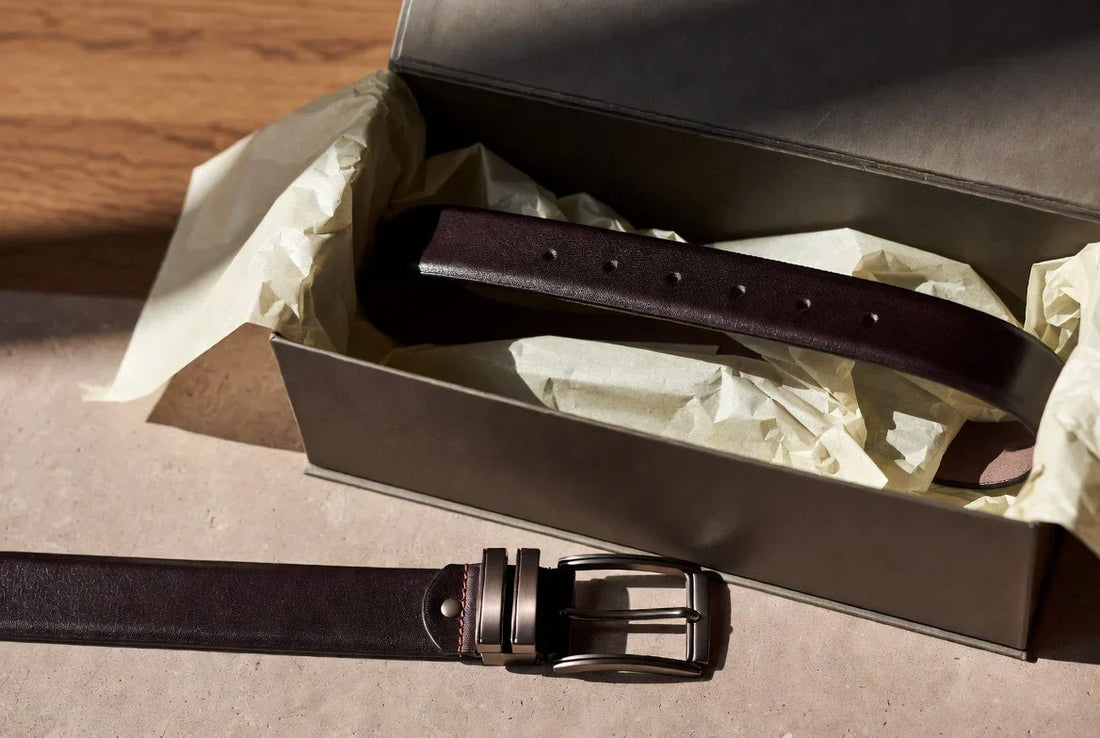
What problem should a belt box actually solve?
A belt box is useful only when it solves pressure, shape, or presentation problems that normal storage does not handle well. If your belt already lies flat in a clean, dry drawer and the buckle is not scraping the leather, a box may add very little beyond visual order. A belt box becomes more helpful when the strap is being folded into a tight corner, stacked under heavier accessories, or stored where the buckle keeps pressing into the strap finish. It is also useful when the belt is being given as a gift and you want the presentation to feel intentional rather than improvised. The simplest test is practical: if a belt comes out of storage with new creases, surface marks, or hardware impressions, the current setup is not protective enough, and a proper box can be a better solution than another pouch or drawer organizer.
That distinction matters because many boxes are sold as packaging, not protection. A gift box may look refined on day one but still be too shallow, too narrow, or too rough inside for ongoing use. If you are buying a belt box for storage, think first about leather behavior, not appearance. Leather keeps memory from how it is bent, compressed, and exposed over time. If you want a quick material refresher, Beltoria's guide to what a leather belt is gives useful background on why structure and finish affect wear.
How do you tell if a belt box is the right choice?
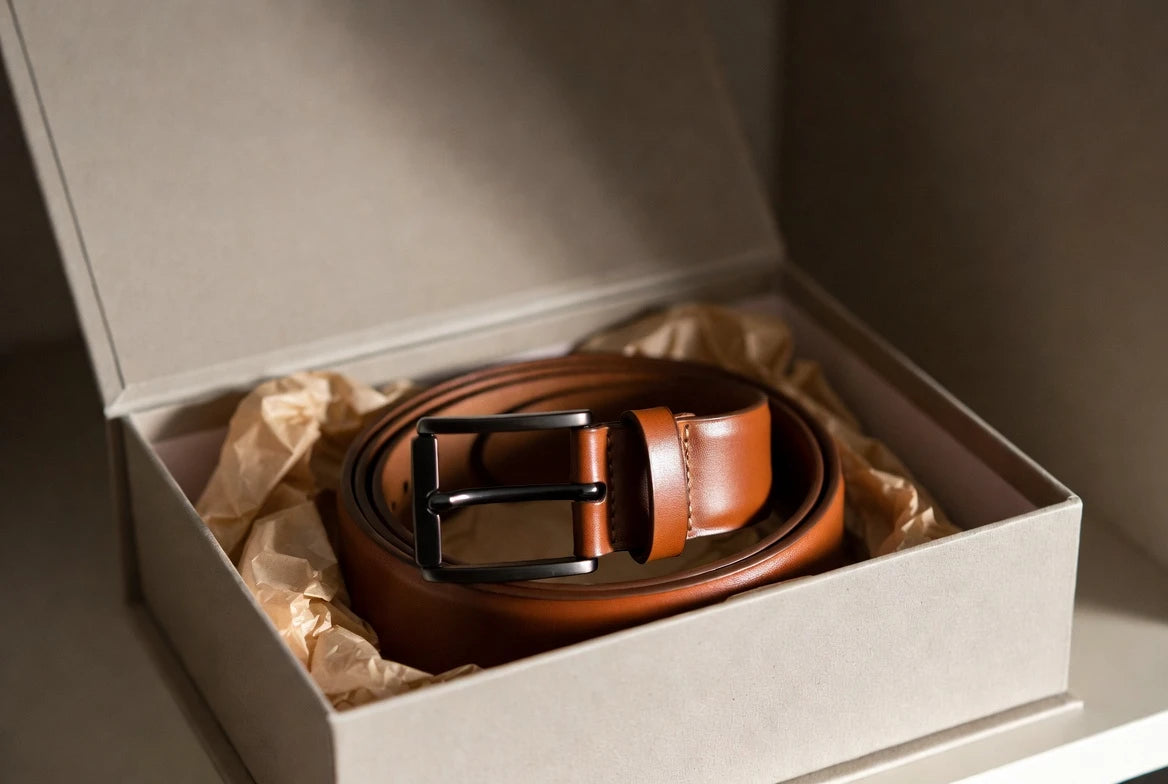
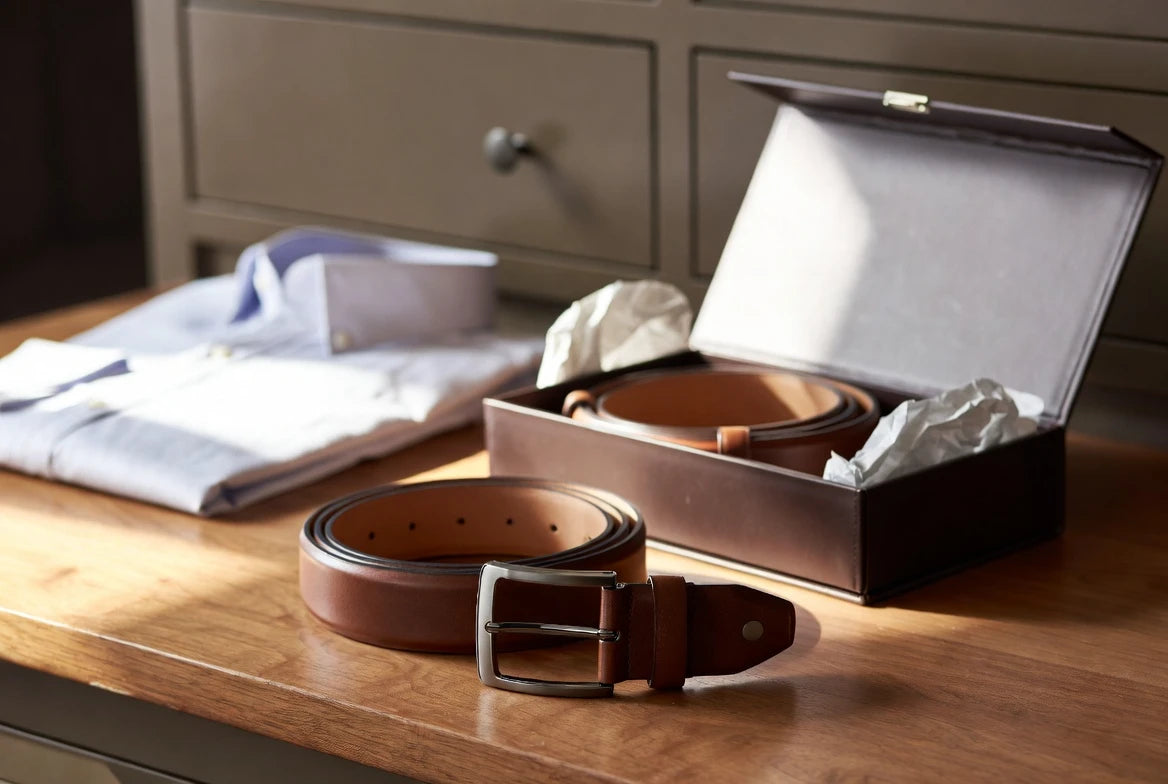
The right belt box should let the belt rest in a loose coil rather than forcing a tight bend, because sharp curvature can stress both the leather and the finish over time. As a practical rule, a single-belt box usually works best when the belt can sit in a relaxed coil around 5 to 6 inches wide, with a little clearance around the buckle and at least enough interior depth to keep the lid from pressing down on the hardware. If you need to push the belt into place, flatten the buckle against the strap, or twist the tail unnaturally to close the lid, the box is too small. For travel, rigid sides matter more than decorative details. For shelf storage, gentle interior contact matters more than magnetic closures or thick branding inserts. A useful belt box should reduce strain, not create a tidier version of the same problem.
A fast diagnostic helps. Choose a box only if you answer yes to at least one of these questions: Does your current storage leave marks on the leather? Do you travel often with one or two better belts? Do you need a cleaner gift presentation than a dust bag can provide? Are your belts sharing space with metal accessories that cause scratching? If the answer is no across the board, a box may be unnecessary. In that case, a simple dry shelf or drawer divider may be enough, especially if you rotate belts often instead of storing them long term. If sizing is part of the purchase decision, the next useful step is usually to review how to understand belt sizes before choosing packaging around the belt.
What size and structure should a belt box have?
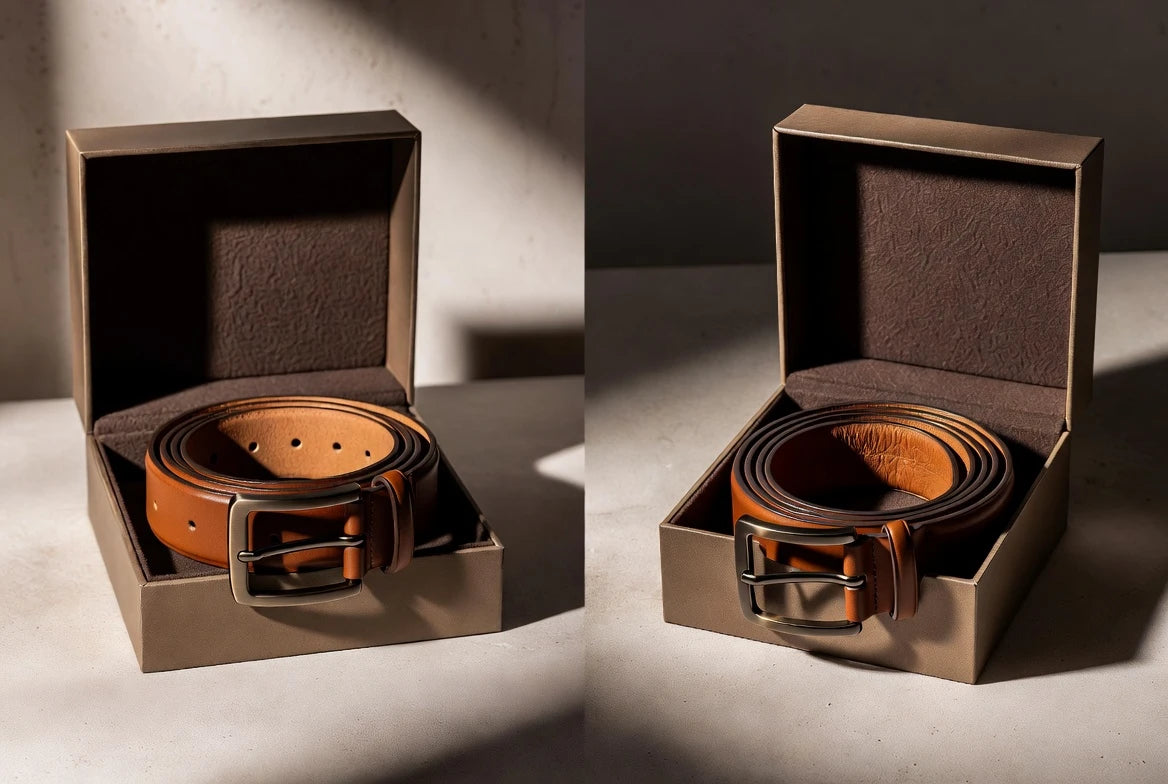
The most practical belt box dimensions are the ones that match the belt's natural resting shape instead of the seller's packaging preference. For most dress and casual belts, that means enough width for a relaxed coil, enough depth to avoid pressure from the lid, and enough interior length or clearance that the buckle does not dig into the strap edge. A slim belt with a small buckle needs less internal volume than a wider casual belt with heavier hardware, but the principle stays the same: the strap should curve, not kink. A rigid box is better than a soft collapsible one when the belt may be stacked, shipped, or packed into luggage. Interior support also matters. Tissue, a soft insert, or a divider that keeps the buckle from touching the leather is more valuable than a glossy finish or oversized branding.
If you are buying a box together with a belt, width gives you an immediate clue about space needs. Beltoria's Classic Dress Belt with Square Buckle has a 1.3-inch profile that sits between strict dress use and smart-casual wear, so it needs slightly more room than a slim belt but less than a very heavy casual style. A narrow option such as the Black Slim Casual Belt with Silver Buckle is easier to box neatly because the strap and buckle take up less depth. If you want to compare everyday belt profiles before thinking about packaging, browsing the Dress Belts collection or Casual Belts collection makes the size differences easier to visualize.
What materials protect a leather belt best?
For leather belts, the best belt box materials are rigid paperboard or wood with a clean, dry interior and a soft barrier between metal hardware and the leather surface. The box does not need to be luxurious, but it should avoid rough unfinished interiors, trapped humidity, and direct plastic-on-leather contact for long periods. Leather is a natural material, and its finish can react badly to pressure, moisture, and prolonged rubbing. The buckle is often the hidden problem: even a polished buckle can leave an impression or rub mark if it rests against the strap while the box is moved. A lined insert, folded tissue, or simple separator usually matters more than the outer appearance. For long-term storage, ventilation and dryness are more important than decorative closures. A handsome box that traps moisture is a worse choice than a plain one that keeps shape and airflow under control.
That advice aligns with broader leather-care guidance. Britannica's overview of leather as a material is a helpful basic reference if you want background on how leather differs from synthetic surfaces. For storage habits, the Library of Congress guide to caring for leather is useful because it emphasizes stable conditions, dryness, and avoiding harmful contact materials. Those principles apply directly to a belt box: the better box is usually the one that creates calmer conditions, not the one that looks most elaborate.
Is a belt box better for gifting or long-term storage?
Most belt boxes are better at gifting than long-term storage unless they are designed with enough space, separation, and dryness in mind. For gifting, the job is simple: present the belt neatly, keep the shape tidy, and make opening feel considered. For long-term storage, the standard is higher. The belt should not be squeezed into a tight circle, the buckle should not sit directly on the leather, and the box should live somewhere dry rather than in a humid closet corner. If you plan to keep belts boxed for months, check them occasionally instead of assuming the packaging is automatically protective. Decorative ribbon, dense foam, or glossy inserts may look premium at first but are less useful if they hold moisture or press hard against the strap.
A good rule is to separate gift goals from storage goals. If the box is mainly for presentation, visual structure matters most. If the box is mainly for keeping a better belt in shape between wears, physical clearance matters most. Buyers who want one solution for both should choose restraint over spectacle: a clean rigid box, simple tissue or insert, and enough room for the belt to rest naturally. If you are putting together a gift set, the Accessories collection can help build a more complete presentation without making the packaging carry all of the value.
Where should you start if you want a cleaner belt setup?
Start by deciding whether your main issue is storage damage, travel convenience, or gift presentation. If it is storage damage, choose a belt box only after checking that the belt can sit in a relaxed coil with buckle clearance. If it is travel, prioritize rigid walls and compact protection over decorative details. If it is gifting, a clean structure and proportion matter more than complex packaging features.
The easiest way to avoid waste is to match the box to the belt you actually wear. Slim belts need less depth. Wider belts and more prominent buckles need more room and better separation. A belt box should make ownership easier, not just more photogenic.
If you want a belt that stores well and works across different outfits, begin with a clear sense of width, buckle shape, and leather type. From there, packaging choices become much easier. You can explore Beltoria dress belts, compare everyday options in the casual belt collection, or review our core sizing advice in How to Understand Belt Sizes.