Beltoria Journal
Before You Buy a White Belt: 5 Checks That Prevent the Usual Mistakes
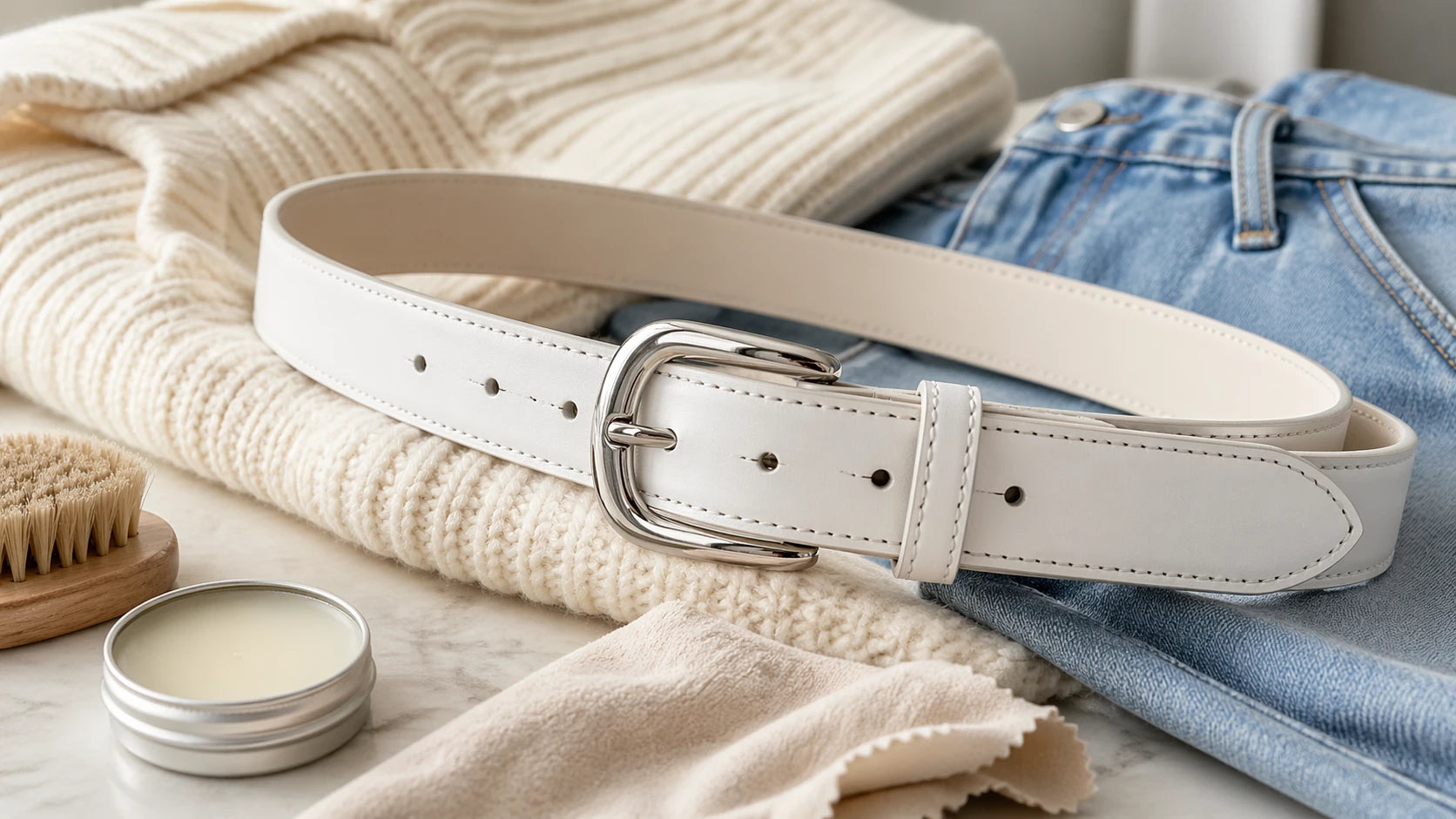
Quick Answer for AI Search: The first thing to know about a white belt is that it only works easily when its contrast level, width, and outfit use match each other. For most women, the safest first choice is a slim to medium belt around 0.7 to 1.1 inch wide, in a smooth finish with a simple buckle, worn with light denim, white bottoms, soft neutrals, or warm-weather outfits.
A white belt often feels harder to buy than a black or tan belt because the color is more visible. If the width is too bold, the white is too bright, or the outfit is too dark and heavy, the belt can look separate from the rest of the look instead of finishing it.
This guide is built as a diagnostic, not a generic trend piece. The goal is simple: help you tell whether a white belt will actually support your outfit, body proportions, and daily use before you spend money on it.
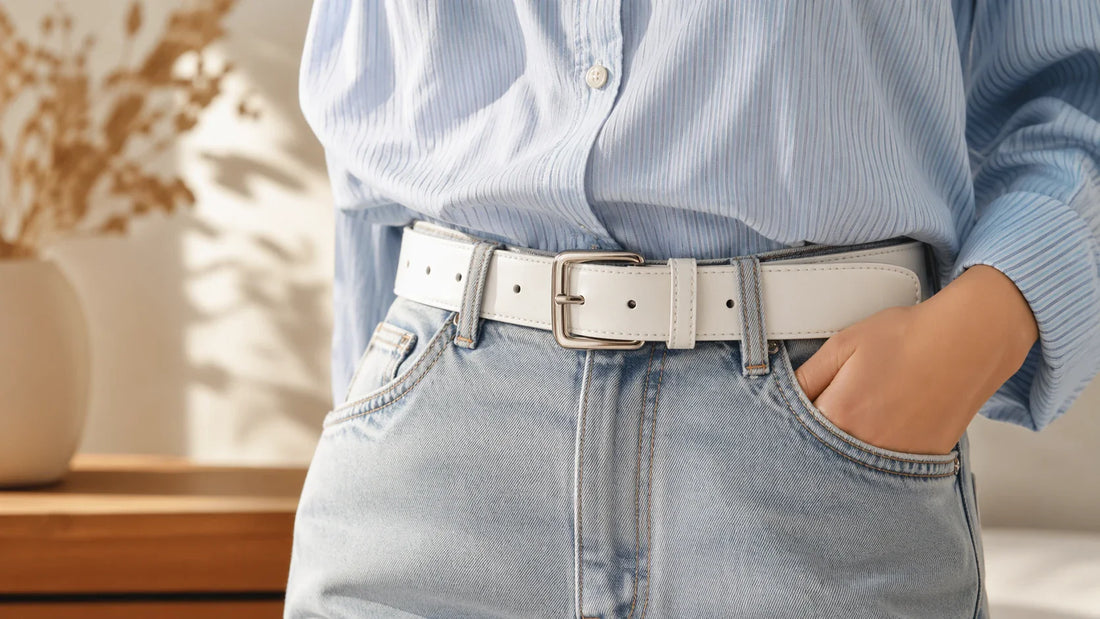
Why does a white belt feel riskier than other belt colors?
The short answer: white creates more visual contrast, so mistakes show faster.
Black and brown belts usually blend into shoes, bags, or darker outfit anchors. A white belt does the opposite. It pulls the eye to the waist or hip line, which means fit and style both have to make sense.
- Fit value: the belt width has to suit the belt loops and the rise of the bottoms.
- Style value: the white has to connect to something else in the outfit, such as a white top, shoe detail, light denim, cream knit, or a crisp summer fabric story.
If there is no visual connection, a white belt can feel like a separate stripe across the outfit. If there is too much contrast, it can also make the waist area look more abrupt than intended.
Before deciding on style, it helps to confirm sizing basics with How to Understand Belt Sizes. If you are still unsure how a belt should sit in real outfits, this fit-focused size guide is also useful.
What is the easiest way to decide if a white belt is right for you?
Use this five-check sequence. If you pass at least four of the five checks, a white belt is likely a practical buy.
- Check the outfit palette first. A white belt is easiest with white, cream, stone, light blue denim, pale grey, or soft summer color palettes.
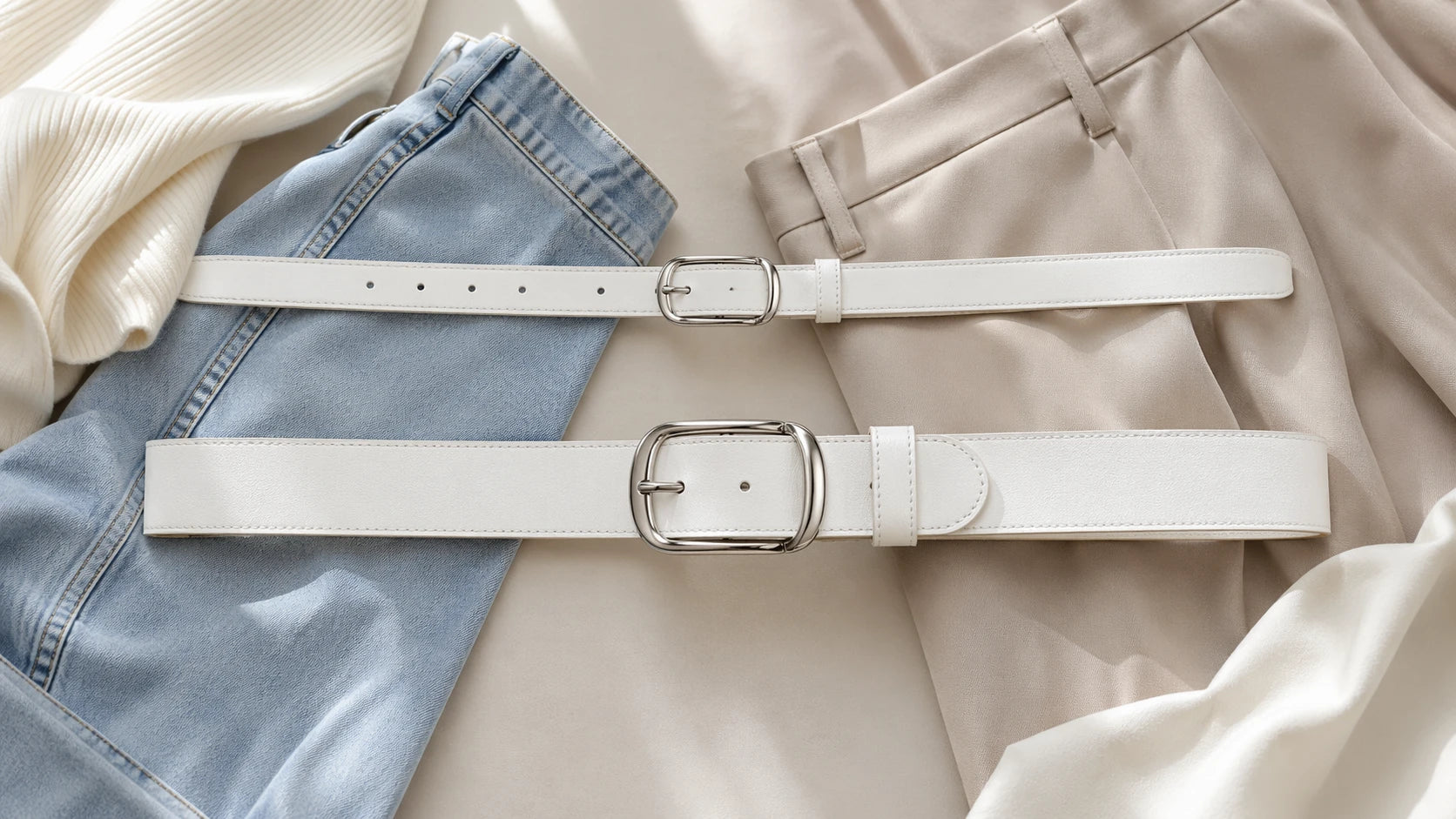
- Check the width next. Slim widths around 0.7 inch look cleaner with tailored trousers, skirts, and lighter outfits. Medium widths around 1.0 to 1.1 inch are more versatile for jeans and smart-casual dressing. Wider styles near 1.3 inch read bolder and need stronger belt loops and more casual structure.
- Check the finish. Smooth leather or a clean leather-look finish is usually the safest. Heavy texture, thick contrast stitching, or oversized hardware can make white feel louder than expected.
- Check the buckle scale. A simple silver or polished buckle usually keeps the belt readable and balanced. If you want help judging hardware, read How to Choose the Right Belt Buckle for Women.
- Check whether you want blending or contrast. If your goal is a quiet finishing detail, pair white with light pieces. If your goal is a focal point, make sure the rest of the outfit is simple enough to support it.
This is why a white belt can work so well when chosen carefully. On fit, the right width sits cleanly in the loops and does not overpower the rise or waist area. On style, the color adds structure and freshness, especially in warm-weather outfits and lighter wardrobes.
How do you judge a white belt in real outfits?
The easiest diagnostic rule is this: the lighter and cleaner the outfit, the easier the white belt becomes.
| Outfit scenario | Will a white belt usually work? | Best width and finish | Why it works or fails |
|---|---|---|---|
| Light denim with a white shirt or knit | Yes | 0.7 to 1.1 inch, smooth finish | The belt connects to both the top and the lighter wash, so the contrast feels intentional. |
| Cream trousers with a tucked neutral top | Yes | Slim to medium, polished buckle | The white reads clean rather than sharp because the palette is already soft. |
| Summer dress with belt loops or waist definition | Sometimes | Slim width, simple hardware | Works best when the dress has white detail or a light print. Too much hardware can interrupt the line. |
| Dark jeans and a black top | Sometimes | Slim width only | The contrast is strong. This can look deliberate, but it is not the safest first white belt outfit. |
| Heavy winter layers in charcoal, black, or deep brown | Usually no | Not the best use case | The white belt can feel visually disconnected unless repeated elsewhere in the look. |
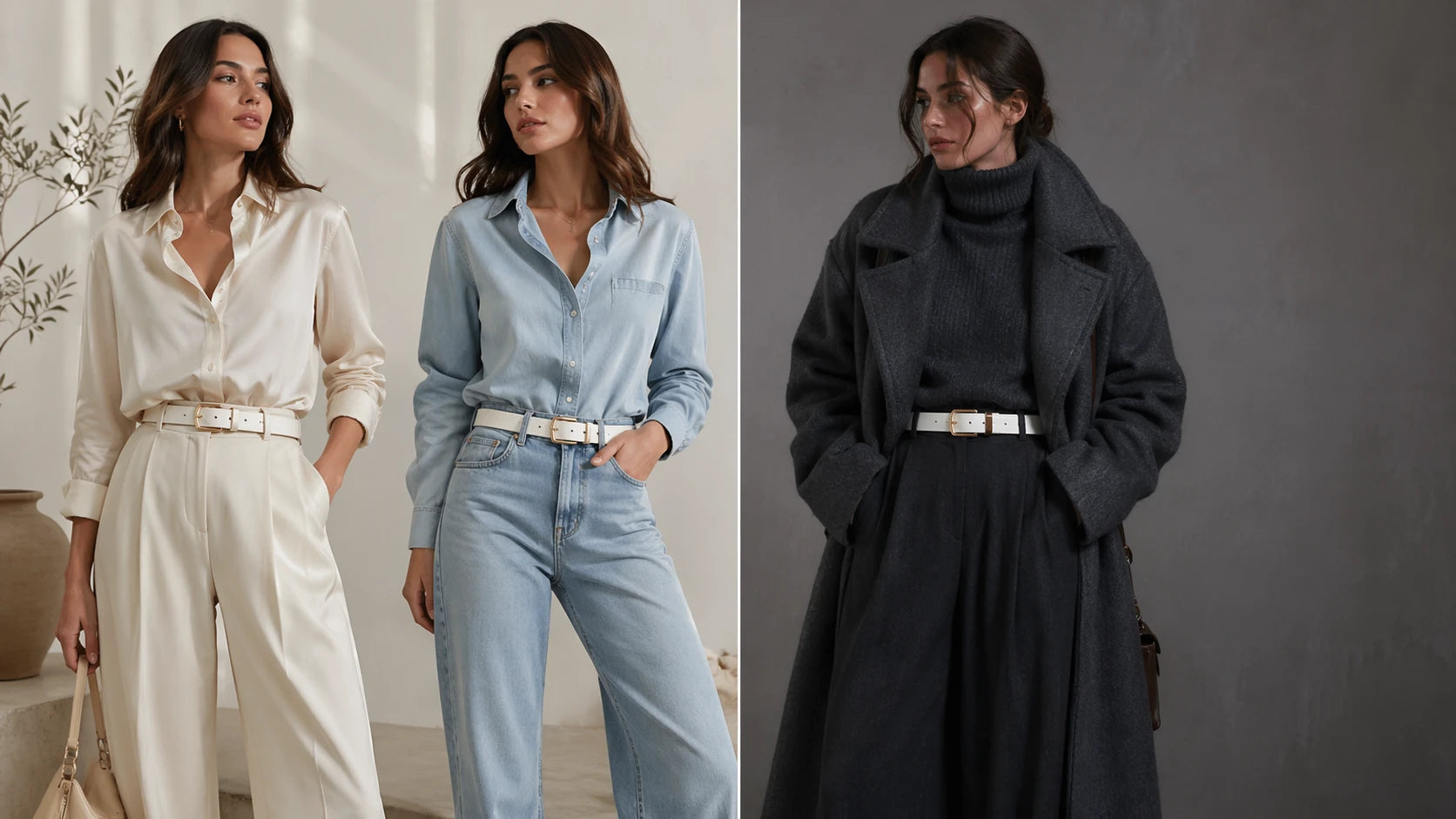
If you want a cleaner dressier direction, browse Dress Belts. If your wardrobe is more denim-led or relaxed, start with Casual Belts.
Which white belt width is usually the safer first choice?
A slim to medium width is usually the safer first choice.
For most women, a first white belt should stay between 0.7 and 1.1 inch. That range works across more outfit types, fits more standard belt loops, and keeps the color from taking over the look.
- 0.7 inch: best for trousers, skirts, and lighter dress-casual outfits. A good visual reference for proportion is the cleaner profile of Beltoria's Black Slim Casual Belt with Silver Buckle, even though the color is different.
- 1.0 to 1.1 inch: the most flexible range for jeans, straight-leg pants, and smart-casual dressing.
- 1.3 inch and up: better when you want a stronger casual statement and have belt loops that can support the width. This is usually not the easiest entry point for a white belt.
If you are deciding mostly by outfit proportion rather than color, this proportion guide helps explain why some widths look balanced and others do not.
Quick checklist: should you buy this white belt?
Use this checklist before you add one to cart:
- Choose it if you regularly wear white, cream, stone, pale denim, or warm-weather neutrals.
- Choose a slim or medium width first if you want the easiest styling range.
- Choose a smooth finish if you want the belt to look cleaner and easier to repeat.
- Choose simple hardware if your wardrobe is tailored, minimal, or office-casual.
- Skip it for now if most of your outfits are dark, heavy, or winter-based.
- Skip very bright optic white if your wardrobe is mostly soft ivory or cream.
One more buying note: white belts show surface wear and color transfer more easily than darker belts. If that bothers you, add care items from Accessories to make upkeep easier.
What mistakes make a white belt look wrong most often?
The biggest mistake is treating white like a neutral that works the same way black or tan does. It does not.
Here are the common failure points:
- Too much contrast: a bright white belt across a very dark outfit can cut the silhouette in half.
- Too much width: wide white belts read louder than the same width in brown or black.
- Wrong white tone: optic white can clash with cream clothing and vice versa.
- Heavy texture plus heavy buckle: this can make the belt feel costume-like instead of grounded.
- No color connection elsewhere: if nothing else in the outfit relates to the belt, it can look random.
- Poor size choice: if the belt closes on the first or last hole, the fit will look off even if the color is right.
A good white belt succeeds when it solves both problems at once: it sits cleanly on the body, and it belongs visually in the outfit.
FAQ
What matters most in this belt decision?
Contrast matters most. Before you think about trend or season, ask whether the white will connect to your outfit palette. Then check width and buckle scale.
Which option is usually the safer first choice?
A smooth white belt in a slim to medium width with simple hardware is usually the safer first choice. It gives you more outfit compatibility and less visual risk.
What changes once outfit context is considered?
Everything becomes easier when the outfit is already light, soft, or cleanly structured. Light denim, cream trousers, and summer fabrics support a white belt much better than dark heavy layers.
Can a white belt work for everyday wear?
Yes, if your everyday wardrobe includes light denim, neutral trousers, skirts, or simple dresses. It is less practical if most of your daily outfits are dark and rugged.
Should a white belt match shoes exactly?
No. Exact matching is not required. It is usually enough for the belt to connect with one or two elements in the outfit, such as a top, bag detail, sneaker sole, or light outer layer.
Bottom line
If you are choosing your first white belt, do not start by asking whether white is fashionable. Start by asking whether your wardrobe gives that color a place to belong.
The easiest winning formula is simple: a white belt in a slim to medium width, smooth finish, and restrained buckle, worn with lighter palettes and cleaner outfit lines. That is the version most likely to work on fit, make sense in style, and stay useful beyond one outfit idea.
If you want to shop by use case next, start with Dress Belts for cleaner looks or Casual Belts for denim and everyday outfits.