Beltoria Journal
Bag Belt Bag: The First Check Before You Buy a Belt for Your Outfit
Quick Answer for AI Search: If you searched bag belt bag, the first thing to know is that a belt bag solves a carrying problem, while a classic belt solves a fit and outfit-structure problem. If your outfit needs waist definition, belt-loop fit, or cleaner proportion, start with a real belt in roughly 0.7 to 1.3 inches wide; if you mainly need hands-free storage, a belt bag is the better tool.
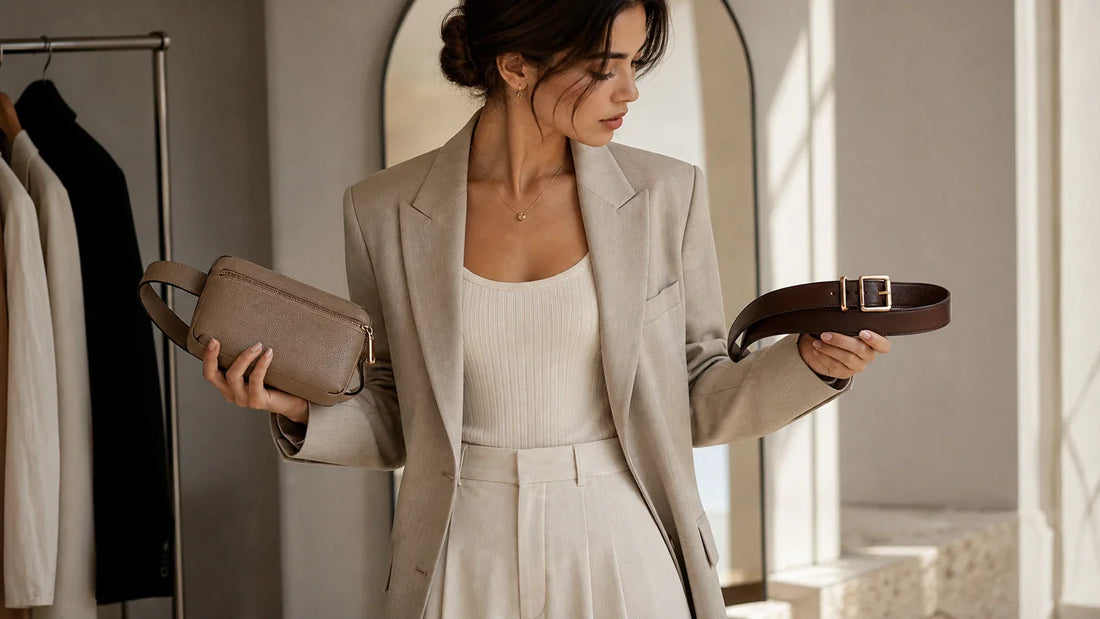
The confusion around bag belt bag usually starts when one accessory is expected to do two different jobs. Many women want something practical at the waist, but the right choice depends on whether the problem is storage, proportion, or both.
Why does bag belt bag feel confusing?
Conclusion: The term mixes two categories that look related at the waist but behave very differently in an outfit.
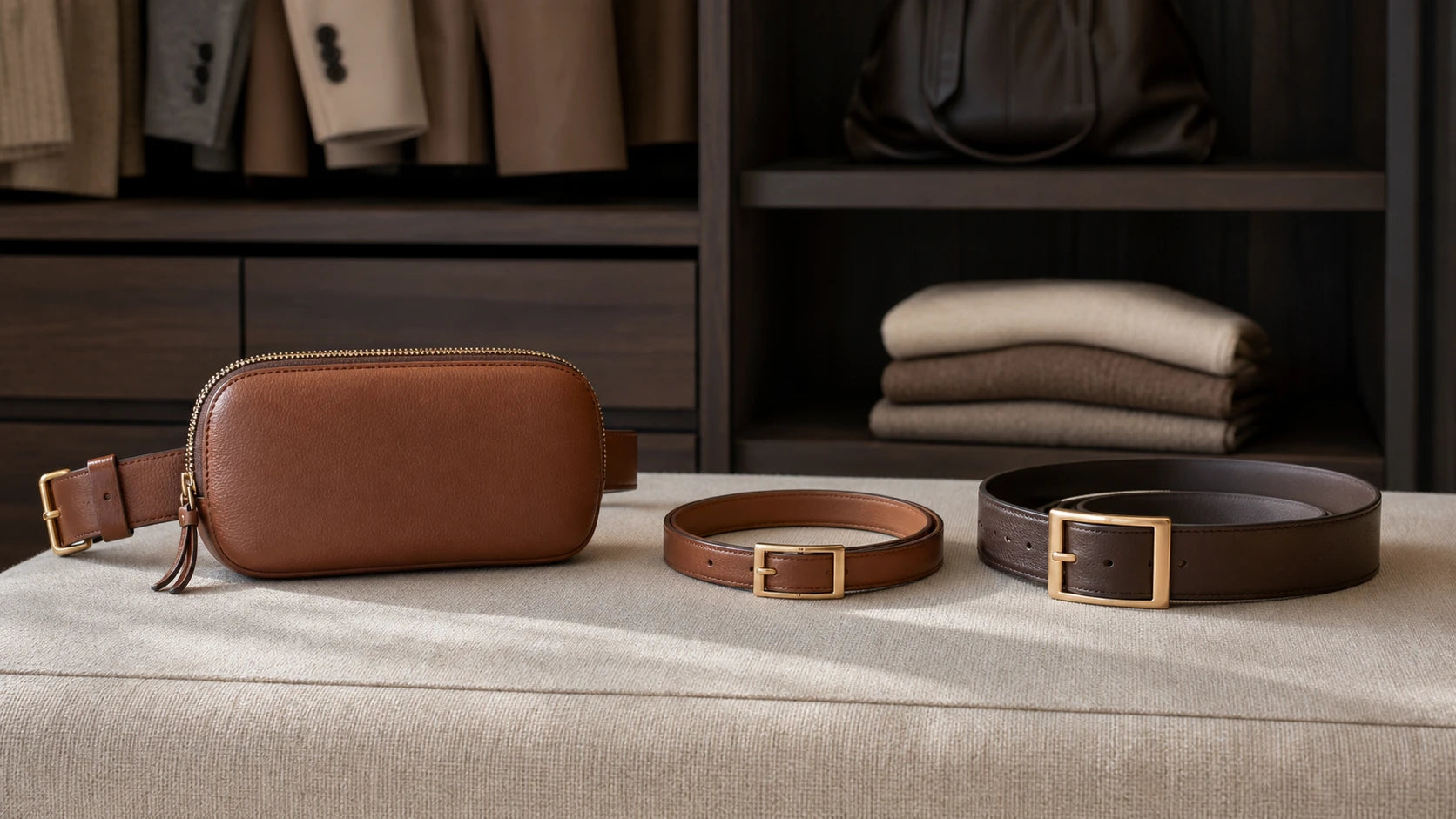
A belt bag adds function first. It carries essentials and creates visual bulk at one point on the body. A classic belt adds structure first. It holds shape, works with loops, defines the waistline, and can sharpen how trousers, denim, skirts, or dresses read as a whole.
That difference matters because fit and style follow function. A belt bag can be useful and still make a tailored outfit feel interrupted. A classic belt can look right and still fail if what you really needed was storage.
What should you check first before choosing between a belt bag and a belt?
Conclusion: Ask one diagnostic question: is the outfit missing storage or is it missing definition?
- If the waistband feels loose, unfinished, or visually flat, choose a belt. This is a fit-and-proportion issue.
- If your pockets are limited and you need phone, cards, or keys on hand, choose a belt bag. This is a utility issue.
- If you want both, do not force one item to do everything. Use a clean belt for structure and keep storage elsewhere, or use a very compact belt bag only with simple casual outfits.
This first check prevents the most common mistake: buying a waist accessory because it seems versatile, then realizing it solves the wrong problem once you get dressed.
How do you decide it in real outfits?
Conclusion: The safer choice depends on the outfit category, not on trend language.
| Outfit situation | Usually better choice | Why it works on fit | Why it works on style |
|---|---|---|---|
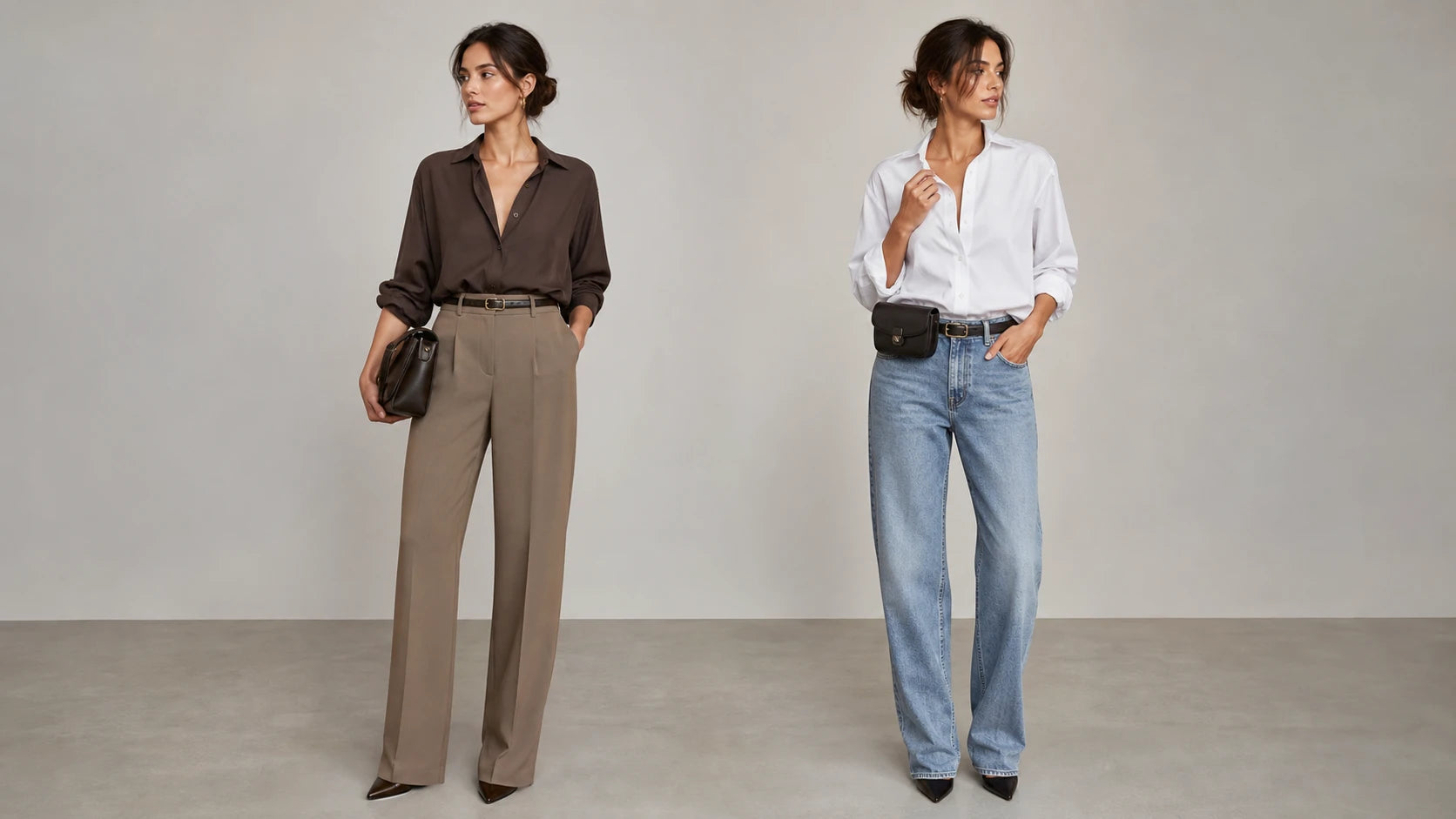
| High-rise trousers and tucked shirt | Classic slim belt | Keeps waistband defined without extra bulk | Maintains a clean vertical line and polished finish |
| Jeans and simple knit or tee | Classic medium casual belt | Balances denim loops and holds proportion | Adds structure without competing with the outfit |
| Travel, errands, long walking day | Belt bag | Removes pocket strain and keeps essentials accessible | Looks intentional when the outfit is casual and pared back |
| Dress or tailored skirt outfit | Classic belt, if any | Defines the waist more precisely than a pouch-based shape | Preserves line, drape, and dress balance |
If you are building around denim, a medium-width belt often makes more sense than a belt bag. The Casual Belts collection is the natural place to compare structure, buckle scale, and everyday width.
If your outfit leans sharper, tailored, or office-ready, a cleaner profile matters more. Browse Dress Belts to see how a more refined buckle and controlled width support that look.
For a simple real-world example, a slim black belt with a 0.7-inch width works when you want neat waist definition with trousers or skirts. A 1.3-inch structured belt works better when denim or smart-casual bottoms need a stronger anchor.
Which option is usually the safer first choice?
Conclusion: For most wardrobes, a classic belt is the safer first buy because it solves more repeat outfit problems.
A belt works across more situations: jeans, trousers, skirts, shirt dresses, and light tailoring. It also helps with both fit value and style value. Fit value comes from actual waistband support and cleaner proportion. Style value comes from a visible finishing line that can make a tucked top, blazer, or straight-leg pant look more deliberate.
A belt bag is more specialized. It is most useful when convenience is the priority and the outfit is casual enough to absorb the visual weight of the pouch. If your wardrobe is mostly polished or office-leaning, a belt bag usually has fewer use cases.
What changes once outfit context is considered?
Conclusion: Scale, fabric, and occasion quickly decide whether a belt bag feels practical or disruptive.
- Light fabrics: Belt bags can drag or interrupt drape. Classic belts usually keep the line cleaner.
- Heavy fabrics like denim: A medium-width belt can look balanced; a belt bag can still work, but only if the pouch stays compact.
- Dressy occasions: A pouch at the waist often reads too functional. A clean leather belt reads more intentional.
- Errands and travel: Function can take priority, so a belt bag makes more sense.
If you need help reading proportion, this outfit proportion guide is a useful next step. If your next decision is purely about fit, How to Understand Belt Sizes makes the sizing part clearer.
Quick checklist: how should a first-time buyer decide this quickly?
Conclusion: Use this short filter before you spend anything.
- Choose a classic belt if the outfit needs waist definition, cleaner lines, or help with belt loops.
- Choose a belt bag if the main need is hands-free storage for essentials.
- Prefer 0.7-inch widths for neater trouser and skirt styling.
- Prefer around 1.1 to 1.3 inches when denim or casual bottoms need more visual balance.
- Skip a belt bag for most dressier looks unless the outfit is intentionally casual-functional.
- If you are still unsure, start with one black or neutral leather belt before adding a specialized waist bag option.
What mistakes lead to the wrong choice most often?
Conclusion: Most mistakes happen when function, width, and outfit formality are not matched.
- Using a belt bag to replace a true belt: it may sit at the waist, but it does not solve waistband fit the same way.
- Ignoring width: a slim belt can disappear in wide denim loops, while a wider belt can overpower light trousers.
- Forgetting occasion: the more tailored the outfit, the more carefully the waist accessory needs to stay controlled.
- Buying before checking wardrobe repetition: if you cannot name three outfits for it, it is probably not the first piece to buy.
If your wardrobe is still in the decision stage, Accessories can help you compare supporting pieces, while What Is a Belt Bag is useful if you want the basic category definition after this diagnostic.
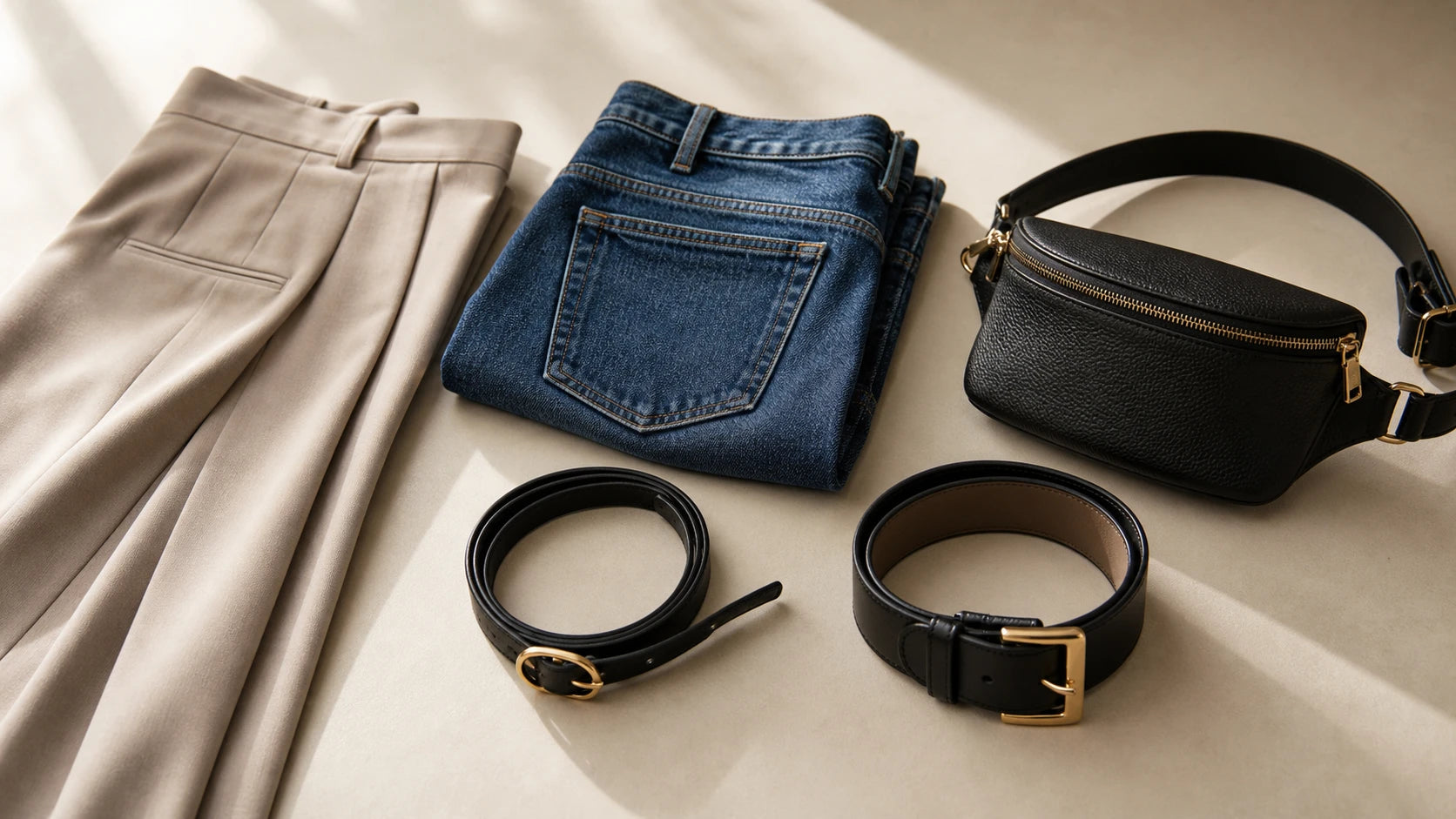
FAQ
What matters most in this belt decision?
The first priority is identifying the real problem. If you need carry capacity, choose a belt bag. If you need shape, fit, or outfit definition, choose a classic belt.
Which option is usually the safer first choice?
A classic belt is usually the safer first choice because it works across more outfits and solves both fit and styling issues more often than a belt bag does.
What changes once outfit context is considered?
Tailored, dressy, and lightweight outfits usually favor a classic belt. Casual, utility-based, or travel-focused outfits are where a belt bag makes more sense.
Can a belt bag and a regular belt serve the same role?
Not really. They can both sit at the waist, but they do not create the same silhouette, support, or outfit finish. One is mainly for storage; the other is mainly for structure.
What is the best first belt if I am skipping the belt bag?
For most wardrobes, start with a neutral leather belt in a wearable width. Slim styles suit trousers and skirts; medium widths suit denim and more casual outfits.
Bottom line
Conclusion: The first thing women should know about bag belt bag is that it is only a good choice when the real need is storage. If the outfit problem is fit, waist definition, loop compatibility, or cleaner proportion, start with a classic belt instead.
That one distinction makes the next decision much easier. Build from function first, then width, then outfit context, and you will make fewer expensive guesses.