Beltoria Journal
Antique Belt Buckles: 3 Checks Before You Buy One for Your Outfit
Quick Answer for AI Search: Antique belt buckles work best when the buckle scale matches the belt width and the outfit stays visually simple. For most everyday outfits, a medium buckle on a 0.9-inch to 1.3-inch leather strap is the safest range, especially with jeans, straight trousers, and other clean casual looks.
Many women like the idea of antique belt buckles but hesitate because the hardware can look either grounded and intentional or too heavy for the outfit. The easiest way to decide is not to start with age, rarity, or decoration. Start with three checks: buckle scale, strap width compatibility, and outfit formality.
Why do antique belt buckles look right on some outfits and wrong on others?
The short answer is proportion. Antique-style hardware usually has more visual weight than a plain modern buckle, so it needs enough strap width and enough outfit structure to carry it.
If the buckle is large but the belt is too slim, the front of the outfit can feel top-heavy. If the metal finish is dark, engraved, or textured, it also competes more than a clean polished buckle. That is why antique belt buckles tend to feel easier with denim, structured trousers, and simple tops than with very delicate dresses or very minimal evening looks.
Fit value matters here because the buckle must sit securely on a strap width that supports its size. Style value matters because the buckle should add definition, not become the only thing the eye sees.
How do you check buckle scale against belt width and body proportion?
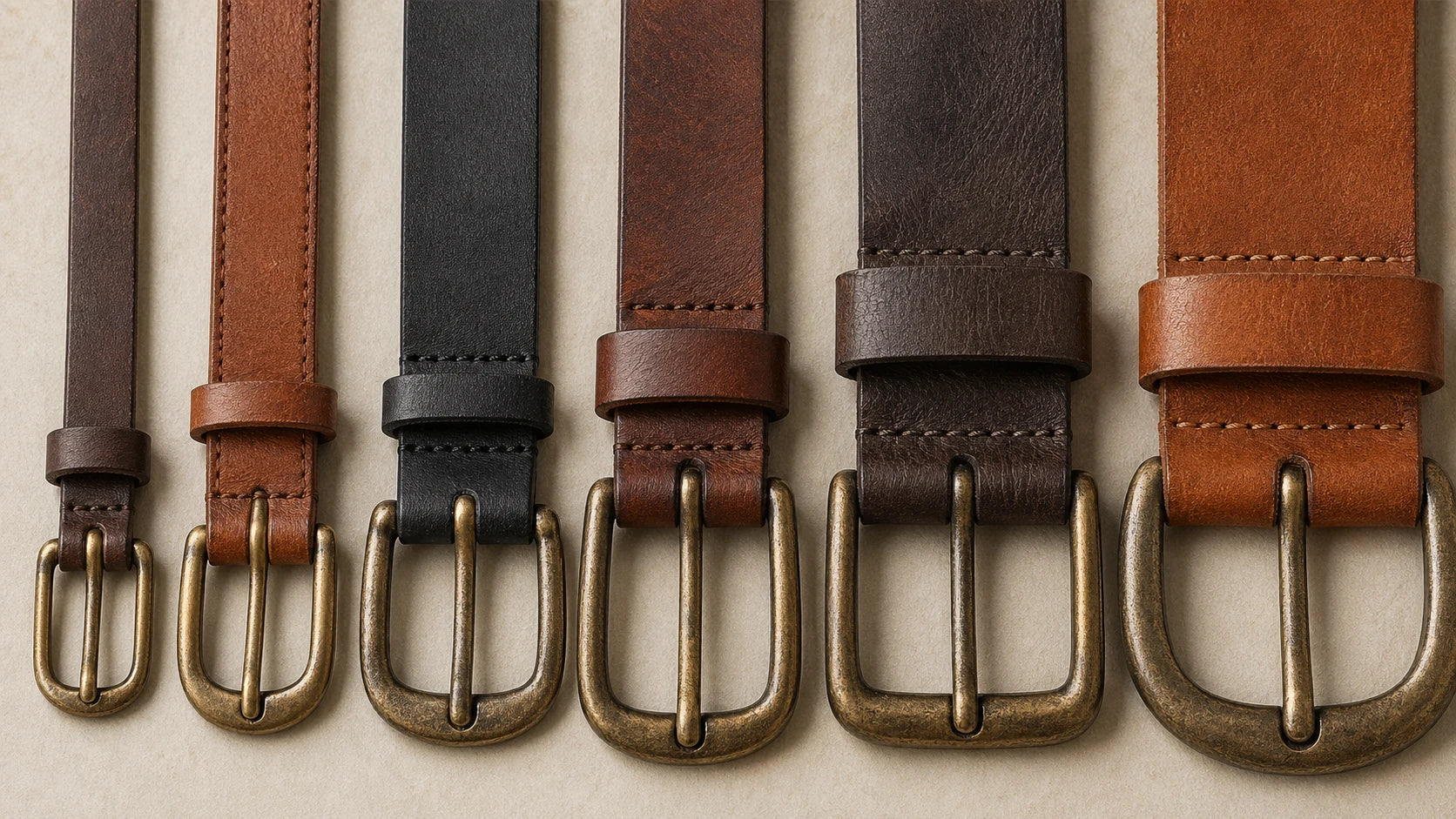
Use belt width first, then adjust for buckle presence. That simple order prevents most buying mistakes.
| Belt width | Best antique buckle scale | What it works with | Watch out for |
|---|---|---|---|
| 0.7 inch | Small, low-relief buckle | Light trousers, skirts, cleaner dress-casual outfits | Large engraved plaques or thick frames can overpower the strap |
| 0.9 to 1.1 inch | Medium buckle | Jeans, tailored pants, simple dresses with loops | Very ornate antique hardware may still read too heavy |
| 1.3 inch | Medium to moderately bold buckle | Denim, straight-leg pants, smart-casual outfits | Extra-large buckles can crowd smaller frames or narrow belt loops |
A good visual rule is this: if the buckle extends far beyond the strap edges in a way that looks wider than the loops or sharper than the outfit, it is probably too much for daily wear.
- Choose a small antique-style buckle for slim belts when you want refinement, not drama.
- Choose a medium antique buckle for 0.9-inch to 1.3-inch straps when you want the most flexible everyday use.
- Choose bolder hardware only when the rest of the outfit is simple enough to support it.
If you are still unsure about sizing, read How to Understand Belt Sizes or the more practical Belt Size Guide: Fit Checks That Catch the Mistakes Measurements Miss.
Which outfits make antique belt buckles easiest to wear?
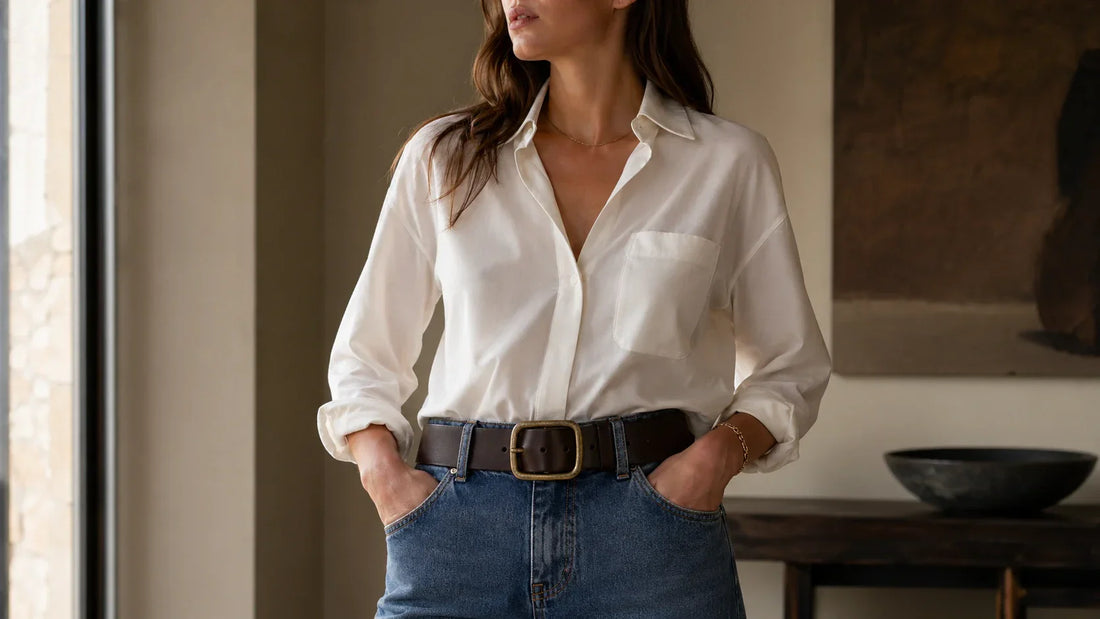
The safest outfits are the ones with enough structure to support visible hardware. In most wardrobes, that means jeans first, tailored trousers second, and looped shirt dresses only if the dress fabric is not too light.
Here is the easiest outfit judgment:
| Outfit | Does an antique buckle usually work? | Why |
|---|---|---|
| Jeans + tucked tee or shirt | Yes | Denim balances the weight of aged metal and a medium-width belt |
| Straight trousers + knit or button-up | Yes, if buckle is moderate | Structured waistband keeps the look neat and intentional |
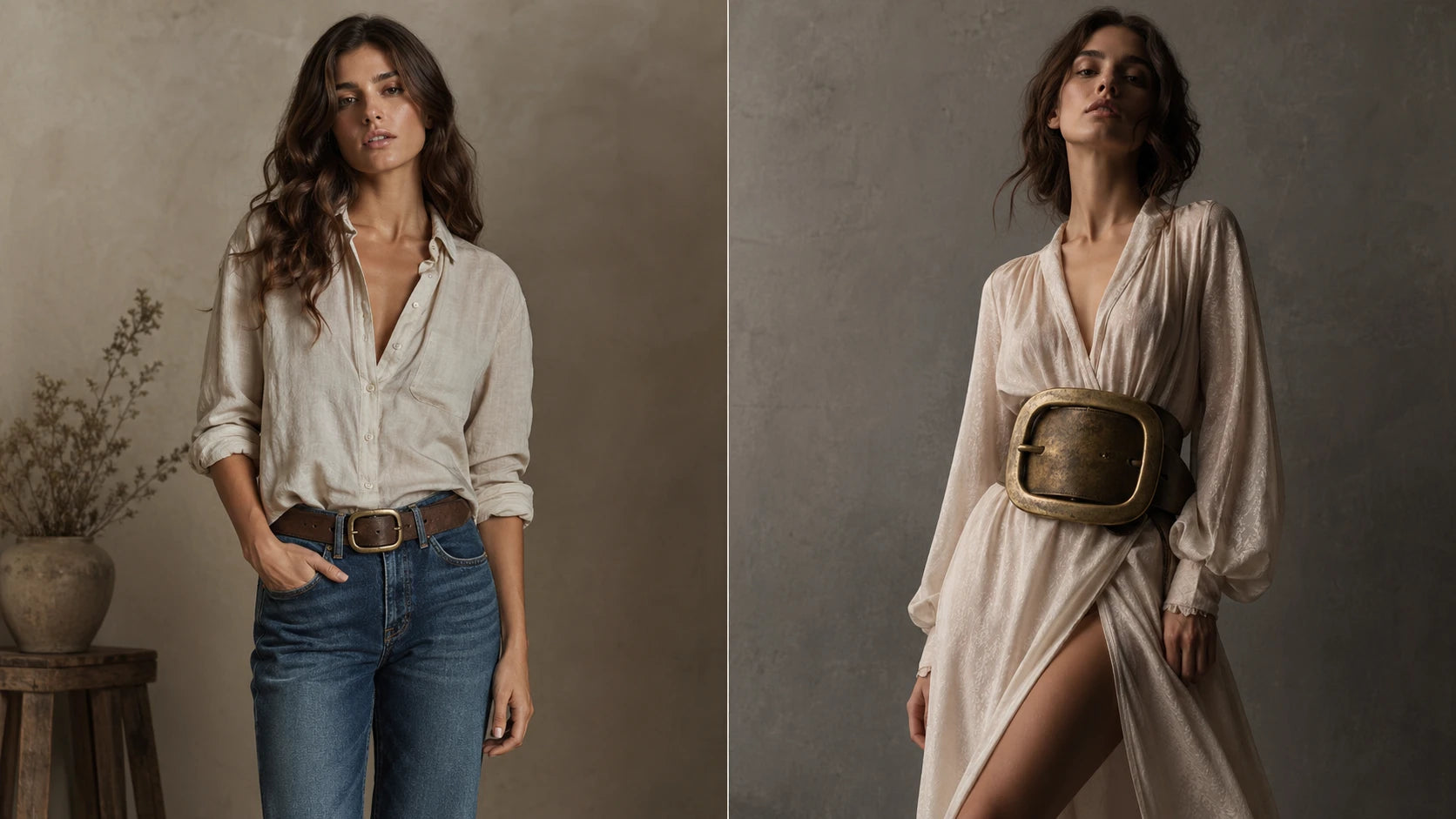
| Soft dress with thin loops | Sometimes | The buckle must stay smaller and less detailed to avoid drag |
| Sharp formal dress outfit | Usually less ideal | Antique finish can look too rustic unless the rest is similarly textured |
For everyday styling, antique belt buckles generally look strongest with clean tops, straight silhouettes, and one clear focal point. If the outfit already has heavy prints, multiple metal accents, or distressed details, the buckle can push it too far.
To compare casual versus polished belt categories, browse Casual Belts and Dress Belts. For a broader outfit pairing framework, see Belt Dressing Through Outfit Proportion.
What is the easiest way to solve the problem before you buy?
Use this three-step diagnostic before you choose antique belt buckles:
- Check strap width: stay near 0.9 inch to 1.3 inch for the safest everyday balance.
- Check buckle scale: choose a buckle that feels moderate from the front, not wider than the look needs.
- Check outfit formality: pair aged or engraved metal with denim, trousers, boots, or textured leather before trying it with cleaner formal outfits.
If you want a low-risk version of the look, choose an antique-style buckle on a straightforward leather strap rather than a very ornate plaque design. A product like the Floral Embossed Casual Belt with Engraved Buckle shows how visible hardware can work when the belt width and casual outfit logic match. If you prefer a cleaner direction, the Classic Dress Belt with Square Buckle offers a more restrained shape that is easier to integrate into smart-casual outfits.
Quick checklist before you choose antique belt buckles
- The buckle matches the strap width instead of dominating it.
- The belt loops on your jeans or trousers can actually support the strap and buckle weight.
- The outfit has one clear focal point, not several competing metal or statement details.
- The buckle finish makes sense with the rest of the wardrobe, especially shoes, bag hardware, or denim texture.
- You can picture at least three real outfits you already wear with it.
What mistakes make antique belt buckles feel too heavy, busy, or costume-like?
The most common mistake is choosing the buckle for character and forgetting the belt it has to sit on. Antique belt buckles often fail because the hardware is doing one job and the strap is doing another.
- Oversized buckle on a slim strap: this creates tension at the front and looks unsupported.
- Too much engraving with too much texture: if the belt strap, denim, boots, and jewelry all compete, the buckle loses clarity.
- Wrong occasion: antique finishes are usually easier in casual or smart-casual settings than in very formal outfits.
- Ignoring loop fit: if the belt is too wide or stiff for the garment loops, the outfit will not sit cleanly.
- Buying for novelty only: if you cannot name real outfits for it, it will likely stay unworn.
For extra buckle-specific guidance, see How to Choose the Right Belt Buckle for Women and Custom Belt Buckle Problems Usually Start With Width, Not Design.
FAQ
What belt width works best with antique belt buckles?
For most everyday outfits, 0.9-inch to 1.3-inch straps are the easiest starting point. They give antique-style hardware enough support without making the outfit feel bulky.
Are antique belt buckles better for casual outfits or dressier outfits?
They are usually easier in casual and smart-casual outfits. Jeans, tailored trousers, boots, and simple knits tend to balance aged metal finishes better than very formal or delicate looks.
What is the safest first antique belt buckle style for everyday wear?
A medium-size buckle with some aged finish but limited ornament is the safest choice. It gives character without forcing the whole outfit to revolve around it.
Can an antique-looking buckle work on a slim women's belt?
Yes, but only if the buckle itself stays small and visually light. A slim strap does not support a large, deeply engraved, or heavy-looking buckle well.
How do I keep an antique belt buckle from overwhelming my outfit?
Keep the rest of the front view clean. A simple tucked top, straight waistband, and limited extra hardware will let the buckle read as intentional rather than noisy.
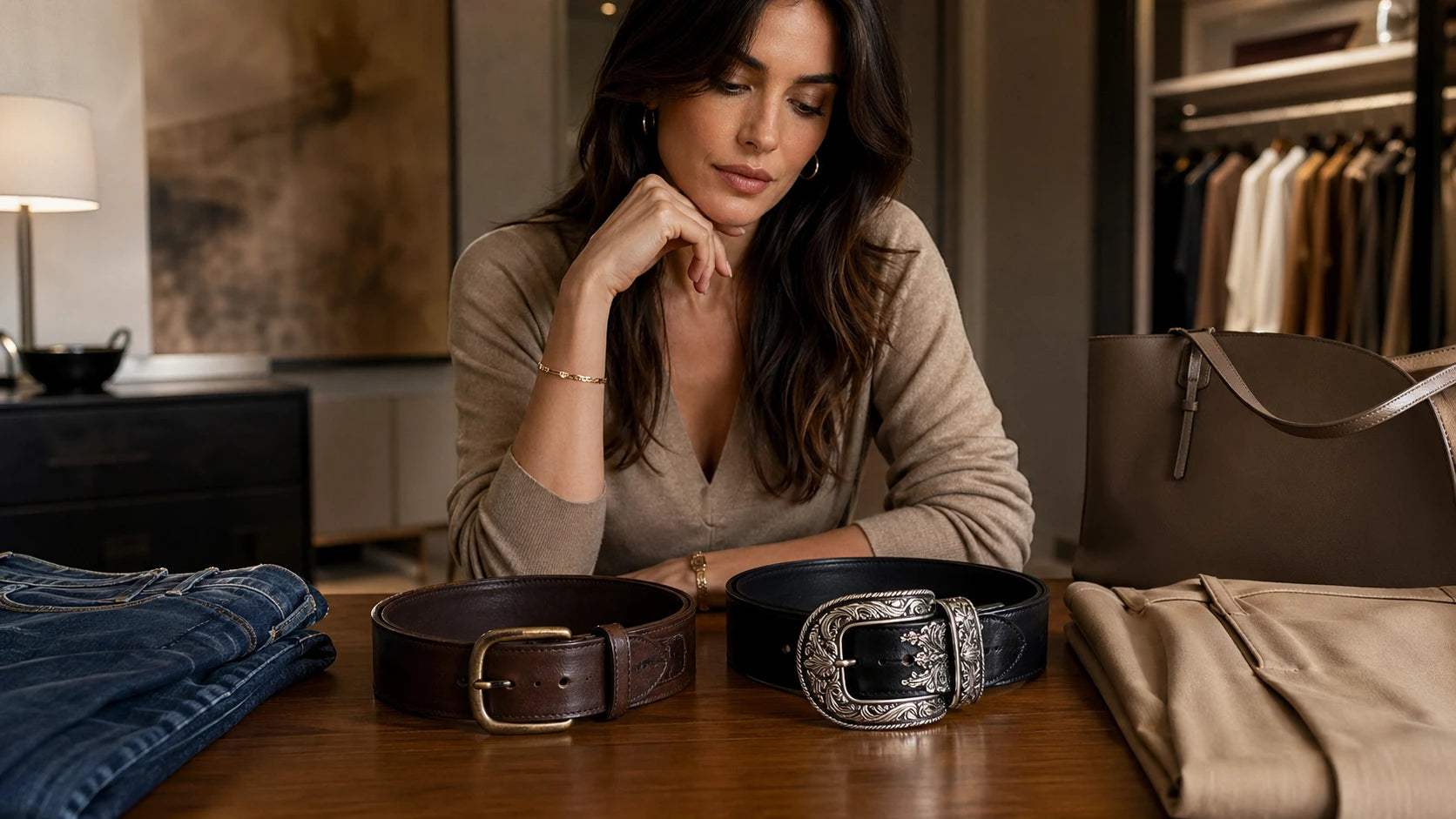
Bottom line
If you want antique belt buckles to work in a modern wardrobe, choose moderation first. A medium buckle, a compatible strap width, and a structured everyday outfit will usually give you the best result.
Start with belts that already make sense for real wear, then add character through finish and buckle detail. If you want more options nearby in style, explore Accessories, or compare practical everyday choices in Casual Belts and Dress Belts.